
Views: 293 Author: Keychain Venture Publish Time: 2026-06-30 Origin: Site


Content Menu
● Truck Safety And Low-Clearance Warnings: A Heavy Truck Expert's Guide For Global Fleets
● Why Low-Clearance Warnings Matter In Real Operations
● Know Your Truck's Height: Non‑Negotiable For Drivers And Buyers
● Height And Weight: Reading Bridge Signs Like An Expert
● Route Planning: Why Consumer GPS Is Dangerous For Heavy Trucks
● Practical Low-Clearance Driving Checklist (Driver's View)
● New Energy Heavy Vehicles And Low-Clearance Risk
● Fleet-Level Controls: Policies, Technology, And Culture
● How Heavy Truck Buyers Can Specify Safer Vehicles (Buyer's View)
● Recommended Table: Driver Vs Fleet Responsibilities
● Clear CTA For Global Buyers And Fleet Managers
● FAQs
>> Q1: What is the most common cause of low-clearance collisions in heavy trucks?
>> Q2: How can fleets quickly improve low-clearance safety without buying new trucks?
>> Q3: Do new energy heavy trucks have different low-clearance risks than diesel trucks?
>> Q4: What should a driver do if they are unsure whether a bridge is safe to pass?
>> Q5: How can buyers work with suppliers like KeyChain to reduce low-clearance risk?
A well-optimized, expert-level article on heavy truck low-clearance safety should blend practical driving guidance with fleet and vehicle selection insights tailored to global buyers of heavy trucks, buses, and new energy commercial vehicles.
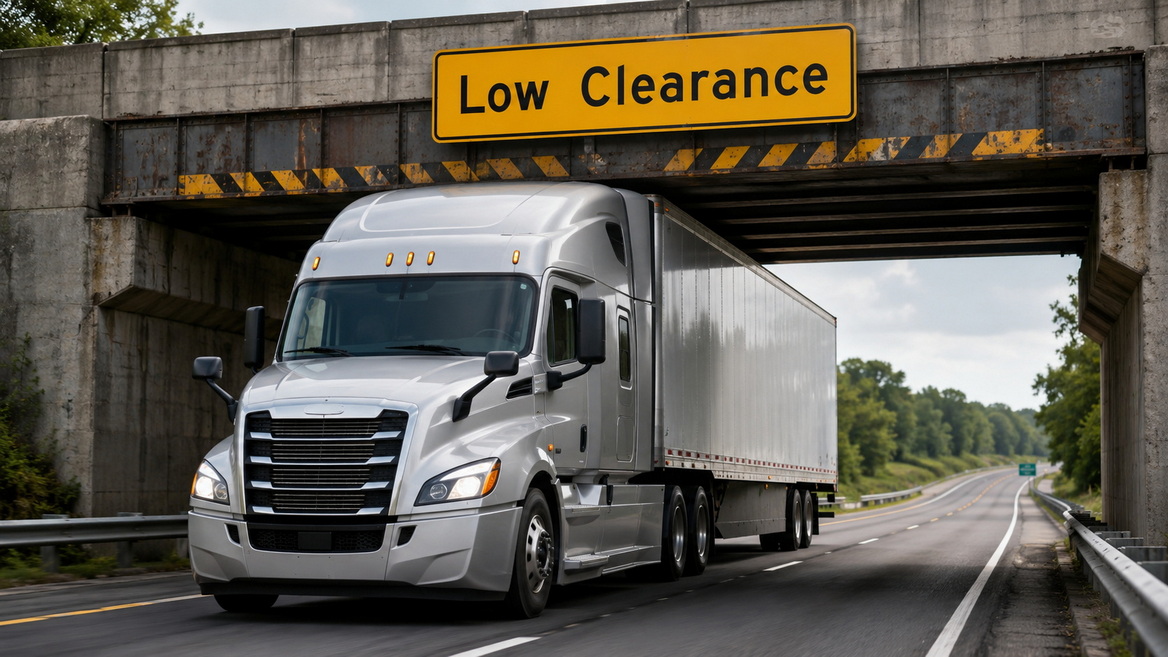
Driving or operating a heavy truck, coach bus, or new energy commercial vehicle under low bridges and overhangs is one of the most underestimated risks in road freight and passenger transport. From my experience working with international fleets and Chinese OEM partners, the difference between a safe trip and a viral "bridge strike" video usually comes down to one thing: how seriously drivers and managers treat low-clearance warnings.
As a supplier and exporter of heavy trucks and buses in China, KeyChain sees these risks every day in customer inquiries, specification discussions, and post-delivery driver feedback. We know that choosing the right vehicle height configuration is only half the battle; the other half is how your team actually behaves on the road.
Bridge strikes are not just embarrassing; they are operational, financial, and reputational disasters. A single miscalculation at an overpass can damage your truck body, destroy cargo, shut down a bridge, and trigger fines or citations from local authorities.
Industry data and insurer reports consistently show three patterns behind low-clearance incidents.
- Drivers underestimate vehicle height or forget modifications such as rooftop HVAC units, refrigeration units, or roof racks.
- Route planning relies on passenger-vehicle GPS, which does not account for truck height, weight, or local bridge restrictions.
- Fleet policies around low-clearance checks exist on paper but are weakly enforced during tight delivery windows or peak-season pressure.
From a fleet manager's perspective, low-clearance collisions are almost always categorized as preventable because professional drivers are expected to recognize fixed hazards and adjust in advance. For buyers investing in high-quality heavy trucks and buses, this is exactly why safety-oriented vehicle selection and driver training should be part of the same conversation.
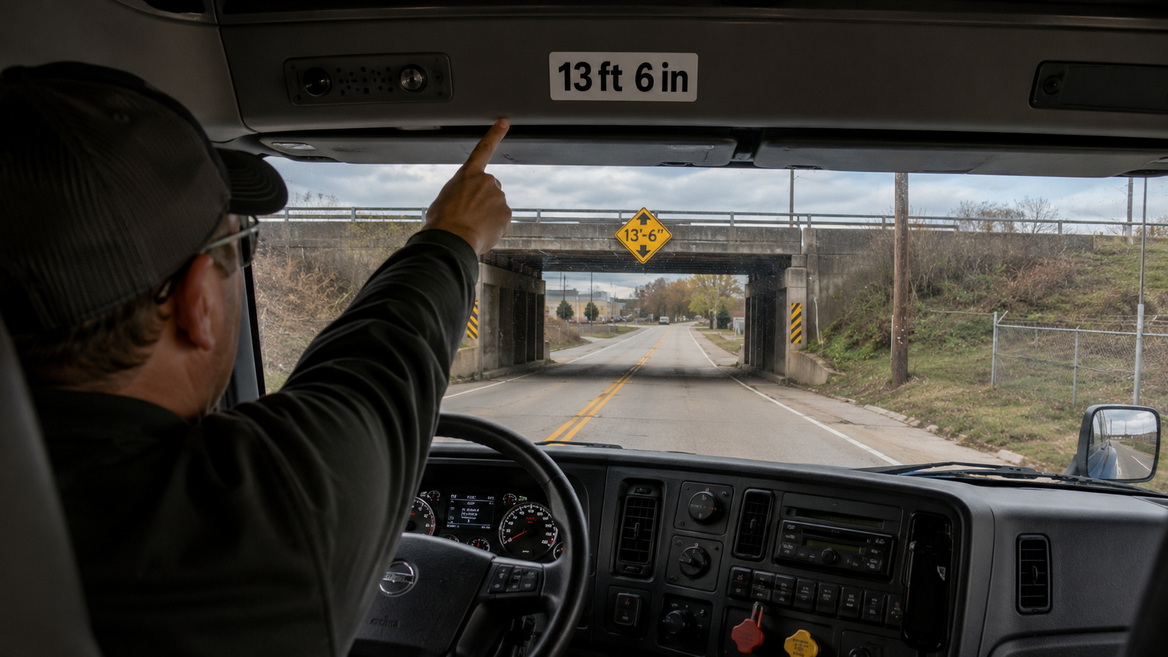
One of the most important safety habits for any heavy truck driver is to know the exact height of the vehicle, including any mounted equipment. If you are unsure, measure it and record it in a visible place in the cab.
Many rental and fleet trucks now display a clearance decal on the front windshield or driver-side area, where the driver can quickly confirm height before approaching an overpass. This simple practice, when enforced by fleet management, dramatically reduces height-related incidents.
For international buyers working with KeyChain, height awareness begins much earlier—during specification.
- Select chassis and body configurations that match local bridge and tunnel constraints in your target market.
- Consider roof-mounted components such as AC units, battery packs, or cargo boxes when calculating total height.
- Request a clearance sticker and log as part of your delivery documentation for each vehicle.
When drivers know the true height—and trust that it matches on-vehicle labels—they are far more likely to respond correctly to low-clearance warnings on the road.
Low-clearance bridges are typically marked with signs that show either the height limit of the overpass, the maximum gross vehicle weight rating (GVWR), or specific weight limits per axle configuration. Professional drivers must treat these signs as hard constraints, not suggestions.
Key behaviors drivers should adopt include:
- Scanning early for height and weight signs when approaching bridges, tunnels, or overhead structures. - Checking vehicle height and GVWR against the posted limits, including any permitted axle-weight distributions. - Maintaining a personal rule: *If in doubt, don't cross*—pull over in a safe zone to re-check clearance and route options.
To support this behavior, fleets and buyers can:
- Install truck-specific GPS units that factor in vehicle dimensions and restricted bridges. - Maintain internal maps of known low-clearance locations, especially in urban or industrial zones. - Use telematics to log near-miss events and update route guidance before a serious incident occurs.
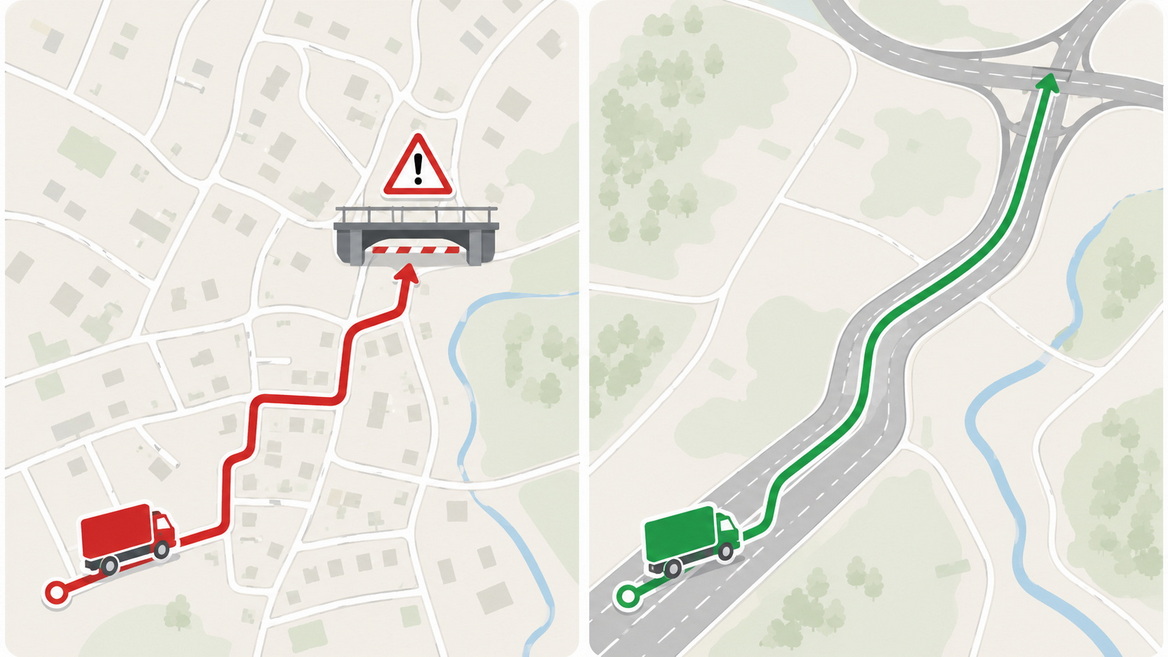
Many collision reports show drivers following directions from navigation devices designed for small passenger vehicles, not heavy commercial trucks. Consumer navigation apps often ignore height and weight restrictions, leading drivers onto back roads and under low bridges that are unsuitable for trucks.
For heavy truck operations, best practice is to use truck-specific or DOT-focused navigation tools:
- Configure route planning with vehicle height, width, length, and GVWR directly in the GPS settings. - Favor interstate and truck-friendly routes, which typically follow standardized clearance and load-bearing requirements. - Maintain backup routes in case of sudden detours, ensuring drivers never "improvise" through unfamiliar low-clearance areas.
KeyChain's fleet customers increasingly integrate these navigation capabilities with new truck purchases, particularly for long-haul and regional distribution fleets that cross mixed urban and rural infrastructure.
From a driver's perspective, approaching low-clearance obstacles safely requires a structured routine. A simple checklist can be implemented across any fleet:
1. Before departure:
- Confirm vehicle height from the clearance decal and compare it with route notes. - Verify GVWR and approximate operational weight, including cargo, fuel, and passengers.
2. During route planning:
- Use truck-specific GPS and avoid "shortcuts" suggested by consumer apps. - Cross-check route against known low-clearance hotspots shared by your fleet.
3. Approaching a bridge or overhang:
- Reduce speed and scan for height and weight warning signs. - Look for visible damage on bridges or overhangs indicating prior strikes. - Consider road resurfacing, snow, or ice that may reduce actual clearance by several inches.
4. If uncertain:
- Stop in a safe area, activate hazard lights, and reassess the situation. - If necessary, exit the vehicle and visually inspect clearance and roadway conditions. - Choose an alternate route rather than "taking a chance."
This routine is simple but highly effective when reinforced through driver onboarding, periodic safety training, and fleet-level performance metrics.
New energy commercial vehicles—electric heavy trucks and hybrid buses—introduce additional height and weight considerations that fleets must manage proactively.
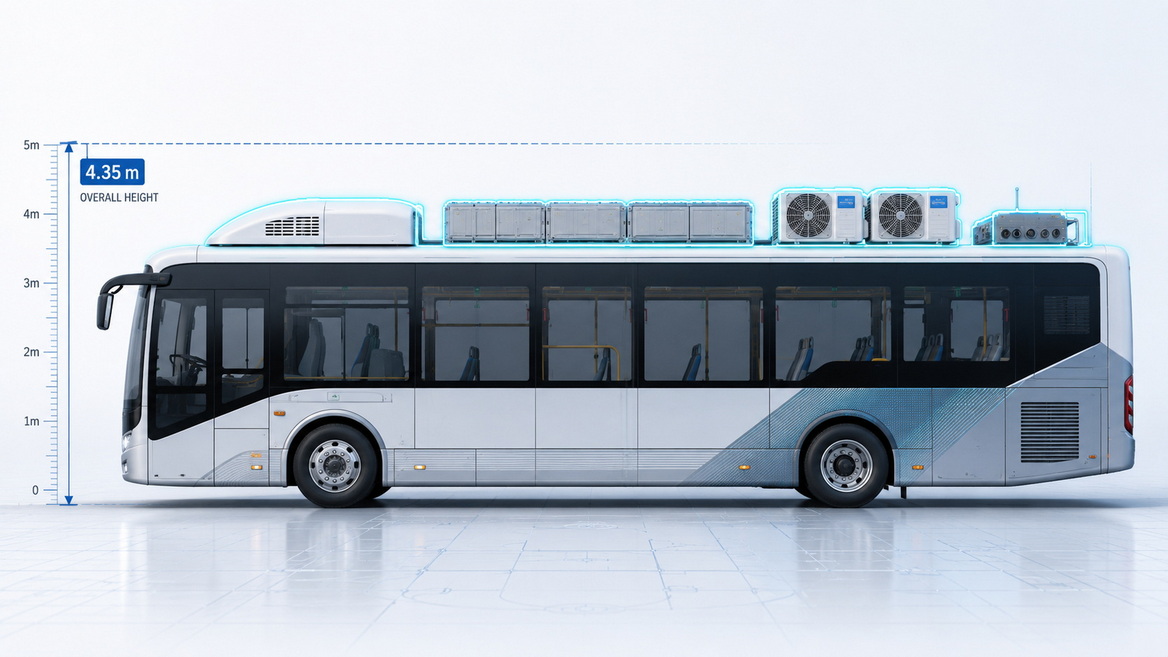
- Roof-mounted battery packs, cooling systems, or electrical units can significantly increase vehicle height. - Battery systems may change weight distribution, affecting how the vehicle interacts with bridge weight limits and dynamic road profiles.
For global buyers sourcing new energy vehicles through KeyChain, low-clearance safety should be part of the technical dialogue, not an afterthought.
- Request full dimensional diagrams including rooftop equipment and optional components. - Ensure your spec sheet clearly indicates total height in operating condition, not just chassis height. - Align vehicle selection with local regulations and typical bridge clearances in your operating regions.
By pairing sustainable vehicle technology with robust clearance awareness, fleets can reduce risk while meeting environmental and performance targets.
Low-clearance safety is not only a driver habit; it is a fleet management capability. Effective fleets combine policies, technology, and culture.
Key policy elements:
- Written guidelines on height and weight verification before each trip.
- Mandatory use of truck-specific GPS and route plans that avoid known low-clearance structures.
- Clear incident reporting processes for near misses, with follow-up training.
Technology enablers:
- Telematics systems that log approach speeds and driver behavior near bridges.
- Height-specific clearance alert systems that provide real-time warnings when a vehicle approaches a restricted overpass.
- Digital route libraries that highlight hazardous structures and automatically propose safer alternatives.
Culture factors:
- Encouraging drivers to slow down and ask for help rather than push through risky structures.
- Reinforcing the idea that low-clearance incidents are preventable and that safety performance is part of professional pride.
For fleets sourcing their vehicles from KeyChain, integrating these controls with procurement decisions ensures that every truck and bus delivered is not only technically capable but also fully supported by an operational safety framework.
As a global buyer of buses and heavy trucks, your procurement choices can either amplify or mitigate low-clearance risk. When you work with KeyChain or similar suppliers, consider including low-clearance safety in your specification checklist:
- Choose vehicle heights that align with local infrastructure standards for bridges and tunnels. - Evaluate roof equipment options carefully; sometimes relocating components or choosing lower-profile units can materially reduce risk. - Ask for pre-installed height and weight labeling in the cab and exterior. - Integrate driver-assistance features such as advanced GPS routing and clearance alert systems.
By approaching low-clearance safety as part of the buying process, you ensure that your investment in high-quality vehicles translates into sustainable, safe operations over the long term.
| Aspect | Driver responsibilities northlandins+1 | Fleet responsibilities northlandins+2 |
|---|---|---|
| Height awareness | Know and verify truck height; check decals before trips | Provide accurate height data and cab labeling |
| Weight and GVWR | Monitor load and avoid overweight crossings | Define loading policies and weigh procedures |
| Route planning | Use truck GPS and follow approved routes | Maintain and update low-clearance route maps |
| On-road behavior | Slow down, scan signs, refuse unsafe crossings | Track incidents, coach drivers, enforce standards |
| Technology use | Pay attention to alerts and warnings | Deploy telematics, clearance alert systems |
If you operate or manage heavy trucks, buses, or new energy commercial vehicles, low-clearance safety should be a structured part of your specification and training programs, not an afterthought.
To discuss vehicle configurations, clearance requirements, and fleet-level safety options tailored to your market, contact KeyChain's heavy truck and new energy vehicle team for a consultation and custom quotation. Integrating the right vehicles, labeling, and technology from the start will help your drivers stay safe, protect your cargo, and avoid costly bridge strikes for years to come.
Most incidents occur when drivers misjudge the height of their vehicle or rely on passenger-car navigation that routes them under low bridges not designed for trucks.
Fleets can add clear height and GVWR labels, implement truck-specific GPS routing, and train drivers to follow a pre-bridge checklist that emphasizes slowing down and verifying clearance.
They can, because rooftop battery packs and electrical equipment may increase overall height or change weight distribution, making careful specification and labeling even more important.
The safest action is to stop in a secure area, activate hazard lights, double-check vehicle height and posted limits, and, if necessary, exit the vehicle to visually inspect clearance or select an alternate route.
Buyers should share local infrastructure constraints, request full dimensional drawings that include rooftop equipment, and specify height and weight labeling and relevant safety technologies as part of the purchase.
1. Penske Truck Leasing – "Trucks & Bridges: Know Your Truck's Height and Weight." https://www.pensketruckleasing.com/resources/resource-library/safety/trucks-and-bridges/
2. Northland Insurance – "Low-Clearance Obstacles." https://www.northlandins.com/resources/safe-driving/low-clearance-obstacles
3. European New Car Assessment Programme – "Safer Trucks – On the road to Vision Zero." https://cdn.euroncap.com/media/77173/2304-euro-ncap_safer-trucks_on-the-road-to-vision-zero.pdf
4. Victorian Road Safety Guide – "Low Clearance Road Safety Guide." https://www.scribd.com/document/173075732/Vr-Pin-00459
5. Pride Transportation – "A Truck Driver's Guide to Highway Signs." https://www.pridetransport.com/news-and-events/a-truck-drivers-guide-to-highway-signs
6. GiraffeG4 – "Protect Your Fleet – Sentinel Clearance Alerts." https://giraffeg4.com/protect-your-fleet/
7. KeyChain – "China New Energy Vehicles Exporter & Supplier." https://www.keychainauto.com/new-energy-vehicles.html
8. FMCSA social media guidance on low-clearance crashes and bridge warnings. https://www.facebook.com/FMCSA/posts/-low-clearance-crashes-dont-just-dent-trucksthey-can-damage-bridges-shut-down-tr/1210631507


