
Views: 277 Author: Keychain Venture Publish Time: 2026-09-17 Origin: Site


Content Menu
● What Is a Commercial Vehicle?
● Main Types of Commercial Vehicles
● Passenger Commercial Vehicles: Buses and Coaches
>> City Buses
>> Coach Buses
>> School and Staff Transport Buses
● Freight Commercial Vehicles: Vans, Trucks, and Tractor Units
>> Heavy-Duty Trucks and Tractor Units
● Specialized Commercial Vehicles
● What Is a New Energy Commercial Vehicle?
● How to Choose the Right Commercial Vehicle
>> 1. Analyze the Daily Duty Cycle
>> 2. Select the Right Capacity
>> 3. Compare Total Operating Cost
>> 4. Confirm Local Compliance Requirements
>> 5. Review Service and Spare Parts Support
● Diesel, Electric, Hybrid, or Hydrogen: Which Option Fits Your Fleet?
● Why Commercial Vehicle Configuration Matters
● Commercial Vehicle Solutions from KeyChain
● Summary
>> What is considered a commercial vehicle?
>> Is a bus a commercial vehicle?
>> What is the difference between a commercial vehicle and a private car?
>> What is a New Energy Commercial Vehicle?
>> Are electric buses suitable for public transportation?
A commercial vehicle is built or used to transport passengers, goods, equipment, or materials for business and public-service purposes. From city buses and coaches to cargo trucks, tractor units, dump trucks, and battery-electric vehicles, commercial vehicles support the daily movement of people, products, and essential resources.
For fleet operators, logistics companies, distributors, construction contractors, public transportation authorities, and importers, selecting the right commercial vehicle involves far more than comparing purchase prices. The best solution must match real operating conditions, including payload, route distance, passenger volume, energy consumption, service support, safety requirements, and long-term operating cost.
KeyChain is a China-based supplier and exporter focused on high-quality buses, heavy-duty trucks, and New Energy Vehicles. We support domestic and overseas customers with practical vehicle solutions for passenger transportation, freight logistics, construction work, municipal services, and fleet electrification.
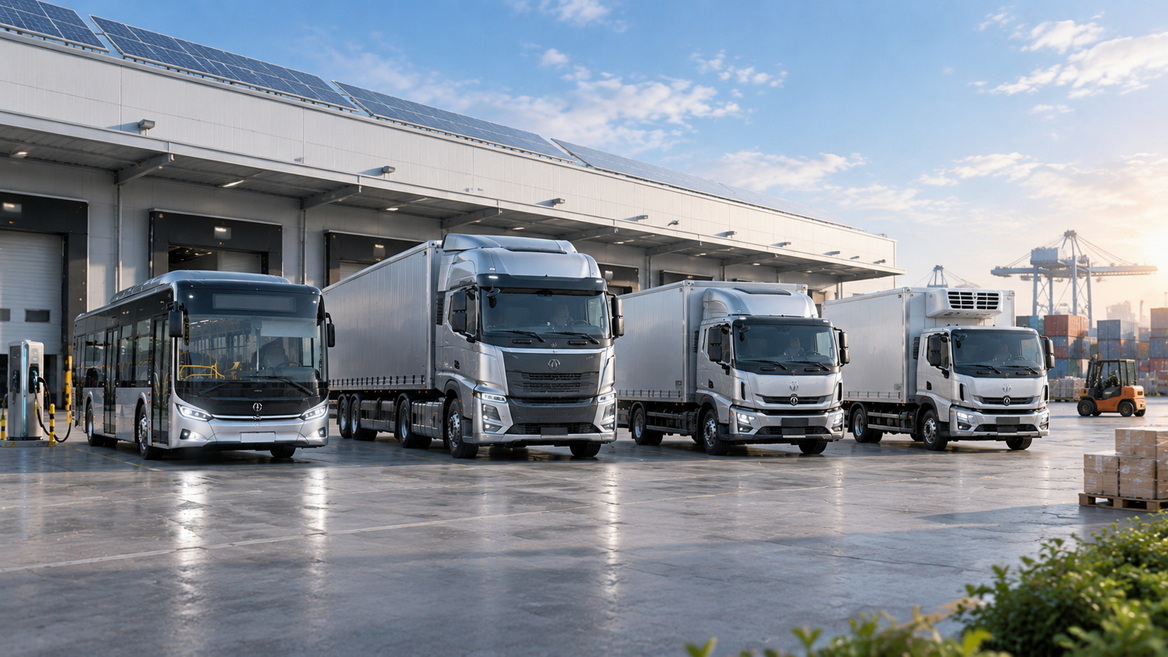
A commercial vehicle is a vehicle primarily used for business operations, public transportation, logistics, construction, delivery, municipal work, or other professional applications. It may carry passengers, goods, machinery, tools, materials, or specialized equipment.
Commercial vehicles can range from compact delivery vans to large coaches and heavy-duty tractor trucks. Their classification often depends on how they are used, their seating capacity, cargo capacity, Gross Vehicle Weight Rating, axle configuration, or local transport regulations.
In everyday fleet operations, commercial vehicles usually fall into two broad categories:
- Passenger commercial vehicles, including city buses, coaches, shuttle buses, school buses, airport buses, and staff transport vehicles.
- Goods commercial vehicles, including cargo vans, box trucks, refrigerated trucks, dump trucks, tractor units, flatbed trucks, tankers, and specialized work trucks.
The main difference between a commercial vehicle and a private passenger vehicle is its operating purpose. A private car is usually used for personal mobility, while a commercial vehicle is designed to help an organization move people, cargo, equipment, or materials efficiently and safely.
Commercial vehicles are designed around specific working requirements. A bus serving a busy urban route has very different needs from a heavy truck hauling construction materials or a refrigerated vehicle delivering temperature-sensitive products.
| Commercial Vehicle Type | Main Application | Typical Users | Important Considerations |
|---|---|---|---|
| City bus | Urban and public transportation | Transit authorities, operators | Passenger capacity, accessibility, charging, durability |
| Coach bus | Tourism and intercity travel | Tour companies, transport firms | Seating comfort, luggage space, route range |
| School bus | Student transport | Schools, local authorities | Passenger safety, seating layout, compliance |
| Shuttle bus | Airport, hotel, factory, campus transport | Hotels, airports, industrial parks | Door layout, standing room, route distance |
| Light truck | Urban distribution and local deliveries | Retailers, delivery fleets | Payload, cargo volume, operating cost |
| Medium-duty truck | Regional distribution | Wholesalers, utility fleets | Chassis strength, fuel efficiency, body options |
| Heavy-duty truck | Long-haul freight and industrial transport | Logistics companies, contractors | Towing capacity, axle layout, uptime |
| Tractor truck | Trailer-based cargo transport | Freight operators | Gross combination capacity, drivetrain, trailer compatibility |
| Dump truck | Construction and bulk material transport | Contractors, mines, municipalities | Tipping system, frame strength, axle capacity |
| Refrigerated truck | Cold-chain delivery | Food and pharmaceutical suppliers | Refrigeration system, insulation, payload |
| Electric commercial vehicle | Low-emission freight or passenger transport | Public fleets, logistics companies | Battery range, charging, duty cycle, operating cost |
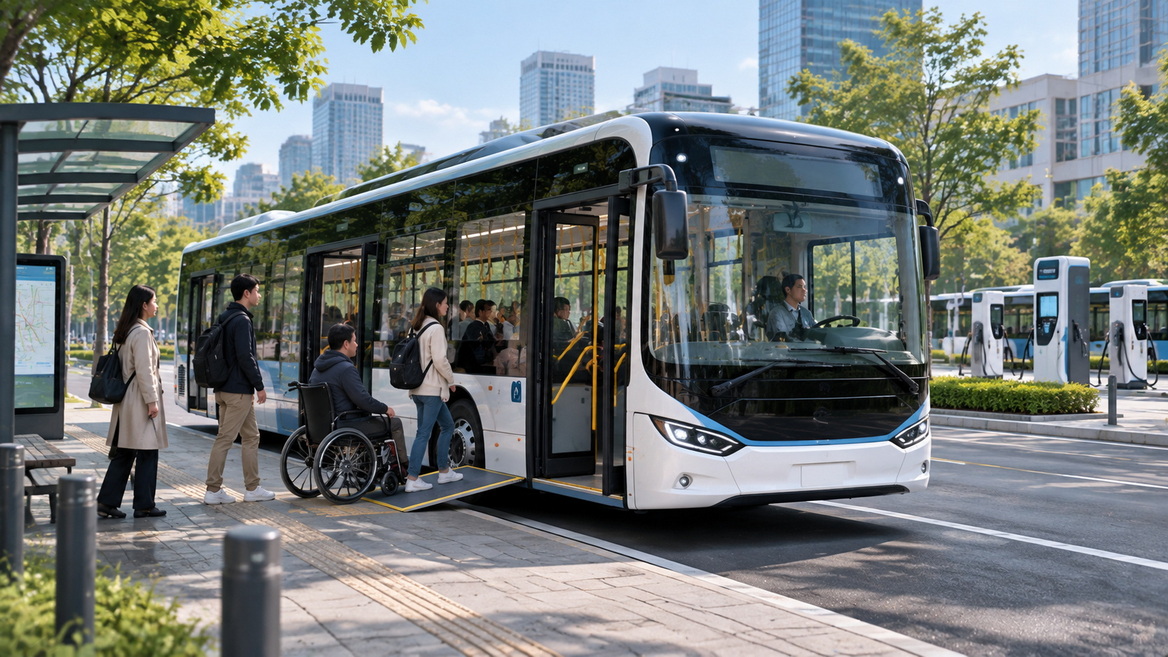
Passenger commercial vehicles are designed to move people safely, comfortably, and efficiently. They are used in public transport, tourism, school transportation, employee commuting, airport transfers, hotel shuttle services, and private charter operations.
City buses are designed for regular urban operation. They normally stop and start frequently, carry standing passengers, and operate on fixed routes with high passenger turnover.
Important city bus features may include:
- Low-floor entry for easier boarding
- Wheelchair access and dedicated mobility space
- Multiple doors for faster passenger flow
- Standing capacity for peak commuting periods
- Durable flooring and interior materials
- Effective air conditioning and heating
- Regenerative braking capability for electric models
- Depot charging compatibility for battery-electric buses
An electric city bus can be especially suitable when the route is predictable and the vehicle returns to a depot for scheduled charging. This can make energy planning easier and reduce local tailpipe emissions in densely populated areas.
Coach buses are typically used for longer-distance journeys, tourism, intercity routes, charter services, and airport transfers. Compared with city buses, they often focus more heavily on passenger comfort and luggage capacity.
A coach buyer may prioritize:
- Reclining passenger seats
- Large underfloor luggage compartments
- Improved suspension comfort
- Interior lighting and entertainment systems
- Onboard restroom options
- Strong air-conditioning performance
- Higher cruising range
- Reliable performance on highways and mountain roads
When selecting a coach, seating quantity is important, but it should not be the only consideration. The intended route, passenger profile, climate, road conditions, luggage requirements, and refueling or charging access are all equally important.
School buses and employee transport buses are often selected based on safety, accessibility, seating configuration, and long-term reliability.
Common requirements include:
- High-visibility exterior markings
- Seat belts where required
- Emergency exits
- Non-slip flooring
- Easy-to-clean interior surfaces
- Adequate ventilation and climate control
- Driver visibility and ergonomic controls
- Durable suspension for repeated daily trips
For companies operating industrial parks, factories, warehouses, airports, or large campuses, a dedicated staff shuttle bus can improve punctuality, reduce parking pressure, and make employee transport more organized.
Freight commercial vehicles support almost every part of the supply chain. They transport raw materials to factories, move finished products to distribution centers, serve retail stores, deliver e-commerce parcels, and carry equipment to construction sites.
Light commercial vehicles are commonly used for local delivery, service work, retail distribution, and urban logistics. They include panel vans, pickup trucks, small cargo trucks, and compact box trucks.
They are often chosen for:
- Last-mile parcel delivery
- Food and beverage distribution
- Mobile repair services
- Small-business transport
- Urban retail replenishment
- Equipment and tools transport
A light commercial vehicle should be easy to maneuver, economical to operate, and large enough to carry the required cargo volume without unnecessary weight or energy use.
Medium-duty trucks are widely used for regional delivery, wholesale distribution, utility work, furniture transport, and specialized cargo movement.
They can be configured with a wide range of bodies, including:
- Dry cargo boxes
- Curtain-side bodies
- Refrigerated boxes
- Flatbeds
- Service bodies
- Mobile workshops
- Tankers
- Recovery and towing equipment
The correct chassis should be selected based on payload, route length, cargo dimensions, road conditions, and body weight. A strong match between chassis and body configuration helps improve stability, durability, and fleet uptime.
Heavy-duty trucks are designed for demanding work. They are commonly used in long-haul logistics, port transport, industrial operations, mining, construction, and bulk cargo delivery.
Typical heavy-duty vehicle applications include:
- Container transport
- Long-distance freight
- Heavy machinery transport
- Bulk materials hauling
- Mining and quarry operations
- Cross-border logistics
- Fuel and tanker transport
- Construction material delivery
A tractor truck is a heavy-duty vehicle designed to pull a semi-trailer or other trailer configuration. The correct tractor unit must be matched to the required gross combination weight, trailer type, road gradient, expected mileage, and fuel or energy strategy.
For heavy-duty fleets, reliability is often the most important performance factor. A truck that remains operational and serviceable can create more value than a lower-cost vehicle with frequent downtime.
Some commercial vehicles are designed for a particular industry or operating task. These vehicles may use a standard truck chassis, but the body and equipment are tailored for a specialized purpose.
Common specialized commercial vehicles include:
- Refrigerated trucks for cold-chain transportation
- Tanker trucks for liquid or bulk cargo
- Concrete mixer trucks
- Refuse collection vehicles
- Fire trucks and emergency-response vehicles
- Crane trucks
- Road maintenance vehicles
- Mobile workshops
- Airport support vehicles
- Mining and off-road transport vehicles
- Car carriers
- Livestock transport vehicles
Specialized vehicle procurement requires careful planning because the body equipment affects total vehicle weight, axle load, stability, fuel or energy consumption, and maintenance needs.
For example, a refrigerated truck must be designed around both cargo capacity and temperature control. The refrigeration unit, insulation thickness, door opening pattern, ambient climate, and delivery schedule can all affect the vehicle's operating efficiency.
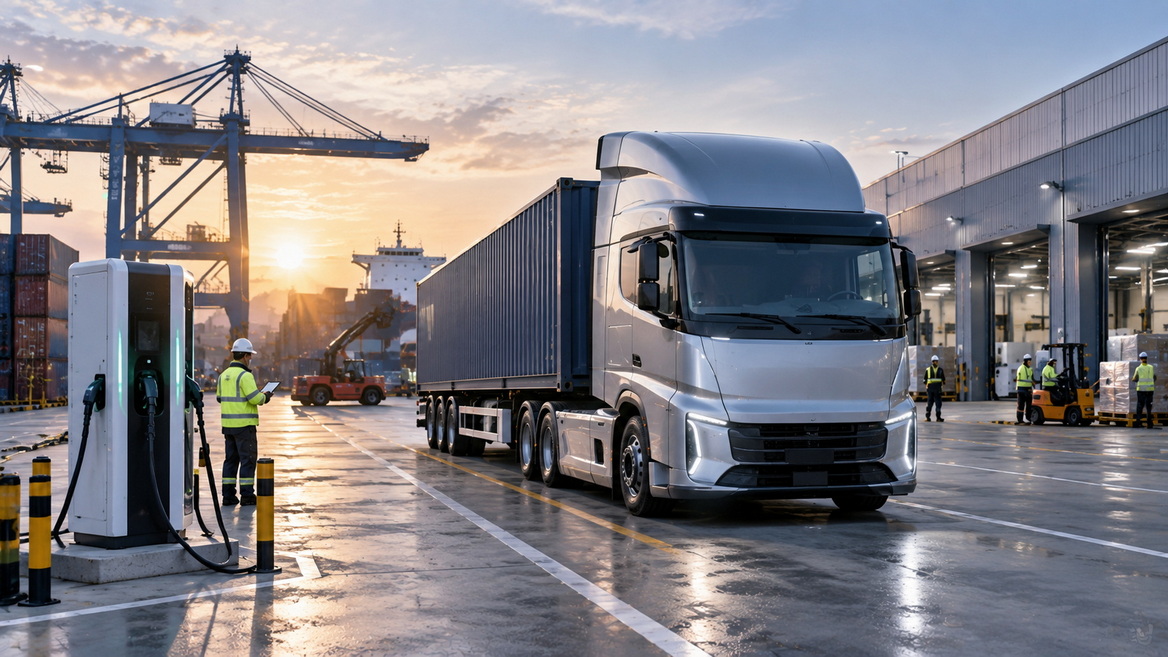
A New Energy Commercial Vehicle is a bus, truck, van, or specialty vehicle powered fully or partly by an alternative energy system rather than relying only on a traditional internal-combustion engine.
New Energy Commercial Vehicles may include:
- Battery-electric buses and trucks
- Plug-in hybrid commercial vehicles
- Hybrid commercial vehicles
- Hydrogen fuel-cell buses and trucks
- Other low-emission transport solutions
Electric commercial vehicles are becoming more common in public transportation, city logistics, airport operations, municipal fleets, port transport, and fixed-route delivery services.
Electric trucks accounted for 9% of global truck sales in 2025, while nearly 70,000 electric buses were sold worldwide during the same year. This growth reflects increasing fleet interest in lower-emission transport, especially in operations where vehicle routes and charging schedules can be planned effectively.
Battery-electric buses are particularly suitable for routes with predictable daily mileage and access to depot charging. Common applications include city bus routes, airport shuttles, factory staff transportation, campus transport, and municipal services.
Potential operational benefits include:
- Zero tailpipe emissions during operation
- Quiet driving performance
- Lower energy cost potential
- Reduced brake wear through regenerative braking
- Smoother acceleration
- Improved suitability for low-emission urban areas
However, electric bus selection must be based on real conditions. Battery capacity alone does not determine whether a vehicle is suitable.
A fleet operator should also consider:
- Daily route distance
- Passenger load
- Road grade and terrain
- Outside temperature
- Air-conditioning and heating use
- Charging time
- Charger power
- Depot electrical capacity
- Required range reserve
Battery-electric trucks can be highly effective in selected commercial applications, especially where daily operations follow predictable routes.
Suitable applications may include:
- Urban logistics
- Retail delivery
- Port transport
- Warehouse-to-warehouse operations
- Municipal sanitation
- Short-haul freight
- Industrial park transport
- Airport and terminal operations
For longer or more variable routes, fleet planners should evaluate charging infrastructure, payload requirements, route planning, and scheduling flexibility before choosing an electric heavy truck.
Choosing the right commercial vehicle begins with understanding how the vehicle will be used every day. The purchase decision should be based on operational requirements rather than appearance, brochure specifications, or initial price alone.
The daily duty cycle describes how the vehicle operates in real conditions.
Before selecting a bus or truck, identify:
- Average daily distance
- Maximum daily distance
- Number of trips or shifts
- Typical payload or passenger load
- Maximum payload or passenger load
- Stop frequency
- Road surface and terrain
- Urban, highway, rural, or mixed driving conditions
- Daily idling time
- Seasonal weather conditions
- Required operating hours
For electric vehicles, duty-cycle analysis is essential because range can change based on load, speed, gradients, weather, and heating or air-conditioning use.
A commercial vehicle should have enough capacity for normal operations and realistic peak conditions.
For freight vehicles, evaluate:
- Payload capacity
- Cargo volume
- Gross Vehicle Weight Rating
- Axle limits
- Loading method
- Trailer requirements
- Body weight
- Legal road restrictions
- Cargo dimensions
For passenger vehicles, evaluate:
- Number of seated passengers
- Standing capacity
- Door arrangement
- Wheelchair access
- Luggage space
- Interior circulation space
- Air-conditioning performance
- Driver visibility
- Safety equipment
Repeated overloading can lead to increased tire wear, suspension damage, higher energy use, braking stress, reduced reliability, and potential compliance issues.
The purchase price is only one part of the total financial picture. A more useful measure is total operating cost over the vehicle's service life.
This can include:
- Vehicle purchase cost
- Fuel or electricity cost
- Maintenance and repair cost
- Tire replacement
- Insurance
- Financing cost
- Driver training
- Spare-parts inventory
- Charging infrastructure
- Vehicle downtime
- Residual value
For electric commercial vehicles, buyers should also consider battery warranty terms, charging equipment, electrical upgrades, charging time, and long-term battery performance.
A lower initial purchase price does not always mean a lower long-term cost. A vehicle with better energy efficiency, stronger support, longer service intervals, and lower downtime may offer better overall value.
Commercial vehicles must meet the rules of the destination market before they can be registered and operated legally.
Requirements can include:
- Vehicle type approval
- Lighting and signaling systems
- Emissions standards
- Brake-system requirements
- Tire specifications
- Steering position
- Dimensions and weight limits
- Seat belts and emergency exits
- Accessibility features
- Battery safety
- Charging connector compatibility
- Vehicle identification documentation
- Customs clearance documents
- Local roadworthiness inspection
A vehicle specification that works well in one market may require changes before it can be used in another. It is important to confirm local technical and registration requirements before production, shipment, or payment.
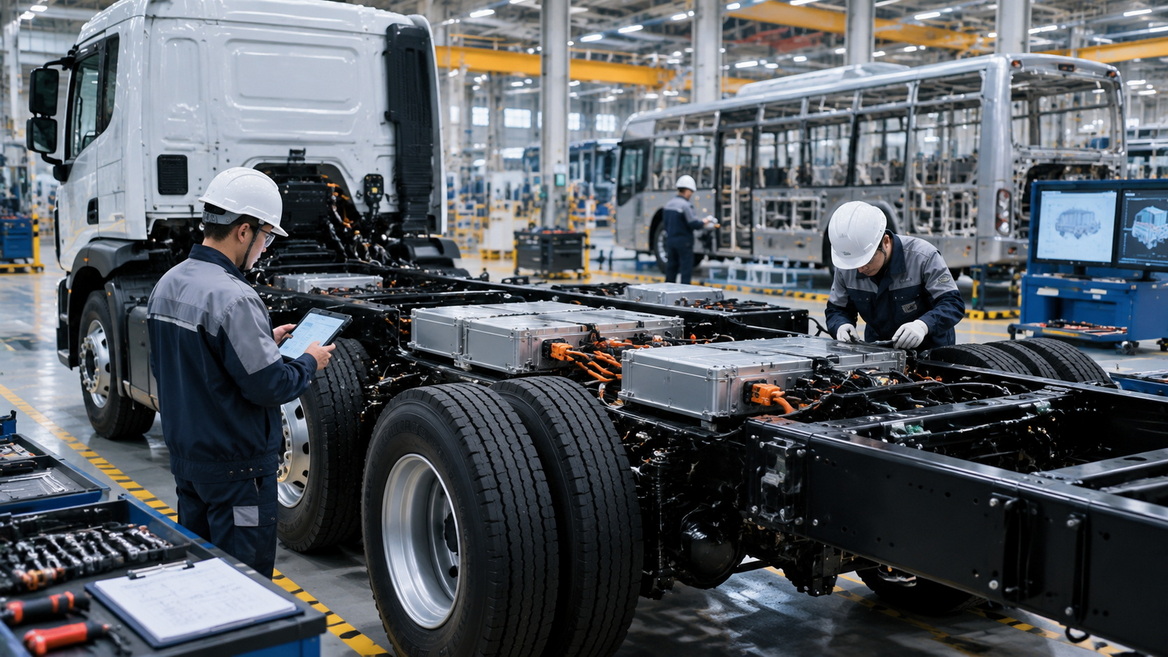
Commercial vehicles generate value when they stay on the road. After-sales support should be evaluated as carefully as vehicle specifications.
Before confirming a vehicle order, consider these questions:
1. What warranty coverage is included?
2. Which components are covered under the warranty?
3. What battery warranty is provided for electric vehicles?
4. Can the supplier provide English manuals and technical drawings?
5. Are spare parts available for regular maintenance?
6. What is the expected lead time for critical parts?
7. Is remote diagnostic support available?
8. Can technicians receive commissioning or maintenance training?
9. Can the vehicle be customized for local operating conditions?
10. Is a recommended initial spare-parts package available?
The best commercial vehicle powertrain depends on route conditions, fuel or energy availability, payload, operational distance, infrastructure, local policies, and budget.
| Powertrain Type | Suitable Applications | Main Strengths | Key Considerations |
|---|---|---|---|
| Diesel | Long-distance freight, remote routes, heavy hauling | Established refueling network, fast refueling, proven operation | Fuel costs, emissions restrictions, local pollution |
| Battery-electric | City buses, fixed routes, urban logistics, depot fleets | Quiet operation, zero tailpipe emissions, energy cost potential | Charging access, range planning, payload impact |
| Hybrid | Variable routes, transitional fleet upgrades | Can reduce fuel use without relying fully on charging | More complex systems, savings depend on duty cycle |
| Hydrogen fuel-cell | High-utilization and longer-distance operations with hydrogen access | Fast refueling potential, zero tailpipe emissions | Limited infrastructure, higher complexity and cost |
Battery-electric vehicles are often most effective when operators can control their routes, charging periods, and return-to-depot schedules. Public buses, airport shuttles, warehouse distribution vehicles, municipal trucks, and port transport vehicles may be strong candidates for electrification.
Diesel remains relevant for many long-haul and remote heavy-duty applications where refueling access, high payload, and continuous operation are critical.
The most practical fleet strategy is often based on vehicle segmentation. Instead of replacing every truck or bus with one technology, companies can identify which routes are most suitable for electrification and continue using conventional powertrains where they remain operationally necessary.
A commercial vehicle should be built around the customer's real operating needs. The right configuration can improve productivity, safety, driver comfort, energy efficiency, and maintenance performance.
Important configuration choices can include:
- Left-hand-drive or right-hand-drive layout
- Vehicle length and wheelbase
- Number of axles
- Engine, motor, or battery specification
- Passenger seating layout
- Cargo body design
- Refrigeration equipment
- Suspension type
- Tire specification
- Cabin configuration
- Fuel tank or battery capacity
- Charging connector type
- Air-conditioning capacity
- Safety and accessibility features
- Exterior color and branding
For international buyers, configuration should be confirmed in writing before production begins. A complete specification sheet reduces misunderstandings and helps ensure the final vehicle meets the requirements of the destination market.
KeyChain supplies and exports commercial vehicles for customers seeking dependable solutions from China. Our focus includes buses, coaches, heavy-duty trucks, cargo vehicles, construction transport vehicles, and New Energy Vehicles.
Our product scope includes:
- Electric city buses
- Public transportation buses
- Intercity coaches
- Staff and shuttle buses
- School transport buses
- Heavy-duty trucks
- Tractor trucks
- Cargo trucks
- Dump trucks
- Refrigerated trucks
- Specialized vehicle chassis
- Battery-electric trucks
- New Energy Vehicle fleet solutions
Every market has different operating conditions. A city with hot weather may need a stronger air-conditioning system. A mountainous transport route may require specific power, braking, and thermal-management performance. A fleet operating in a right-hand-drive market may need a different cabin layout, lighting configuration, and safety specification.
KeyChain works with customers to review vehicle application, capacity, route conditions, energy preference, destination-market requirements, and customization needs. This helps buyers identify a bus, truck, or electric commercial vehicle solution that is practical for daily operation.
Commercial vehicles are essential to passenger transport, logistics, construction, public services, and modern supply chains. They range from compact delivery vans to electric city buses, tractor trucks, dump trucks, refrigerated vehicles, and specialized industrial transport solutions.
The best commercial vehicle is not necessarily the largest, lowest-priced, or most powerful option. It is the vehicle that fits the actual job: the right passenger capacity, payload, route range, chassis configuration, energy system, compliance specification, and service support.
For fleets considering electric buses or electric trucks, the first step should be to assess real-world routes, charging conditions, loads, climate, and operating schedules. For heavy-duty logistics and construction fleets, durability, uptime, drivetrain suitability, and parts support should remain central to the decision.
KeyChain supports customers looking for commercial vehicle solutions that match real transport needs. Share your vehicle type, destination country, required quantity, payload or passenger capacity, operating route, and preferred powertrain to begin evaluating a suitable bus, truck, or New Energy Vehicle configuration.
A commercial vehicle is a vehicle used for business, public transportation, logistics, construction, delivery, municipal work, or other professional purposes. Examples include buses, coaches, cargo vans, trucks, tractor units, dump trucks, and refrigerated trucks.
Yes. A bus is a passenger commercial vehicle because it is designed to transport people for public transit, tourism, school transport, staff transportation, airport transfers, or charter services.
A private car is mainly intended for personal transportation. A commercial vehicle is designed or used to move passengers, goods, equipment, materials, or specialized cargo for business or public-service activities.
A New Energy Commercial Vehicle is a bus, truck, van, or specialized vehicle powered fully or partly by alternative energy. It can include battery-electric, hybrid, plug-in hybrid, or hydrogen fuel-cell commercial vehicles.
Electric buses can be very suitable for public transportation, especially on predictable urban routes with depot charging access. Their suitability depends on route distance, passenger load, terrain, weather, charging time, and local electrical infrastructure.
1. Evans Halshaw. "[What Is a Commercial Vehicle? What Are the Different Types?]"
Used as a benchmark for general commercial vehicle classifications and examples of light commercial vehicle types.
2. Federal Motor Carrier Safety Administration. "[What Is the Difference Between a Commercial Motor Vehicle and a Non-CMV?]"
Used for the general regulatory definition of commercial motor vehicles in interstate commerce.
3. International Energy Agency. "[Trends in Other EV Modes – Global EV Outlook 2026]"
Used for electric truck and electric bus market development data.
4. International Energy Agency. "[Executive Summary – Global EV Outlook 2026]"
Used for global electric truck sales and fleet electrification context.
5. United Nations Economic Commission for Europe. "[Vehicle Regulations]"
Used for international vehicle safety and regulatory context.
6. TÜV Rheinland. "[Electric Vehicle Homologation]"
Used for electric vehicle homologation and international certification context.


