
Views: 279 Author: Keychain Venture Publish Time: 2026-09-15 Origin: Site


Content Menu
● When Should You Declare a Vehicle SORN?
● Where Can You Keep a SORN Vehicle?
>> Storage Considerations for Commercial Vehicles
>> Storage Considerations for Electric Buses and Trucks
>> Apply Online
● Do You Receive a Vehicle Tax Refund?
● Can You Drive a SORN Vehicle?
>> Is Insurance Still Needed for a SORN Vehicle?
● How to Put a SORN Vehicle Back on the Road
● SORN for Buses, Heavy Trucks and New-Energy Vehicles
● Summary
● Build a Smarter Commercial Vehicle Fleet
>> Can I park a SORN vehicle on the street outside my house?
>> Can I drive a SORN vehicle to an MOT test?
>> Does a SORN vehicle need insurance?
A SORN, or Statutory Off Road Notification, is an official declaration that a vehicle will not be used or kept on public roads. It is commonly used when a car, bus, truck, van, motorcycle, or other registered vehicle is stored on private land, undergoing repair, awaiting sale, or temporarily removed from service.
For private owners and commercial fleet operators, understanding SORN rules can help avoid unnecessary vehicle-tax costs, insurance complications, and compliance risks. Whether you are storing a personal car in a garage or managing buses, heavy trucks, and new-energy vehicles in a secure depot, the same core rule applies: a SORN vehicle must remain off the public road.
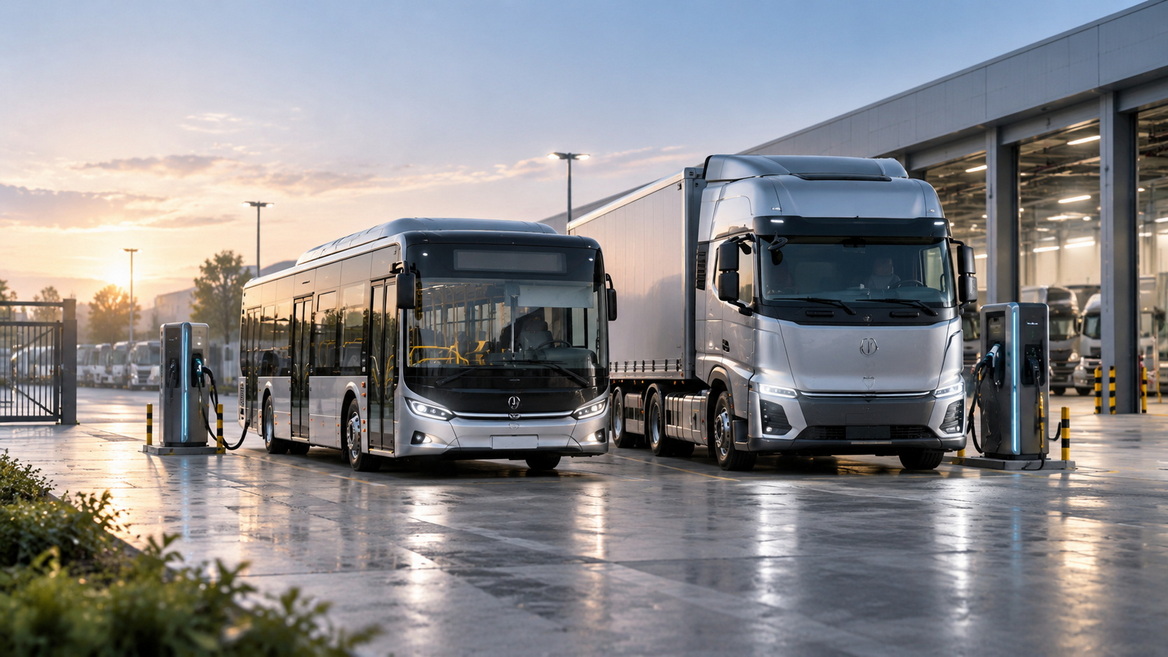
SORN stands for Statutory Off Road Notification. It is the formal process of telling the relevant vehicle authority that you are taking a vehicle off the road.
Once a vehicle is declared SORN, it cannot be driven or kept on a public road except in limited circumstances. In return, the registered keeper may no longer need to pay vehicle tax while the vehicle remains legally off road. Road-use insurance may also no longer be required, although many owners still choose specialist storage insurance.
A SORN is not automatic. A vehicle does not become "off road" simply because it has not moved for several weeks or months. The registered keeper must actively submit the declaration and ensure the vehicle is stored in a suitable private location.
This is especially important for fleet owners. A bus, truck, electric vehicle, coach, or delivery vehicle may be inactive for operational reasons, but it can still create legal and financial risk if its road status is not managed correctly.
| Question | Answer |
|---|---|
| What does SORN stand for? | Statutory Off Road Notification |
| Who makes the declaration? | The vehicle’s registered keeper |
| Is a SORN free? | Yes |
| Can a SORN vehicle remain on a public road? | No |
| Does SORN stop vehicle tax? | Yes, while the vehicle remains off road |
| Does SORN remove the need for normal road insurance? | Usually, but storage insurance may still be advisable |
| Does a SORN need annual renewal? | No, it normally remains valid until the vehicle status changes |
| Can a SORN be backdated? | No |
A SORN usually remains valid until the vehicle is taxed again, sold, scrapped, or permanently exported.
You should consider declaring SORN when a vehicle will be kept completely off public roads for a meaningful period of time.
For many owners, the decision is straightforward. A car may be stored while its owner is overseas, while a classic vehicle undergoes restoration, or while a failed MOT is followed by major repairs.
For commercial operators, the reasons are often more complex. Buses, heavy trucks, and new-energy vehicles may be temporarily removed from service because of planned maintenance, seasonal demand changes, charging-infrastructure construction, fleet replacement, refurbishment work, or changes in operating routes.
Common reasons for declaring SORN include:
- A vehicle is undergoing repair or restoration
- A vehicle has failed an MOT and cannot be legally used
- A car, bus, or truck is stored for a long period
- A fleet vehicle is awaiting sale, export, disposal, or scrapping
- A commercial vehicle is temporarily removed from active service
- A vehicle is waiting for spare parts or workshop capacity
- An electric vehicle is awaiting charging-site installation
- A business is replacing older vehicles with newer models
- A classic car is stored over winter
- A vehicle is kept in a private garage, warehouse, workshop, or depot
For a business, SORN should form part of a documented vehicle-management process. It should not be treated as an informal instruction to "leave the truck parked for now."
A good fleet record should show:
- Vehicle registration number
- Legal owner or registered keeper
- Current tax status
- Insurance status
- MOT status
- Storage location
- Maintenance condition
- Reason for removal from service
- Expected return-to-service date
- Planned sale, disposal, repair, or export status
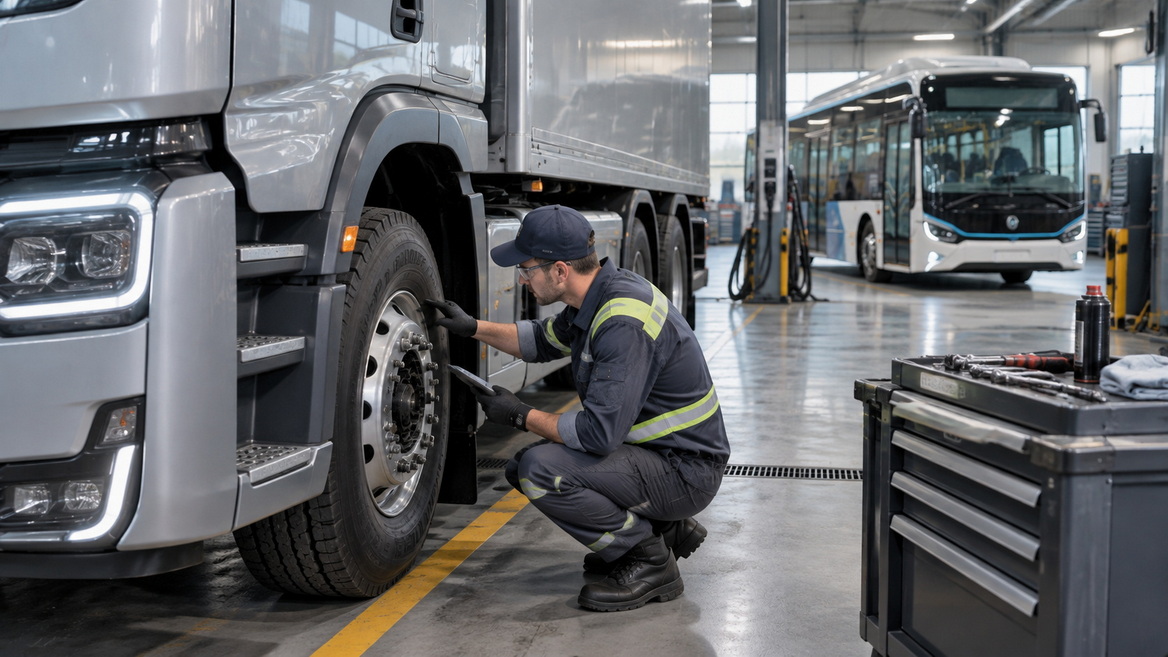
A SORN vehicle must be kept off the public road. This means it cannot be parked on the street outside a house, in a public lay-by, on a public highway, or in another place that is legally treated as part of the public road network.
Suitable storage locations may include:
- A private driveway
- A private garage
- A locked workshop
- A secure warehouse
- A private commercial depot
- A manufacturer's storage yard
- A private logistics compound
- Private land with authorised access
- A secure fleet parking area that is not part of the public highway
The important issue is not whether the vehicle is driven regularly. The issue is whether it is being kept or used on a public road.
For example, a truck may remain stationary for months but still create a problem if it is parked on a public street. By contrast, the same truck can be stored under SORN in a private depot, provided that the storage site is genuinely private and the vehicle is not used on public roads.
Commercial vehicles need more than a legal parking location. Buses, coaches, trucks, and heavy-duty vehicles can deteriorate when left unused for long periods.
A proper off-road storage plan should consider:
- Vehicle security and restricted site access
- Tyre pressure and tyre condition
- Brake corrosion
- Battery condition
- Fluid levels and leaks
- Water ingress
- Pest and rodent prevention
- Fire-safety arrangements
- Key management
- Periodic visual inspections
- Maintenance documentation
- Clear identification of vehicles that must not be driven
For large fleets, a visible windshield or dashboard label can help staff identify vehicles that are not authorised for public-road use.
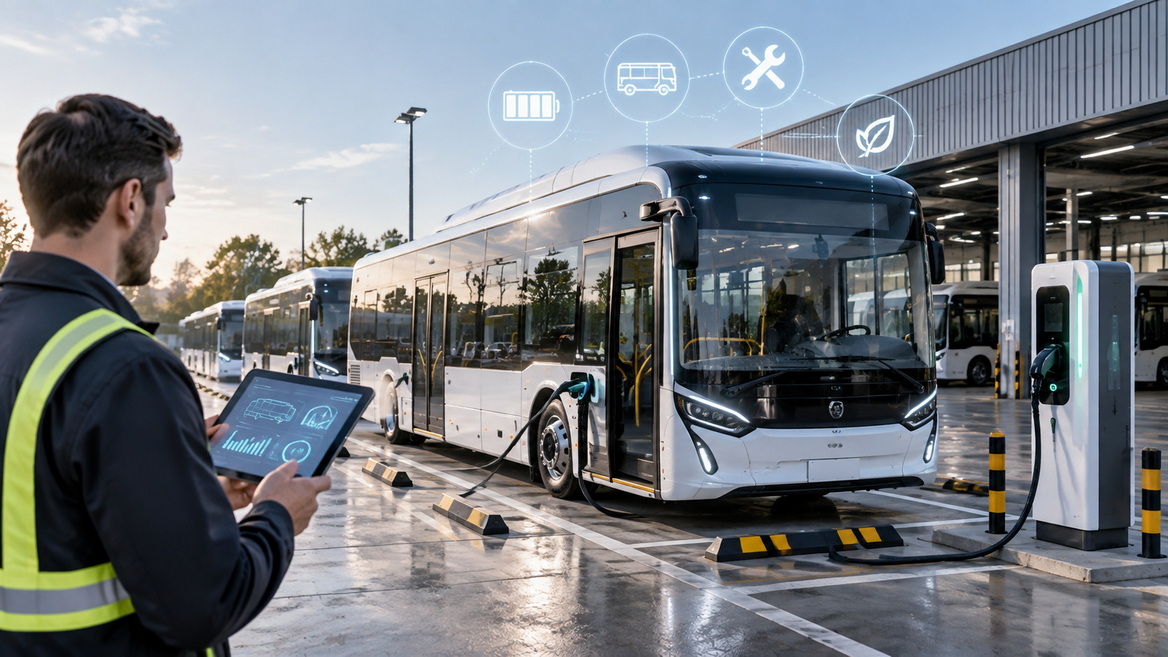
Electric buses, electric trucks, and other new-energy vehicles require additional attention during storage. Their high-voltage battery systems, charging equipment, auxiliary batteries, and electronic control systems should be managed in line with the manufacturer's instructions.
A practical electric-vehicle storage checklist may include:
- Recording the traction battery's charge level before storage
- Maintaining the recommended state of charge
- Checking the low-voltage auxiliary battery
- Following approved charging procedures
- Securing charging equipment when it is not in use
- Maintaining suitable fire-safety procedures
- Checking tyres, brakes, lights, and seals
- Inspecting the vehicle periodically for warning messages
- Keeping trained personnel responsible for high-voltage systems
- Recording all maintenance and inspection activity
A SORN can reduce road-related costs, but it does not remove the need for responsible asset management. A poorly stored vehicle may lose value, suffer avoidable damage, or require expensive repairs before returning to service.
Declaring a vehicle off road is generally a straightforward process. The registered keeper can usually complete the declaration online, by phone, or by post.
Before starting, make sure you have the correct vehicle information and understand when the SORN should begin.
The online process is often the fastest option for a vehicle registered in your name.
You will usually need one of the following:
- The 11-digit reference number from the V5C vehicle log book
- The 16-digit reference number from a vehicle-tax reminder letter, email, or text message
For businesses with a small number of vehicles, an online declaration can be an efficient way to update the legal status of a vehicle quickly.
A SORN can also be declared by phone. This may be useful for owners who prefer to speak with the relevant service or who are managing a vehicle without immediate access to online systems.
Before calling, prepare the registration number, keeper details, and the reference number from the vehicle documents.
A postal application may be required when the vehicle is not yet registered in your name, when documents are missing, or when an online application is not available.
The postal route can take longer, so plan ahead. Do not wait until the vehicle has already been parked on a public road without tax or insurance.
The start date of a SORN depends on the vehicle's current tax status and the date of application.
In general:
- A SORN may begin immediately when vehicle tax has already expired
- A SORN may begin immediately when the application is made outside the month in which tax is due to expire
- A SORN may begin on the first day of the following month when the application is made during the month that tax is due to expire
Because a SORN cannot be backdated, timing is important. If you know a vehicle will be removed from service, make the declaration promptly and move it to private land before it becomes untaxed or uninsured.
Before submitting the declaration, confirm the following:
1. The vehicle will be stored entirely on private land.
2. The vehicle will not be parked on a public road.
3. You are the registered keeper or have the correct documents for a postal application.
4. You have the V5C or tax-reminder reference number available.
5. You know the intended off-road date.
6. The vehicle has a suitable secure storage location.
7. Your insurance records are being reviewed.
8. Fleet records are updated for commercial vehicles.
9. You will retain confirmation of the declaration.
In many cases, declaring a vehicle off road can result in a refund for unused vehicle tax.
The refund is generally calculated for full remaining months of tax. This means that partial months are normally not refunded.
For example, if a vehicle is taken off road halfway through a month, the refund calculation may begin from the next full month rather than the date of the declaration.
The refund is usually sent to the person and address recorded on the vehicle log book. For this reason, it is important to ensure that vehicle ownership and keeper information are accurate before making a declaration.
For commercial operators, tax refunds should be monitored carefully. A business that removes multiple buses, trucks, or service vehicles from the road should maintain a clear financial record of every vehicle affected.
A simple fleet-control process can include:
- Recording the date of SORN declaration
- Recording the tax-expiry date
- Checking whether a refund is expected
- Reconciling the refund against company accounts
- Reviewing insurance changes
- Confirming the vehicle's storage location
- Monitoring the planned repair, sale, export, or disposal date
This process can prevent small administrative errors from becoming larger financial losses across a fleet.
In most circumstances, no. A vehicle with SORN status cannot be driven on public roads.
There is a limited exception for travelling to or from a pre-booked MOT or other authorised testing appointment.
This exception should be interpreted narrowly. It does not allow general driving, commuting, school runs, deliveries, shopping trips, vehicle demonstrations, fuel stops, or informal test drives.
If a SORN vehicle needs to travel for a permitted test appointment, the owner should take the following steps:
1. Book the MOT or testing appointment in advance.
2. Keep evidence of the booking available.
3. Make sure the vehicle is safe enough for the journey.
4. Arrange valid insurance before driving.
5. Travel directly to the appointment.
6. Travel directly back after the appointment, unless the vehicle is being repaired at an authorised location.
7. Avoid unrelated stops or detours.
Using a SORN vehicle on a public road outside the permitted exception can lead to serious consequences, including fines and enforcement action.
A vehicle that has been correctly declared SORN and remains off the road does not normally need standard road-use insurance.
However, this does not necessarily mean that all insurance protection should be removed.
Many owners choose to maintain storage-focused cover for risks such as:
- Theft
- Fire
- Flood damage
- Vandalism
- Accidental damage in a workshop or depot
- Damage caused during restoration
- Damage to high-value electric-vehicle components
For fleet operators, insurance decisions should be based on the vehicle's value, storage location, asset condition, operational plan, and replacement cost.
Electric buses, electric trucks, and other advanced commercial vehicles may contain high-value traction batteries, electronic control systems, specialist charging components, and onboard safety equipment. Removing all insurance without assessing these risks can expose the owner to major financial loss.
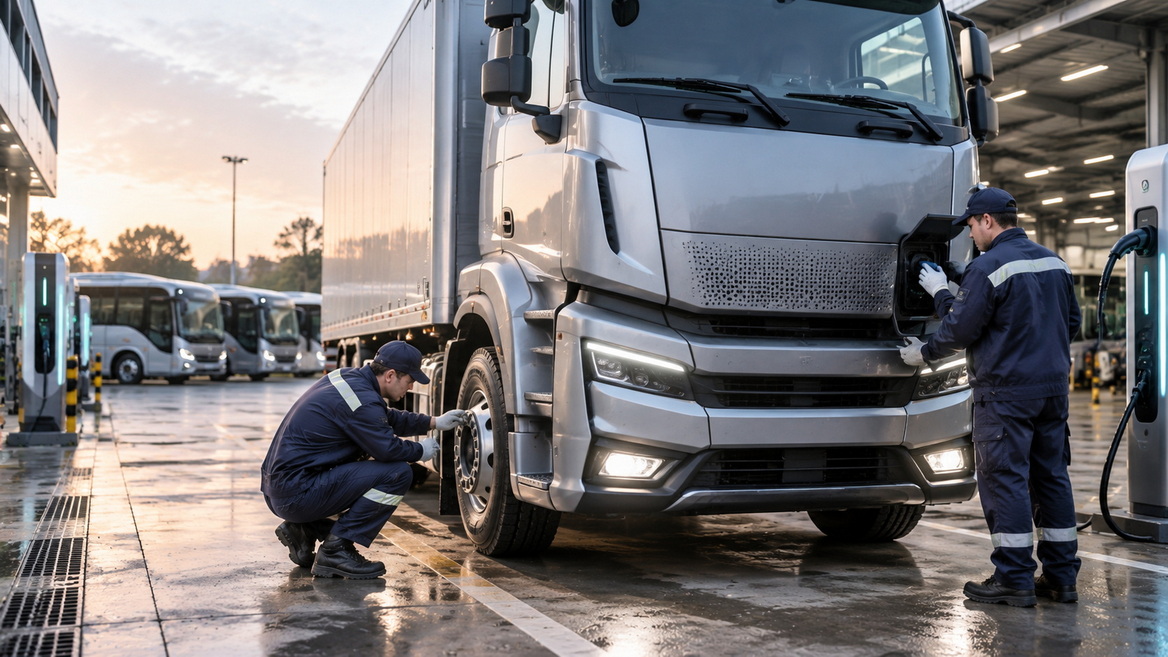
A vehicle can return to normal road use when it is properly taxed again. Once vehicle tax is arranged, the off-road status normally ends automatically.
However, taxation is only one part of returning a vehicle to service. Before a car, bus, truck, or electric commercial vehicle goes back onto public roads, it should be checked carefully.
- Tax the vehicle before it is used on public roads
- Arrange valid insurance for the intended road use
- Check MOT status where an MOT is required
- Confirm roadworthiness before operating the vehicle
- Inspect tyres for damage, low pressure, flat spots, and cracking
- Inspect brakes for corrosion or reduced performance
- Check lights and electrical systems
- Check fluid levels and visible leaks
- Inspect wipers, mirrors, windows, and safety equipment
- Check for rodent damage or water ingress
- Review the vehicle's maintenance history
- Complete electric-vehicle inspections in line with manufacturer guidance
- Update fleet-management records
- Complete a formal pre-use inspection for commercial vehicles
A valid MOT should not be treated as a full guarantee of day-to-day roadworthiness. This is particularly important after long-term storage, when issues such as tyre deterioration, seized brakes, low batteries, corrosion, and electrical faults may not be immediately obvious.
For commercial buses and heavy trucks, a qualified technician or authorised workshop should assess the vehicle before it returns to passenger or freight operations.
SORN is often discussed in relation to private cars, but it is equally relevant to commercial transport operations.
A bus operator may need to declare SORN when a vehicle is removed from service for refurbishment. A heavy-truck fleet may use SORN for vehicles awaiting parts, resale, or export. A company introducing electric buses may place older diesel vehicles in secure storage while replacement vehicles are delivered and charging infrastructure is completed.
For KeyChain customers and commercial vehicle buyers, the most important lesson is that off-road status should be connected to a wider fleet lifecycle plan.
A well-managed plan should address:
- Vehicle procurement schedules
- Fleet replacement strategy
- Storage capacity
- Maintenance planning
- Insurance arrangements
- Vehicle resale or export planning
- Electric-vehicle charging readiness
- Battery-care requirements
- Compliance documentation
- Return-to-service inspection procedures
For example, a transport business may temporarily remove several older buses from service while it prepares a new zero-emission fleet. Declaring SORN for inactive vehicles can support cost control and compliance, but the business should still track the location, condition, maintenance needs, ownership documents, insurance requirements, and disposal plan for every unit.
The core principle is simple: a SORN protects legal off-road status, while professional fleet management protects the value, safety, and future usability of the vehicle.
A SORN is an official declaration that a vehicle is off the road and stored on private land. It is useful for cars, buses, heavy trucks, motorcycles, vans, and new-energy vehicles that will not be used on public roads for a period of time.
The most important points to remember are:
- A SORN vehicle must not be kept on a public road.
- A SORN is free to declare.
- A SORN cannot be backdated.
- A SORN can help stop vehicle-tax obligations while the vehicle remains off road.
- A SORN vehicle can usually be driven only to or from a pre-booked MOT or authorised test appointment.
- Storage insurance may still be worth considering.
- Commercial vehicles need a documented storage, inspection, and return-to-service process.
- Electric buses and trucks require additional battery, charging, and high-voltage safety management during storage.
For vehicle owners and fleet managers, proper planning is the best way to avoid unnecessary cost, protect valuable assets, and ensure that every vehicle returns to service safely when the time is right.
KeyChain supplies high-quality buses, heavy trucks, and new-energy vehicles for domestic and international customers. From passenger transport solutions to heavy-duty commercial applications and electric vehicle projects, we help businesses identify dependable vehicle options for evolving operational needs.
Explore practical fleet solutions designed around vehicle performance, operating conditions, configuration requirements, and international market expectations.
SORN stands for Statutory Off Road Notification. It is the official declaration used when a vehicle will not be used or kept on public roads.
Yes. Declaring a SORN is free. The registered keeper can usually complete the process online, by phone, or by post.
No. A SORN vehicle cannot be parked or kept on a public road. It must be stored on private land, such as a private driveway, garage, workshop, or secure depot.
Yes, but only when the MOT or authorised testing appointment has been booked in advance. The vehicle must be insured, and the journey should be made directly to or from the appointment.
A correctly declared SORN vehicle that remains off the road does not normally require standard road-use insurance. However, storage insurance may still be useful to protect against theft, fire, vandalism, flood damage, or accidental damage.
1. [GOV.UK — Register your vehicle as off the road (SORN)]
2. [GOV.UK — When you need to make a SORN]
3. [GOV.UK — Vehicle insurance: uninsured vehicles]
4. [GOV.UK — Cancel your vehicle tax and get a refund]
5. [GOV.UK — Make a Statutory Off Road Notification, form V890]
6. [GOV.UK — The Highway Code: Annex 3, motor vehicle documentation]
7. [Evans Halshaw — What Does SORN Mean? How to Declare Your Car as Off the Road]


