
Views: 266 Author: Keychain Venture Publish Time: 2026-07-12 Origin: Site


Content Menu
● Dump Trucks, New Energy Buses and Heavy Trucks: How KeyChain Powers Modern Logistics
● Why Heavy Vehicles Now Sit at the Heart of Logistics Strategy
● KeyChain: A High‑Performance Dump Truck and Bus Export Partner
● How Global Logistics Trends Shape Heavy Vehicle Requirements
>> Volatility and Capacity Constraints
>> Electrification and New Energy Commercial Vehicles (NECVs)
● Lessons from CSCMP Thought Leadership: Data‑Driven Fleet Decisions
● Practical Selection Criteria for Dump Trucks and Heavy Trucks
>> 1. Payload and Duty Cycle Alignment
>> 3. Energy Strategy: Diesel vs. New Energy
>> 4. Lifecycle Cost and Support
● User Feedback and Common Expectations from International Buyers
● Integrating Heavy Vehicles into a Resilient Supply Chain
>> Step‑By‑Step Integration Approach
● Actionable CTA: Partner with KeyChain for Your Next Fleet Upgrade
● FAQ: Dump Trucks, Buses and New Energy Heavy Vehicles
>> Q1: Are Chinese dump trucks suitable for long‑term heavy‑duty use in mining and construction?
>> Q2: How do I decide between diesel and electric heavy trucks for my operation?
>> Q3: What is the biggest risk when sourcing heavy vehicles internationally?
>> Q4: How does KeyChain support after‑sales service for overseas fleets?
>> Q5: Can new energy buses and trucks really reduce my total cost of ownership?
As a logistics and manufacturing strategist working with fleets across Asia, Europe and North America, I've watched supply chains become more volatile, more complex – and more dependent on high‑performance dump trucks, buses and heavy trucks than ever before. At the same time, electrification and automation are reshaping how OEMs, logistics providers and fleet operators think about vehicle procurement and lifecycle planning.
In this article, I'll explain why Chinese‑built dump trucks, high‑quality buses and heavy trucks from KeyChain are increasingly central to global logistics strategies, and how buyers can make smarter, aligned decisions when sourcing conventional and new energy commercial vehicles.
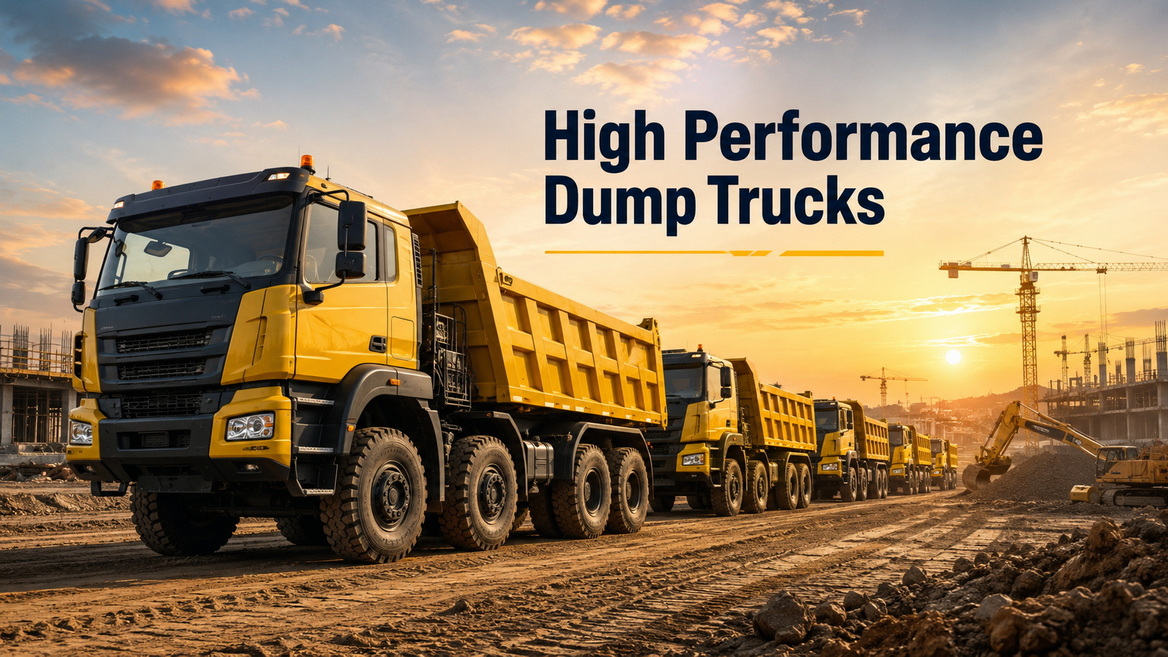
Supply chain volatility has become the new normal, with logistics costs in the U. S. alone reaching around 7.8% of GDP, or roughly $2.4 trillion in recent analyses. That volatility shows up on the ground as:
- Fluctuating freight rates and capacity shortages
- Longer and less predictable lead times
- Pressure to cut emissions while keeping costs under control
At conferences like CSCMP's EDGE and the long‑running State of Logistics Report® presented by Penske Logistics, industry leaders repeatedly highlight the same priority: building flexible, resilient logistics networks that can adapt to shocks without sacrificing service.
From my experience, that flexibility increasingly depends on three pillars:
1. Reliable high‑capacity trucks for bulk cargo and construction flows.
2. Comfortable, safe buses and coaches for workforce and passenger transport.
3. New energy commercial vehicles (NECVs) that satisfy growing decarbonization requirements.
KeyChain's role is to connect global buyers with this full range of Chinese‑manufactured heavy vehicles — from dump trucks and mining trucks to city buses, coaches, tractors and electric heavy trucks — under OEM, ODM or branded export models.
As a China‑based supplier and exporter, KeyChain specializes in matching overseas fleet requirements with customized dump trucks, buses and heavy trucks built for demanding operating environments.
KeyChain's typical portfolio for international buyers covers:
- Dump trucks (tipper trucks) for construction, mining, aggregate and bulk materials.
- City buses and intercity coaches for passenger transport, tourism, staff shuttle and public transit projects.
- Heavy‑duty tractors and rigid trucks for long‑haul and regional distribution.
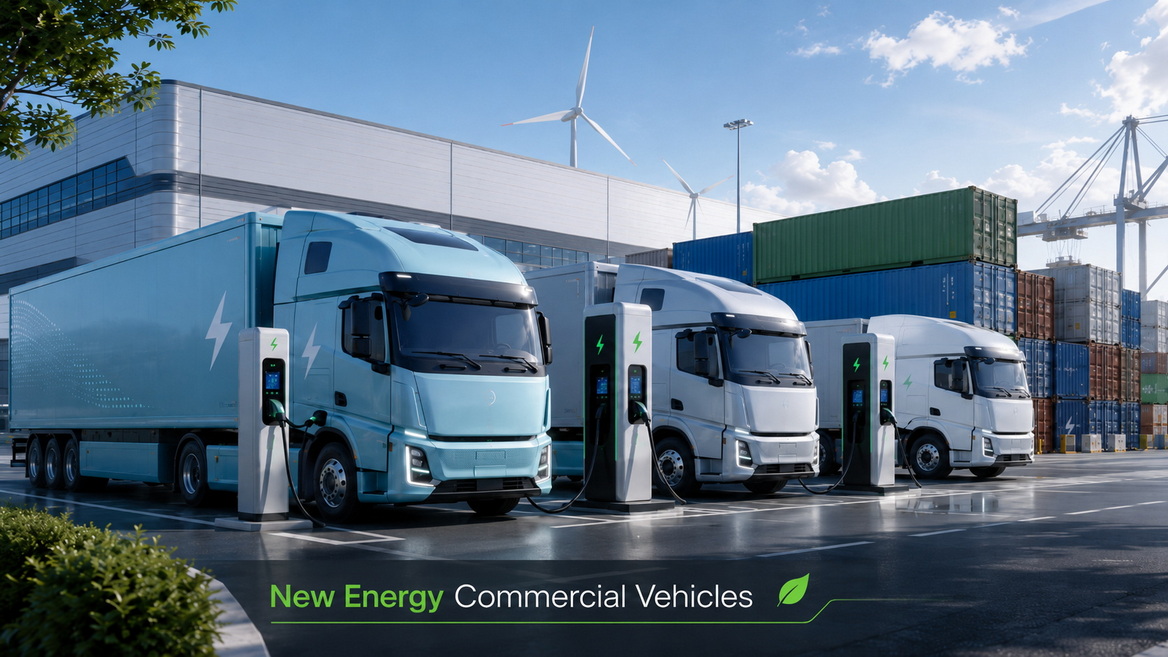
- New energy vehicles (NEVs) – including battery‑electric buses, e‑dump trucks and hybrid heavy trucks – for fleets transitioning to low‑carbon operations.
From a logistics strategist's perspective, the differentiator is not just product breadth but application fit. Modern supply chains need trucks that:
- Operate efficiently in mixed urban–industrial environments.
- Handle steep grades and poor road surfaces for infrastructure projects.
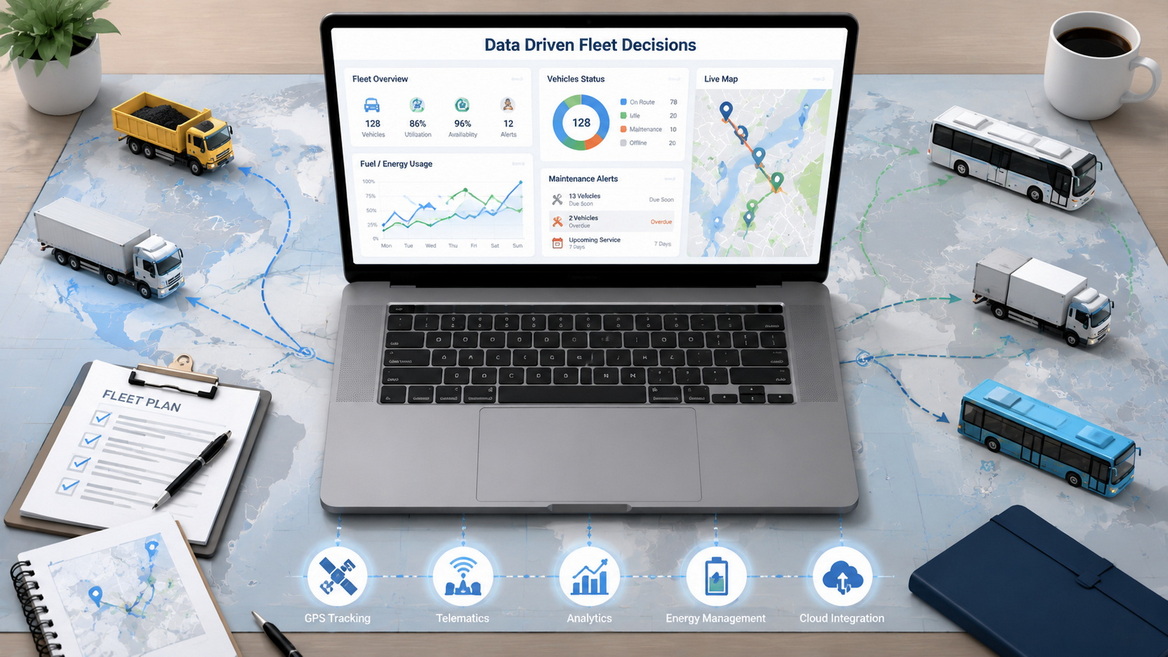
- Integrate with telematics and fleet management systems for real‑time visibility.
KeyChain's export projects typically start with a use‑case consultation: payload ranges, duty cycles, climate conditions, road quality and regulatory constraints. This is a critical element — grounding recommendations in real‑world expertise rather than generic specifications.
Recent logistics trend reports and conference discussions point to several structural shifts that directly impact dump truck and bus procurement strategies.
Industry reports emphasize that capacity constraints and operational complexity are reshaping transportation planning.
Key implications for vehicle buyers:
- Higher utilization targets – fleets must do more with fewer trucks.
- Greater emphasis on uptime – vehicles need robust servicing plans and reliable spare parts.
- Flexible configuration – axle layouts, body types and powertrains must be adaptable to changing freight mixes.
This is where high‑durability dump trucks and heavy trucks from Chinese OEMs, configured and exported by KeyChain, can offer compelling value: competitive acquisition costs combined with customization and international support.
Electrification is no longer just a passenger car story. Reports on mobility and logistics in 2026 highlight rapid growth in electric vans, electric lorries and EV‑ready hubs, along with the need for dedicated e‑HGV charging networks.
For dump truck and bus fleets, the practical lessons include:
- Start with clearly defined duty cycles. Short urban routes, predictable return‑to‑base operations and fixed shuttle services are strong candidates for electric buses and e‑dump trucks.
- Assess infrastructure realistically. High‑power charging for heavy vehicles demands grid‑aware planning and potential collaboration with local utilities.
- Use phased deployment. Begin with pilot routes, gather data on energy consumption and TCO, then scale to broader fleet segments.
KeyChain's NECV offerings are designed around these principles, helping international buyers balance emissions targets with operational realities.
The long‑running State of Logistics Report®, presented at CSCMP conferences and sponsored by Penske Logistics, has repeatedly underscored the need for business intelligence and end‑to‑end visibility in supply chain decisions.
As panel moderator Adrian Gonzalez framed it, companies operating in a "new normal" must:
- Access timely logistics data and analytics tools.
- Modify business processes quickly and cost‑effectively.
- Build flexible logistics networks across modes (truck, rail, ocean, air).
For heavy vehicle procurement, this translates into a more rigorous, expert approach:
1. Link vehicle specifications directly to network design. Axle loads, engine power, body volume and range should be tuned to actual lanes, sites and cargo types.
2. Use integrated data for lifecycle planning. Maintenance schedules, fuel or energy consumption and driver behavior data feed back into replacement and expansion decisions.
3. Evaluate 3PL and OEM partnerships strategically. Third‑party logistics studies presented at CSCMP show a shift from transactional to strategic partnerships, with OEMs and vehicle suppliers increasingly part of that conversation.
KeyChain positions itself within this data‑driven ecosystem: not just selling trucks, but providing technical input to help buyers model total cost of ownership, uptime and emission trajectories over a multi‑year horizon.
From my work with fleets, I recommend buyers of dump trucks, buses and heavy trucks apply five practical selection lenses. This section adds a new, high‑value operational framework beyond typical product descriptions.
- Define typical and maximum payloads and frequency of full‑load operation.
- Match GVW and axle configuration to regulatory limits and target sites.
- For mining and heavy construction, prioritize reinforced frames, stronger suspensions and high‑torque powertrains.
- Steep or unpaved routes call for higher ground clearance, retarder systems and robust braking.
- Hot climates demand upgraded cooling systems; cold climates call for pre‑heaters and anti‑corrosion treatments.
- Dusty environments benefit from enhanced air filtration and sealing.
- Conventional diesel is still practical for remote, infrastructure‑poor routes.
- Electric or hybrid buses and trucks fit urban or regional routes with strong grid access and clear ESG mandates. - A mixed fleet strategy often delivers the best balance of resilience and decarbonization.
- Compare fuel/energy, maintenance, tire and residual value over 5–10 years.
- Confirm parts availability, local service partners and remote diagnostics.
- Evaluate whether OEM/KeyChain can provide training for drivers and maintenance teams.
- Ensure vehicles meet local homologation, emissions and safety standards.
- Align exterior and interior specs with your brand and passenger expectations — key for buses and coaches.
KeyChain's OEM/ODM flexibility is particularly valuable here: fleets can source vehicles built to their brand image, regulatory needs and operational models.
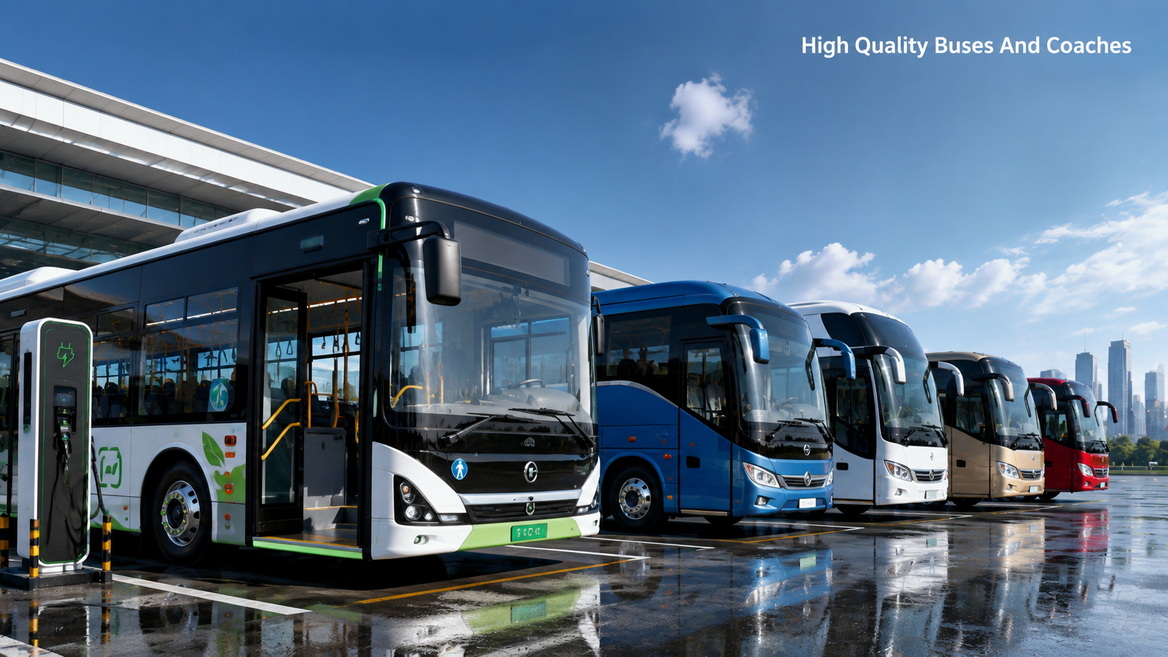
International buyers of Chinese dump trucks and buses often share similar expectations when they leave reviews or provide feedback to suppliers and export partners:
- Robustness and reliability in heavy‑duty applications.
- Value for money compared to Western brands, especially on acquisition cost.
- Custom configuration – from body types to seating layouts and interior trim.
- Responsive after‑sales support and clear communication throughout shipping and commissioning.
Where dissatisfaction appears, it typically relates to:
- Misaligned expectations on specifications (e. g., payload vs real‑world road limits).
- Insufficient technical documentation or training.
- Delays in parts or warranty service across borders.
From an expert standpoint, the best mitigation is to codify requirements in detail upfront, insist on full documentation, and align KeyChain's export bundle with local implementation partners — something that experienced Chinese suppliers are increasingly ready to support.
To go beyond traditional product‑focused content, this section offers a practical, expert framework for integrating dump trucks and buses into a modern logistics network.
1. Map your logistics network.
Identify core nodes, lanes, depots, quarries, plants and passenger flows.
2. Quantify demand and variability.
Model tonnage, trip frequency, seasonality and peak scenarios.
3. Assign vehicle classes to each lane.
Short‑haul dump truck loops, long‑haul heavy trucks, urban bus routes, staff shuttles, etc.
4. Define service‑level requirements.
Target on‑time performance, maximum dwell times, and customer experience metrics for passenger services.
5. Select vehicle specs accordingly.
Use the criteria outlined earlier to match KeyChain's dump trucks, buses and NECVs to each lane.
6. Deploy telematics and monitoring.
Integrate GPS, CAN‑bus data and driver apps for visibility and proactive maintenance.
7. Review performance quarterly.
Adjust fleet composition, routes and maintenance plans based on hard data — mirroring the continuous‑improvement mindset promoted in industry studies and CSCMP sessions.
This process reflects the standard by embedding real‑world, repeatable operational practice into procurement decisions rather than relying on generic marketing claims.
If you're planning a dump truck fleet expansion, upgrading your bus and coach operations, or piloting new energy heavy vehicles, now is the time to move from research to action.
- Share your target routes, payloads and energy goals with KeyChain's team.
- Request a tailored configuration and TCO analysis for conventional and NECV options.
- Use that analysis to support board‑level or customer ESG discussions.
By treating heavy vehicle procurement as a strategic, data‑driven decision — and leveraging KeyChain's manufacturing and export capabilities — you can build a fleet that stays competitive in an increasingly volatile logistics landscape.
A: Yes, when specified correctly for payload, terrain and climate, Chinese dump trucks can deliver multi‑year performance comparable to more expensive Western brands, especially with proactive maintenance and parts support through experienced exporters like KeyChain.
A: Start with route analysis: short urban or shuttle routes with strong charging infrastructure favor electric, while long remote routes still suit diesel. Many fleets adopt a hybrid approach, deploying NECVs where ESG and cost structures align best.
A: The main risk is misalignment between promised specifications and real‑world operating conditions. Mitigate this by sharing detailed duty cycle data, requesting technical drawings and documentation, and confirming local compliance and service arrangements before signing.
A: KeyChain typically coordinates spare parts, remote technical support and, where possible, local service partners or training programs to ensure uptime and predictable lifecycle costs for international buyers.
A: They can, especially in high‑utilization urban environments with competitive electricity prices and supportive regulations. However, TCO depends on energy costs, charging infrastructure, subsidies and vehicle utilization, so each project requires a specific calculation.
1. Penske Logistics – *Penske Logistics Welcomes CSCMP to Philly*.
https://www.gopenske.com/blog/logistics/penske-logistics-welcomes-cscmp-to-philly/
2. Kenco Group – *2026 Supply Chain Outlook: What Specialists Should Anticipate*.
https://kencogroup.com/blog/2026-supply-chain-outlook-transportation-ltl-parcel/
3. INFORM – *What Vehicle Logistics Organizations Need Next (Trend Report 2026)*.
https://www.inform-software.com/en/lp/trendreport-vl-2026
4. Shoosmiths – *Trends shaping mobility, logistics & manufacturing in 2026*.
5. FreightWaves – *2026 State of Logistics Report: Volatility is the new normal*.
https://www.freightwaves.com/news/2026-state-of-logistics-report-volatility-new-normal
6. CSCMP / Penske Logistics – Selected EDGE and 3PL Study content (LinkedIn announcements).


