
Views: 249 Author: Keychain Venture Publish Time: 2026-07-16 Origin: Site


Content Menu
● Why Trucking Capacity Is Tight
>> Demand Surges and Disruptions
>> Structural Constraints in the Industry
● What Long-Term Transportation Partnerships Provide
>> Reserved Capacity and Predictable Service
● Dump Trucks and Heavy Trucks as Strategic Assets
>> Construction and Infrastructure
>> Mining, Energy, and Heavy Industry
>> Municipal Services and Public Works
● The Growing Role of New Energy Buses and Trucks
>> Regulatory and Environmental Drivers
>> Integrating New Energy Vehicles into Existing Fleets
● Data and Technology as Foundations for Capacity Strategy
>> Visibility and Performance Monitoring
>> Data-Informed Fleet Renewal and Expansion
● Practical Steps for Building a Resilient Capacity Plan
>> Mapping Critical Routes and Volumes
>> Evaluating Current Sourcing and Fleet Structures
>> Designing Long-Term Arrangements and Fleet Plans
● How Capacity Planning Supports Future Growth
● Moving From Short-Term Reactions to Long-Term Resilience
● FAQ
>> Q1: Why has trucking capacity become so tight in recent years?
>> Q2: How do long-term transportation partnerships help shippers?
>> Q3: What makes dump trucks and heavy trucks strategic assets rather than simple rental vehicles?
>> Q4: How are new energy buses and trucks changing fleet planning?
>> Q5: Why is data so important for managing trucking capacity?
Across global freight networks, trucking capacity has moved from "comfortable" to "constrained." Many fleets operate close to full utilization, and shippers feel the impact whenever demand surges or disruptions occur. In this environment, organizations that depend on dump trucks, heavy-duty trucks, and buses for construction, mining, municipal services, and passenger transport face increasing competition for vehicles and drivers.
Short-term arrangements that once worked—such as day-to-day spot freight—have become less reliable. When capacity tightens, prices rise, service can be inconsistent, and project timelines become harder to control. As a result, more shippers are turning to structured, long-term transportation partnerships and carefully planned fleets to regain stability and predictability.

Several factors have combined to squeeze available trucking capacity. Extreme weather events divert trucks into emergency relief operations and disrupt normal route schedules. Seasonal peaks in consumer demand push more freight into already crowded networks, leaving less room for industrial and project cargo.
Infrastructure projects and broader economic growth add further pressure as more materials move over long distances. In parallel, evolving regulations around driver working hours and equipment standards can temporarily reduce effective capacity while fleets adjust. When these dynamics overlap, shippers experience higher rates, fewer options, and greater uncertainty.
The industry also faces longer-term constraints. Many regions struggle to attract and retain enough qualified drivers for heavy-duty vehicles. Fleet renewal cycles can lag behind actual demand, especially when capital budgets are tight or financing conditions change.
These structural limits mean capacity does not expand overnight. Even when demand stabilizes, it can take time for fleets to grow, for new vehicles to enter service, and for networks to re-balance. Shippers that depend on dump trucks, heavy trucks, and buses for critical operations must plan with these realities in mind rather than assuming that capacity will always be available on short notice.
Long-term transportation partnerships give shippers a defined level of reserved capacity. Instead of competing daily for trucks, they secure dedicated access to vehicles and drivers for specific lanes, projects, and time windows. This structure supports more accurate planning and reduces the risk that loads will be delayed or bumped when networks are busy.
Reserved capacity is especially valuable for operations that must run on tight schedules: infrastructure construction, large-scale mining, public works, and regular passenger transport services. For these activities, the ability to count on dump trucks, heavy-duty trucks, or buses being available when needed is as important as the rate paid per trip.
Stable service goes hand in hand with stable cost structures. Daily rate fluctuations make it difficult to build reliable budgets or price long-term contracts. When shippers negotiate extended arrangements, they gain more predictable pricing tied to agreed volumes, routes, and service levels.
This predictability allows organizations to forecast logistics costs over months or years, rather than guessing from one week to the next. It also supports internal decision-making around project bids, investment in equipment, and choice of markets, because logistics ceases to be a wild card and becomes a manageable, measurable component of the business.

The construction sector is a clear example of how specific vehicles become strategic assets. Construction sites rely on dump trucks to move aggregates, soil, demolition debris, and other bulk materials. Heavy-duty trucks carry structural components, machinery, and specialized loads. Delays in these flows can stop work, trigger penalties, and damage reputations.
By treating dump trucks and heavy trucks as part of a long-term capacity strategy rather than as ad‑hoc rentals, contractors can align logistics with project schedules. They can define daily and weekly capacity needs, plan surge capacity for peak phases, and ensure that vehicle specifications match site conditions and loading equipment. This approach reduces idle time, minimizes last-minute scrambling, and keeps projects moving steadily forward.
Mining, energy, and heavy industry operate under demanding conditions that require robust vehicles and uninterrupted flows of materials. Heavy trucks carry ores, fuels, chemicals, and equipment in environments that often run around the clock. A single breakdown or capacity gap can have significant operational and financial consequences.
In these contexts, fleets are designed and managed as long-term strategic assets. Vehicle specifications are tailored to payloads, terrain, and safety requirements. Maintenance schedules are coordinated with production plans. Data on utilization, downtime, and efficiency drives decisions about renewal and expansion. Shippers that adopt this mindset are better able to withstand broader capacity constraints because they control critical elements of their own logistics capabilities.
Municipalities and public works departments face different pressures but similar capacity challenges. Waste collection, road maintenance, and public infrastructure projects depend on reliable access to dump trucks and heavy service vehicles. Budgets may be fixed over annual cycles, and the public expects consistent service regardless of market conditions.
Long-term arrangements for vehicle supply and operation help municipal organizations balance these needs. They can align fleet size and composition with policy objectives, plan renewal over multi-year horizons, and gradually introduce cleaner technologies without disrupting service. This structured approach reduces vulnerability to short-term market shifts and supports more sustainable urban operations.
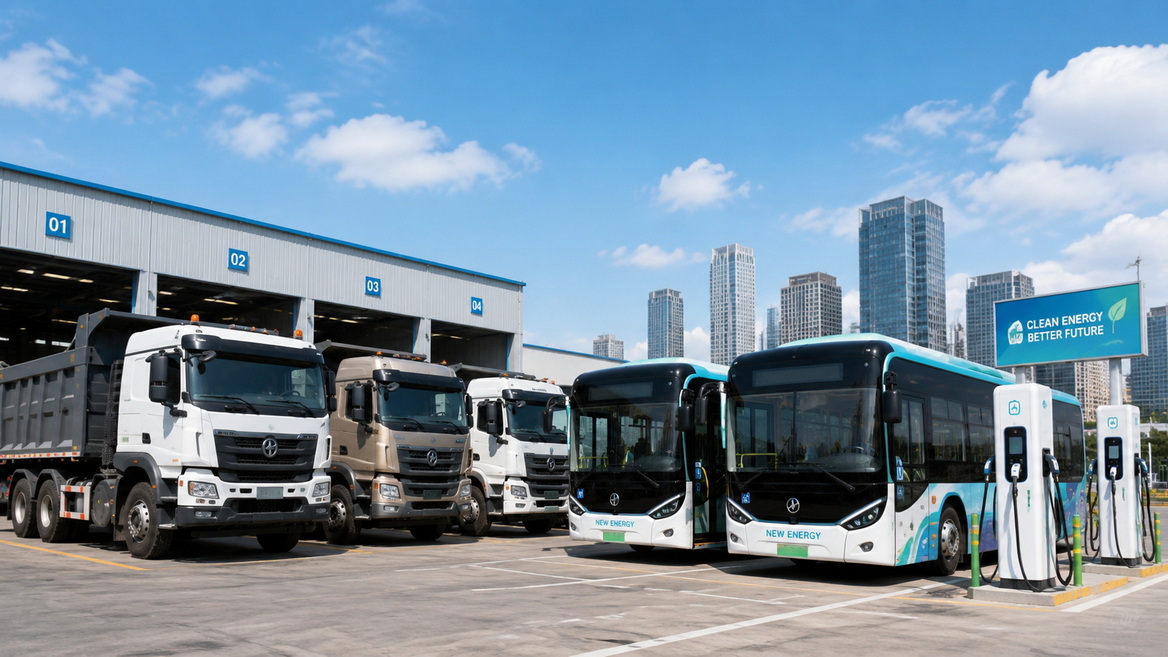
New energy commercial vehicles, including electric buses and trucks and other low-emission models, are becoming central to fleet planning. Many regions now place stricter limits on emissions, especially in urban areas and along busy corridors. Organizations must adapt their fleets to comply while continuing to meet service and capacity requirements.
Buses and trucks powered by alternative technologies can help meet these goals. They reduce local emissions, operate more quietly, and may offer different long-term cost profiles when energy supply, incentives, and maintenance are considered. Adopting them within structured transportation plans enables organizations to move toward cleaner operations without sacrificing reliability.
Introducing new energy vehicles is not just a matter of replacing older units. It requires careful assessment of routes, infrastructure, and operating conditions. Charging or fueling facilities must be planned and installed. Drivers and maintenance teams need training. Fleet composition must be adjusted to ensure that new vehicles are deployed on routes that suit their range, payload, and performance characteristics.
Organizations that take a phased, data-informed approach can blend conventional and new energy vehicles effectively. They can start with selected routes, monitor performance, and gradually expand deployment. Over time, this integration supports both environmental objectives and operational resilience as fleets become more diversified and flexible.
Modern fleet operations increasingly rely on digital tools. Tracking systems provide real-time visibility of vehicles and loads. Route and schedule management platforms help reduce empty miles and optimize utilization. Performance dashboards highlight patterns in delays, fuel consumption, maintenance events, and driver behavior.
Shippers and fleet operators that use these tools gain a clearer picture of how capacity is actually used. They can identify bottlenecks, adjust schedules, and manage exceptions more quickly. In tight markets, this visibility is crucial; it allows organizations to make the most of the capacity they already control and to build stronger arguments when negotiating additional resources.

Data also supports long-term decisions about renewal and expansion. By analyzing trends over months and years, organizations can identify vehicles that are becoming costly to operate, routes that are pushing current equipment to its limits, and patterns of demand that justify additional capacity.
These insights lead to better choices about which vehicles to buy, when to retire older units, and how to configure new fleets. When aligned with structured transportation arrangements, data-informed decisions create fleets that are more reliable, efficient, and resilient, even when external capacity remains tight.
A resilient capacity plan starts with a clear understanding of current needs. Shippers and fleet managers can begin by mapping their most important routes, cargo types, and service commitments. This exercise highlights where delays or cost volatility would have the greatest impact on projects or customers.
Once critical flows are identified, organizations can estimate minimum and peak capacity requirements in concrete terms: number of dump trucks or heavy trucks, frequency of trips, tonnage per day, and expected service windows. These numbers provide a foundation for constructive discussions with internal stakeholders and potential partners.
The next step is to examine how capacity is currently sourced. Some volume may be handled by internal fleets, some by long-term contracts, and some by short-term or spot arrangements. Understanding this mix helps identify where vulnerabilities exist and where there is room for improvement.
Organizations can then assess whether existing fleets and contracts align with critical routes and service needs. In many cases, they will find that certain lanes or projects rely too heavily on short-notice capacity, exposing them to risk when markets tighten. Addressing these gaps becomes a priority for future planning.
With clear data on needs and current structures, organizations can design long-term arrangements that match their operational reality. This may involve negotiating extended transportation contracts, planning new vehicle procurement, or restructuring internal fleets.
Key elements include defining service expectations, specifying vehicle types and configurations, agreeing performance indicators, and establishing review points for continuous improvement. When done well, these arrangements ensure that dump trucks, heavy trucks, and buses are available where and when they are needed, and that costs remain predictable enough to support long-term business decisions.
Thoughtful capacity planning does more than solve immediate challenges. It creates a foundation for future growth. Organizations that understand their logistics needs, manage fleets as strategic assets, and cultivate long-term partnerships are better positioned to enter new markets, bid on larger projects, or expand services.
They can respond more quickly when opportunities arise because they know how much capacity they have, how flexible it is, and how to extend it. They can also communicate more confidently with stakeholders about timelines and risk, because transportation is managed as a stable, visible component of operations rather than a variable left to chance.
Many organizations spend years reacting to capacity challenges one shipment at a time. While this may work during calm periods, it becomes unsustainable when markets tighten or operating conditions change. The shift toward long-term, structured transportation and fleet planning represents a move from reaction to resilience.
By investing in dedicated access to dump trucks, heavy trucks, and buses, embracing new energy technologies where appropriate, and using data to guide decisions, shippers can build logistics systems that remain robust despite external pressures. This transformation takes planning and cooperation, but it pays off in more reliable operations, clearer cost structures, and stronger prospects for sustainable growth.
Capacity has tightened due to overlapping demand surges, extreme weather events, large infrastructure projects, regulatory changes, and structural constraints such as driver shortages and slower fleet renewal cycles.
Long-term partnerships provide reserved capacity, predictable service levels, and more stable cost structures, enabling shippers to plan projects and budgets with greater confidence even when markets are volatile.
When integrated into structured capacity plans, dump trucks and heavy trucks become essential tools for keeping construction, mining, and public works projects on schedule, reducing delays, and aligning logistics with long-term operational goals.
New energy vehicles introduce lower emissions and different operating profiles, requiring careful route selection, infrastructure planning, and phased integration. They allow organizations to meet environmental objectives while maintaining reliable service.
Data on routes, utilization, delays, and costs helps organizations understand how capacity is used, identify weak points, and make informed decisions about fleet renewal, expansion, and long-term transportation arrangements.
1. Penske Logistics Blog – "Tight Trucking Capacity has Shippers Turning to Dedicated Transportation."
2. Fuse – "SEO for Logistics and Supply Chain: The Complete Guide."
https://fuseagency.com/resources/seo-for-logistics-and-supply-chain
3. SEO. com – "SEO for Transportation and Logistics: A Marketer's Guide."
https://www.seo.com/industries/transportation-logistics/
4. SerpsGrowth – "Effective SEO Strategies for Freight Companies: Expert Tips."
https://serpsgrowth.com/blog/seo-strategies-for-freight-companies/
5. Key‑G – "SEO for Transportation Logistics Trucking Companies in 2025: Strategies to Boost Online Visibility."
6. Dotit – "SEO for Logistics: How Logistics Companies Can Rank #1."
https://dotit.org/seo-for-logistics-companies-ranking-higher-in-freight-and-transport-searches/
7. Ranktracker – "Trucking Company SEO: Rank Locally and Haul in More Freight Contracts."
https://www.ranktracker.com/blog/trucking-company-seo/
8. Digital Gorkhaa – "Best SEO Strategy for Logistic & Cargo Industries."
https://digitalgorkhaa.com/best-seo-strategy-for-logistic-cargo-industries/
9. Jason Pittock – "SEO for Logistics Companies: AI, Keywords & Strategy."
https://jasonpittock.com/blog/guide-to-seo-for-logistics-businesses/


