
Views: 287 Author: Keychain Venture Publish Time: 2026-07-19 Origin: Site


Content Menu
● The Basics of Driving a Van on a Standard Licence
● Pre‑1997 Licences and Additional Entitlements
● Common Vans You Can Drive on a Car Licence
>> Everyday City and Service Vans
>> Medium Vans for Heavier Loads
● Understanding Licence Categories and Van Weights
● Electric Vans and Heavier New‑Energy Vehicles
● Practical Checklist Before Driving a Van
● Comfort, Safety, and Ease of Use
● Planning Your Next Vehicle Choice
>> Can I drive a Ford Transit on my car licence?
>> Do I need extra training to drive a heavier electric van?
>> Can I tow a trailer with a van on my existing licence?
>> What happens if my van is overloaded?
>> How do I check what vehicles I am allowed to drive?
Whether you are stepping up from a car to a small delivery van or planning longer journeys in a larger panel van, the key question is simple: what can you legally drive with the licence you already hold? The answer depends mainly on the maximum authorised mass of the vehicle, the number of passenger seats, and any additional licence entitlements you may have gained over time.
This guide walks through the main licence categories, explains how they apply to common van types (including newer electric models), and offers practical, experience‑based advice so you can choose the right vehicle without risking fines, invalid insurance, or safety issues.
This article is written from the perspective of a consultant who works with drivers, tradespeople, and small fleets that use light commercial vehicles every day. Over the last few years, I have seen growing confusion around weight limits, heavier alternative‑fuel vehicles, and the impact of new regulations on everyday van use.
If you are a self‑employed tradesperson, a delivery driver, a small business owner, or simply someone renting a van for the weekend, you will find clear explanations and real‑world examples that answer the most common questions about what you can drive and how to stay on the right side of the law.
Most people in the UK hold a standard car licence, known as Category B. With this licence, you can usually drive:
- A vehicle with a maximum authorised mass (MAM) of up to 3,500 kg
- A vehicle with up to eight passenger seats in addition to the driver
- Certain vehicle and trailer combinations, as long as specific weight limits are not exceeded
For many popular small and medium vans, this is all you need. The crucial point is that the MAM figure includes the vehicle, the driver and passengers, and the load. If you exceed that limit with tools, parcels, or equipment, you may technically be driving a vehicle that is too heavy for your licence.
A simple rule of thumb: if the van's plate shows a maximum weight of 3.5 tonnes or less, and it does not carry more than eight passengers, it is usually within the scope of a Category B licence.
If you passed your driving test before 1 January 1997, your licence may include additional entitlements beyond Category B. In practice, this often means:
- You can drive vehicles up to 7.5 tonnes maximum authorised mass (Category C1)
- You may be allowed to drive certain heavier vehicle and trailer combinations without obtaining a full large goods vehicle licence
These rights are sometimes called "grandfather rights," and they can be valuable if you plan to drive larger vans or small rigid trucks. Many experienced drivers are unaware of the full scope of their entitlements and assume they are restricted to smaller vehicles.
To make use of these rights safely, take time to check the back of your licence card and understand which categories you hold. Larger vehicles require more care in loading, braking, and manoeuvring, so any upgrade in size should be accompanied by realistic training, even if no formal test is required.
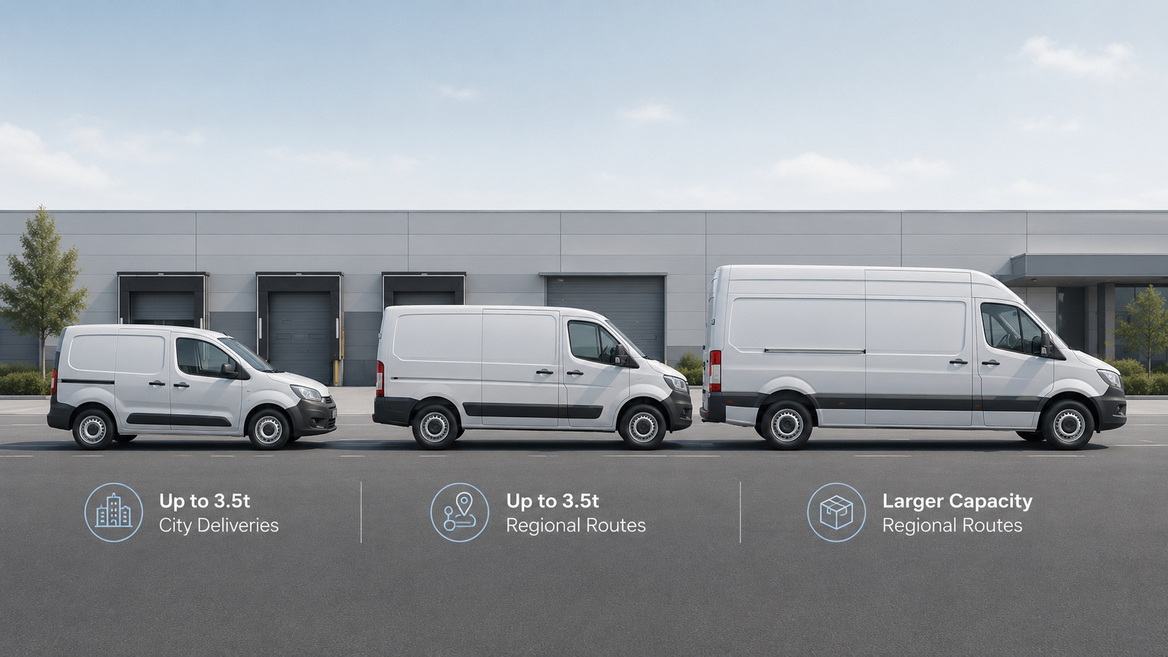
The following types of van are typical examples that fall within the limits of a standard car licence in most configurations. Exact specifications vary, so always check the individual vehicle's plate.
For city deliveries, light trades, and service work, compact vans offer car‑like handling with useful cargo space. Popular examples include:
- Citroën Berlingo and similar compact models
- Ford Transit Courier and Transit Connect
These vehicles are designed for tight urban streets and short‑range tasks. They usually have modest payloads and sit comfortably below the 3,500 kg limit, even when loaded with tools or parcels.
If you need more space or carry heavier materials, mid‑size vans provide additional capacity while still keeping within the typical car‑licence limits. Models in this group include:
- Peugeot Expert
- Ford Transit Custom
These vans offer larger cargo volumes and higher payloads, making them well‑suited to builders, installers, and regional delivery routes. While they are bigger and taller than compact vans, their maximum authorised mass usually remains at or below 3.5 tonnes.
Full‑size panel vans such as the Ford Transit in its larger body styles can handle substantial loads and often serve as the backbone of many business fleets. These vehicles may offer payloads exceeding 2,000 kg in some configurations, yet still stay within the 3.5‑tonne limit for a typical UK specification.
If you move into these larger vans, expect a different driving experience: higher seating position, greater length and height, and a greater need for attention to loading and braking distances.
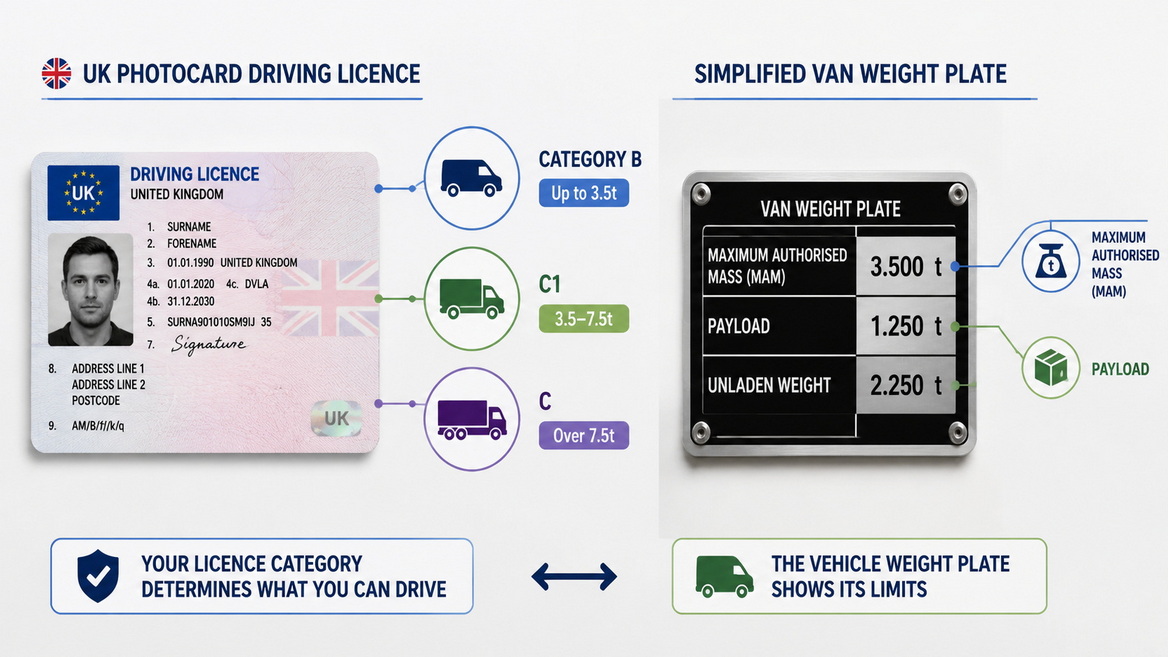
To make sense of what you can drive, it helps to map licence categories to typical vehicle weights and examples.
| Licence category | Weight range (MAM) | Typical vehicles you can drive |
|---|---|---|
| Category B | Up to 3,500 kg | Cars, small and medium vans, many minibuses |
| Category C1 | 3,500–7,500 kg | Larger vans, small rigid trucks |
| Category C | Over 7,500 kg | Full‑size lorries and heavy rigid trucks |
In everyday van use, the transition from Category B to C1 is where many drivers and operators need clarity. As long as a vehicle's maximum authorised mass does not exceed 3.5 tonnes, most people with a car licence can drive it. Once that line is crossed, you move into heavier territory and may require additional entitlements or tests.
Always remember that these weight figures include any load, passengers, and fitted equipment. A van that is perfectly legal when empty can become illegal for your licence category if overloaded.
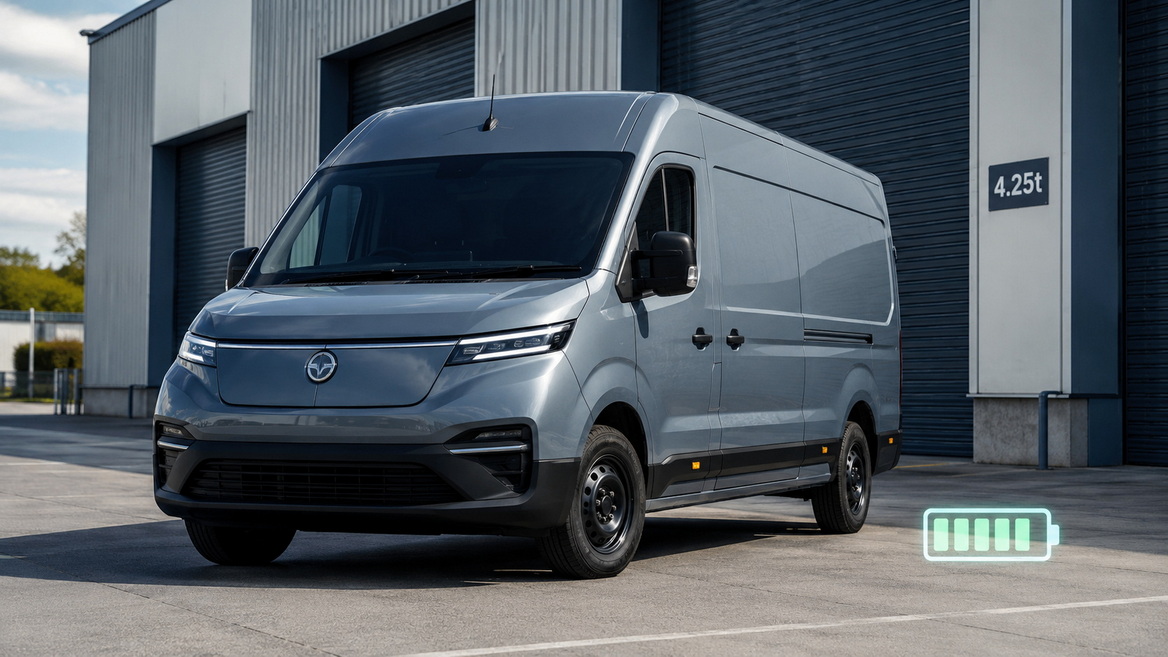
Modern electric and hydrogen vans introduce a new consideration: battery and fuel‑cell systems are heavy. To accommodate this extra weight without penalising payload too harshly, regulations now allow certain zero‑emission vans to have a higher maximum authorised mass than comparable diesel models.
In practice, this means:
- Some zero‑emission vans can legally weigh up to 4,250 kg while still being driven on a standard car licence
- The extra allowance is intended to offset the weight of the alternative power system rather than give unlimited additional payload
- The vehicle still needs to meet specific conditions to qualify under these rules
For drivers and small businesses, this higher limit allows the use of slightly heavier vans with larger battery packs or more robust equipment without forcing every driver to obtain a medium‑ or heavy‑goods vehicle licence. It also makes new‑energy commercial vehicles more practical for everyday deliveries and service work.
That said, heavier vehicles demand more attention to braking distances, load securing, and tyre condition. Even if your licence permits them, extra care and familiarity with the vehicle's dynamics are essential.
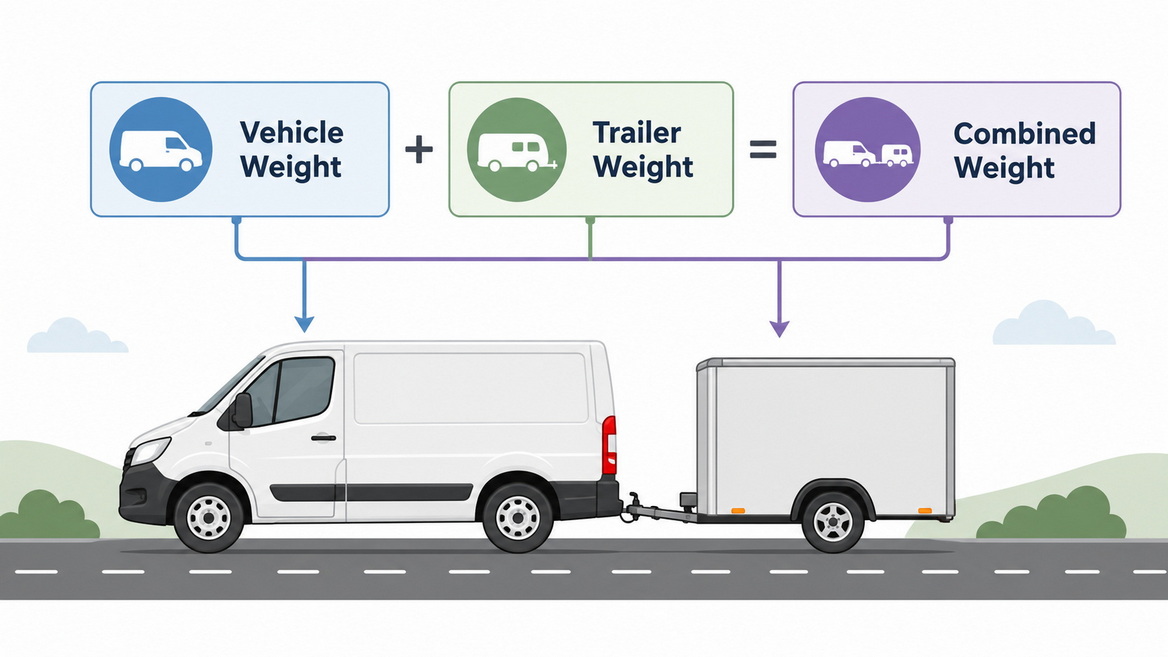
Many drivers use vans with trailers to carry tools, equipment, or extra cargo. Towing complicates weight calculations and makes it easy to exceed limits unintentionally. Some important principles include:
- The maximum authorised mass of the vehicle and trailer combined must stay within the limits tied to your licence category
- The trailer itself usually has a separate plate indicating its own MAM, which must also be respected
- The van's rated towing capacity can be lower than the theoretical legal limit, so manufacturer guidance must be followed
For many standard car‑licence holders, typical combinations involve a van up to 3.5 tonnes and a relatively light trailer. Drivers should take time to understand both sets of limits before hitching up and heading out, as enforcement officers routinely check combined weights at the roadside.
Good practice includes weighing fully loaded trailers at least once, using public weighbridges or fleet facilities, so that your estimates are grounded in real figures rather than guesswork.
To reduce risk and make sure you are operating within the law, it helps to follow a short checklist before driving any van, especially one that is new to you.
1. Check the vehicle's weight plate. Find the manufacturer plate, usually under the bonnet, in the door aperture, or near the driver's seat. Confirm the maximum authorised mass and compare it to your licence category.
2. Review your licence card. Look at the back of your photocard licence to see which categories you hold and note any expiry dates or restrictions.
3. Calculate realistic payload. Subtract the vehicle's kerb weight from its maximum authorised mass to estimate what you can carry after accounting for occupants and fixed equipment.
4. Consider towing limits. If you plan to tow, add the trailer's maximum weight to the van's and ensure the combined figure remains within legal and manufacturer‑specified limits.
5. Check your insurance cover. Make sure the vehicle is correctly insured as a van, not a car, and confirm that the policy allows for business use, hiring, or any other specific activities you plan to undertake.
These steps are simple, but consistently applying them can prevent many of the problems that arise when drivers unknowingly exceed weight or licence limits.
Beyond legality and weight, the experience of driving a van is shaped by its design and safety features. Modern vans often include equipment that makes moving up from a car feel less intimidating. Common helpful features include:
- Parking aids, such as sensors and cameras, to manage blind spots and long bodies
- Cruise control and speed limiters, which help maintain appropriate speeds on longer journeys
- Lane‑keeping and driver‑attention systems, increasingly available on newer models
For someone used only to driving cars, the change in height and length can be disorienting at first. A short familiarisation session—whether informal or structured—helps build confidence. Walking around the vehicle, identifying blind spots, understanding mirrors, and practising basic manoeuvres in a quiet area is time well spent.
Businesses can reduce incidents simply by encouraging drivers to treat a new van as a new skill. Even experienced car drivers benefit from a mindful transition to a taller, heavier vehicle with different handling characteristics.
Choosing the right van is not just about price and payload. It is about matching the vehicle to your licence, typical routes, cargo type, and long‑term plans. As new‑energy commercial vehicles become more common, buyers have more options than ever before, but also more factors to weigh.
A thoughtful approach starts with understanding your licence entitlements and typical loads, then considering future growth. For example, if your work is likely to involve heavier tools or longer routes, stepping into a slightly larger van now—while staying within legal limits—may prove more efficient than upgrading again in a year or two.
The aim is simple: select a vehicle that supports your work today, remains compliant under realistic loading, and can handle tomorrow's demands without forcing a sudden change in licensing or training.
Most Ford Transit vans in standard UK configurations have a maximum authorised mass at or below 3,500 kg. As long as the specific vehicle you use fits within that limit and you do not overload it, you can drive it with a normal Category B licence.
Certain zero‑emission vans with a maximum authorised mass up to 4,250 kg can be driven on a standard car licence when they meet set conditions. In many cases, no separate formal course is required, but familiarisation training is strongly recommended due to the extra weight and different driving characteristics.
You can tow a trailer with a van on a car licence, provided both the van and trailer remain within the weight limits attached to your licence and the vehicle's own rated towing capacity. Always check both the van's and trailer's plates and consider weighing fully loaded combinations when possible.
Driving an overloaded van can lead to penalties, increased stopping distances, premature wear on tyres and brakes, and potential invalidation of your insurance. Enforcement agencies regularly carry out roadside weight checks, and offences can result in fines and operational disruption.
You can check your entitlements by reading the categories listed on the back of your photocard licence and, if needed, by using official online licence‑checking services. This will confirm whether you hold only a Category B licence or also have additional categories such as C1.
1. Evans Halshaw – *Can I Drive a Van? Guide to Van Driving and Licence*
https://www.evanshalshaw.com/blog/can-i-drive-a-van/
2. GOV. UK – *Driving a van* and licence guidance
https://www.gov.uk/guidance/driving-a-van
3. Van Reviewer – *4.25t electric van driving licence changes start today*
https://vanreviewer.co.uk/news/4-25t-electric-van-driving-licence-changes-start-today/
4. Parkers – *Changes to drivers' licence laws for heavy electric vans*
https://www.parkers.co.uk/vans-pickups/news/2025/government-scraps-training-for-heavy-electric-vans/
5. Select Car Leasing – *Driving licence changes let more drivers behind the wheel*
6. GOV. UK – *Large vehicles you can drive using your car or lorry licence (INF52)*
7. UK legislation – *The Motor Vehicles (Driving Licences) (Amendment) (No. 2) Regulations 2025*


