
Views: 239 Author: Keychain Venture Publish Time: 2026-07-20 Origin: Site


Content Menu
● Penske and REE Automotive: A Strategic Partnership
● What This Means for Fleet Operators
● The P7‑C Truck: Core Features and Advantages
>> Key Advantages for Commercial Use
● The Growing Role of Electric Trucks in Commercial Fleets
● Practical Considerations for Fleet Decision‑Makers
>> 2. Charging and Depot Readiness
>> 3. Maintenance, Service, and Support
>> 4. Body Upfit and Application Fit
>> 5. Long‑Term Cost and Business Impact
● Comparison: Electric Medium‑Duty vs. Conventional Diesel
● Why Partnerships Like Penske and REE Matter
● The Importance of Upfit Strategy
● Uptime and Charging as Operational Anchors
● Closing Thoughts for Fleet Operators
● FAQ
>> 1. What is the main message of the Penske and REE collaboration?
>> 2. Why is the P7‑C platform relevant to commercial fleets?
>> 3. What should a fleet assess before adding electric trucks?
>> 4. How does depot charging influence success?
>> 5. In which applications do electric medium‑duty trucks perform best today?
Penske Truck Leasing's decision to expand its electric truck fleet with new medium‑duty models marks a turning point for commercial operators who are moving from trials to real deployment. This development shows that battery‑electric trucks are increasingly ready for everyday work, not just demonstration projects.
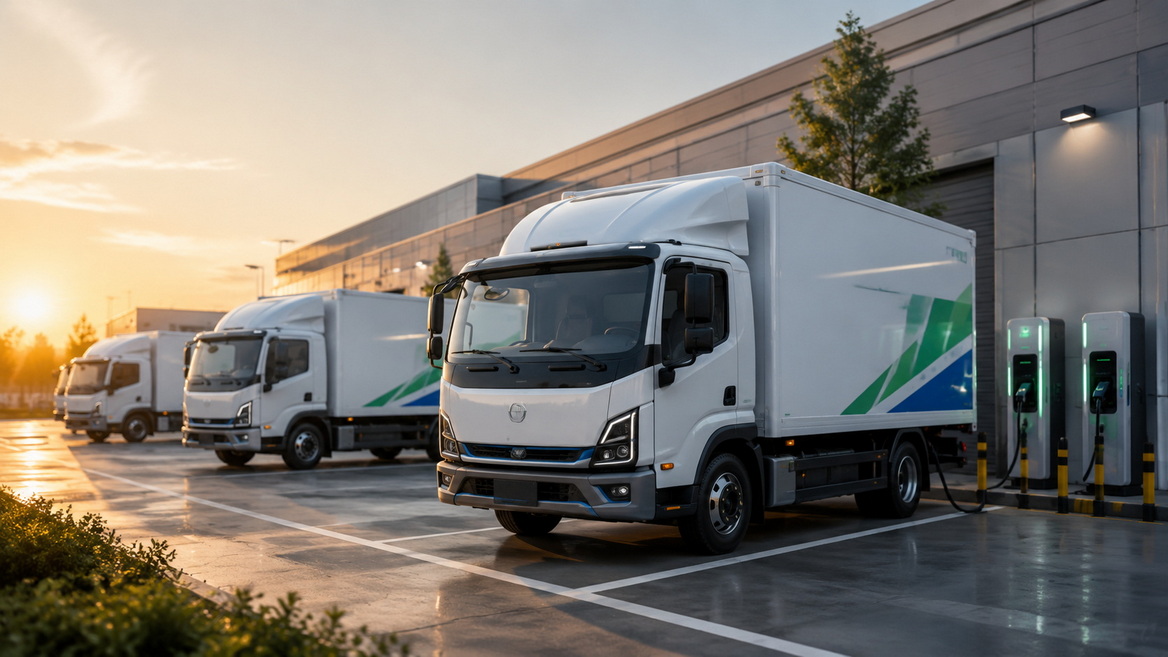
Penske Truck Leasing has introduced a new electric medium‑duty truck developed in collaboration with REE Automotive. The vehicle is built on REE's P7‑C chassis cab platform and is designed specifically for commercial use, with a driver‑centric cab and an upfitted 16‑foot body suitable for urban and regional delivery operations.
The partnership brings together REE's software‑defined, by‑wire architecture and Penske's experience in operating and maintaining large fleets. Penske gives customers access to real‑world demos and structured trials, allowing operators to understand how the truck performs in their own applications before committing to broader deployment.
For many operators, the biggest challenge is not whether electric trucks work in theory, but whether they work within their existing routes, depots, and maintenance plans. Penske's approach focuses on integrating electric trucks into its leasing and service network, making it feasible for customers to test vehicles without taking on the full burden of ownership from day one.
By adding electric medium‑duty trucks into its portfolio, Penske provides a clearer path for businesses that want to reduce emissions while keeping a strong focus on uptime and predictable performance. This is particularly relevant for delivery fleets, regional logistics, and vocational applications that return to a depot each day, where charging and maintenance can be planned around stable duty cycles.
The truck introduced through this partnership is built on REE's P7‑C electric chassis, which uses a full by‑wire architecture. Steering, braking, powertrain, and control functions are managed electronically, enabling advanced maneuverability and precise control in tight urban environments.
The chassis is designed as a flat, modular platform, allowing upfitters to mount a range of bodies without redesigning the underlying vehicle. This structure increases usable space and simplifies integration for different applications, from parcel delivery to light construction support and municipal services.
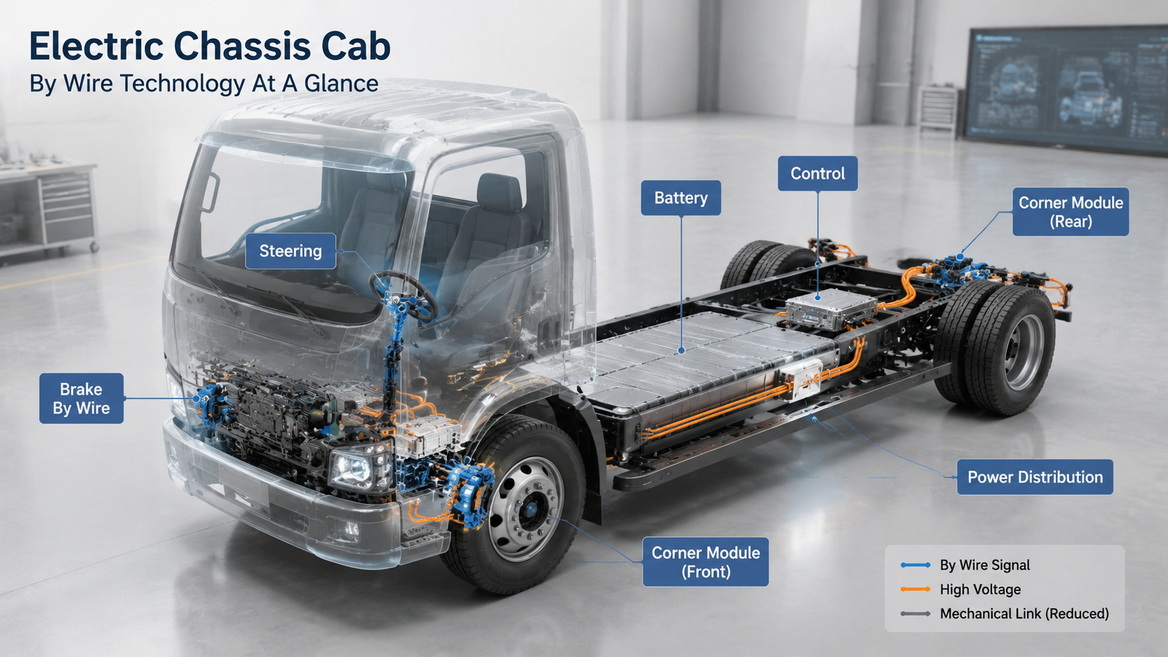
- By‑wire control for smoother handling and potentially tighter turning performance.
- Modular platform to support a wide variety of bodies and applications.
- Optimized cab design focused on driver comfort and visibility in busy traffic.
- Electric powertrain that reduces local emissions and noise in urban operations.
The market for electric trucks has moved beyond early pilot projects and is entering a phase of scaled adoption. Global sales of electric trucks have been rising quickly, supported by improvements in battery performance, lower energy costs in many regions, and growing awareness of the need to decarbonize road freight.
Medium‑duty and heavy‑duty electric trucks are increasingly being used in urban distribution, regional routes, and depot‑based operations. These use cases benefit most from predictable routes and regular dwell times, which make planning charging sessions and managing energy use more straightforward.
At the same time, the number of available models is growing, and more manufacturers are bringing electric trucks to market. This gives fleet operators more choice and makes it easier to match vehicles to specific operating profiles, payload requirements, and regional regulations.
Operators considering an electric medium‑duty truck like the P7‑C should focus on a set of practical questions before moving ahead. The goal is to ensure that the vehicle fits the realities of the business, not just the specifications on paper.
The most important factor is whether daily routes align with the vehicle's range, payload capacity, and charging needs. Fleet managers should look closely at average route length, number of stops, dwell times at depots or customer locations, and typical load factors. Trucks that return to the same depot at the end of each day are often the best candidates for electrification.
Charging infrastructure can be a limiting factor if it is not planned in advance. Decision‑makers should consider the available electrical capacity at depots, how many vehicles need to be charged simultaneously, and whether fast charging or managed charging is more appropriate. Coordinating charging with peak demand on the grid and existing facility operations is essential to avoid bottlenecks.
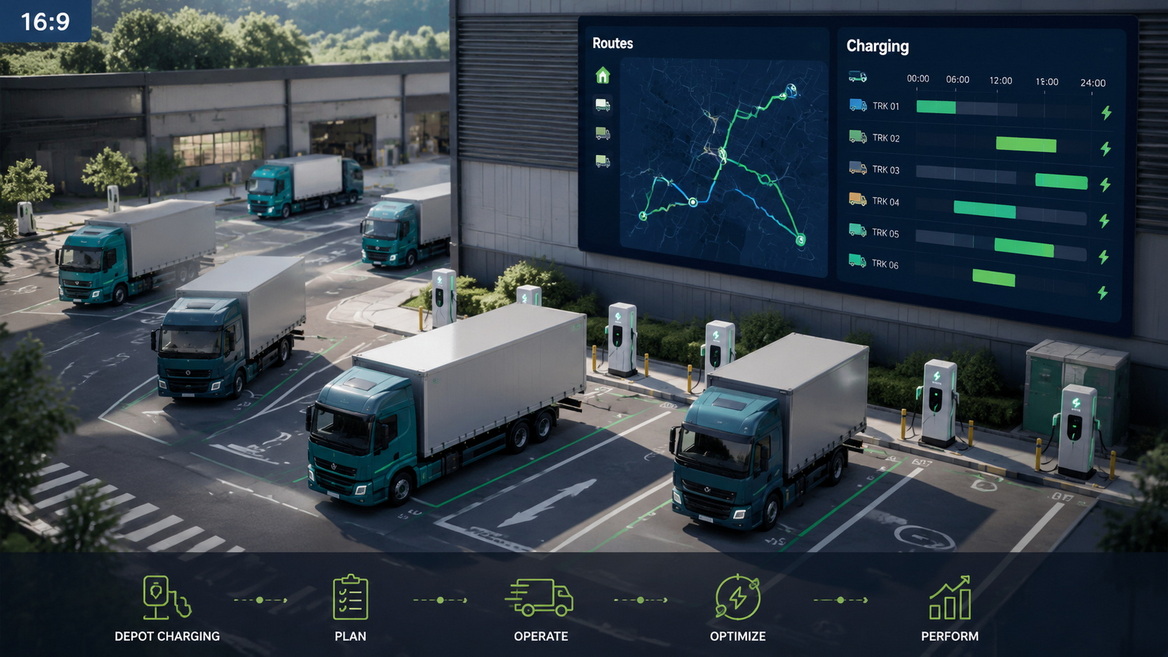
Electric trucks require different maintenance routines than diesel vehicles, with greater emphasis on software diagnostics, battery health monitoring, and high‑voltage safety. Working with a leasing and maintenance provider that already has experience with electric vehicles can reduce risk. Reliable service coverage and access to trained technicians help maintain uptime and protect investments in new technology.
In many commercial operations, the true value of a truck lies in its body and equipment. A chassis like the P7‑C is designed to simplify body integration, but operators should still verify that the chosen configuration supports the required payload, interior volume, and loading/unloading methods. The best vehicle is one that can be configured quickly and work seamlessly with existing operational processes.
Total cost over the life of the vehicle includes energy, maintenance, downtime, financing or lease rates, and potential incentives or regulatory benefits. Businesses should compare scenarios over three‑year and five‑year horizons, taking into account expected mileage, energy prices, and possible changes in local rules around emissions and access to city centers.
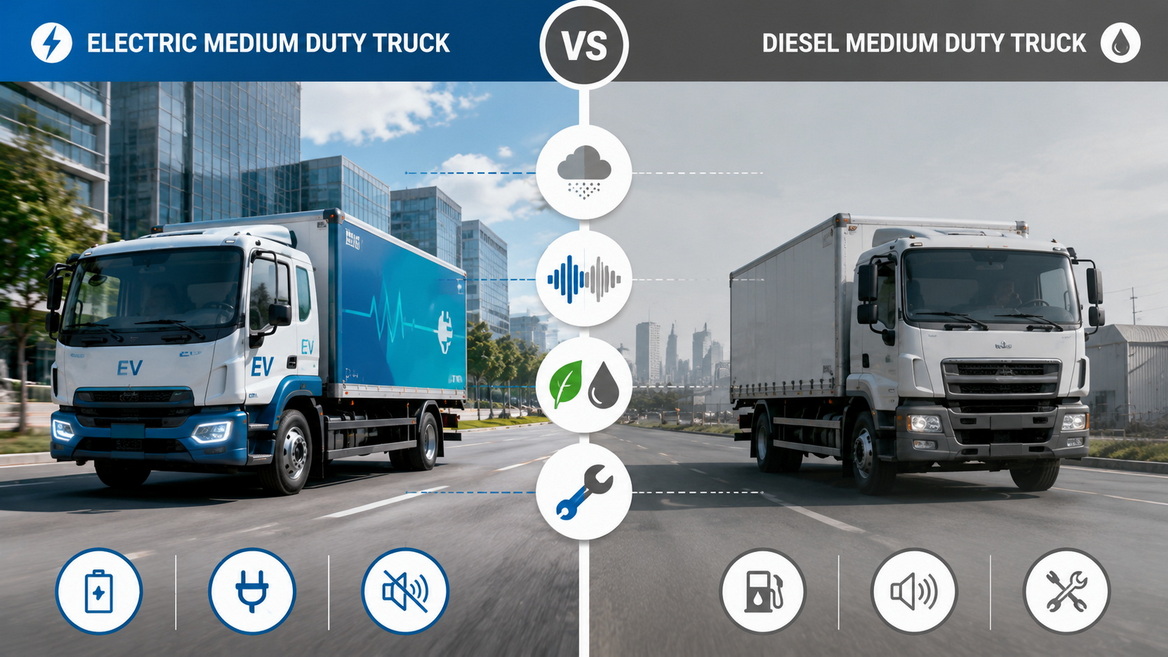
To make the decision clearer, it is helpful to compare electric medium‑duty trucks with conventional diesel vehicles in a few core areas.
| Aspect | Electric Medium‑Duty Truck | Conventional Diesel Truck |
|---|---|---|
| Local emissions | Zero at point of use | Direct exhaust emissions |
| Noise levels | Typically lower | Higher, especially at idle |
| Energy source | Electricity, often depot‑based charging | Diesel fuel from retail or bulk supply |
| Routine maintenance | Fewer moving parts, different service focus | More frequent mechanical service |
| Upfront acquisition | Often higher per unit | Typically lower per unit |
| Operational planning | Requires charging and route planning | Requires fueling logistics |
This comparison shows that electric trucks change the balance between upfront cost and operational planning. They can offer benefits in noise, local emissions, and maintenance, but they require more structured planning around energy and duty cycles.
The collaboration between a technology manufacturer and a large leasing and maintenance provider is significant because it closes the gap between innovation and daily operations. Many promising vehicles struggle to reach scale because operators lack support for deployment, charging, and service.
When established fleet organizations work together with technology companies, commercial customers gain access to vehicles that have been tested in real conditions and integrated into existing service networks. This helps reduce uncertainty and makes it easier for businesses to explore new powertrains without taking on all the risk alone.
One detail that often receives too little attention is how quickly a chassis can be upfitted for specific applications. The value of a medium‑duty truck depends heavily on its ability to carry the right body and equipment, whether that is a box body, refrigerated unit, flatbed, or specialized service configuration.
A platform that is designed from the start for easy upfit and a flat, modular layout can shorten lead times and reduce engineering complexity. That translates into faster deployment and more consistent performance across different applications. In this context, chassis cab partnerships between truck platform providers and body manufacturers are becoming a quiet but important differentiator in the market.
As more fleets add electric vehicles, uptime and charging planning emerge as the true anchors of successful deployment. Range and performance remain important, but they are only part of the story. Trucks must be available when needed, and charging must fit around existing operations rather than disrupting them.
Businesses that approach electrification as a holistic operating change—considering routes, depot infrastructure, staff training, and maintenance practices—are more likely to realize lasting benefits. An electric truck becomes a business asset when it is matched to the right duty cycle, supported by charging and service, and monitored carefully over time.
For businesses considering electric trucks, this development signals that the technology is moving steadily into regular commercial use. It underscores the importance of real‑world testing, structured evaluation, and collaboration between truck manufacturers, fleet organizations, and body builders.
Operators who take a measured approach—starting with pilot routes, understanding charging and maintenance requirements, and aligning vehicles with clear business goals—are best positioned to benefit from this new generation of medium‑duty electric trucks.
The main message is that electric medium‑duty trucks are ready for practical fleet applications, supported by a leasing and maintenance structure that helps customers test and deploy them in real operations.
It is relevant because its modular by‑wire chassis is designed for maneuverability, upfit flexibility, and efficient use of space, making it suitable for a range of delivery and vocational tasks.
A fleet should assess route length, payload needs, depot charging capacity, maintenance and service arrangements, and total cost over the life of the vehicle.
Depot charging allows fleets to control energy use, schedule charging around operations, and avoid reliance on public infrastructure, which improves uptime and predictability.
They perform best in urban and regional routes with predictable distances, regular depot returns, and clearly defined payload requirements, such as parcel delivery, retail distribution, and certain municipal services.
1. REE Automotive – "Penske Truck Leasing to Offer REE Automotive's P7‑C EV Trucks to its Customers for Demos and Orders Across North America"
2. REE Automotive – "REE Automotive Reports First Quarter 2024 Financial Results"
3. Penske Truck Leasing – "Leading the Way for Electric Fleets"
https://www.pensketruckleasing.com/truck-leasing/leasing-services/electric-vehicles/
4. Penske Truck Leasing – "Fleet Maintenance"
https://www.pensketruckleasing.com/fleet-maintenance/
5. Penske Truck Leasing – "Penske Truck Leasing Receives First Electric Heavy‑Duty Trucks from Volvo Trucks North America"
6. International Energy Agency – "Trends in heavy‑duty electric vehicles – Global EV Outlook 2025"
https://www.iea.org/reports/global-ev-outlook-2025/trends-in-heavy-duty-electric-vehicles
7. International Energy Agency – "Trends in other EV modes – Global EV Outlook 2026"
https://www.iea.org/reports/global-ev-outlook-2026/trends-in-other-ev-modes


