
Views: 222 Author: Keychain Venture Publish Time: 2026-06-08 Origin: Site


Content Menu
● The Story Behind "Penske Power Climbs Pikes Peak"
● Why Pikes Peak Is a Benchmark for Truck Engineering
● Key Lessons for Fleet Operators and Export Buyers
>> 1. Powertrain and Gearing Matter More Than Raw Horsepower
>> 2. Cooling and Braking Are Non‑Negotiable Safety Systems
>> 3. Driver Behavior Is a Critical Performance Variable
● How KeyChain Applies These Insights to Dump Trucks and Commercial Vehicles
● Inside KeyChain's Rigorous Vehicle Inspection and Refurbishment
>> 1. Complete Structural and Mechanical Assessment
>> 2. Professional Maintenance for Long Service Life
● Tailored Upgrades for Different Markets and Applications
>> 1. Comfort and Safety Upgrades for Passenger Buses
>> 2. Performance-Oriented Specifications for Dump Trucks
● Practical Specification Checklist for High-Altitude and Heavy-Grade Operations
>> Driver Training and Telematics
● The Role of New Energy Vehicles in Mountain and Urban Fleets
● When You Should Talk to KeyChain
● FAQs About Dump Trucks, Mountain Routes, and Vehicle Export
>> Q1: Can standard dump trucks operate safely on very steep mountain roads?
>> Q2: What should I prioritize when buying dump trucks for high-altitude projects?
>> Q3: How does KeyChain ensure the quality of used buses and trucks for export?
>> Q4: Are new energy trucks suitable for mountainous operations?
>> Q5: How can I reduce downtime for heavy-duty trucks working on difficult terrain?
When a camera crew drove up Pikes Peak, a 19‑mile mountain road that climbs from about 7,400 feet to 14,110 feet, they did not expect to see a full‑size yellow rental truck parked quietly at the summit. The truck belonged to researchers who had hauled sensitive equipment from Massachusetts to the top of the mountain to study the effects of altitude, proving that even a standard commercial vehicle can complete an extreme climb when driven properly and maintained well.
For most fleet operators and international buyers, this is more than a fun story. It is a practical case study in powertrain, cooling, braking, and safety margins under extreme load and altitude—exactly the kind of environment many dump trucks, buses, and heavy-duty chassis face on construction sites, mining roads, port ramps, and mountain highways.
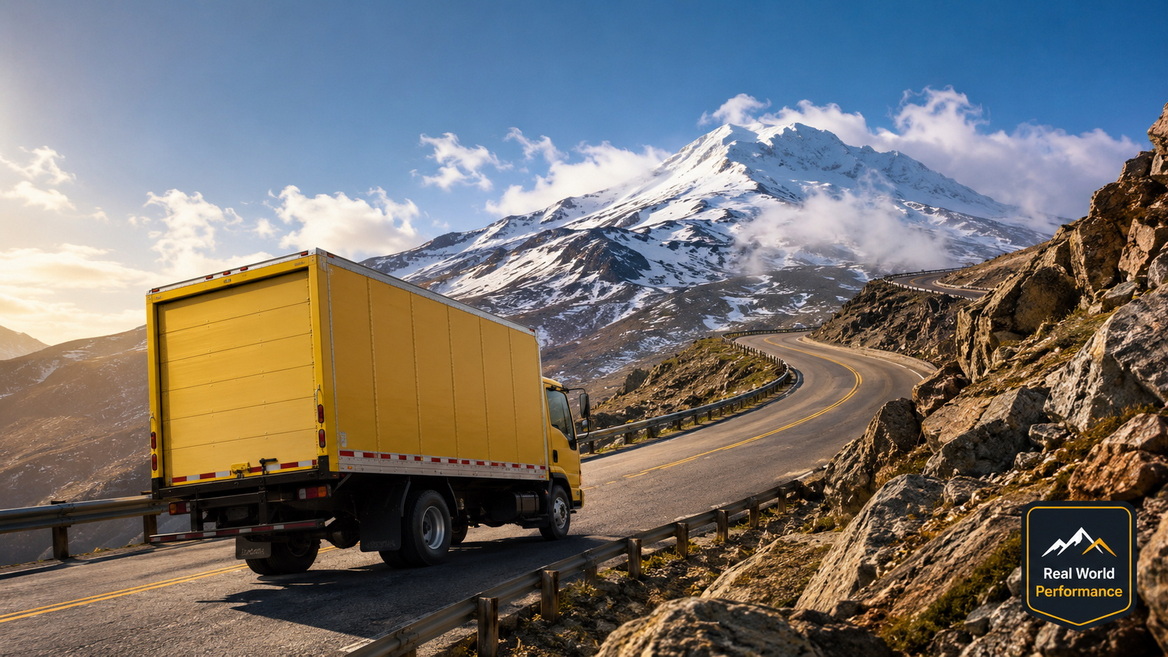
The original article describes how the Penske Truck Leasing blog received scenic photos from drivers across North America, including a remarkable set from Pikes Peak in Colorado. A production crew, in town for a training video shoot, decided to be "tourists" and drove up the mountain in a compact SUV, taking roughly 45 minutes to climb from the entrance gate to the 4,301-meter summit.
At the top, they discovered a Penske moving truck parked near a service building, operated by a research team transporting altitude-testing equipment. When asked about the drive, the driver simply answered that the ascent was "slow"—but the fact that he made it at all, with a loaded box truck, speaks volumes about engine torque, transmission gearing, cooling capacity, and braking durability on long grades.
Pikes Peak is known as "America's Mountain" and is also home to the Pikes Peak International Hill Climb, where performance vehicles race from the base to the summit on a challenging, twisting course. For commercial vehicles, this route is less about speed and more about thermal management, driveline durability, and braking control over a sustained 19‑mile climb and descent.
The ascent from 7,400 to 14,110 feet means significantly thinner air, which reduces engine power and places extra stress on both cooling and combustion systems. For diesel trucks and heavy-duty dump trucks, altitude can impact turbocharger efficiency, fuel consumption, and exhaust aftertreatment performance, making it a natural "stress test" for powertrains and braking systems designed for hilly or mountainous markets.
From an industry expert perspective, the Pikes Peak story highlights several core principles that matter whether you operate rental trucks in North America or export dump trucks and buses from China to Africa, the Middle East, or Latin America.
On steep, long grades, torque at low RPM and proper gearing are often more important than headline horsepower figures. The Penske truck climbed slowly but steadily, suggesting the driver kept engine revs in an efficient band while using lower gears to maintain traction and cooling capacity.
For dump trucks and heavy-duty chassis, this translates into:
- Selecting engines with strong low-end torque curves
- Matching transmissions (manual or automatic) with enough ratios for mountain or off‑road duty
- Balancing final drive ratios for climbing ability, not just highway speed
Long climbs and descents test more than engines. Cooling systems and brakes are often the limiting factors when a truck is fully loaded. If cooling capacity is insufficient, coolant temperatures climb, power derates, and component wear accelerates. If brakes are undersized or poorly maintained, fade on the descent can become dangerous.
Fleet operators should focus on:
- Larger radiators and intercoolers for hot or high‑altitude markets
- Retarder or engine braking systems for loaded downhill segments
- Regular inspection of brake pads, drums, rotors, and lines
The Penske driver described the ascent in one word: "slow." From an expert's point of view, that one word reveals that he respected the limits of his truck, used conservative speeds, and prioritized safety over speed—a key factor in preventing thermal overload and brake fade.
In real-world operations, this means training drivers to:
- Use lower gears early, not reactively
- Monitor coolant and transmission temperatures
- Maintain safe speeds on both climbs and descents
As a Chinese exporter focused on dump trucks, high-quality buses, and new energy commercial vehicles, KeyChain's engineering and refurbishment processes are designed around exactly these real-world stress scenarios. Instead of treating them as rare extremes, we assume that many customers will frequently operate in high-load, high-temperature, or mountainous conditions.
KeyChain's fleet philosophy is simple: if a vehicle specification would struggle on an extended climb like Pikes Peak, it will also struggle on steep mining access roads, mountainous national highways, or large construction projects. That is why we focus on matching engine output, gearing, cooling, and braking to the specific terrain and payload profile of each customer.
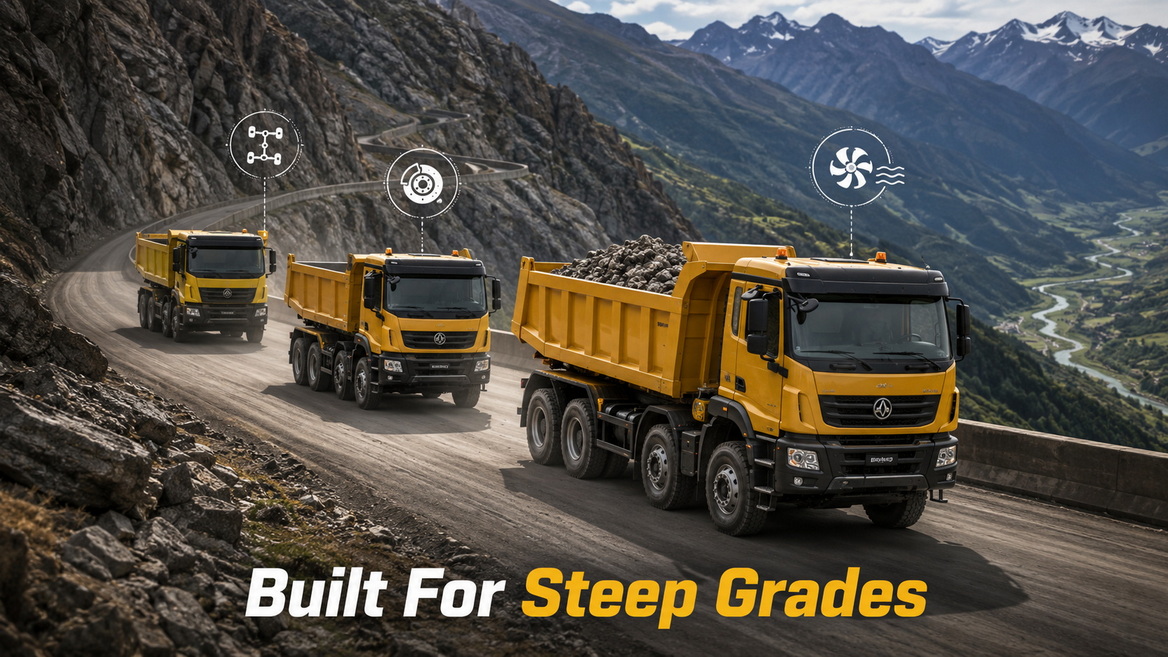
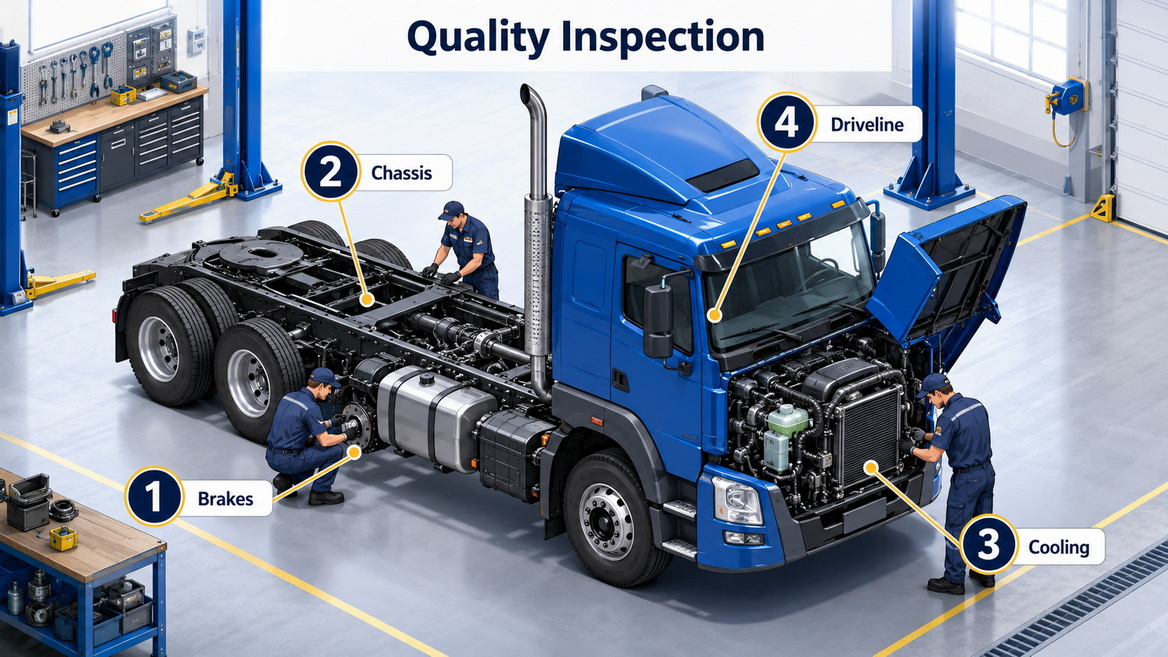
Every used bus or heavy-duty truck supplied by KeyChain starts with a thorough inspection of the chassis, suspension, braking system, and driveline. Technicians evaluate frame integrity, fatigue points, steering components, and key safety systems to ensure the vehicle can handle repeated heavy loads and rough roads without premature failure.
Wear-prone parts such as bushings, joints, hoses, and brake components are either refurbished or replaced with high-quality components, restoring baseline safety before any customization begins.
Following inspection, KeyChain's technical team executes precise repairs and preventive maintenance designed to extend the service life of the vehicle. This includes fluid changes, filter replacement, brake system overhaul, and tuning of engine and transmission systems to ensure stable performance under load and at higher altitudes.
By combining mechanical restoration with preventive maintenance, KeyChain reduces unplanned downtime and improves total cost of ownership for customers operating in demanding environments such as quarries, ports, and cross-border logistics corridors.
For passenger buses used in long-distance or tourism services, KeyChain offers upgrades such as panoramic window film, reclining seats, upgraded lighting, and optimized overhead luggage compartments. For long mountain or desert routes, passengers benefit from better climate control, comfortable seating, and enhanced interior lighting during night operations.
Amenities such as small galleys, retractable awnings, and climate-controlled storage can be integrated to support complex tour itineraries or remote worksites where drivers and passengers spend long hours on board.
For dump trucks, the focus shifts to payload capacity, frame strength, and powertrain durability. KeyChain works with buyers to balance:
- Engine torque and displacement vs. typical payload
- Transmission type and ratios vs. terrain profile
- Axle configurations vs. legal and operational load limits
By aligning these variables with the kind of "Pikes Peak-style" conditions a fleet might encounter, KeyChain helps buyers avoid underpowered or over-specified trucks that waste fuel or fail prematurely.
From my experience working with international fleets and OEMs, the following checklist can help fleet managers and buyers specify trucks for steep or high-altitude routes.
1. Define the maximum gross vehicle weight (GVW) and typical payload.
2. Map the steepest gradients and longest climbs on core routes.
3. Choose engines with strong low-RPM torque and reliable turbocharging.
4. Match gear ratios to allow climbing at safe speeds without overheating.
1. Specify heavy-duty radiators and adequate intercooling.
2. Consider auxiliary transmission or engine oil coolers for hot climates.
3. Require engine braking, retarder, or strong service brakes with sufficient cooling capacity.
4. Implement strict brake inspection intervals based on route severity.
1. Train drivers on low-gear usage, speed control, and temperature monitoring.
2. Use telematics to monitor driving behavior on key grades.
3. Set alerts for overspeed on descents and sustained high coolant temperatures.
Using this checklist, KeyChain's team can help customers from Latin America, Africa, Southeast Asia, and the Middle East translate local road profiles into the right truck configuration and refurbishment plan.
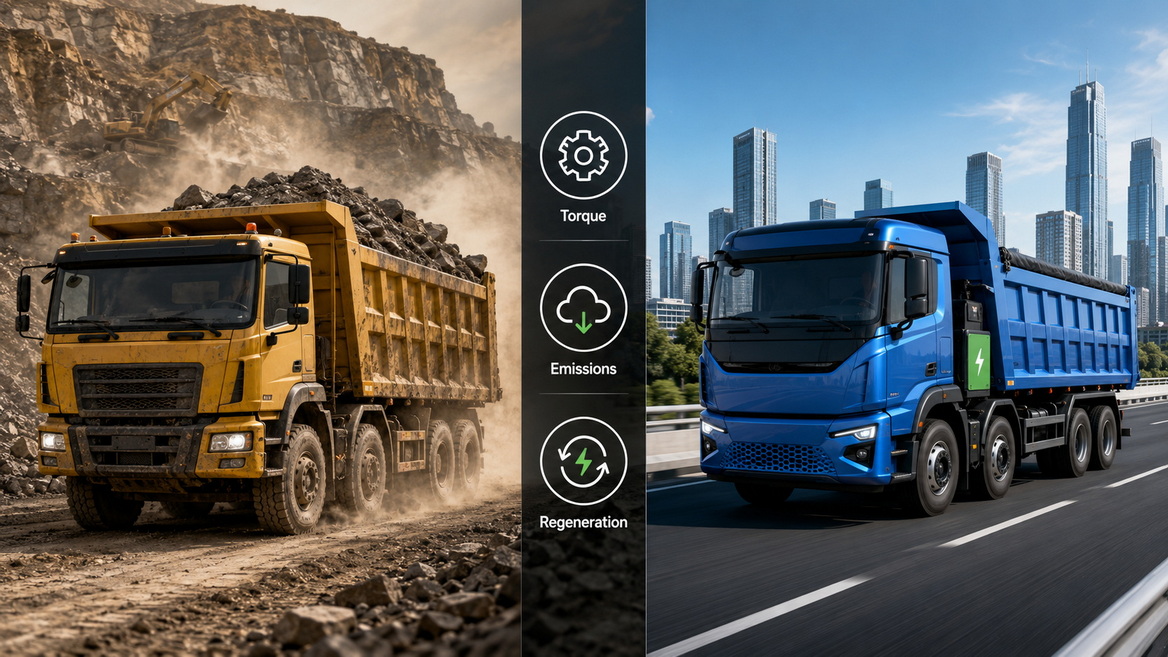
New energy trucks and buses—whether hybrid or fully electric—introduce additional opportunities and constraints in challenging routes. While battery-electric drivetrains can deliver instant torque for climbing and strong regenerative braking for descents, they also require careful range and charging planning on mountain or rural routes.
For urban fleets, new energy dump trucks and buses can cut emissions and noise while still handling steep flyovers, port ramps, and city gradients. Partnering with a supplier who understands both conventional and new energy systems allows buyers to mix combustion and electric platforms in a way that fits their infrastructure and regulatory environment.
If your routes include steep grades, unpaved access roads, or high-altitude passes, you need more than a basic spec sheet. You need a partner who can translate your real-world operating conditions into engines, gearboxes, axles, and cooling systems that will perform day after day.
KeyChain offers:
- Rigorous inspection and refurbishment for used buses and trucks
- Customized configurations for dump trucks and heavy-duty vehicles
- Options for both conventional and new energy commercial vehicles
- Experience serving global markets with diverse terrain and regulations
If you are planning to grow or renew your heavy-duty fleet for mountain, mining, or mixed urban–rural operations, contact KeyChain's team to discuss a tailored dump truck or bus configuration that is engineered for your specific routes and load profiles.
A1: Yes, but only when they have appropriate powertrain, braking, and cooling systems, and when drivers use correct low-gear techniques and speed control.
A2: Focus on torque, gear ratios, cooling capacity, and braking systems, then align these with your maximum payload and the steepest, longest grades on your routes.
A3: KeyChain conducts structural and mechanical inspections, replaces wear-prone parts, and performs professional maintenance and refurbishment before export to restore safety and reliability.
A4: They can be, especially when routes are well understood and charging is planned. Instant torque and regenerative braking can perform well on grades, but range and infrastructure must be carefully evaluated.
A5: Start with robust specifications, implement preventive maintenance and brake inspections, and use driver training plus telematics to catch risky driving behavior or thermal issues early.
- Penske Truck Leasing Blog – "Penske Power Climbs Pikes Peak" (original story and quotation from the camera crew and truck driver).https://www.gopenske.com/blog/lease/penske-power-climbs-pikes-peak/
- Pikes Peak International Hill Climb – background on the mountain route and motorsport event. https://en.wikipedia.org/wiki/Pikes_Peak_International_Hill_Climb
- Pikes Peak – "America's Mountain" official site, altitude and visitor information. https://www.pikes-peak.com/about-pikes-peak/
- KeyChain (KCV) – High-quality used bus exporter & commercial vehicle supplier, company information and refurbishment process. https://www.keychainauto.com
- Hedges & Company – Truck and automotive SEO insights on matching search intent and content. https://hedgescompany.com/digital-marketing/truck-parts-seo/


