
Views: 238 Author: Keychain Venture Publish Time: 2026-07-21 Origin: Site


Content Menu
● Understanding Your Finance Agreement
>> PCP – You Usually Do Not Own the Car Yet
>> HP – Ownership Gradually Transfers to You
● How to Part Exchange a Financed Car – Step‑by‑Step Guide
>> Step 1 – Request Your Settlement Figure
>> Step 2 – Obtain a Professional Valuation
>> Step 3 – Compare Valuation and Settlement
>> Step 4 – Agree the Deal and Close the Finance
● Positive Equity vs Negative Equity Explained
>> What Positive Equity Looks Like
>> What Negative Equity Looks Like
● Alternatives When You Are in Negative Equity
>> Option 1 – Wait and Continue Paying
>> Option 2 – Voluntary Termination Under HP
>> Option 3 – Pay the Shortfall and Exchange
● Documents You Need for Part Exchange
● Selling a Financed Car Without Part Exchanging
● Practical Insights for Private and Business Buyers
>> When Exchanging Makes Practical Sense
>> When You Should Pause and Reconsider
● Improving Clarity and Readability for Online Readers
● Summary – Make the Numbers Work for You
● FAQs – Part Exchange and Outstanding Finance
>> Can I part exchange a car that still has finance on it?
>> Will part exchanging my financed car affect my credit record?
>> Do I need to tell the dealership that the car is on finance?
>> Is it better to sell privately or part exchange?
>> Can I exchange a commercial vehicle such as a bus or heavy truck?
If you are tied into a car finance agreement but need to replace or upgrade your vehicle, you do not have to wait until the contract ends. You can still part exchange a car with outstanding finance, as long as you follow a clear process and respect the rules set out in your agreement.
From a practical point of view, this is a financial and contractual decision rather than a simple vehicle swap. Treat it the same way you would any other long‑term commitment: understand the numbers, read the small print, and avoid rushing into a deal because you feel pressured or excited by a new car.
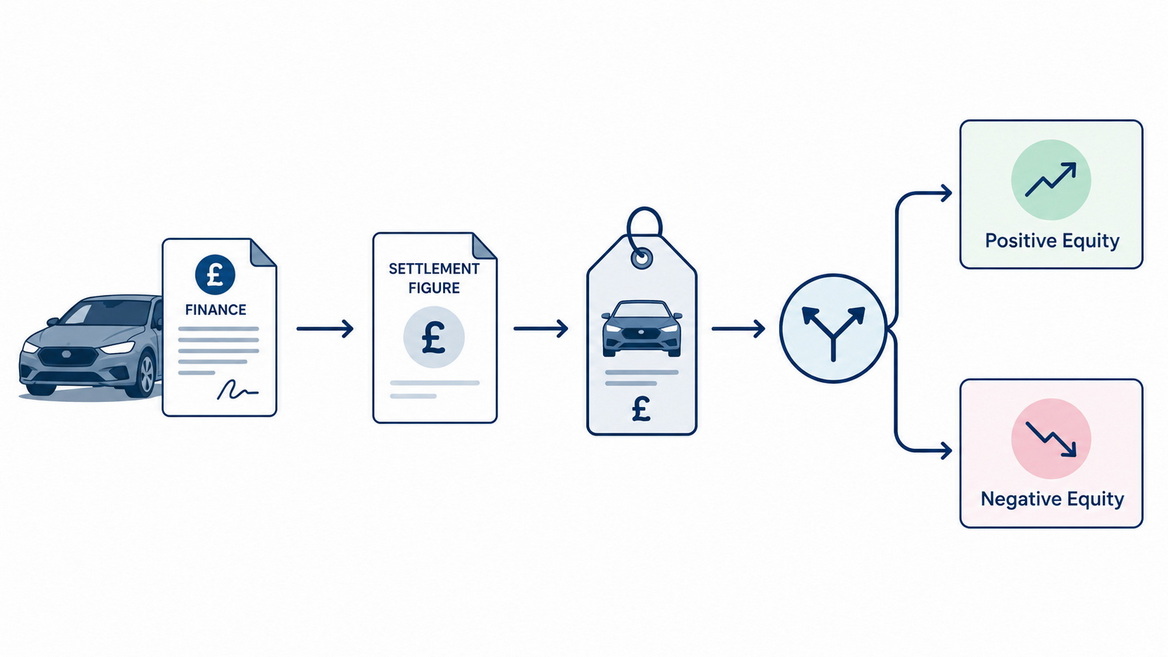
Before you speak to any dealership, take time to understand the structure of your current agreement. In most modern car purchases, two formats are common: Personal Contract Purchase (PCP) and Hire Purchase (HP).
With PCP, your monthly payments mainly cover the predicted depreciation of the vehicle over the term. A large optional final payment, sometimes called a balloon payment, is due at the end if you decide to keep the car.
Under this structure, you usually do not own the vehicle outright until that final amount is paid. This is important because it affects how the car can be exchanged or sold. In practice, you are handing back a vehicle that technically belongs to the finance company, and the settlement amount is what brings that contract to an end.
With HP, your monthly payments gradually repay the total cost of the car. Once every instalment is paid, including any fees, the vehicle becomes fully yours.
This format tends to be more straightforward when exchanging, because the ownership path is clearer. Depending on how much you have already paid, you may have the right to end the agreement early, return the vehicle, or pay a settlement figure to close the contract and then exchange your car.
The process of part exchanging a car on finance is manageable if you follow a simple sequence. This section outlines the steps that individual drivers and business buyers should take.
Your settlement figure is the total amount required to clear the finance agreement at a specific point in time. It accounts for what you still owe, minus instalments you have already paid, and may include an early termination fee or interest adjustment.
Always request this figure in writing. Use your finance provider's app, online account, phone number, or email, and store the document somewhere safe. Without this figure, you are effectively guessing your remaining obligation, which is risky when you are about to enter a new agreement.
Next, you need to know what your car is worth today. A dealership or specialist buyer will typically inspect the vehicle, consider age, mileage, specification, condition, and maintenance records, then provide a valuation.
For higher‑value or commercial vehicles, such as buses, heavy‑duty trucks or new energy vehicles, it is often wise to request more than one valuation. This helps you benchmark offers against wider market conditions and avoids relying on a single figure that might not reflect true value.
Once you have both numbers, you can compare them. This is where you discover whether you are in positive equity or negative equity.
- If your car's valuation is greater than your settlement figure, you are in positive equity.
- If your car's valuation is lower than your settlement figure, you are in negative equity.
This simple comparison will guide your next decision. It tells you whether exchanging the car will close your current agreement cleanly, provide some surplus toward your next vehicle, or leave you with a shortfall that needs to be addressed.
If you are comfortable with the valuation and you understand your equity position, you can agree the exchange. In most cases, the dealership will pay the settlement amount directly to the finance provider, then apply any remaining value from your car as a deposit on your new vehicle.
Always confirm that your old agreement has been cleared. Wait for written confirmation from the finance provider that the contract is closed and that no further payments are due. Keeping a copy of this confirmation helps avoid confusion later.
Many drivers hear these terms but are unsure what they really mean in everyday language. This section breaks them down with simple examples.
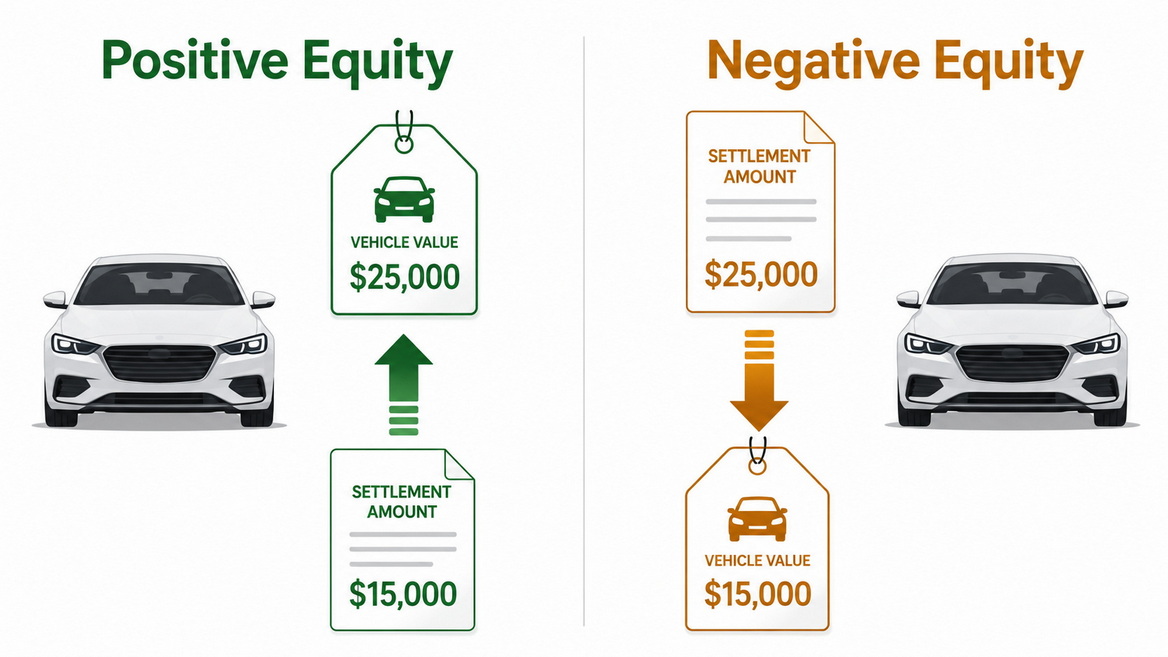
Positive equity occurs when your car is worth more than the remaining balance on your finance agreement. For example:
- Car valuation: £5,000
- Settlement figure: £2,000
- Result: £3,000 positive equity
In this case, exchanging your car can clear the existing finance and leave a surplus. That surplus becomes a contribution toward your next vehicle, helping you reduce the amount you need to finance. For business fleets, this kind of position can support multi‑vehicle upgrades with less upfront capital.
Negative equity is the opposite. It happens when your settlement figure is higher than the value of your car. For example:
- Car valuation: £3,000
- Settlement figure: £5,000
- Result: £2,000 shortfall
Here, exchanging the car will not fully clear the finance. You must either pay the shortfall in cash, roll it into a new agreement, or wait until the gap has narrowed. Rolling negative equity into a new agreement can make your next vehicle more expensive overall, so it should be considered carefully.
If you discover you are in negative equity, you still have options. The right choice depends on your budget, timeline, and tolerance for risk.
One straightforward option is to stay in your current agreement, continue making payments, and repeat the valuation and settlement comparison later. Over time, the finance balance may reduce faster than the car's value, bringing you closer to neutral or positive equity.
This approach is often suitable if your current vehicle still meets your needs and you are not under pressure to change it immediately.
Certain hire purchase contracts allow voluntary termination once you have paid a specified portion of the total amount, often around half. Under these rules, you may be able to return the vehicle and end the agreement without paying the full remaining balance.
This path is useful if the car no longer fits your situation and you want a clean break from the contract. However, you may have to meet mileage and condition requirements, and it might not leave you with funds for a new vehicle.
If you can afford to cover the negative equity in cash, you can settle the shortfall and then exchange the car. This removes the risk of carrying debt into a new agreement.
For businesses managing a fleet of vehicles, this option can be part of a wider asset strategy where older vehicles are retired and replaced with more efficient models, including new energy buses and heavy trucks.
When you exchange a financed car, you are still transferring it to a new owner. You must provide documentation that proves identity, vehicle status, and maintenance.
Key items usually include:
- Vehicle registration document or logbook
- Valid roadworthiness certificate where applicable
- Service history records and invoices
- Warranty and battery health records for electric models
- Spare keys and security codes
Having these documents ready improves the valuation process, speeds up administration, and helps dealerships feel confident about the vehicle's background. For commercial buyers, maintenance logs, inspection reports and upgrade documentation are equally important.
Part exchange is not the only route. You can also sell a financed car outright, without immediately buying a replacement.
The basic steps are similar:
1. Request your settlement figure.
2. Obtain a valuation, either from a dealer or a specialist car‑buying service.
3. Agree a sale price.
4. Ensure the sale proceeds cover the settlement figure or plan to pay any shortfall.
In many cases, the buyer will pay the settlement directly to your finance provider, then pay any remaining amount to you. This path can be useful if you want to reduce monthly costs, free up capital, or switch from a private car to a company or fleet vehicle.
The same principles apply whether you are a private driver exchanging a family car or a business buyer managing buses and heavy trucks. The difference lies in scale and planning.
Exchanging is often a sensible choice when:
- You are in positive equity and the valuation is fair.
- Your current vehicle no longer suits your driving pattern or location.
- You want to move to a more efficient model with lower running costs.
- You prefer a simple process where a dealership handles most of the paperwork.
For fleet operators, exchanging can also align with planned replacement cycles and sustainability goals, such as migrating from older diesel vehicles toward new energy models.
You should pause before exchanging if:
- You are in deep negative equity and would need to carry that shortfall into another agreement.
- Your current vehicle is still fit for purpose and major changes would strain your budget.
- You have not compared alternative options, such as voluntary termination or sale without exchange.
In commercial operations, repeated negative equity across multiple vehicles can signal that asset lifecycles, procurement approaches or disposal timing may need to be reviewed.

To make this information easier to understand and faster to digest on a website, it helps to structure content visually and clearly.
Effective techniques include:
- Short paragraphs and simple sentence structures.
- Key terms and figures highlighted in bold to support scanning.
- Bullet lists for steps, options and required documents.
- Tables for at‑a‑glance comparisons between positive and negative equity, or between PCP and HP.
For example, a table summarising "Positive Equity vs Negative Equity" near the middle of the page can help readers see the financial impact of each scenario in a few seconds. A step‑by‑step graphic showing the journey from settlement figure to final decision further improves comprehension.
Recommended image placements:
- Near the top: a photo of a customer handing over keys during a vehicle exchange.
- In the middle: a simple flow diagram showing "Agreement → Settlement → Valuation → Equity → Decision".
- Near business‑focused sections: images of buses, heavy trucks or new energy vehicles being delivered or inspected.

Exchanging a car on finance can be a smart move when the numbers and timing are on your side. By understanding your agreement type, requesting a clear settlement figure, securing a realistic valuation and comparing the two, you can see whether an exchange will leave you better off or expose you to additional costs.
Whether you are a private driver or a business buyer managing a fleet of vehicles, the goal is the same: protect your finances, avoid surprises, and ensure your next vehicle genuinely supports your needs over the long term.
Yes. The key is to request a settlement figure, obtain a valuation, and allow the dealership or buyer to settle the finance before ownership transfers. Any remaining value can then help fund your next vehicle.
If the finance is settled correctly and payments have been made on time, part exchange itself should not harm your credit record. Problems arise only if payments are missed or agreements are left unpaid.
Absolutely. You must disclose that the car is financed. The dealership needs this information to arrange settlement with the provider and ensure the transfer of ownership is lawful and properly recorded.
Selling privately can sometimes achieve a higher price, but it requires more time, effort and negotiation. Part exchange is usually faster and more convenient, especially if you are already working with a dealership on a new vehicle.
Yes. The principles are the same: understand the finance agreement, request a settlement figure, secure a professional valuation, and compare the two. For commercial vehicles, it is common to involve specialists who understand fleet depreciation and new energy technologies.
1. Evans Halshaw – Can You Part Exchange a Car With Outstanding Finance?
https://www.evanshalshaw.com/blog/can-you-part-exchange-a-car-on-finance/
2. Digicrawl – How to Create an E‑E‑A‑T Optimized Blog Post for Maximum SEO Impact
https://thedigicrawl.com/how-to-create-an-e-e-a-t-optimized-blog-post-for-maximum-seo-impact/
3. Journaleus – Google E‑E‑A‑T Optimization for Bloggers: Complete 2025 Guide
https://journaleus.com/articles/google-eeat-optimization-bloggers
4. Semrush – Google E‑E‑A‑T: What it is & how it affects SEO
https://www.semrush.com/blog/eeat/
5. Google Search Central – Creating Helpful, Reliable, People‑First Content
https://developers.google.com/search/docs/fundamentals/creating-helpful-content


