
Views: 248 Author: Keychain Venture Publish Time: 2026-07-06 Origin: Site


Content Menu
● Why the Lowe's Gold Carrier Award Matters
● What the Lowe's Gold Carrier Award Recognizes
● Penske Logistics' Performance Culture and KPIs
● Lessons for Fleets from an Industry Expert's View
● How KeyChain Supports High‑Performance Fleets
● Building a KPI Framework Inspired by Penske
>> Core Logistics KPIs to Prioritize
● Sustainability and SmartWay: Beyond On‑Time Delivery
● Case Insight: Award Programs as Strategic Levers
● Practical Steps: How Fleets Can Reach Gold‑Level Performance
>> Step 1: Align Vehicle Strategy with Service Goals
>> Step 2: Implement KPI‑Driven Operations
>> Step 3: Embed Safety and Maintenance Discipline
>> Step 4: Pursue Sustainability and Awards Proactively
● How KeyChain Partners with Global Fleets
● Strategic Takeaways for OEMs, Carriers, and Shippers
● Frequently Asked Questions (FAQ)
>> 1. What is the Lowe's Gold Carrier Award?
>> 2. How did Penske Logistics earn the award?
>> 3. Why is SmartWay recognition important for fleets?
>> 4. How can vehicle choice influence KPI performance?
>> 5. What role does KeyChain play in helping fleets achieve similar recognition?
Penske Logistics' Lowe's Gold Carrier Award is a powerful case study in how disciplined logistics execution, data-driven KPI management, and collaborative carrier–shipper relationships can unlock consistent 99.5%+ on‑time performance—and it offers actionable lessons for global fleets and vehicle suppliers like KeyChain.
Lowe's Gold Carrier Award recognizes trucking partners that consistently exceed 99.5% on‑time delivery while maintaining high customer service standards and advanced supply chain solutions. Penske Logistics has earned this Gold Carrier Award from Lowe's for at least two consecutive years, underscoring their ability to maintain service excellence over time rather than as a one‑off success. For fleet owners and OEM/vehicle exporters, this benchmark illustrates how reliable operations translate directly into customer recognition and long‑term contracts.
From my perspective as a fleet and logistics strategist, awards like this are not "nice‑to‑have trophies" but external validation of a disciplined operating model: the right vehicles, the right KPIs, and the right people. When we design fleets at KeyChain—whether dump trucks, heavy tractors, or new energy buses—we look at the same core metrics that Lowe's uses for recognition, because those KPIs ultimately determine profitability, safety, and customer satisfaction.
Lowe's Gold Carrier Award focuses on more than just arriving on time; it rewards end‑to‑end supply chain performance and customer service. Carriers must maintain on‑time delivery performance above 99.5%, provide excellent communication, and support advanced supply chain solutions such as proactive exception management and continuous improvement programs.
In practice, this means a carrier like Penske must coordinate planning, routing, dock operations, and real‑time updates seamlessly across hundreds or thousands of loads. It also means collaborating closely with shippers on network design, inventory strategy, and demand variability so that high service levels are sustainable, not just heroic.
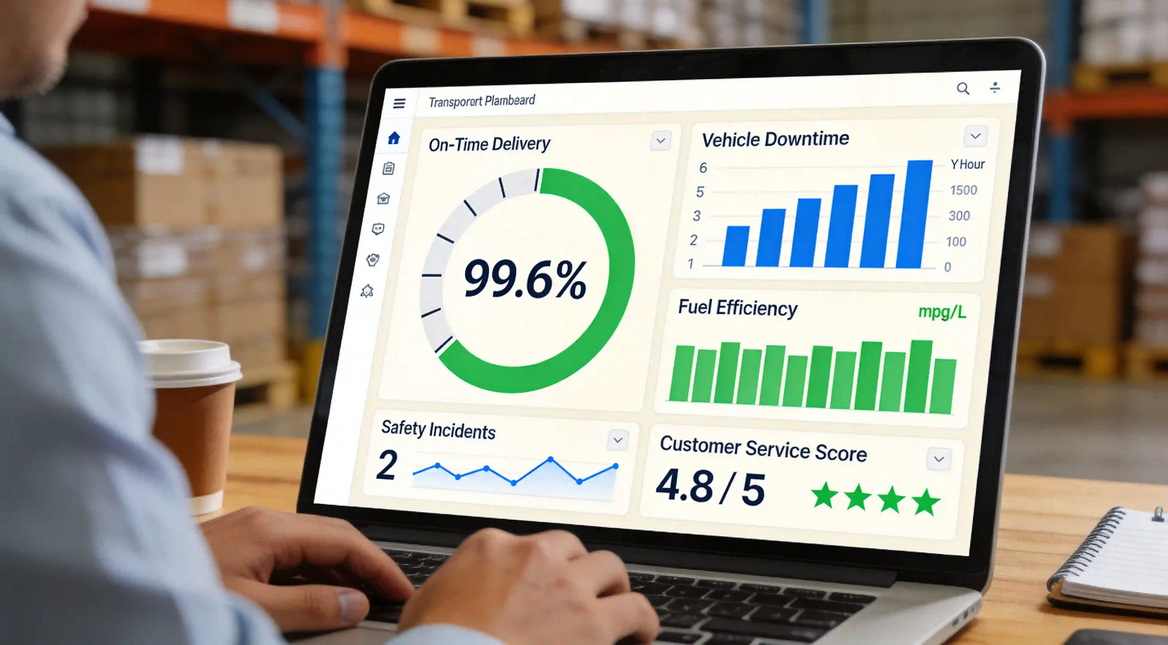
Penske operates in a KPI‑rich environment where 80+ key performance indicators can be tracked in real time across transportation and warehousing. Through its Supply Chain Insight platform, Penske provides customers with dashboards that monitor trends, evaluate results, and identify improvement opportunities—from on‑time delivery to carrier performance and warehouse throughput.
This KPI discipline is mirrored in safety and compliance metrics reported to regulators. For example, Penske's Safety Measurement System (SMS) profile shows vehicle out‑of‑service rates below the national average and low driver out‑of‑service rates, reflecting a strong focus on maintenance and driver compliance. As a vehicle supplier, we see this as evidence that equipment quality, maintenance programs, and driver training directly influence award‑winning performance.
From a fleet expert's perspective, Penske's recognition from Lowe's is a demonstration of how aligned vehicles, technology, and processes create a resilient logistics system. To sustain 99.5%+ on‑time performance, fleets must reduce unplanned downtime, design routes around realistic dwell times, and leverage telematics and predictive maintenance.
KeyChain's work with global fleets shows that when operators invest in high‑performance dump trucks, long‑haul tractors, and new energy buses, they can materially reduce breakdowns and fuel consumption while improving driver satisfaction. The Lowe's–Penske example confirms that customers reward such investments with longer contracts, higher load volumes, and preferential carrier status.
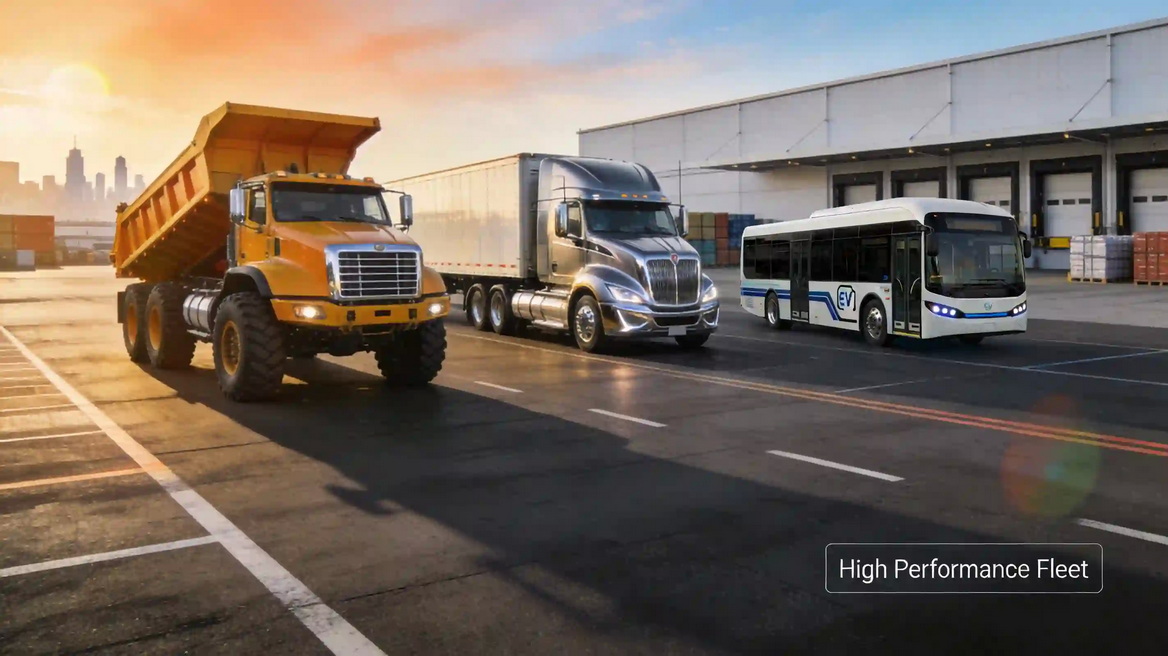
As a Chinese exporter and supplier of dump trucks, heavy‑duty trucks, buses, and new energy vehicles, KeyChain focuses on delivering vehicles that are engineered for uptime, safety, and total cost of ownership (TCO). Our portfolio includes heavy dump trucks for construction and mining, long‑haul tractors for regional and international routes, and new energy vehicles designed for low‑emission urban operations.
We combine this product offering with inspection, refurbishment, and customization services tailored to demanding global routes, drawing lessons from award‑winning fleets like Penske. By aligning vehicle specs with customers' logistics KPIs—such as payload utilization, fuel efficiency, and on‑time performance—we help fleets build the operational foundation needed to achieve Gold‑level service.
A robust KPI framework is central to both Penske's and Lowe's success, and it offers a practical template for fleets globally. Penske's Supply Chain Insight platform enables customers to choose from more than 85 KPIs and focus on the metrics that matter most for their business.
- On‑time delivery rate (OTD) – benchmark against 99.5%+ to align with Lowe's Gold Carrier expectations.
- Vehicle availability and utilization – track downtime, preventive maintenance compliance, and asset productivity.
- Safety and compliance metrics – monitor out‑of‑service rates, driver violations, and incident rates relative to national averages.
- Fuel efficiency and emissions – measure liters per 100 km or mpg and CO₂ per ton‑km, aligning with programs like the EPA's SmartWay. - Customer service KPIs – evaluate on‑time in‑full (OTIF), claims ratio, and communication responsiveness.
By adopting such a framework, fleets can directly link vehicle choice and maintenance practices to measurable service outcomes—a methodology that KeyChain uses when advising customers on fleet expansion or renewal.
Penske's recognition as a High Performer by the U. S. EPA SmartWay program signals that award‑winning carriers must excel not only in service levels but also in environmental performance. Penske has been listed among fewer than 10% of SmartWay truck carriers with top‑tier carbon metrics and among the top 5% of logistics companies for freight management emissions performance.
High‑performing SmartWay carriers consume less fuel per mile and per ton of freight, reflecting optimized routes, efficient equipment, and careful carrier selection. For fleets and shippers, this demonstrates that carbon efficiency and cost efficiency often move in the same direction, especially when supported by new energy vehicles, aerodynamic designs, and advanced telematics.
Penske's broader award portfolio—including recognition from OEMs such as General Motors—shows how carriers can leverage awards for strategic advantage. Penske has repeatedly been honored as a Supplier of the Year and recognized for driving efficiencies, optimizing shipments, and launching digital tools that enhance visibility and predictive alerts.
These awards rest on an enterprise scorecard that blends customer feedback, operational metrics, and sourcing evaluations. For carriers and exporters, this underscores the importance of structured, data‑backed performance reviews and continuous improvement programs. KeyChain encourages fleet customers to align internal scorecards with major shippers' criteria so that every operational improvement also enhances competitiveness in tender processes.
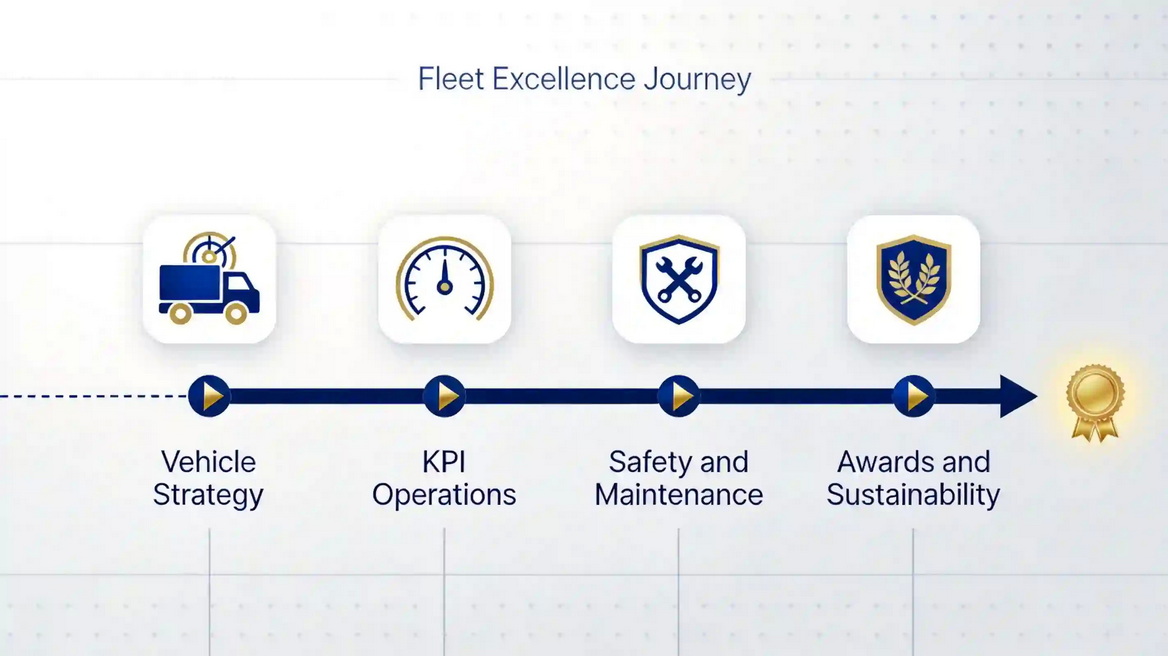
To translate these insights into action, fleets can follow a structured roadmap that integrates vehicles, operations, and technology.
1. Define service targets (e. g., 99.5%+ on‑time delivery, target OOS rates below national average). 2. Select vehicles—such as high‑reliability dump trucks and long‑haul tractors—that can meet these targets under real‑world conditions. 3. Plan fleet mix (diesel, LNG, and new energy vehicles) based on route profiles and sustainability commitments.
1. Deploy a KPI platform similar in intent to Penske's Supply Chain Insight to consolidate transportation and warehouse data. 2. Standardize definitions of on‑time, dwell time, and utilization across the organization to avoid data ambiguity.
3. Run weekly reviews of exceptions, root causes, and corrective actions with cross‑functional teams.
1. Benchmark safety metrics against regulators' data and national averages, as reflected in SMS profiles. 2. Adopt preventive maintenance schedules tuned to vehicle type, operating environment, and telematics alerts. 3. Train drivers continuously on defensive driving, efficient driving techniques, and regulatory compliance.
Join programs like SmartWay and report emissions and fuel performance annually.
Set emissions‑per‑ton‑km targets and align them with vehicle purchasing and route optimization strategies.
Apply for shipper awards (e. g., Gold Carrier, Supplier of the Year) as part of a brand and sales strategy, using their criteria to guide internal improvements.
By following these steps, fleets can build a trajectory that mirrors what Lowe's and Penske have achieved: consistent, measurable performance recognized by customers and regulators alike.
KeyChain acts not just as a vehicle exporter, but as a solution partner for fleets seeking Gold‑level performance. We work with operators in construction, mining, regional distribution, and intercity passenger transport to:
- Specify dump trucks, buses, and heavy trucks aligned with route demands and regulatory constraints.
- Provide inspection and refurbishment services for used vehicles to extend service life while maintaining reliability.
- Support TCO analysis that integrates acquisition cost, fuel, maintenance, and residual value with target KPIs.
Our experience shows that fleets that treat vehicle selection, KPI design, and driver programs as a single integrated system are the ones that eventually secure awards, preferred carrier status, and stronger margins.
The Lowe's–Penske Logistics relationship demonstrates that high‑performance logistics today is defined by more than capacity and price; it is defined by reliability, visibility, sustainability, and collaboration. Award programs such as Lowe's Gold Carrier and SmartWay High Performer codify these expectations and provide a roadmap for fleets and suppliers.
For OEMs and exporters like KeyChain, the message is clear: vehicles must be engineered and configured to meet customer KPIs—not just technical specifications. For carriers, the focus shifts to building an integrated system where equipment, technology, and people operate within a clear KPI framework that is transparent to shippers and measurable in real time.
Call to action:
If you are planning to upgrade your fleet—whether with high‑performance dump trucks, long‑haul tractors, or new energy buses—and want to align your investments with award‑level logistics performance, we invite you to contact KeyChain's specialist team for a tailored fleet and KPI consultation.
The Lowe's Gold Carrier Award recognizes trucking companies that consistently achieve at least 99.5% on‑time delivery and demonstrate outstanding customer service and advanced supply chain solutions.
Penske Logistics achieved the award by delivering high on‑time performance, strong customer service, and innovative supply chain capabilities, earning Lowe's recognition for at least two consecutive years.
SmartWay High Performer status indicates that a fleet operates more fuel‑efficiently and with lower carbon emissions than most peers, which can reduce operating costs and support customer sustainability goals.
Vehicle choice affects uptime, fuel efficiency, safety, and compliance; fleets using high‑reliability dump trucks, tractors, and new energy vehicles are better positioned to meet strict OTD and emissions targets.
KeyChain supports fleets by supplying high‑performance buses, heavy trucks, and new energy vehicles, offering inspection and customization, and aligning vehicle specs with customers' KPI frameworks and award criteria.
1. Lowe's Honors Penske Logistics with Gold Carrier Award – Penske Logistics Blog. Available at:
https://www.gopenske.com/blog/logistics/lowes-honors-penske-logistics-with-gold-carrier-award/
2. Transform Your Supply Chain With the Right KPIs – Penske Logistics. Available at:
https://www.penskelogistics.com/technology/supply-chain-insight/the-right-kpis/
3. Penske Logistics Launches Supply Chain Insight – Penske Logistics. Available at:
https://www.gopenske.com/penske-logistics-launches-supply-chain-insight/
4. Penske Logistics Recognized as High Performer by U. S. EPA SmartWay Program – PR Newswire. Available at:
5. Safety Measurement System – Complete SMS Profile (Penske) – FMCSA. Available at:
https://ai.fmcsa.dot.gov/SMS/Carrier/268015/CompleteProfile.aspx
6. Penske Logistics Hands Out 2025 Supply Chain Management Carrier Awards – PR Newswire. Available at:
7. Penske Logistics Supplier Awards and Digital Tools – Instagram/GM Supplier of the Year Post. Available at:
https://www.instagram.com/p/DZNb5JYFqtq/
8. KeyChain – Wholesale Dump Truck, Customized Semi Trailer – Official Site. Available at:
https://www.keychainventure.com/
9. Comprehensive Supply Chain Strategy at Penske – Case and academic material. Available at:


