
Views: 251 Author: Keychain Venture Publish Time: 2026-09-14 Origin: Site


Content Menu
● MPV vs SUV: What Is the Difference?
>> Flexible Seating for Changing Needs
>> Easier Passenger Entry and Exit
>> Better Use of Interior Space
>> Comfortable Travel for Families and Groups
● Potential Disadvantages of an MPV
>> Less Rugged or Sporty Appearance
>> Larger Size Can Affect Urban Parking
>> Higher Initial Costs for Larger Models
● How to Choose the Right Electric MPV
>> Plan Charging Before Vehicle Delivery
>> Review Passenger Safety and Vehicle Compliance
● A Practical Checklist for MPV Fleet Buyers
● Where MPVs Fit in Passenger Transport
● Summary
>> Is an MPV the same as a minivan?
>> Is an MPV better than an SUV for a large family?
>> Are electric MPVs suitable for airport transfers?
>> How far can an electric MPV travel on one charge?
An MPV means a Multi-Purpose Vehicle. It is a passenger vehicle designed to carry people comfortably while offering more flexible seating, easier access, and better cargo practicality than many conventional cars.
Often known as a people carrier, minivan, or multi-activity vehicle, an MPV is widely used by large families, airport-transfer operators, hotels, tourism companies, employee shuttle providers, and community transport services. Modern MPVs are available with petrol, diesel, hybrid, plug-in hybrid, and fully electric powertrains.
For buyers looking at new energy vehicles, an electric MPV can offer a practical combination of passenger capacity, quiet operation, zero tailpipe emissions during driving, and potentially lower daily operating costs on predictable routes.
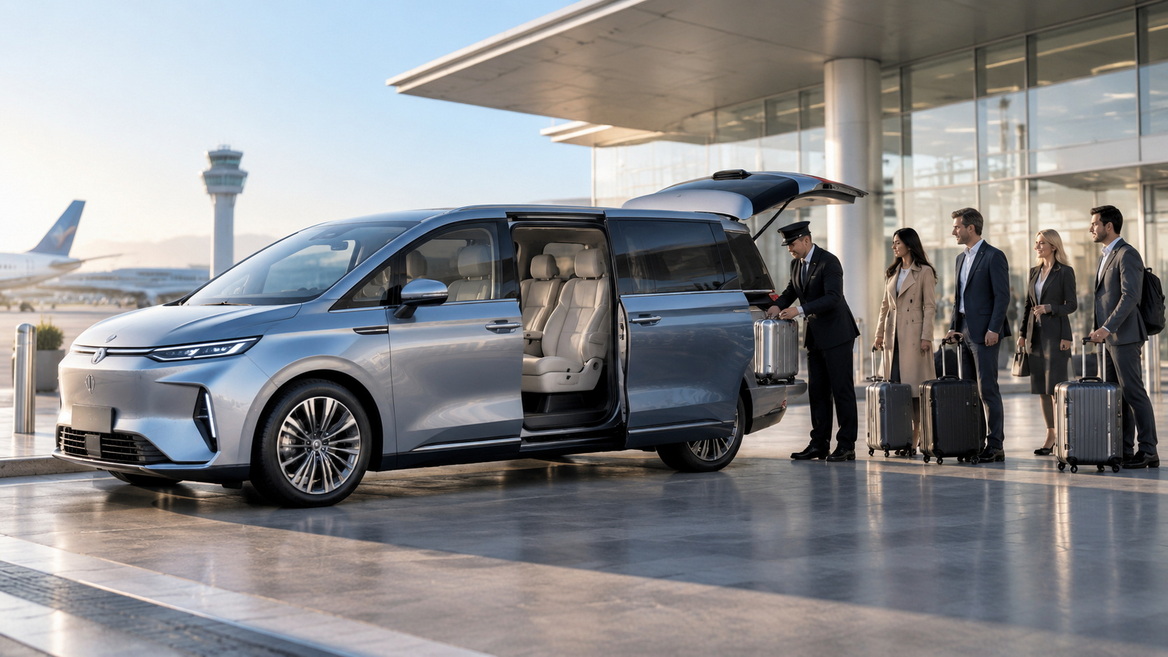
MPV stands for Multi-Purpose Vehicle. It describes a vehicle body style that prioritizes interior space, adaptable seating, passenger comfort, and practical storage.
Unlike a traditional sedan or hatchback, an MPV usually has a higher roofline, a more upright cabin, and a layout that makes better use of every part of the interior. Many models have five, six, or seven seats, while larger people carriers can accommodate even more passengers.
The main purpose of an MPV is flexibility. It can be used for school runs during the week, family trips at the weekend, luggage-heavy airport journeys, hotel guest transfers, staff commuting, and light commercial transport.
Common features of an MPV include:
- Five to seven seats, with larger models offering more passenger capacity
- A tall roofline for improved headroom
- Flexible second- and third-row seating
- Wide-opening doors or sliding rear doors
- Low step-in height for easier passenger access
- Large windows for improved visibility and a more open cabin feel
- Useful cargo space for luggage, shopping, equipment, or work materials
- Fold-flat, sliding, split-fold, or removable seats depending on the model
In the UK and many European markets, "MPV" is the most common name. In North America, similar vehicles are often called minivans. In other markets, buyers may see descriptions such as people mover, passenger van, multi-activity vehicle, or family shuttle.
MPVs are popular because they solve practical transport problems. They make it easier to carry more people, more luggage, and more everyday items without moving up to a full-size bus or commercial van.
For many buyers, the value of an MPV comes from the cabin rather than the exterior. The upright seating position, flat floor areas, adaptable rear rows, and wide door openings can make daily travel significantly easier.
A well-designed MPV can be particularly useful for passengers who may find low cars or high-riding SUVs less convenient. This includes young children, older family members, guests carrying luggage, and people entering or leaving the vehicle many times during the day.
| Application | Why an MPV Is Suitable | Important Features |
|---|---|---|
| Large family transport | Offers multiple seats and flexible cargo space | ISOFIX points, third-row access, boot capacity |
| Airport transfers | Carries passengers and luggage in one practical vehicle | Rear-door opening, luggage layout, air conditioning |
| Hotel shuttle service | Supports frequent passenger entry and exit | Sliding doors, low step height, durable interior |
| Corporate commuting | Moves employees efficiently on fixed routes | Seating capacity, comfort, charging access |
| Tourism transport | Provides comfortable group travel and luggage room | Rear climate control, seat comfort, ride quality |
| Community mobility | Can support local passenger and accessibility needs | Step height, grab handles, safety equipment |
| Mixed business use | Allows passengers and cargo to be carried as needed | Foldable seats, payload, interior versatility |
MPVs and SUVs may both offer five or seven seats, but their priorities are different.
An MPV is built around passenger space and cabin flexibility. An SUV is often built around style, ride height, road presence, and mixed-road capability.
An SUV may have a more rugged appearance and may offer all-wheel drive, increased ground clearance, and stronger towing capability. However, an MPV often makes better use of its external dimensions by creating more usable passenger space inside.
| Feature | MPV | SUV |
|---|---|---|
| Main purpose | Passenger transport and flexible space | Lifestyle driving, versatility, and road presence |
| Cabin design | Tall, practical, and space-efficient | Often more sculpted and style-focused |
| Seating flexibility | Usually very strong | Varies by model |
| Third-row access | Often easier for regular use | May be more restricted |
| Entry and exit | Usually easy, especially with sliding doors | May require a higher step up |
| Luggage practicality | Often excellent when rear seats are folded | Depends on body size and seat layout |
| Ground clearance | Normally lower | Usually higher |
| All-wheel drive availability | Less common | More common |
| Best suited to | Families, shuttles, hospitality, group transport | Families, outdoor users, mixed-road driving |
A family that frequently carries children, grandparents, bags, strollers, and shopping may find an MPV easier to live with. A buyer who values a higher driving position, occasional rough-road use, and SUV styling may prefer an SUV.
The better option depends on what happens every day, not just how the vehicle looks in a showroom.
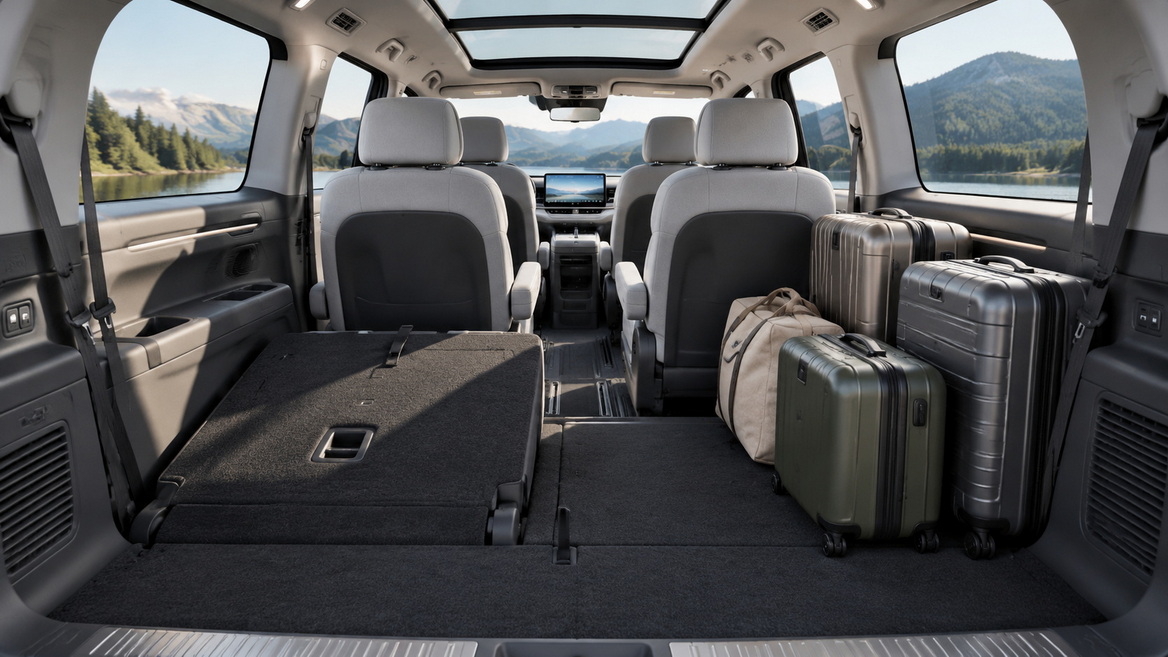
One of the most important benefits of an MPV is its seating flexibility. Different journeys require different cabin layouts.
A family may need all seven seats for a school run. A hotel operator may need room for four guests and several large suitcases. A business user may need to carry staff in the morning and equipment later in the day.
Many MPVs allow owners to:
- Slide the second-row seats forward or backward
- Fold the third row flat into the floor
- Fold individual seats independently
- Create more room for long or bulky items
- Adjust legroom between seating rows
- Convert part of the passenger area into additional luggage space
This flexibility makes an MPV a useful long-term choice for buyers whose transport needs change frequently.
Passenger access is one of the clearest advantages of an MPV. The cabin is usually designed to make getting in and out simple.
Wide rear doors are useful in busy car parks and drop-off points. Sliding doors can be especially convenient when space is limited. A relatively low step-in height can also help children, older passengers, and people carrying bags.
For a transport business, easy entry can improve service quality. Guests can board faster, luggage can be handled more easily, and drivers can spend less time assisting passengers at every stop.
An MPV is often more efficient than a similarly sized SUV because its cabin shape is less focused on exterior styling and more focused on usable space.
The higher roofline can create more headroom. The longer cabin can improve third-row comfort. The square rear section can provide more practical luggage capacity.
This does not mean every MPV has more luggage space than every SUV. Buyers should always check the actual boot volume with every seat occupied.
A seven-seat vehicle may have limited luggage space when the third row is in use. This is particularly important for airport transfers and tourism transport, where each passenger may carry one or more large cases.
MPVs are designed for people who spend time in the vehicle, not only drivers who enjoy the driving position.
Features worth checking include:
- Rear air-conditioning vents
- Adjustable second-row seats
- Third-row air vents
- USB charging ports
- Cup holders and storage areas
- Large side windows
- Rear privacy glass
- Comfortable seat cushioning
- Easy access to the third row
- Quiet cabin insulation
For longer journeys, these details can make a major difference to passenger satisfaction.
MPVs are practical, but buyers should consider their limitations before choosing one.
Many MPVs are designed primarily for practicality. Their tall rooflines and box-shaped cabins may not appeal to drivers who prefer the aggressive styling of an SUV.
However, the market is changing. Newer electric people carriers often feature slim LED lights, aerodynamic bodywork, panoramic glass roofs, premium seating, digital displays, and more modern exterior proportions.
A practical vehicle no longer needs to look basic.
A full-size MPV can be longer and wider than a standard family car. This may make parking more difficult in narrow urban streets, underground garages, and compact residential parking areas.
Before buying, check:
- Overall vehicle length
- Vehicle width with mirrors
- Turning radius
- Parking camera quality
- Front and rear parking sensors
- Door-opening clearance
- Garage height restrictions
- Parking-space dimensions
For city-based business use, a compact MPV may offer a better balance between passenger space and maneuverability.
A large MPV may cost more than a compact hatchback or sedan. Running costs can also be higher due to vehicle weight, tire size, insurance, maintenance, and energy or fuel use.
Electric MPVs may require additional planning for charging equipment. Buyers may need to budget for depot chargers, electrical upgrades, installation work, charging management systems, and staff training.
The purchase price is only one part of the decision. A better comparison considers the full operating picture, including energy costs, maintenance, expected mileage, route type, utilization rate, vehicle downtime, and resale value.
An electric MPV is a people carrier powered by an electric motor and rechargeable battery. It has the same passenger-focused layout as a conventional MPV but does not use a petrol or diesel engine for driving.
Electric MPVs are becoming increasingly relevant for families, hotels, airport shuttles, corporate transport, city tourism, local passenger services, and fleet operators.
They are especially suitable for routes that are predictable and return to a regular charging location.
Examples include:
- Airport-to-hotel shuttle routes
- Employee transport between offices and metro stations
- School and community transport
- Short-distance tourism transfers
- Business park shuttle services
- Urban executive transport
- Fixed-route passenger services
- Local delivery and people-moving operations
Electric buses and trucks are also becoming more common in commercial transport. This growth reflects improving battery technology, stronger charging infrastructure, policy support in many markets, and fleet demand for lower-emission transport solutions.
For smaller passenger groups, an electric MPV can be a practical bridge between a conventional family car and a larger electric minibus.
Selecting an electric MPV requires more than checking the stated driving range. The right vehicle should match the real conditions of its daily operation.
Before comparing specifications, understand how the vehicle will be used.
Key questions include:
1. How far will the vehicle travel each day?
2. What is the longest individual journey?
3. How many passengers will normally be carried?
4. How much luggage, equipment, or cargo will be loaded?
5. Will the route include steep hills, highways, or heavy traffic?
6. What weather conditions will affect heating or air conditioning?
7. Will the vehicle return to a depot or home charger each night?
8. Is charging available during the day if needed?
A vehicle operating a fixed 120-kilometre hotel transfer route is very different from one serving changing long-distance passenger trips every day.
The more predictable the route, the easier it is to select the right electric MPV and charging arrangement.
Official range figures provide a useful starting point, but they do not always reflect everyday operation.
Real-world driving range can change because of:
- Passenger numbers
- Luggage and payload
- Outdoor temperature
- Heating and air-conditioning demand
- Highway speed
- Traffic conditions
- Frequent acceleration and braking
- Road gradients
- Tire pressure
- Driving behavior
A professional buyer should not plan daily operations around the maximum claimed range. It is safer to keep a realistic operational buffer.
The vehicle should be able to complete its required route comfortably under normal high-demand conditions, rather than only on an ideal day with light loads and mild weather.
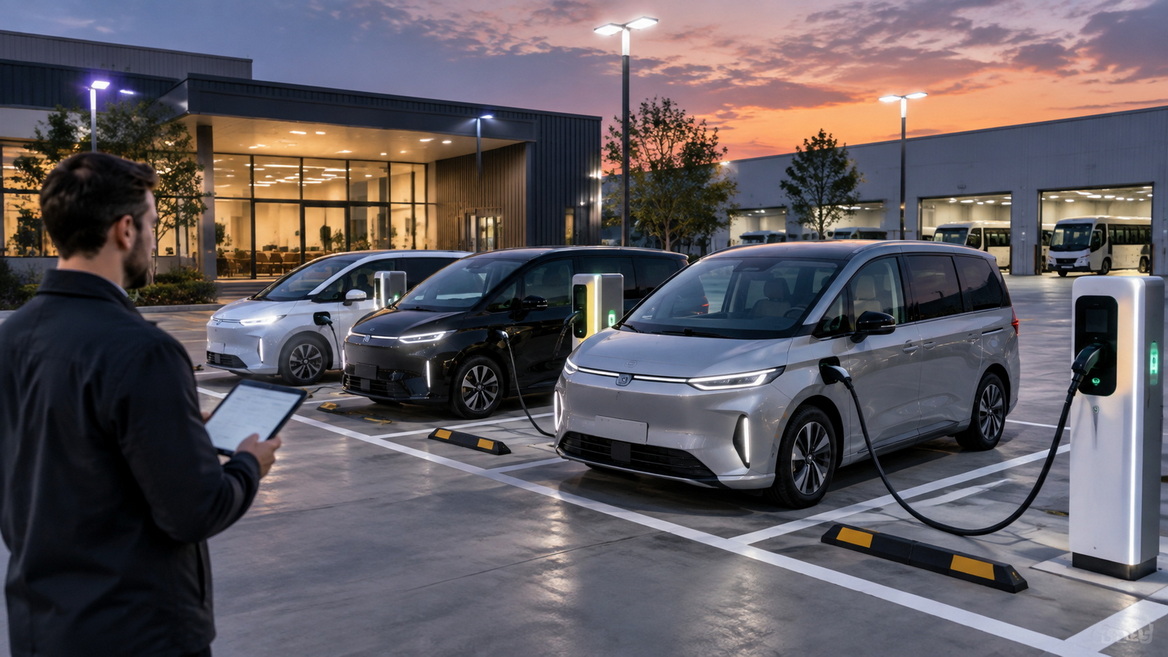
Charging infrastructure should be planned at the same time as the vehicle order.
A suitable charging plan considers the number of vehicles, battery capacity, available electrical power, charging windows, and future fleet growth.
Important points include:
- Confirming available electrical capacity at the depot
- Choosing the correct charger type and output
- Checking compatibility between the vehicle and charging equipment
- Calculating how many vehicles may charge at the same time
- Planning overnight charging schedules
- Considering backup options if a charger is unavailable
- Reviewing installation permits and local utility requirements
- Preparing charging areas for safe vehicle movement and cable management
For fleets with multiple vehicle types, such as electric MPVs, buses, vans, and heavy trucks, charging requirements may differ significantly. A fleet should avoid assuming that one charger type is suitable for every vehicle.
Safety should be evaluated as carefully as range and seating capacity.
Depending on the intended market, buyers should review:
- Seatbelt configuration
- Airbag coverage
- Electronic stability control
- Anti-lock braking systems
- Emergency braking support
- Forward-collision warning
- Lane-departure warning
- Rear-view camera systems
- Parking sensors
- Tire-pressure monitoring
- Emergency exits where applicable
- Fire safety requirements
- Child-seat compatibility
- Accessibility equipment
- Local registration and certification rules
For international buyers, it is important to confirm whether the vehicle meets the regulations of the destination market before shipment.
For private buyers, comfort and appearance may be the first priorities. For businesses, transport operators, and importers, the selection process should be more structured.
| Evaluation Area | Questions to Consider |
|---|---|
| Route suitability | Can the MPV complete the daily route with passengers, luggage, and climate control in use? |
| Passenger comfort | Are the seats, access points, air conditioning, storage, and luggage space suitable? |
| Battery and range | Does the real-world range provide a comfortable operating buffer? |
| Charging readiness | Is sufficient charging capacity available before the vehicle arrives? |
| Safety | Does the vehicle include suitable active and passive safety equipment? |
| Compliance | Does the vehicle meet destination-market regulations and documentation requirements? |
| Operating cost | What are the expected energy, servicing, insurance, tire, and maintenance costs? |
| Supplier support | Are spare parts, technical documents, warranty terms, and service support clearly available? |
| Future expansion | Can the charging and maintenance plan support additional vehicles later? |
For importers, detailed specification confirmation is essential. Buyers should clarify the seat layout, battery capacity, charging connector, steering position, climate system, safety equipment, language settings, spare-parts package, warranty coverage, and export documentation before production begins.
A clear specification sheet can reduce costly changes, delays, and misunderstandings.
MPVs fill an important role between private passenger cars and full-size buses.
A compact MPV may suit a family or a small executive team. A larger electric MPV can support airport transfers, hotel guest transport, business commuting, and local tourism. When passenger numbers become higher, an electric minibus or coach may provide better efficiency per passenger.
The right vehicle category depends on the actual job.
- An MPV is suitable for flexible passenger transport and moderate group sizes.
- A minibus is suitable for higher-capacity shuttle and community transport.
- A coach is suitable for longer-distance group travel and larger passenger numbers.
- An electric van is suitable for urban delivery, service work, and mixed cargo operations.
- A heavy-duty electric truck is suitable for commercial freight and larger payloads.
Choosing the correct vehicle class can improve operating efficiency, passenger experience, energy use, and long-term fleet value.
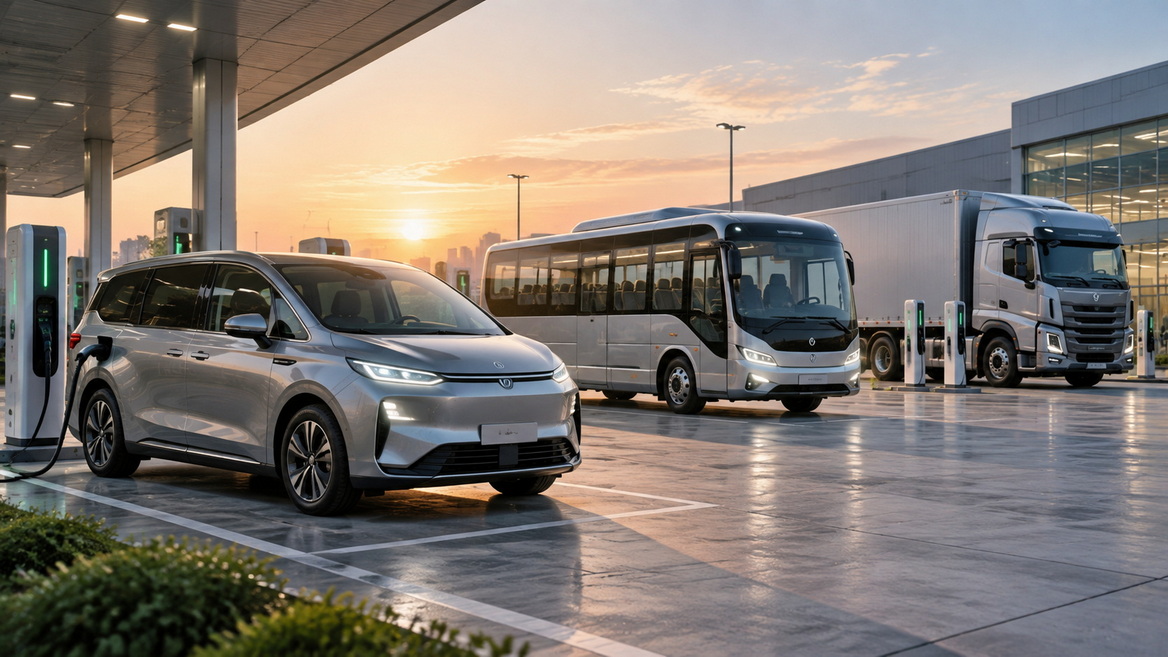
An MPV is a Multi-Purpose Vehicle designed around passenger comfort, flexible seating, and practical cargo capacity. It is an excellent option for large families, hotels, airport-transfer services, employee transport, tourism businesses, and community mobility operators.
Compared with an SUV, an MPV often provides easier passenger access, better third-row usability, more efficient cabin space, and stronger seating flexibility. However, buyers should also consider size, parking requirements, operating costs, and the amount of luggage space available when all seats are occupied.
Electric MPVs add another layer of value for suitable routes. They can provide quiet, efficient, zero-tailpipe-emission driving while supporting passenger transport needs. The best results come from matching the vehicle to the route, passenger load, charging plan, safety requirements, and long-term operating goals.
KeyChain provides high-quality buses, heavy trucks, and new energy vehicle solutions for domestic and international customers. Whether the requirement is an electric MPV for passenger transport, an electric minibus for shuttle service, or a heavy-duty vehicle for commercial logistics, the most important starting point is understanding the real operating environment.
MPV stands for Multi-Purpose Vehicle. It refers to a passenger vehicle designed with flexible seating, a spacious cabin, practical access, and adaptable cargo capacity.
In many cases, yes. "MPV" is widely used in the UK and Europe, while "minivan" is more common in North America. Both terms usually describe practical people carriers with flexible seating arrangements.
An MPV may be better for a large family if daily practicality is the priority. It usually offers easier access, more flexible seating, and better interior space. An SUV may be more suitable for buyers who prefer higher ground clearance, all-wheel drive, or a more rugged design.
Yes. Electric MPVs can be well suited to airport transfers, especially when routes are predictable and charging is available at a hotel, depot, airport, or central operating location. Luggage space and real-world range should be checked carefully before selection.
The driving range depends on the battery size, passenger load, luggage weight, speed, weather, terrain, and use of heating or air conditioning. Buyers should evaluate expected real-world operating range rather than depending only on laboratory figures.
1. Evans Halshaw. "[What Is an MPV?]"
Background information on MPV definitions, core characteristics, practical advantages, limitations, and comparisons with SUVs.
2. International Energy Agency. "[Trends in Other EV Modes – Global EV Outlook 2026]"
Global information on electric bus and electric truck market development.
3. International Energy Agency. "[Trends in Heavy-Duty Electric Vehicles – Global EV Outlook 2025]"
Analysis of electric bus and truck adoption, market conditions, and commercial vehicle electrification.
4. U.S. Department of Energy, Alternative Fuels Data Center. "[Electric Vehicles for Fleets]"
Guidance on fleet electrification, charging infrastructure, electrical planning, and fleet deployment.
5. U.S. Department of Energy, Alternative Fuels Data Center. "[Electric School Bus Planning Guide]"
Practical guidance on route assessment, charging equipment, operational planning, maintenance, and staff preparation.
6. Euro NCAP. "[Trucks & Vans: Helping You Choose the Safest Fleet]"
Commercial vehicle safety assessment information for vans, trucks, and fleet operators.
7. U.S. Department of Energy, Alternative Fuels Data Center. "[Electric Vehicle Charging Stations]"
Information on charging infrastructure, charging equipment, and commercial electric vehicle charging development.


