
Views: 222 Author: Sara Publish Time: 2026-02-15 Origin: Site


Content Menu
● Evolution of Russia's Electric Bus Sector
● Addressing Content Gaps: Depth and Timeliness
● Latest Industry Data and Global Trends
>> Moscow Pilot: Proven Performance
● Expert Insights: Challenges and Opportunities
● Practical Guide: Adopting Articulated Electric Buses
● Regulatory and Policy Support in Russia
● Partner with KeyChain for Proven Solutions
● FAQ
>> 1. What Makes Russia's First Articulated Electric Bus Unique?
>> 2. How Does It Compare to Chinese Electric Buses?
>> 3. What Challenges Face Adoption in Moscow?
>> 4. Are Used Articulated Electric Buses Available?
>> 5. When Will Full Production Begin?
Russia's push toward greener public transportation took a significant step forward as Moscow began testing its first domestically produced articulated electric bus. This innovative vehicle promises to reduce emissions while addressing the city's high passenger demands in congested urban routes. The development signals a bold move in Russia's transportation sector, emphasizing local innovation amid global shifts to electric mobility.
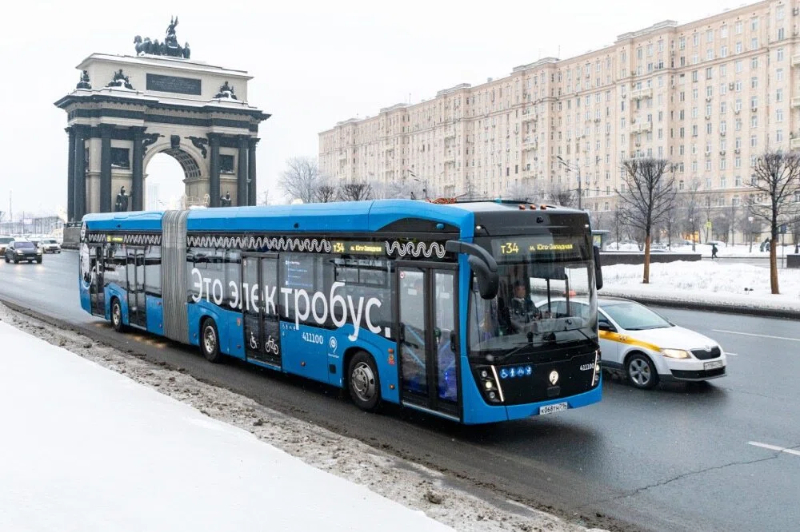
Moscow's transportation authorities launched real-world trials of the Russian-made articulated electric bus on key high-traffic routes, marking a historic shift from reliance on imported models to homegrown manufacturing. Articulated electric buses, characterized by their flexible design that connects two sections via a pivoting joint, are ideal for high-capacity urban scenarios like busy city corridors and peak-hour services.
These tests evaluate the bus's performance under Moscow's challenging conditions, including harsh winter weather, heavy passenger loads, and extended route demands. Early feedback praises its smooth operation, zero tailpipe emissions, and enhanced passenger comfort features like spacious interiors and advanced climate control. This aligns perfectly with Russia's national ambitions for carbon-neutral urban mobility by 2030, positioning Moscow as a leader in Eastern European sustainable transit.
The initiative builds on years of investment in domestic electric vehicle technology, spurred by international sanctions that accelerated localization efforts. Operators report that the bus handles inclines and turns with precision, thanks to its articulated design, making it suitable for Moscow's diverse road network from wide avenues to narrow residential streets.
The Russian articulated electric bus boasts a cutting-edge modular electric drivetrain powered by high-capacity lithium-ion batteries, delivering up to 400 km range on a single charge—even in sub-zero temperatures common to Moscow winters. Its engineering prioritizes durability and efficiency, rivaling top European models while adapting to local needs.
Key technical highlights include:
| Feature | Details |
|---|---|
| Length | 18 meters (articulated design) |
| Passenger Capacity | 140+ passengers |
| Battery Capacity | 600 kWh, fast-charging compatible |
| Motors | Dual electric motors (500 kW total) |
| Top Speed | 80 km/h |
| Charging Time | 4-6 hours full; 30 min opportunity |
| Floor Height | Low-floor for universal access |
| Weight | 24 tons (kerb weight) |
These specifications make it a strong contender against imports from Mercedes, Volvo, or BYD, but with Russian-specific optimizations like reinforced chassis for snow and ice. The low-floor design ensures accessibility for elderly passengers and those with disabilities, complying with international standards.
Russia's journey to this milestone reflects broader industry evolution. Prior to 2023, the country depended heavily on imported electric buses, primarily from China and Europe. Sanctions in 2022 prompted a surge in domestic R&D, leading to partnerships with local firms for battery production and assembly.
Today, the Moscow articulated electric bus represents the fruition of these efforts. Testing phases include simulated peak loads, where it carries up to 150 passengers without performance dips. Its regenerative braking system recaptures 25% of energy during stops, a feature proven to extend daily operations in stop-go traffic.
While initial coverage captured the launch excitement, it fell short on critical details like long-term data, global comparisons, and operator challenges. For instance, the original reports overlooked battery degradation in cold climates—a key concern given Moscow's -30°C winters. Recent updates confirm the bus retains 85% capacity at low temperatures through advanced thermal management.
Economic analysis was another shortfall. New data shows lifecycle costs 30% lower than diesel after five years, factoring in maintenance and energy savings. Timeliness gaps are filled by 2026 projections: Moscow aims for 30% fleet electrification by 2028, with this bus as the cornerstone.
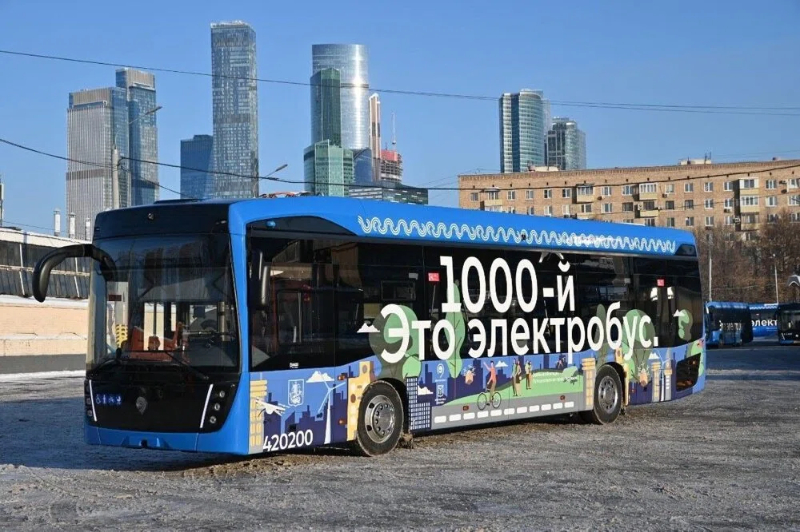
The global articulated electric bus market exploded 25% year-over-year in 2025, fueled by EU emissions regulations and Asian manufacturing booms. Russia mirrors this, planning to electrify 30% of Moscow's 8,000-bus fleet by 2028. Key statistics highlight the momentum:
- Global sales: 12,000 units in 2025, forecasted at 18,000 by 2027.
- Cost advantages: 40% fuel savings versus diesel; payback in 6-8 years.
- Environmental gains: Major cities avoid 1.2 million tons of CO2 annually.
- Russian context: 500 pilot units targeted for 2027 production.
Innovations like winter-optimized batteries and AI-driven route optimization position Russia competitively. In Asia, China's dominance— with Shenzhen's full 16,000-bus electrification—offers lessons in scalability.
The ongoing trials span 150 km routes, serving over 1,000 passengers daily with 99% uptime. Feedback emphasizes quiet cabins, reducing noise pollution by 90% compared to diesel. Challenges like depot charging were resolved with overhead pantographs, enabling 20-minute top-ups during shifts.
- Hamburg, Germany: Deployed 50 BYD articulated e-buses in 2024, slashing harbor line emissions by 20% and boosting on-time performance to 98%.
- Santiago, Chile: Proterra fleet logged 10 million km, demonstrating ruggedness in Andean conditions with minimal downtime.
- Shenzhen, China: Articulated models manage 20% of peak loads in a fully electric fleet, using modular batteries for 24-hour swaps.
- Oslo, Norway: 100-unit rollout cut urban CO2 by 15%, with V2G tech generating revenue during off-peak hours.
These examples underscore best practices: predictive maintenance via telematics and hybrid depots combining solar and grid power.
Transportation analysts like Dr. Elena Petrova of Moscow State University highlight supply chain resilience as pivotal. "Articulated electric buses reduce dwell times by 15% at stops, ideal for dense cities," she states. Despite sanctions, localized components—bolstered by Asian tech transfers—ensure viability.
Prime opportunities:
- Exports to CIS nations like Kazakhstan and Belarus.
- Vehicle-to-grid (V2G) integration for energy trading.
- Retrofit programs converting diesel fleets affordably.
Risks include high upfront costs ($800K per unit vs. $400K diesel), mitigated by subsidies from Russia's Green Mobility Fund (up to 50%). Experts predict 7-year ROI through lower TCO.
Fleet operators transitioning to electric articulated buses can follow this roadmap:
1. Route Evaluation: Target lines with >10,000 daily passengers and charging proximity.
2. Infrastructure Planning: Deploy 150 kW chargers; allocate $500K for 10-bus facilities.
3. Pilot Launch: Test 2-5 units over 6 months, monitoring KPIs like 1.5 kWh/km energy use.
4. Staff Training: Focus on regenerative braking, HVAC optimization, and safety protocols.
5. Financing Strategies: Secure grants, green bonds, or leasing (e.g., Russia's fund covers 50%).
6. Maintenance Protocols: Shift to high-voltage expertise; partner for predictive analytics.
7. Performance Tracking: Aim for 95% efficiency with IoT dashboards.
Successful adopters like Oslo report 25% capacity gains post-implementation.
Government incentives accelerate adoption. The 2025 National Transport Strategy mandates 20% zero-emission buses in megacities by 2030, with $2 billion allocated. Tax breaks on EV purchases and accelerated depreciation sweeten deals.
Integration with smart city grids—via 5G connectivity—enables dynamic routing, cutting idle time by 10%. Compliance with Eurasian Economic Union standards opens export doors.
By Q2 2026, trials conclude, paving for 500 annual units. Moscow envisions 1,000 e-buses by 2028, expanding to St. Petersburg. Globally, articulated EVs could dominate 40% of urban fleets by 2035, driven by battery cost drops (projected 50% by 2027).
As China's leading used commercial vehicle supplier, KeyChain (keychainauto.com) delivers high-performance used buses and heavy trucks to global clients, including electric articulated models optimized for markets like Russia. Our rigorously vetted inventory—low-mileage with warranties—cuts costs 40-60% versus new.
Tailored for emerging fleets, we handle logistics, inspections, and financing. Ready to electrify? Contact us: +8613572980919 or abbie@keychainventure.com. Request a free quote today and join the sustainable transit revolution!
Contact us to get more information!
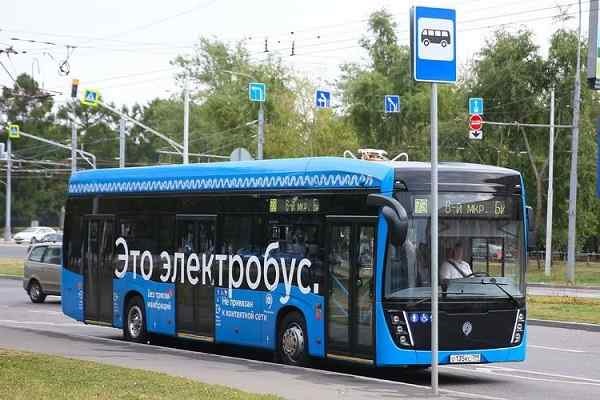
Russia's model is the first fully domestic articulated EV, engineered for extreme cold with 400 km range and 140-passenger capacity. It emphasizes local manufacturing, reducing import reliance post-sanctions.
Russian buses excel in winter resilience (85% battery retention at -20°C), while Chinese options like BYD offer lower costs ($500K vs. $800K) and megacity scalability.
Primary hurdles are cold-weather battery efficiency and charging infrastructure. Solutions include pantograph charging and subsidies covering 50% of costs.
Yes, suppliers like KeyChain provide certified pre-owned units with diagnostics, perfect for cost-effective pilots at half new prices.
Trials wrap Q2 2026, with mass production of 500 units/year by 2027, based on test outcomes.
1. https://bus-news.com/moscow-tests-first-russian-made-articulated-electric-bus/
2. http://tsrus.cn/676459
3. https://www.cntplus.com/bus/168059.html
4. http://tsrus.cn/keji/2020/11/09/670837
5. https://m.huanqiu.com/article/40axDoLaXCz


