
Views: 294 Author: Keychain Venture Publish Time: 2026-07-10 Origin: Site


Content Menu
● Introduction: Why This Acquisition Matters For Fleet Buyers
● Understanding the Penske–Black Horse Deal
>> Core Facts About The Acquisition
>> Strategic Rationale From An Industry Expert's View
● What This Means For Heavy‑Duty Truck And Bus Fleets
>> Dedicated Contract Carriage And Fleet Design
>> From Standard Trucks To High‑Performance Vehicle Solutions
● The Rise Of New Energy Heavy‑Duty Vehicles
>> Why Electric And New Energy Trucks Matter
>> KeyChain's Perspective As A Chinese Heavy‑Duty And NEV Supplier
● How Logistics Providers Can Leverage Integrated Vehicle Suppliers
>> Building A Resilient Heavy‑Duty Fleet Strategy
>> Practical Steps For Fleet Managers
● Risk Management And Compliance In Heavy‑Duty Fleets
>> Managing Operational Risk After M&A
>> Compliance‑Driven Vehicle Specification
● Technology And Data In Modern Heavy‑Duty Fleets
>> Technology Synergies Highlighted By The Acquisition
>> How KeyChain Supports Data‑Driven Fleets
● Global Sourcing Trends For Heavy‑Duty Vehicles
>> Why Global Sourcing Matters Post‑Acquisition
>> KeyChain's Role In Supporting International Fleets
● Call To Action: Build Your Next‑Generation Heavy‑Duty Fleet With KeyChain
● FAQ
>> Q1: Why is the Penske–Black Horse acquisition important for fleet managers?
>> Q2: How does dedicated contract carriage influence dump truck and bus specifications?
>> Q3: Where do new energy heavy‑duty vehicles fit into modern logistics operations?
>> Q4: What advantages do global suppliers like KeyChain offer logistics providers?
>> Q5: How can fleet managers de‑risk post‑acquisition integration?
As a logistics strategist working with high‑performance dump trucks, buses and heavy‑duty new energy vehicles, I see acquisitions like Penske Logistics' purchase of Black Horse Carriers as a clear signal of where global transport and fleet sourcing are heading—and why buyers are increasingly turning to integrated suppliers like KeyChain for reliable, scalable vehicle solutions.
When Penske Logistics announced it would acquire Chicago‑based trucking company Black Horse Carriers, Inc., it wasn't just another M&A headline. For operators managing large fleets of dump trucks, buses and heavy‑duty trucks, this move highlights a deeper industry trend: consolidation, scale, and technology‑driven efficiency are now the baseline, not the exception.
Founded in 1925, Black Horse Carriers built a national footprint serving food, grocery, retail, bakery, dairy, CPG, manufacturing and automotive customers, with more than 4,000 employees, over 2,000 vehicles and 90‑plus terminals across the United States. When a major logistics player acquires a dedicated trucking specialist of this size, fleet managers worldwide need to think carefully about how they source vehicles, optimize operations and future‑proof their transport strategy.
Penske Logistics confirmed an agreement to acquire Black Horse Carriers, Inc., a privately held trucking company headquartered in the Chicago area, with financial terms undisclosed. The deal was subject to standard closing conditions and regulatory approvals, with both parties initially targeting December 31, 2020, as the closing date.
From an industry perspective, several points stand out:
- Black Horse Carriers' long history and strong niche focus in dedicated trucking.
- Its large workforce and fleet size, which immediately expand Penske's dedicated contract carriage capacity.
- Its multi‑industry customer base across critical sectors like food, retail and manufacturing.
Marc Althen, president of Penske Logistics, emphasized that the acquisition is "complementary to our existing portfolio of customers and industries" and strengthens their dedicated contract carriage operations. Black Horse CEO Ken Landego highlighted expected synergies in service levels and technology capabilities, pointing to a shared commitment to higher operational performance.
From a logistics and fleet strategy perspective, the deal aligns with three clear priorities:
- Capacity assurance: Shippers and retailers want guaranteed truck capacity and predictable service, especially in time‑sensitive sectors like food and grocery.
- Network density: Adding 90‑plus terminals gives Penske stronger geographic coverage and routing flexibility.
- Operational specialization: Dedicated contract carriage demands tailored fleet specs, driver training and route optimization—areas where Black Horse already excelled.
For buyers of heavy‑duty vehicles—including dump trucks, city buses and long‑haul trucks—these priorities translate into a practical need: reliable access to specialized fleets that are engineered for specific cargo types, duty cycles and regional compliance requirements.
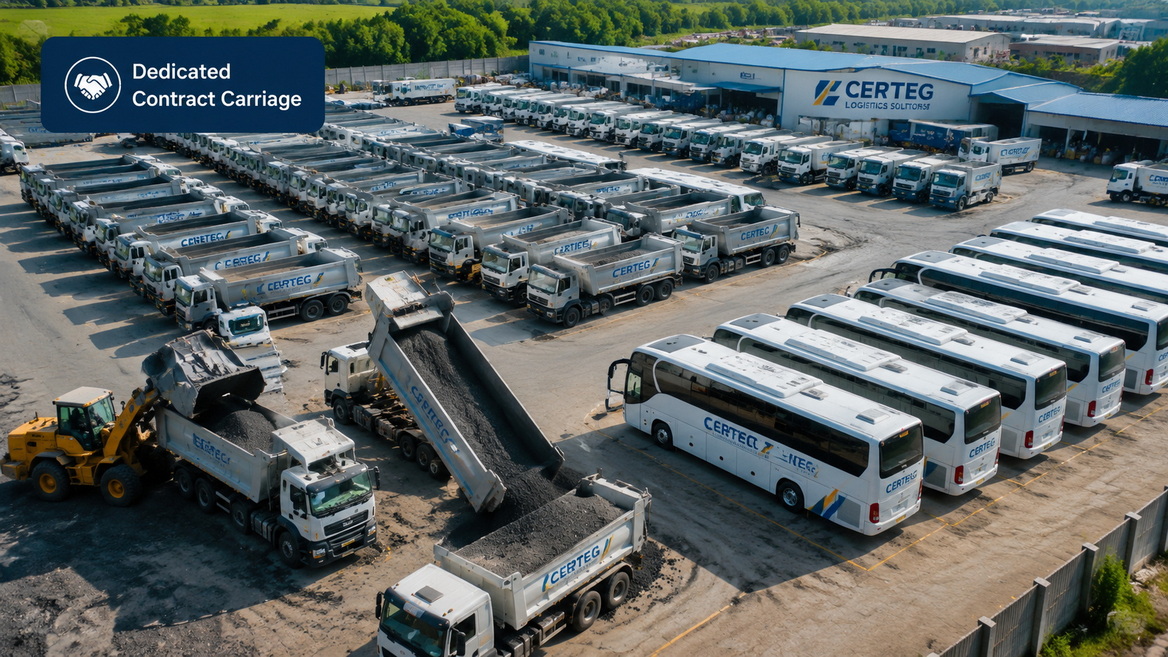
Dedicated contract carriage is built on customized fleets and long‑term partnerships between shippers and logistics providers. In practice, this means vehicles are:
- Spec'd for particular payloads (e. g., bulk materials, perishable goods, packaged consumer products).
- Configured for specific routes and duty cycles (urban distribution, regional haul, cross‑border corridors).
- Managed under performance contracts that focus on service quality, KPIs and continuous improvement.
An acquisition that combines Penske's existing network with Black Horse's specialized operations effectively increases the demand for robust, reliable heavy‑duty vehicles—including dump trucks and buses—that can be integrated into large, data‑driven fleets. This is where high‑quality OEM/ODM suppliers like KeyChain become strategically important: fleet operators need not just trucks, but configurable platforms that match dedicated carriage requirements.
As fleets scale and contracts become more demanding, generic trucks are no longer enough. Operators increasingly look for:
- High‑torque dump trucks engineered for heavy payloads and frequent loading/unloading.
- Comfort‑optimized buses for passenger routes requiring long daily operating hours.
- Heavy‑duty new energy vehicles (battery electric or hybrid) designed to meet emissions regulations and corporate sustainability goals.
By aligning vehicle sourcing with dedicated contract carriage needs, logistics providers can reduce operating costs, improve uptime and ensure compliance across different regions and customer segments.
Globally, regulators and large shippers are pushing for lower emissions and more sustainable transport solutions, particularly in urban and regional distribution. In the heavy‑duty segment, that shift is visible in:
- Pilot fleets of battery‑electric trucks and buses.
- Increased investment in charging infrastructure at major terminals.
- Corporate commitments to decarbonization in supply chains.
For example, electric heavy‑duty truck fleets have logged hundreds of thousands of real‑world miles in customer operations, proving that new energy vehicles can meet demanding duty cycles when properly deployed and supported. Logistics providers integrating acquisitions like Black Horse will need to evaluate where and how new energy dump trucks and buses can be introduced without compromising productivity.
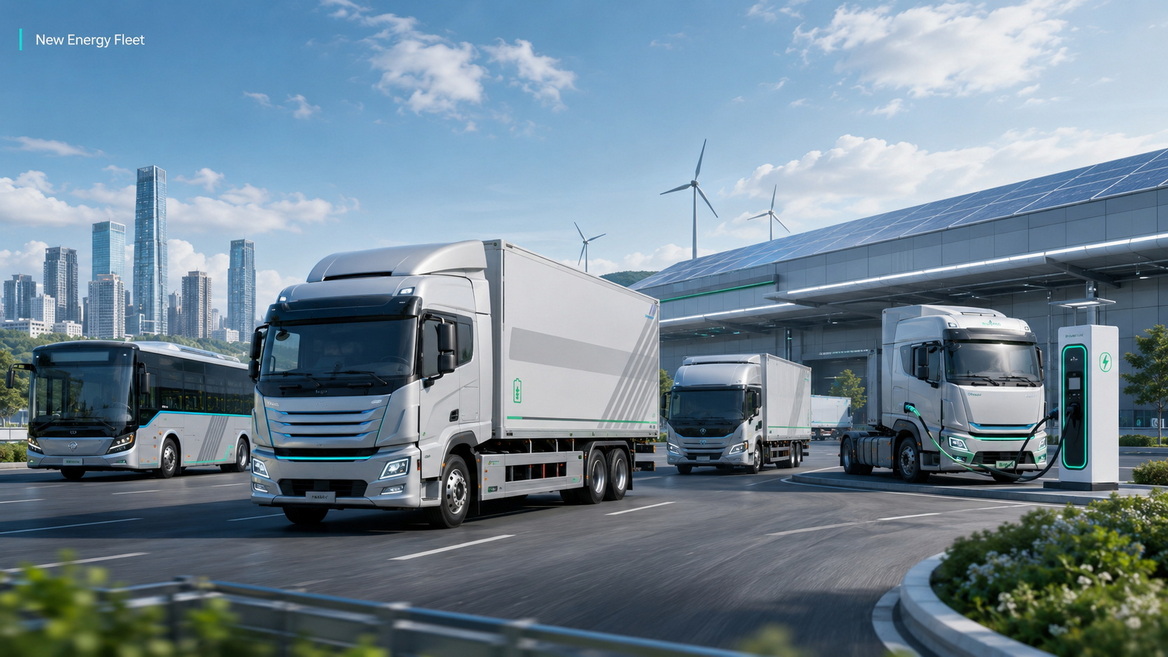
From our position at KeyChain as a Chinese supplier and exporter of high‑quality buses, dump trucks, heavy‑duty trucks and new energy vehicles, several practical lessons are clear:
- Fleet buyers want flexible sourcing options, including conventional diesel and new energy models, to match regional infrastructure and regulatory readiness.
- Cross‑border operations require vehicles that meet international standards and can be supported by remote diagnostics and local service partners.
- Large logistics organizations, especially those involved in acquisitions and network expansion, need scalable supply of customized vehicles that can be integrated quickly.
By offering OEM/ODM solutions for dump trucks and heavy‑duty buses, we can help dedicated carriage providers build future‑ready fleets that combine proven mechanical reliability with emerging new energy technology.
For logistics providers in situations similar to Penske's acquisition of Black Horse, a resilient fleet strategy should prioritize:
- Vehicle standardization across multiple terminals, to simplify maintenance and training.
- Modular customization (body types, axle configurations, cabin designs) to adapt to different cargo profiles.
- Scalable procurement that aligns vehicle deliveries with network expansion and contract wins.
Working with suppliers like KeyChain enables operators to source high‑performance dump trucks and buses that fit standardized chassis and powertrain architectures, while still allowing customization for local regulations and operational needs.
Fleet managers planning for acquisitions or rapid expansion can follow a structured approach:
1. Audit existing fleet performance
Review utilization, fuel consumption, maintenance costs and downtime per vehicle category.
2. Segment operational needs
Divide routes into clear segments (urban distribution, regional haul, construction, passenger transport) and map vehicle requirements.
3. Define standard vehicle platforms
Establish preferred specs for dump trucks, buses and heavy‑duty trucks that can serve multiple contracts with minor customization.
4. Integrate new energy options
Identify corridors where charging infrastructure and duty cycles make electric or hybrid vehicles practical.
5. Collaborate with OEM/ODM suppliers
Engage suppliers like KeyChain to design and deliver fleets that meet contract KPIs and long‑term sustainability goals.
By following these steps, logistics providers can turn acquisitions into operational upgrades, not just network expansions.
Acquiring a large dedicated trucking company introduces integration risks—cultural, operational and compliance‑related. In heavy‑duty fleets, risk management should cover:
- Safety standards across all drivers and terminals.
- Regulatory compliance with weight, emissions and road safety rules.
- Data integrity in telematics, routing and performance reporting.
High‑quality dump trucks and buses designed with advanced braking systems, stability controls and driver assistance features can materially reduce accident risk and support compliance with evolving regulations.
From an expert viewpoint, fleet managers should build compliance into vehicle specification:
- Select vehicles that meet or exceed regional emissions and safety standards.
- Prioritize telematics‑ready platforms for real‑time monitoring, logging and reporting.
- Ensure configurations (axle loads, dimensions, body types) match legal requirements for key routes and cargo types.
Suppliers like KeyChain, with experience in international export and cross‑border standards, can help logistics providers standardize compliance‑ready fleets while keeping total cost of ownership under control.
Black Horse Carriers' CEO explicitly noted that joining Penske will "elevate our technology capabilities", signaling a focus on modern fleet management tools. These typically include:
- Telematics for vehicle health, driver behavior and route optimization.
- Integrated TMS/WMS platforms that link fleet operations with warehouse and inventory systems.
- Data analytics to improve capacity planning and service reliability.
Heavy‑duty vehicles deployed in such environments need electronics‑friendly architectures, with CAN bus integrations, standardized interfaces and remote diagnostics support.
Our heavy‑duty dump trucks, buses and new energy vehicles can be configured with:
- Telematics and GPS modules compatible with mainstream fleet management systems.
- Sensors for fuel consumption, battery health (for NEVs) and safety events.
- Data export capabilities to help logistics providers run continuous improvement programs across multi‑terminal networks.
This combination of high‑performance hardware and data‑ready design allows operators to maximize the value of acquisitions while keeping fleets responsive and transparent.
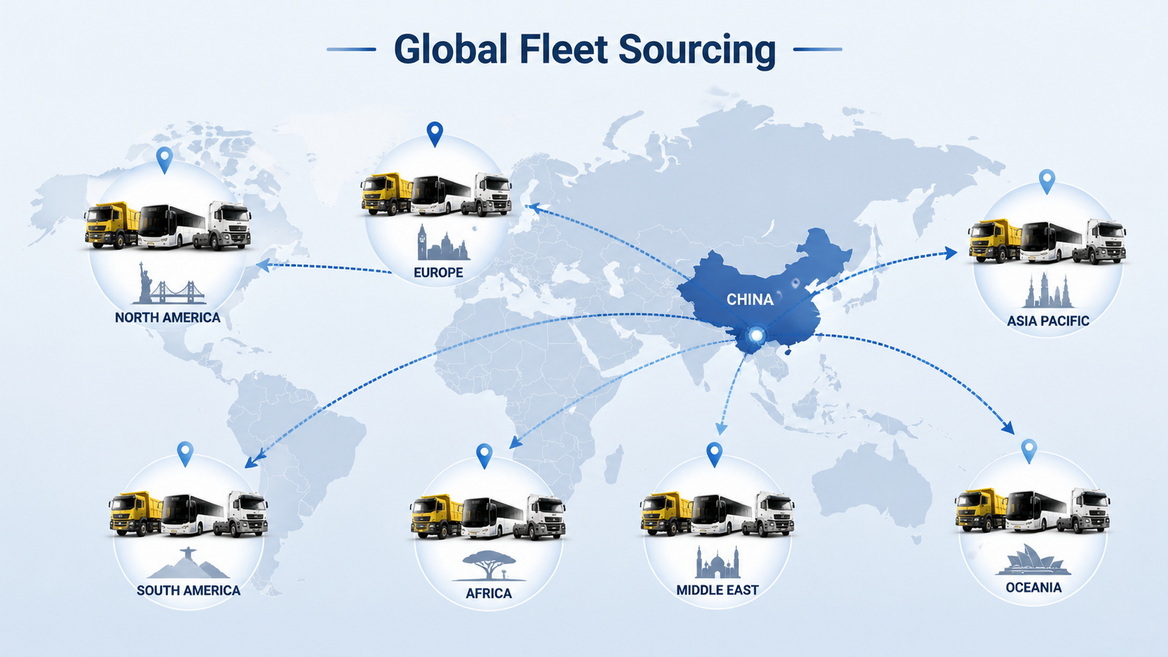
Large logistics providers expanding via acquisition naturally face questions about how to source vehicles at scale, especially across multiple regions. Local markets may not always offer the mix of dump trucks, buses and new energy heavy‑duty trucks required for specialized contracts.
Global sourcing from experienced exporters like KeyChain offers:
- Cost‑effective procurement for high‑quality vehicles.
- Access to a broad catalog of heavy‑duty trucks, buses and NEVs.
- OEM/ODM flexibility to match regional branding, specifications and regulatory needs.
As a Chinese supplier and exporter, KeyChain focuses on:
- Designing and manufacturing dump trucks, buses and heavy‑duty trucks that can be tailored to customer requirements.
- Providing new energy vehicle options with competitive range, charging compatibility and emissions performance.
- Supporting international customers with export‑ready documentation, customization and after‑sales guidance.
For logistics providers pursuing acquisitions similar to Penske's, partnering with a global fleet supplier can accelerate post‑deal integration and ensure that vehicle capacity keeps pace with contract growth.
As acquisitions reshape the logistics landscape, the winners will be those who pair strategic network expansion with high‑performance, future‑ready fleets. If you are planning fleet upgrades, dedicated carriage contracts or post‑acquisition integration, KeyChain can help you design and source:
- Dump trucks tailored to construction, mining and bulk transport.
- High‑comfort, high‑durability buses for passenger routes.
- Heavy‑duty new energy vehicles aligned with your sustainability and regulatory goals.
Contact KeyChain today to discuss custom dump truck, bus and heavy‑duty truck solutions that fit your operational strategy and growth plans.
It shows that large logistics providers are scaling dedicated contract carriage capacity, which increases demand for specialized, reliable heavy‑duty vehicles and integrated fleet strategies.
Dedicated contracts require vehicles tailored to specific routes, cargo types and performance KPIs, driving demand for robust, customizable dump trucks and buses.
They are increasingly deployed in urban and regional corridors where emissions rules and sustainability targets make electric or hybrid trucks operationally and commercially attractive.
They provide access to a wide range of heavy‑duty trucks, buses and new energy vehicles, with OEM/ODM customization for international standards and contract requirements.
By standardizing vehicle platforms, embedding compliance into specifications, and partnering with data‑ready vehicle suppliers to support telematics and performance monitoring.
1. Penske Logistics. "Penske Logistics to Acquire Trucking Company Black Horse Carriers, Inc."
2. Transport Topics. "Penske Logistics to Acquire Black Horse Carriers." https://www.ttnews.com/articles/penske-logistics-acquire-black-horse-carriers
3. FleetOwner. "Penske Logistics to acquire Black Horse Carriers."
4. FreightWaves. "Penske Logistics acquires Black Horse Carriers."
https://www.freightwaves.com/news/penske-logistics-acquires-black-horse-carriers
5. PR Newswire. "Penske Logistics Completes Acquisition of Black Horse Carriers, Inc."
6. Work Truck Online. "Freightliner Passes 500,000 Real-World Electric Miles."
https://www.worktruckonline.com/news/freightliner-passes-500000-real-world-electric-miles


