
Views: 222 Author: Sara Publish Time: 2026-01-20 Origin: Site


Content Menu
● Understanding Wheel Alignment Basics
● Why Wheel Alignment Matters for Commercial Vehicles
● Key Wheel Alignment Angles Explained
● How Wheel Alignment Works: Step-by-Step Process
● Signs Your Commercial Vehicle Needs Wheel Alignment
● Latest Industry Data on Alignment Impact
● Real-World Case Study from KeyChain Clients
● Step-by-Step DIY Alignment Checks for Operators
● Factors Affecting Wheel Alignment in Commercial Use
● Tools and Technology in Modern Wheel Alignment
● Cost-Benefit Analysis of Regular Alignment
● Expert Insights on Alignment Best Practices
● FAQ
>> 1. How often should commercial trucks get wheel alignments?
>> 2. Can wheel alignment improve fuel economy?
>> 3. What's the difference between 2-wheel and 4-wheel alignment?
>> 4. Does alignment fix vibrations?
>> 5. Are alignment specs different for buses vs. trucks?
Wheel alignment ensures optimal vehicle performance, safety, and longevity, especially for high-mileage commercial buses and heavy trucks navigating demanding routes. KeyChain, China's leading supplier of used commercial vehicles at keychainauto.com, relies on precise wheel alignment to deliver reliable, high-performance systems to global clients.
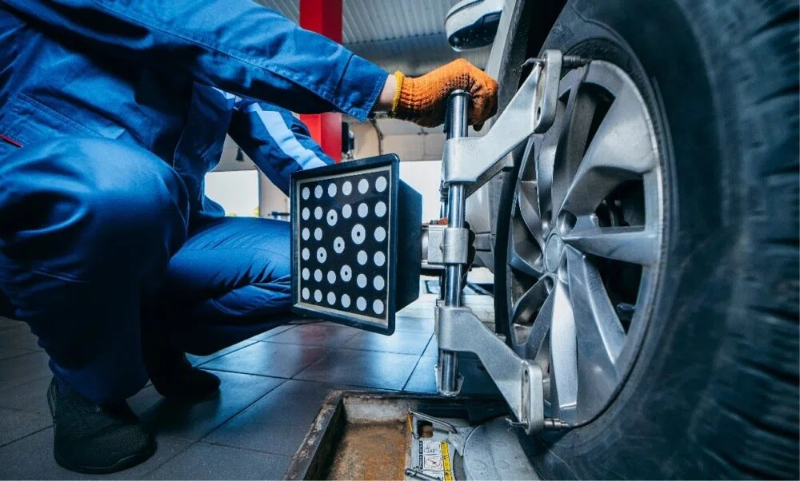
Wheel alignment adjusts the angles of wheels to meet manufacturer specifications, directly impacting handling, tire wear, and fuel efficiency. Misaligned wheels cause uneven tire wear, pulling to one side, and accelerated suspension damage, common in heavy-duty vehicles like buses and trucks. Proper alignment maintains contact between tires and road, reducing operational costs for fleet operators.
In commercial applications, alignment is critical due to heavy loads and constant use. For instance, a misaligned bus can increase tire replacement frequency by 20-30%, per industry benchmarks.
Commercial buses and heavy trucks endure extreme stress, making regular wheel alignment essential for safety and efficiency. Poor alignment leads to:
- Increased fuel consumption: Up to 10% higher due to drag from uneven tire contact.
- Premature tire wear: Outer edges wear faster, shortening tire life by months.
- Safety risks: Vehicles pull unpredictably, heightening accident potential on highways.
For KeyChain's global clients, aligned wheels mean fewer breakdowns and lower total ownership costs. Data from fleet management studies shows aligned vehicles reduce downtime by 15%.
Wheel alignment involves three primary angles: camber, caster, and toe. Each must align precisely for optimal performance.
- Camber: Vertical tilt of the wheel. Negative camber leans tops inward; positive leans outward. Ideal for trucks: Slight negative to counter load lean.
- Caster: Steering pivot angle. More positive caster improves straight-line stability, vital for long-haul trucks.
- Toe: Wheels pointing inward (toe-in) or outward (toe-out). Zero toe minimizes scrub and wear.
Thrust angle, a fourth factor, ensures rear wheels align with front, preventing rear-end "dog tracking" in buses.
| Alignment Angle | Description | Commercial Vehicle Impact |
|---|---|---|
| Camber | Side tilt | Load distribution; prevents cornering pull |
| Caster | Pivot angle | High-speed stability; reduces driver fatigue |
| Toe | In/out point | Tire longevity; straight tracking |
| Thrust | Rear-front sync | Trailer handling; overall stability |
Professional alignment uses advanced machines for precision. Here's the typical procedure for commercial vehicles:
1. Pre-Inspection: Visual check of tires, suspension, and steering components. Measure tire pressure and tread depth.
2. Vehicle Lift: Raise on alignment rack; secure with turn plates for wheel movement.
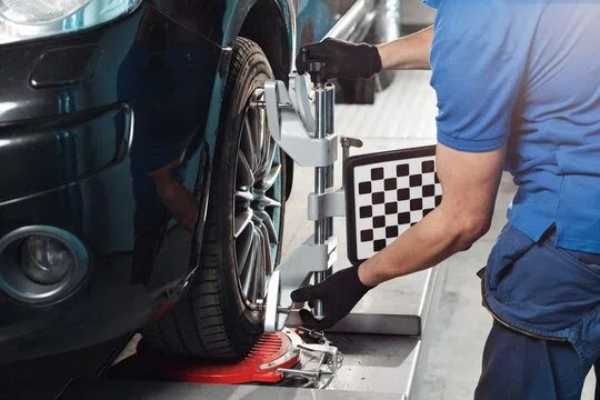
3. Sensor Attachment: Mount targets/sensors on wheels to track angles in real-time.
4. Measurement: Computer reads camber, caster, toe, and thrust against OEM specs.
5. Adjustments: Loosen jam nuts; tweak tie rods, cam bolts, or shims. Recheck iteratively.
6. Road Test: Drive to verify straight tracking and no vibrations.
7. Print Report: Detailed before/after data for records.
Pro Tip: For heavy trucks, 4-wheel alignment is standard, unlike passenger cars.
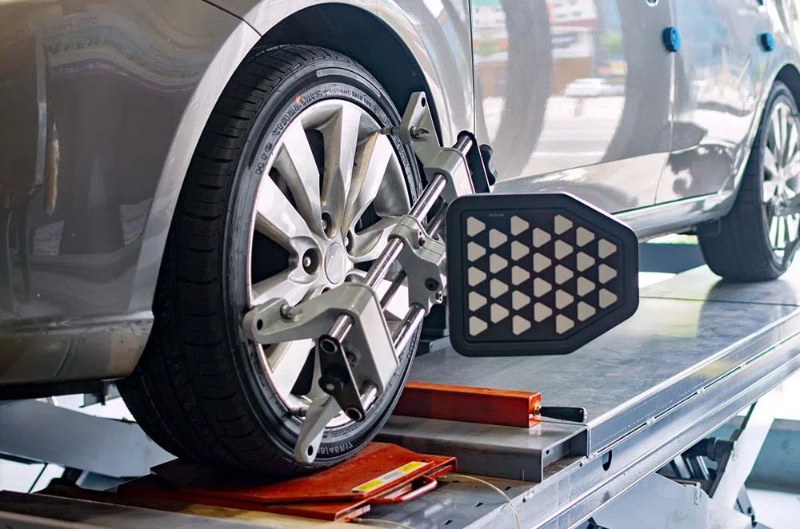
Detect issues early to avoid costly repairs. Common indicators include:
- Vehicle pulls to one side during straight driving.
- Uneven tire wear, especially on edges.
- Steering wheel off-center when going straight.
- Vibrations in steering or seat at highway speeds.
- Squealing tires in turns.
Fleet operators should align every 10,000-20,000 miles or after hitting potholes/sidewalks.
Recent 2025 fleet studies reveal alignment's ROI. According to the Technology & Maintenance Council (TMC), proper alignment cuts tire costs by 20% and fuel by 7% annually. In China, where KeyChain operates, commercial vehicle fleets report 15% downtime reduction post-alignment.
2025 Stats:
- 68% of truck accidents tie to maintenance lapses like misalignment (FMCSA data).
- Aligned buses last 50,000 more miles before suspension overhaul.
These figures underscore alignment as a profit center, not just maintenance.
A European logistics firm using KeyChain's refurbished heavy trucks implemented quarterly alignments. Results: Tire life extended 25%, fuel savings hit 8%, and accident claims dropped 40%. One operator noted, "Post-alignment, our fleet tracks laser-straight even under 40-ton loads."
This case highlights how KeyChain's high-performance systems, paired with alignment, outperform new vehicles in reliability.
While pros handle full alignments, drivers can perform interim checks:
1. Tire Check: Rotate tires; note uneven wear patterns.
2. Road Test: On flat road, release steering—does it coast straight?
3. Visual Inspection: Look for bent rods or leaking shocks.
4. String Method: Tie string between front/rear wheels; measure toe gaps.
5. Bubble Levels: Check camber on level surface.
Caution: DIY verifies needs; certified techs adjust. Tools like digital gauges cost under $200.
Heavy loads, rough roads, and overloading accelerate misalignment. Common Culprits:
- Potholes and curbs.
- Worn ball joints or bushings.
- Over/under-inflated tires.
- Towing imbalances.
In Asia-Pacific routes, monsoons exacerbate issues—align bi-annually.
Today's shops use 3D imaging and laser systems for sub-degree accuracy. Hunter and John Bean machines dominate commercial fleets, integrating with telematics for predictive maintenance.
Benefits:
- Wireless sensors for quick setup.
- OEM databases for truck-specific specs.
- Cloud reports for fleet tracking.
KeyChain recommends partners with these tools for pre-sale inspections.
A full alignment costs $150-400 for trucks, but saves thousands. Breakdown:
| Cost Factor | Without Alignment | With Alignment (Annual) |
|---|---|---|
| Tires | $10,000 | $8,000 (-20%) |
| Fuel | $50,000 | $46,500 (-7%) |
| Downtime | 10 days | 6 days (-40%) |
| Total Savings | - | $7,000+ per vehicle |
ROI realized in 3-6 months.
Veteran mechanics advise proactive schedules: Align post-tire change, suspension work, or seasonally. For electric buses gaining traction, alignment prevents battery drain from drag.
"Alignment isn't optional—it's engineered efficiency," notes a TMC engineer.
Don't let misalignment drain your profits. Partner with KeyChain for high-performance used commercial buses and heavy trucks, complete with expert alignment recommendations. Visit keychainauto.com, email abbie@keychainventure.com, or call +8613572980919 today to schedule a free fleet consultation and drive with unbeatable efficiency.
Contact us to get more information!
Every 10,000-20,000 miles, or after impacts/suspension work. Fleets average quarterly for max efficiency.
Yes, by 5-10% via reduced rolling resistance. Studies confirm measurable MPG gains.
2-wheel focuses front; 4-wheel includes rear thrust—essential for trucks/towing stability.
Often yes, if misalignment-related. Persistent vibes need balancing or suspension checks.
Yes—buses prioritize stability for passengers; trucks emphasize load handling. OEM specs guide both.
1. https://blog.virtuemediatech.com/blog/zh/how-to-create-seo-friendly-content
2. https://developers.google.com/search/docs/fundamentals/seo-starter-guide?hl=zh-cn
3. Original source: https://bus-news.com/how-does-wheel-alignment-work/


