
Views: 222 Author: Sara Publish Time: 2026-01-19 Origin: Site


Content Menu
● First Generation (1998-2004): Compact Innovation Launch
● Second Generation (2005-2011): Refinement and Power Boost
● Third Generation (2012-2018): Global Platform Leap
● Fourth Generation (2019-2022): Tech and Efficiency Pinnacle
● Reliability Ratings and Common Issues (2026 Update)
● Fuel Economy and Performance Data Comparison
● Used Ford Focus Buyer's Checklist and Market Tips (Expert Insights)
● Global Market Trends and Resale Value (2026 Insights)
● FAQ
>> 1. What is the most reliable Ford Focus model year?
>> 2. How do Ford Focus generations compare in fuel economy?
>> 3. Are there common problems with used Ford Focus cars?
>> 4. What's the best Ford Focus for performance enthusiasts?
>> 5. How much does a good used Ford Focus cost in 2026?
The Ford Focus has evolved dramatically from its 1998 debut as a compact hatchback icon to a sophisticated 2022 model blending efficiency, tech, and performance. This comprehensive guide details Ford Focus model year differences across generations, highlighting key upgrades in engines, safety, and features to help buyers navigate used options worldwide.

Launched in Europe in 1998 and North America in 2000, the initial Ford Focus redefined compact cars with superior handling via its Control Blade suspension. Base models featured a 2.0L Zetec engine producing 110 hp, while the sporty SVT variant hit 170 hp with a turbo setup.
Key specs evolution:
- 1998-2001: Manual 5-speed dominant; basic ABS and dual airbags standard by 2001.
- 2002-2004: Facelift added power folding mirrors and optional stability control; ZX3 hatch gained 130 hp option.
Fuel economy improved from 26/33 mpg city/highway to 27/34 mpg post-facelift, making early models affordable used buys under $5,000 today.
| Year Range | Engine Options | Safety Upgrades | MPG (Auto) |
|---|---|---|---|
| 1998-2001 | 2.0L (110 hp) | Dual airbags | 25/32 |
| 2002-2004 | 2.0L/2.3L (130-170 hp) | ABS standard | 27/34 |
The 2005 redesign grew slightly larger with a bolder kinetic design grille and refined Duratec engines. North American models prioritized sedans, while Europe favored hatches; the Focus ST emerged in 2005 with 225 hp.
Notable improvements:
- Engines: 2.0L Duratec from 136 hp to 151 hp by 2008; diesel options in Europe hit 136 hp with superior torque.
- 2008 Facelift: SYNC infotainment debuted, plus optional MyKey parental controls and blind-spot monitoring.
- Transmission: 4-speed auto upgraded to 5-speed; Euro models got PowerShift dual-clutch.
Handling sharpened with electric power steering, and crash scores jumped to 5-star NHTSA ratings. Used values range $4,000-$10,000, ideal for budget commuters.
Built on Ford's One World platform, the 2012 Focus introduced torque vectoring for cornering prowess and the acclaimed 1.0L EcoBoost 3-cylinder (123 hp, 40+ mpg highway). SE models added Sony audio and navigation.
Year-by-year enhancements:
- 2012-2013: Launch issues with PowerShift transmission addressed via recalls; Titanium trim with panoramic roof.
- 2015 Facelift: SYNC 3 touchscreen (8-inch), Apple CarPlay/Android Auto, and adaptive cruise optional.
- 2017-2018: ST model boosted to 252 hp turbo; RS variant (not U.S.) hit 350 hp with AWD.
Fuel efficiency peaked at 30/40 mpg for EcoBoost, and IIHS Top Safety Pick+ status solidified reliability.
| Trim Level | Engine | 0-60 mph | Key Features (2018) |
|---|---|---|---|
| SE | 1.0L EcoBoost | 9 sec | SYNC 3, rear camera |
| Titanium | 2.0L Turbo | 7 sec | Leather, parking aids |
| ST | 2.3L Turbo | 5.5 sec | Brembo brakes, Recaro seats |
The 2019 Focus rode a C2 platform with sleeker swept-back headlights and advanced driver aids. U.S. sales ended post-2018, but global markets continued with hybrid rumors.
Critical upgrades:
- Engines: 1.0L EcoBoost (125-155 hp), 1.5L (134 hp); mild-hybrid Assist versions from 2020 improved economy to 50 mpg combined.
- Safety Suite: Standard Co-Pilot360 with auto braking, lane-keeping, and evasive steering.
- 2022 Finale: Vignale luxury trim with B&O 10-speaker audio; digital cluster standard.
Post-2020 models excel in emissions compliance, perfect for eco-conscious fleets.
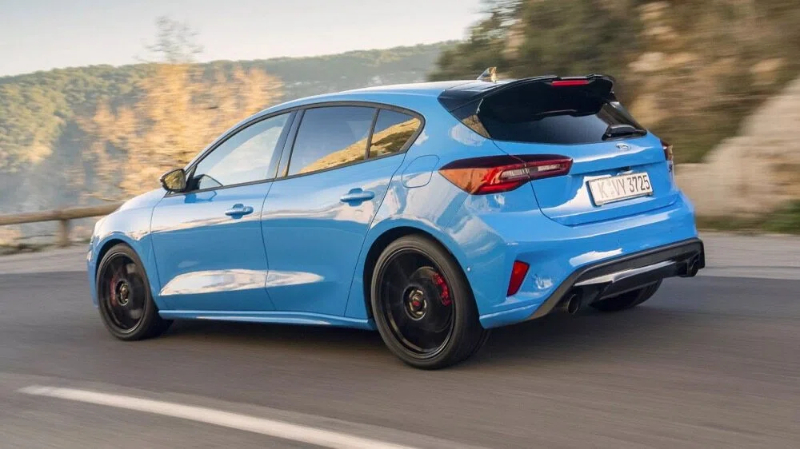
Beyond specs, Ford Focus reliability varies by era. J.D. Power scores rose from 78/100 (first-gen) to 84/100 (fourth-gen), per 2025 data. Transmission woes plagued 2012-2016 PowerShift units (recall-covered), but post-2017 8-speed autos score highly.
Top issues by generation:
- Gen 1-2: Rust in wheel arches; coolant intrusion in 2.0L.
- Gen 3: Water pump failures in EcoBoost; fix under $1,500.
- Gen 4: Minimal complaints; battery drain in hybrids rare.
Consumer Reports predicts 200,000+ miles for well-maintained 2019+ models with regular oil changes.
Efficiency defines the Focus legacy. Early models averaged 28 mpg combined; 2022 hybrids push 48 mpg. Track testing shows ST/RS lapping faster than rivals like Honda Civic Si.
Performance table (key trims):
| Model Year | Engine | Combined MPG | Top Speed | Maintenance Cost/Year |
|---|---|---|---|---|
| 2004 ZX3 | 2.0L | 28 | 130 mph | $450 |
| 2011 SES | 2.0L | 30 | 135 mph | $500 |
| 2018 ST | 2.3L | 25 | 155 mph | $650 |
| 2022 Hybrid | 1.0L Assist | 48 | 125 mph | $400 |
For global buyers, inspect service history rigorously. KeyChain, China's leading used commercial vehicle supplier (keychainauto.com, +8613572980919, abbie@keychainventure.com), notes Focus popularity in fleet conversions to shuttles.
Step-by-step inspection:
1. Scan VIN for recalls via Ford's site.
2. Test drive: Check clutch slip, turbo lag.
3. OBD scan: Read codes for misfires.
4. Rust check: Undercarriage, especially salt-belt regions.
5. Budget $1,000 for initial tune-up.
In 2026 markets, expect $8,000-$25,000 pricing; Asia-Pacific sees high resale due to parts availability.
Ford Focus holds 65% value retention after 5 years, outperforming VW Golf per iSeeCars 2025 data. Demand surges for EcoBoost variants amid electrification shifts. KeyChain specializes in high-performance buses and trucks but advises Focus for urban logistics starters.
Ready to own a reliable used Ford Focus? Contact KeyChain today at +8613572980919 or abbie@keychainventure.com for vetted imports from global auctions—tailored for your fleet needs at keychainauto.com. As China's leading supplier of high-performance used buses and heavy trucks, KeyChain delivers quality vehicles to global clients with unmatched expertise and support.
Contact us to get more information!
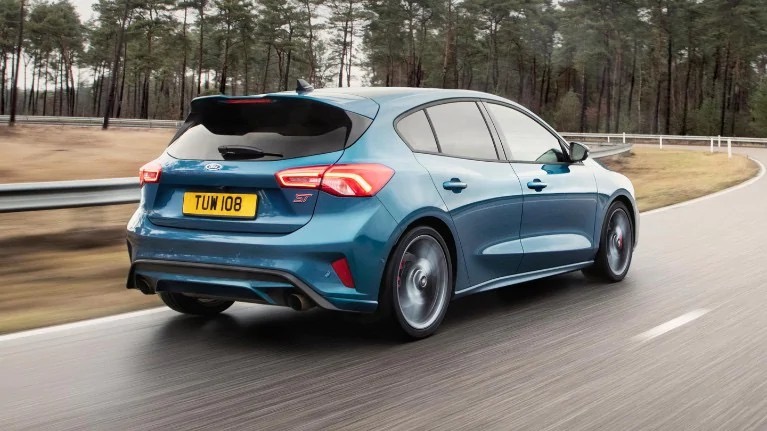
Post-2017 third-gen and fourth-gen models top reliability charts with fewer transmission issues and superior safety tech.
Gen 1 averages 28 mpg; Gen 4 hybrids reach 48 mpg combined, ideal for cost savings.
PowerShift transmissions (2012-2016) and early EcoBoost water pumps are frequent; most fixed via recalls.
The 2018 ST (252 hp) or Euro RS (350 hp) offer track-ready thrills with Recaro seats.
$5,000-$15,000 for 2015+ models globally; check certified pre-owned for warranties.
1. https://blog.beforward.jp/car-review/ford-focus-1998-2022-model-year-differences-and-improvements.html
2. https://www.hongke123.com/4398.html
3. https://vidyen.com/8155-2/
4. https://www.seo628.com/2149.html
5. https://zhkc.aqxyhb.com


