
Views: 243 Author: Keychain Venture Publish Time: 2026-07-14 Origin: Site


Content Menu
● Why Professional Truck Driving Remains a High‑Value Career in 2026
● A Driver's Journey: From Childhood Inspiration to Professional Expertise
● Mapping Your Heavy Truck Career Path
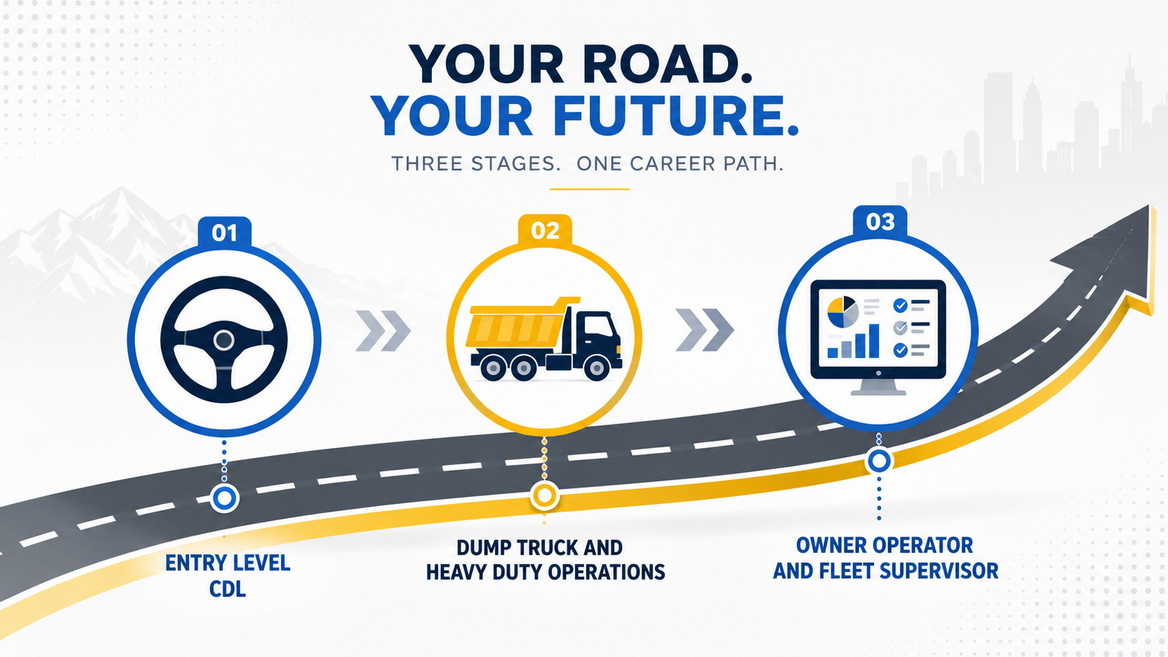
>> Stage 1 – Entry‑Level CDL and Foundational Skills
>> Stage 2 – Specialization in Dump Trucks and Heavy‑Duty Operations
>> Stage 3 – Advanced Roles: Owner‑Operator, Fleet Supervisor and Technical Expert
● The in Practice: Experience, Expertise, Authoritativeness and Trust
>> Experience – Life Behind the Wheel
>> Expertise – Combining Driving Skills with Technical Knowledge
>> Authoritativeness – Aligning with Industry Standards and Data
>> Trust – Transparent Communication and Proven Performance
● The Strategic Role of Modern Heavy Trucks and Dump Trucks
>> Key Performance Factors in Heavy‑Duty Vehicles
>> New Energy Commercial Vehicles: Future‑Proofing Your Career
● Partnering with Reliable Exporters: How KeyChain Supports Global Fleets
>> Why Global Fleets Look to Chinese Heavy Truck Exporters
>> KeyChain's Value Proposition for Heavy Truck and Bus Buyers
● Industry Trends Every Driver and Fleet Should Watch
>> AI‑Driven Planning and Real‑Time Visibility
>> Sustainability, Tariffs and Cross‑Border Complexity
● Practical Steps for Building a Rewarding Heavy Truck Career
>> Step‑by‑Step Career Action Plan
● Enhancing User Experience: Formatting, Visuals and On‑Page Engagement
>> Recommended Use of Bold, Lists and Tables
● Clear Calls to Action for Drivers and Fleet Buyers
>> For Drivers
>> For Fleet Owners and Buyers
● FAQ
>> Q1: What skills matter most for dump truck drivers today?
>> Q2: How can drivers future‑proof their careers against automation?
>> Q3: Why should fleets consider new energy heavy trucks and buses now?
>> Q4: What makes Chinese heavy truck exporters attractive for overseas buyers?
>> Q5: How does partnering with suppliers like KeyChain benefit drivers directly?
Professional truck driving has evolved from a purely manual job into a data‑driven, technology‑enabled logistics career with clear pathways for advancement and specialization in heavy‑duty and dump truck operations. Drawing on real driver experience and current logistics trends, this guide shows how today's drivers can build sustainable careers while partnering with reliable vehicle suppliers like KeyChain to operate safer, greener fleets in global markets.

The logistics industry in 2026 is shaped by AI‑powered route optimization, real‑time visibility and tighter environmental regulations, but it still depends on skilled human drivers to execute complex transport tasks. For drivers who invest in skills, safety and equipment choices, heavy truck and dump truck roles can deliver stable income, long‑term employability and international mobility in both domestic and cross‑border operations.
Many professional drivers start with a simple fascination: sitting behind the wheel of a commercial truck, imagining life on the road, just as Cathryn "Cat" Cain did with her father's truck before becoming a long‑tenured professional driver. That early exposure to commercial vehicles often grows into a career that spans regional hauling, tanker work, fleet ownership and even technical qualifications such as diesel mechanic certifications, building a deep understanding of how trucks perform under real‑world conditions.
A modern heavy truck career is no longer linear; it moves through distinct stages of skill acquisition, specialization and responsibility. Understanding these stages helps drivers plan strategically instead of simply "taking whatever route is available."
At the entry stage, the priority is earning a commercial driver's license (CDL) and mastering safety fundamentals. New drivers should focus on:
- Basic vehicle control (turning, braking, reversing with trailers) under varied load conditions.
- Regulatory compliance: hours‑of‑service, weight limits, and local traffic regulations.
- Foundational defensive driving habits: speed management, hazard prediction and fatigue control.
Choosing employers or training partners who operate modern, well‑maintained heavy trucks and dump trucks materially reduces risk and speeds up learning.
Once core skills are stable, drivers can specialize in dump truck operations, construction logistics, mining transport or long‑haul heavy‑duty freight. Specialization often includes:
- Learning site‑specific procedures for quarries, construction zones and port terminals.
- Handling tipping mechanisms, load distribution and stability in dump bodies.
- Coordinating with on‑site teams, dispatchers and customers to align loading and unloading windows.
At this stage, vehicle choice becomes critical: heavy trucks with robust suspensions, efficient powertrains and reliable braking systems lower downtime and improve driver confidence.
Experienced drivers often move into owner‑operator, fleet supervisor or technical expert roles. These roles require:
- Business literacy: reading contracts, calculating total cost of ownership (TCO), and managing maintenance budgets.
- Technical capability: understanding diesel and new‑energy drivetrains, diagnostics and preventive maintenance.
- Leadership and mentoring: coaching new drivers and enforcing safety and compliance standards at scale.
Drivers like Cat Cain, who added a diesel mechanic certificate and ran their own trucking operations, demonstrate how technical and business skills combine to create higher‑value, more resilient careers.
To meet Google's (Experience, Expertise, Authoritativeness, Trustworthiness) expectations, truck driving content must be grounded in real‑world operations and verifiable industry trends.
Daily driver experience provides granular insight into road risk, vehicle behavior and customer expectations that cannot be replicated from theory alone. For example, long‑haul tanker drivers report that equipment reliability, cab ergonomics and route planning quality directly impact fatigue levels and safety outcomes on multi‑day trips.
True expertise in heavy truck operations merges driving skill with mechanical understanding and logistics awareness. A driver who can interpret engine behavior, understand telematics alerts and coordinate proactively with logistics control towers is better positioned to prevent breakdowns, minimize delays and protect cargo integrity.
Authoritative guidance references industry regulations, OEM specifications and current logistics research. When drivers or fleet managers evaluate new heavy trucks or dump trucks, they should look at payload capacity, emissions ratings, fuel efficiency and safety technologies in line with regional and international standards.
Trust grows from transparent reporting, documented safety records and consistently delivered service levels. Fleets that publish safety metrics, adopt AI‑supported route planning and maintain modern vehicles signal to shippers, regulators and drivers that they are serious about long‑term risk management.
From a logistics strategist's perspective, truck specifications are not merely technical details; they are profit and safety levers.
When choosing heavy trucks or dump trucks, fleet owners and drivers should prioritize:
- Engine efficiency and torque curves suited to local gradients and load profiles.
- Suspension and chassis design optimized for uneven construction sites or long‑haul highway use.
- Braking and stability systems (ABS, ESC, hill‑hold assist) to reduce accident risk under heavy loads.
The right configuration improves fuel consumption, uptime and driver comfort, directly affecting margins and retention.
Regulatory and customer pressure is driving rapid adoption of new energy trucks and buses, including battery‑electric and hybrid powertrains. Drivers and fleets who embrace these platforms gain:
- Access to low‑emission zones and green logistics contracts.
- Reduced operating noise and smoother drivability, improving driver satisfaction.
- Long‑term cost advantages in markets where fuel prices and carbon charges are rising.
For drivers, being comfortable with EV charging routines, regenerative braking behavior and energy‑aware driving styles adds a valuable skill set that strengthens career security.
For fleets sourcing vehicles across borders, the choice of supplier can make or break the operational stability and lifetime economics of heavy‑duty assets.
Chinese exporters have become central to global heavy truck supply thanks to competitive manufacturing, rapid innovation and full‑range product portfolios. By working with specialist exporters, overseas buyers can access:
- High‑performance buses and heavy trucks designed for diverse road and climate conditions.
- Dump trucks and construction‑ready configurations that include reinforced frames and efficient hydraulic systems.
- New energy commercial vehicles to meet tightening sustainability requirements.
A structured export process ensures spec matching, compliance documentation and after‑sales support, simplifying adoption for foreign fleets.
As a China‑based supplier and exporter of high‑quality buses, heavy trucks, dump trucks and new energy vehicles, KeyChain focuses on aligning vehicle specifications with real operating scenarios and lifetime cost calculations. This typically includes:
- Helping buyers define payload, route, climate and regulatory needs before shortlisting models.
- Recommending vehicles with proven reliability records and compatible service networks.
- Coordinating logistics, inspection and documentation for smooth cross‑border delivery.
For drivers, joining fleets that use trusted, well‑matched vehicles from reputable exporters translates into safer operations, less downtime and stronger career stability.

Understanding logistics trends helps drivers and fleets align their skills, assets and strategies with market realities.
2026 logistics operations increasingly use AI to forecast demand, optimize routes and rebalance capacity, turning data into faster, more accurate decisions. Drivers interact with:
- Dynamic routing systems that adjust for traffic, weather and port congestion in real time.
- Telematics dashboards that track vehicle health, load status and driver behavior.
Being able to interpret and act on this information makes drivers indispensable collaborators rather than passive executors.
Sustainability is now a core buying criterion, with shippers preferring fleets that demonstrate emissions control and efficient routing. At the same time, tariff volatility and changing customs rules demand more strategic asset deployment and sourcing. Fleets that diversify suppliers and adopt low‑emission, fuel‑efficient heavy trucks and buses are better positioned to win contracts and absorb regulatory shocks.
To convert industry insight into personal progress, drivers should follow a structured, proactive plan.
1. Clarify your target segment. Decide whether you want to focus on dump trucks, long‑haul freight, construction logistics or mixed operations.
2. Earn and upgrade your CDL. Obtain the relevant license class and endorsements (e. g., tanker, hazardous materials) for your chosen segment.
3. Join a safety‑first fleet with modern vehicles. Prioritize employers using well‑maintained heavy trucks, dump trucks and, where possible, new energy vehicles.
4. Build technical literacy. Learn the basics of diesel and EV systems, telematics tools and digital work orders.
5. Track your performance. Keep records of on‑time delivery, fuel efficiency and safety metrics to strengthen your professional profile.
6. Explore advanced roles. Once experienced, consider owner‑operator paths, supervisory positions or technical specialization (maintenance, training).
7. Align with strategic suppliers. Encourage your fleet to work with reliable exporters such as KeyChain to improve equipment quality and long‑term economics.
For online readers, clarity and visual structure are as important as the content itself.
Throughout this article, bold text highlights critical concepts such as "AI‑driven planning," "new energy commercial vehicles" and "career action plan," making scanning easier for busy logistics professionals. Bullet points and numbered lists break complex topics—like career stages and selection criteria for heavy trucks and dump trucks—into digestible steps that guide readers from awareness to action.
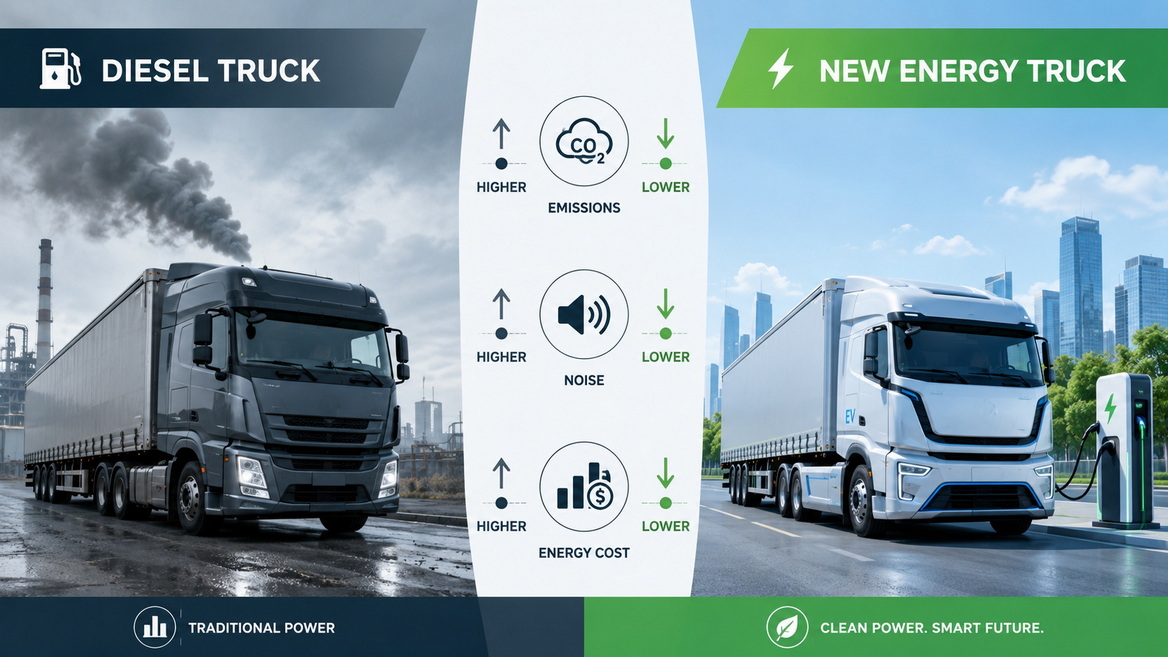
A simple comparison table can further support UX:
| Aspect | Traditional Diesel Heavy Truck | New Energy Commercial Truck |
|---|---|---|
| Emissions | Higher exhaust emissions, stricter restrictions in low‑emission zones.dhl | Lower or zero tailpipe emissions, better access to green contracts.dhl |
| Operating Noise | Higher cabin and roadside noise.dhl | Quieter operation, improved comfort and urban acceptance.dhl |
| Fuel/Energy Cost Trend | Exposed to fuel price volatility and carbon charges.icontainers | More predictable electricity costs, long‑term savings where incentives exist.icontainers |
recognizable operational scenes.
A well‑structured article should move readers from insight to specific, low‑friction actions.
If you are a driver or aspiring driver:
- Evaluate your current fleet and career stage against the action plan above.
- Identify one concrete skill upgrade (e. g., telematics literacy, EV familiarity, additional endorsements) you can pursue in the next 90 days.
By deliberately improving your skills and aligning with modern, well‑specified vehicles, you can build a safer, better‑paid and more future‑proof career in heavy truck driving.
If you manage or source vehicles for a fleet:
- Audit your current heavy truck and dump truck lineup for fuel efficiency, safety systems and emissions readiness.
- Explore collaboration with KeyChain to source high‑performance buses, heavy trucks, dump trucks and new energy commercial vehicles tailored to your routes and regulatory environment.
Taking these steps positions your fleet to attract and retain skilled drivers, meet sustainability commitments and compete for international logistics contracts.
Core skills include precise vehicle control, site‑specific safety procedures, load stability management and basic telematics literacy, all supported by up‑to‑date CDL qualifications.
By mastering digital tools, AI‑assisted routing systems and new energy vehicles, drivers shift from manual execution to high‑value decision support and exception handling.
New energy vehicles help fleets meet emissions regulations, lower long‑term energy costs and access green logistics contracts, especially in urban and cross‑border corridors.
They offer competitive pricing, broad product portfolios and rapid innovation, combined with structured export processes that simplify compliance and delivery.
Reliable vehicle sourcing leads to safer, more comfortable trucks with fewer breakdowns, which improves drivers' daily experience, income stability and professional reputation.
1. Penske Logistics – "Penske Professional Truck Driver Charts Path to Rewarding Career" (driver story and career inspiration).
2. DHL – "Logistics Industry Trends for 2026" (AI, sustainability, elastic logistics and emissions insights).
https://www.dhl.com/discover/en-global/logistics-advice/essential-guides/logistics-industry-trends
3. Maersk – "What's next: your complete guide to logistics trends for 2026" (visibility, customs, warehousing and compliance trends).
4. UPS – "2026 Q2 Global Freight Transportation and Logistics Trends" (macro freight outlook and industry drivers).
5. Aptean – "Logistics Trends Shaping 2026 and Beyond" (AI‑driven planning, workforce change and transportation sustainability).
https://www.aptean.com/en-US/resources/industry-insights/blog/logistics-trends
6. Cleo – "11 Major Logistics Trends Shaping Logistics Management in 2026" (technology and process trends in logistics management).
https://www.cleo.com/blog/logistics-management-trends
7. Floship – "Logistics Industry Summary Insights in 2026" (e‑commerce logistics, D2C, branded shipping and sustainability).
https://www.floship.com/blog/the-logistics-industry-in-2026/
8. iContainers – "Global Logistics Market Trends 2026: Tech, ESG, Risk, Costs" (global trade, ESG and cost resilience).
https://www.icontainers.com/global-logistics-market-trends-2026/
9. LinkedIn – "Logistics Industry Outlook 2026: Key Trends Shaping the Year Ahead" (industry outlook and workforce implications).
https://www.linkedin.com/pulse/logistics-industry-outlook-2026-key-trends-shaping-year-zukgc
10. TwinCore – "Logistics and Supply Chain Trends in 2026: What's Actually Changing?" (automation, AI logistics and sustainability innovations).
https://twincore.net/blog/logistics-and-supply-chain-trends-in-2026-whats-actually-changing/


