
Views: 222 Author: Sara Publish Time: 2025-12-31 Origin: Site


Content Menu
● Core School Bus Classifications
● 2025 School Bus Market Statistics
● Latest Safety Standards (2025 Updates)
● Practical Buying Guide & Checklist
● FAQ
>> 1. What is the most common school bus type?
>> 2. Are electric school buses cost-effective?
>> 3. How do Type C and Type D differ?
>> 4. What safety upgrades are coming in 2025?
>> 5. How much does a used Type A cost?
School bus types range from compact Type A models to high-capacity Type D transit buses, each designed for specific passenger needs and routes. This comprehensive 2025 guide covers all 9 common school bus types, their chassis, capacities, and latest trends like electric adoption to help buyers avoid costly mistakes.[1][2]

U.S. school buses follow strict FMVSS standards, divided into Type A, B, C, D based on chassis and GVWR. These form the foundation for the 9 types, with variations for specialized uses. Understanding these prevents overbuying capacity or underestimating maneuverability.[2][3][1]
- Type A: Van or cutaway chassis, GVWR under/over 10,000 lbs (A1/A2).[4][2]
- Type B: Flat-front, door forward of wheels—rare today.[1]
- Type C: Conventional truck chassis, engine forward.[2]
- Type D: Transit-style, engine rear/front/floor-mounted.[5]
Type A school buses use van or light-duty truck chassis for urban agility. They seat up to 30 passengers, ideal for daycares or nonprofits navigating tight streets.[1][2]
Lower floors ease access; examples include 2015 International models. GVWR splits: A1 (<10,000 lbs) for lightest duty, A2 (over) for more robustness. Maintenance runs $5,500/year on average, lower than larger types.[6][4]
Type B school buses feature stripped chassis with entrance door ahead of front wheels, seating 30-40 passengers. Less common due to market shift to A or C.[1]
A 2012 Blue Bird example highlights tight footprint for mid-range needs. Scarce on used markets, but viable where space trumps capacity. Fuel efficiency mirrors Type C, but parts availability lags.[3][1]
The iconic Type C school bus rides a truck chassis, seating 36-78 passengers. Standard for most districts, balancing size and accessibility.[2][1]
Engine forward, door behind wheels; strong aftermarket support like 2011 International. GVWR 23,500-29,500 lbs handles 10-54+ riders effectively. Suggest video embed: Type C route demo for visibility.[3]
Type D school buses maximize space with transit chassis, engine rear/front/floor, up to 90 passengers. Perfect for long routes or high-volume needs.[1][2]
Models like 2009 Thomas Saf-T-Liner excel in durability, but check parking fit. Lengths to 45 feet demand skilled drivers. Annual costs higher at $5,500+, offset by capacity.[6][2]
Mini school buses (often Type A-based) seat 10-24 passengers for special ed or seniors. Nimble, ADA-compliant like 2013 Chevy Thomas.[1]
Great for new drivers; less intimidating. Market share grows at 8.03% CAGR for <30 seats. Insert image: Mini bus in urban setting.[5]

Lift-equipped school buses add hydraulic lifts and wide aisles for mobility needs, capacity varies. State-mandated for inclusivity.[1]
Essential for wheelchair access; retrofit older Types C/D. Compliance boosts safety scores.[7]
Multi-Function School Activity Buses (MFSAB) lack stop arms/flashers, matching Type A-D capacities for field trips or churches.[1]
2009 Blue Bird Vision example suits non-student routes. Cost-effective without full school bus regs.[3]
Electric school buses adapt Type C/D chassis with 100-150 mile range. Adoption surged: 5,100+ on roads by 2025, up from 415 in 2020.[8][1]
Market hits $5.83B in 2025, 7.22% CAGR; 7.5% of new sales. Lower emissions (54,000 lbs GHG saved/year/bus), health benefits $43,800/bus. Upfront higher, but 60% more efficient vs diesel.[9][10][8][5]
Converted school buses (Skoolies) repurpose Type C/D retirees into homes/business rigs. Check state registration; 1990 Thomas example shows potential.[1]
DIY demands inspection; used Type C costs $8,000-$20,000.[11]
U.S. market reaches $5.83B in 2025, growing to $8.26B by 2030 at 7.22% CAGR. District fleets dominate (69.55% share); mid-size (30-60 seats) lead at 57.13%.[5]
Electric orders: 2,698 in 2024 alone. Ownership costs $34,000-$38,000/year/bus.[8][11]
| Bus Type | New Price Range | Used Price | Capacity | Annual Maint. Est. |
|---|---|---|---|---|
| Type A | $50K-$80K | $6K-$15K | 10-30 | $5,500 |
| Type B | $80K-$120K | $7K-$13K | 30-40 | Similar to C |
| Type C | $100K-$130K | $8K-$20K | 36-78 | $5,500 |
| Type D | $110K-$200K | $15K-$40K | Up to 90 | $5,500+ |
| Electric | Higher upfront | Varies | Varies | Lower long-term |
School Bus Safety Act 2025 mandates 3-point belts (>10,000 lbs GVWR), event recorders, stability control. NHTSA amends FMVSS 213/222 for child restraints, exempting side-impact for buses.[12][13][14]
Trends: ESC standard (IC Bus, Blue Bird), AEB/speed limiters proposed. Insert image: Safety tech diagram.[15]
Fill market gaps with this school bus buying checklist.[16][7]
1. Define needs: Passengers? Routes? Growth?[7]
2. Inspect exterior: Dents, rust, clearance.[16]
3. Check mechanicals: Engine, brakes, mileage.
4. Safety audit: Belts, cameras, lifts.
5. Test drive: Maneuverability, climate.
6. Budget total: Fuel, maint., resale.
Pro Tip: Electric saves $247,600/bus in health/climate over life. Compare via table above.[10]
Ready to find the perfect school bus for your district, church, or skoolie project? Browse hundreds of verified listings at keychainauto.com today or call +8613572980919 right now - inventory moves fast, and expert advisors match your exact needs![1]
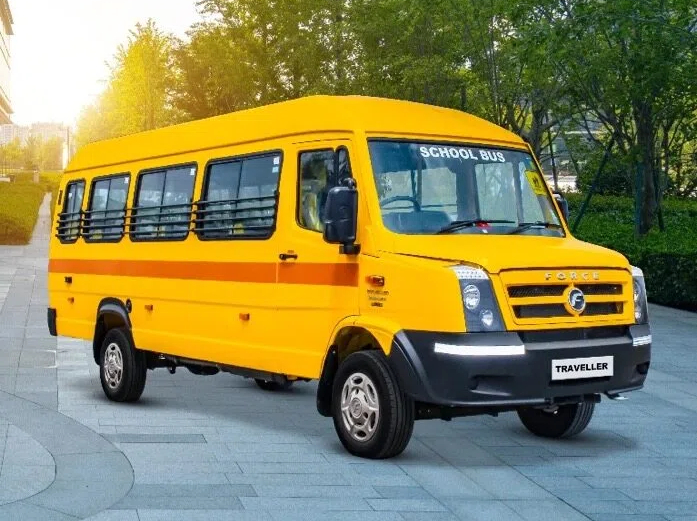
Type C dominates for 36-78 passengers and familiarity.[2][1]
Yes, despite higher upfront costs; 60% more efficient, major savings long-term.[9][8]
Type C: Truck chassis, forward engine; Type D: Transit, rear engine, higher capacity.[3][2]
3-point belts, stability control, AEB per new acts.[12][15]
$6,000-$15,000, ideal for small groups.[11]
[1](https://www.busesforsale.com/knowledge-center/blog/9-types-of-school-buses-a-pocket-guide)
[2](https://idealcharter.com/blog/types-of-school-buses)
[3](https://www.whitestractor.com/an-overview-of-the-different-types-of-school-buses/)
[4](https://www.model1.com/resources/blog/the-different-types-of-school-buses-to-know-about/)
[5](https://www.mordorintelligence.com/industry-reports/united-states-school-bus-market)
[6](https://www.busboss.com/blog/an-analysis-of-costs-and-school-bus-maintenance)
[7](https://www.carpenterbus.com/blog/all/essential-bus-buyers-checklist/)
[8](https://electricschoolbusinitiative.org/state-electric-school-bus-adoption-us)
[9](https://www.schetkynw.com/electric-school-bus-vs-diesel-showdown-steering-the-future-of-school-transportation/)
[10](https://hsph.harvard.edu/news/electric-school-buses-may-yield-significant-health-and-climate-benefits-cost-savings/)
[11](https://municibid.com/blog/how-to-understand-school-bus-costs)
[12](https://www.congress.gov/bill/119th-congress/senate-bill/828/text)
[13](https://stnonline.com/special-reports/nhtsa-seeks-fix-to-child-safety-restraint-standard-affecting-school-buses/)
[14](https://www.federalregister.gov/documents/2025/05/30/2025-09746/federal-motor-vehicle-safety-standards-no-222-school-bus-passenger-seating-and-crash-protection)
[15](https://www.schoolbusfleet.com/10233586/2025-trend-to-watch-school-bus-safety)
[16](https://kerlinbus.com/es/unos/noticia/before-you-buy-a-practical-checklist-for-used-school-buses)


