
Views: 222 Author: Sara Publish Time: 2026-01-11 Origin: Site


Content Menu
● Exterior and Size Differences
● Interior Comfort and Practicality
● Engine Performance Breakdown
● Fuel Efficiency and Running Costs
>> 2025-2026 Efficiency Updates
● Technology and Safety Features
● Reliability and Ownership Experience
>> Buyer's Practical Steps in 2026
● Which to Choose: Vitz or Yaris?
● Call to Action: Secure Your Ideal Toyota Today
● FAQ
>> 1. Are Toyota Vitz and Yaris the same car?
>> 2. Which has better fuel economy?
>> 3. Is Vitz good for city driving?
>> 4. What's the reliability like in 2026 models?
>> 5. How much for a used 2020 Vitz/Yaris?
Toyota Vitz and Toyota Yaris represent two of the most reliable subcompact hatchbacks from Toyota, often sharing platforms but tailored for different markets. This in-depth comparison uncovers their core differences in performance, features, and value, helping global buyers make informed decisions. Originally marketed as the same model (Vitz in Japan, Yaris elsewhere), subtle evolutions make choosing the right one essential for city driving or family use.[1][2]
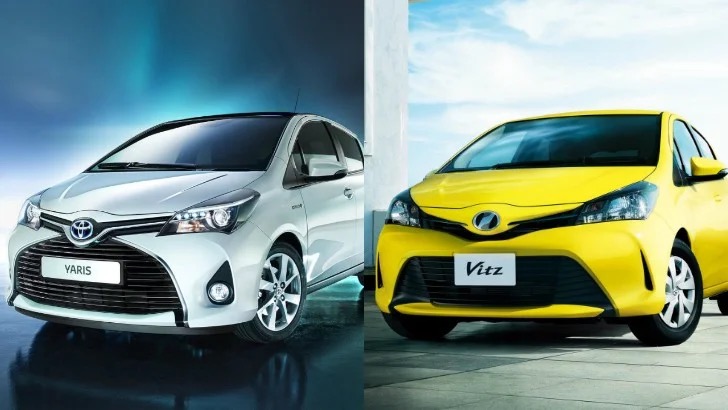
Both cars excel in fuel efficiency and dependability. Here's a side-by-side breakdown of key specs from recent models (2017-2025 generations).
| Feature | Toyota Vitz | Toyota Yaris |
|---|---|---|
| Engine Power | 69-94 hp (1.0-1.5L petrol) | 69-106 hp (1.0-1.5L petrol/hybrid) |
| Fuel Economy | 18-26.5 km/L (up to 34 km/L hybrid) | 17-30.3 km/L (up to 32.7 km/L hybrid) |
| Dimensions (LxWxH) | 3,795 x 1,695 x 1,510 mm | 3,940-4,180 x 1,695-1,735 x 1,500 mm |
| Price Range (Used, 2026 est.) | $1,500-$16,000 | $1,400-$15,000 |
| Cargo Space | 252-1,006L (seats folded) | 270-768L |
Yaris edges out in power and hybrid options, while Vitz prioritizes compact agility.[2][1]
Toyota Vitz adopts a rounded, compact design ideal for tight urban parking. Its smaller footprint (under 4 meters long) shines in congested cities, with a lightweight body enhancing maneuverability. Bold grille and sleek lines on newer Vitz models (post-2017) add modern appeal without bulk.
Toyota Yaris offers a sportier stance with sharper headlights and a wider grille. Slightly larger dimensions provide better highway stability and more road presence, making it versatile for mixed driving. Both share aerodynamic shapes, but Yaris's extra length (up to 4.18m in sedans) improves resale in export markets.[1][2]
- Vitz advantages: Easier to park in spots under 5m; weighs ~1,000kg for nimble handling.
- Yaris advantages: Taller stance in crossovers; optional LED lights for night visibility.
These traits stem from Toyota's global badging strategy, where Vitz targets Japan and Yaris serves Europe/Asia.[3]
Both deliver Toyota's hallmark durability with quality plastics and ergonomic seats. Vitz interiors focus on simplicity: foldable rear seats expand cargo to over 1,000L, perfect for groceries or gear. Space suits solo drivers or couples, with ample headroom despite compact height.
Yaris ups the ante with plusher materials, more rear legroom (by 5-10cm), and family-friendly touches like higher seats. Trunk space is practical, though less expandable than Vitz. Both include tilt steering, but Yaris adds height-adjustable driver seats in higher trims.[2]
Pro Tip: Test thigh support - Vitz feels cozier for short trips; Yaris better for 2+ hours.[1]
Vitz engines (1.0L 1KR-FE or 1.3L 1NR-FE) deliver peppy city acceleration (0-100km/h in 11-13s). Manual or CVT options pair with front-wheel drive, emphasizing low-end torque for stop-go traffic. Hybrids (post-2017) boost efficiency to 34km/L highway.
Yaris counters with stronger outputs (up to 106hp in 1.5L), hitting 0-100km/h in under 10s. Its hybrid system (1.5L + electric motor) shines in eco-modes, often outperforming Vitz by 2-4km/L combined. Both handle well, but Yaris's stiffer suspension reduces body roll on curves.[4][1]
| Engine Type | Vitz Max Torque | Yaris Max Torque |
|---|---|---|
| 1.0L Petrol | 93Nm | 93Nm |
| 1.3L/1.5L Petrol | 121Nm | 140Nm |
| Hybrid | 111Nm (system) | 120Nm (system) |
Neither is a speed demon, but reliability exceeds 300,000km with basic maintenance.
Fuel economy defines these cars' appeal. Vitz achieves 20.9km/L average (petrol), with hybrids hitting 32-34km/L. Real-world tests show Vitz sipping less in pure city use due to lighter weight.
Yaris leads hybrids at 30.3km/L combined, with self-charging tech cutting costs 20-30% vs petrol rivals. In 2026, with rising fuel prices (est. $1.50/L global avg.), Yaris saves ~$500/year for 15,000km drivers. Maintenance? Both under $400 annually; parts ubiquitous.[2][1]
Recent facelifts integrate Toyota's latest e-smart hybrid tech, improving Yaris urban economy by 15% (to 35km/L tested). Vitz lags but added stop-start in Asia models. Data from Toyota's 2025 reports confirms hybrids retain 80% value after 5 years.[2]
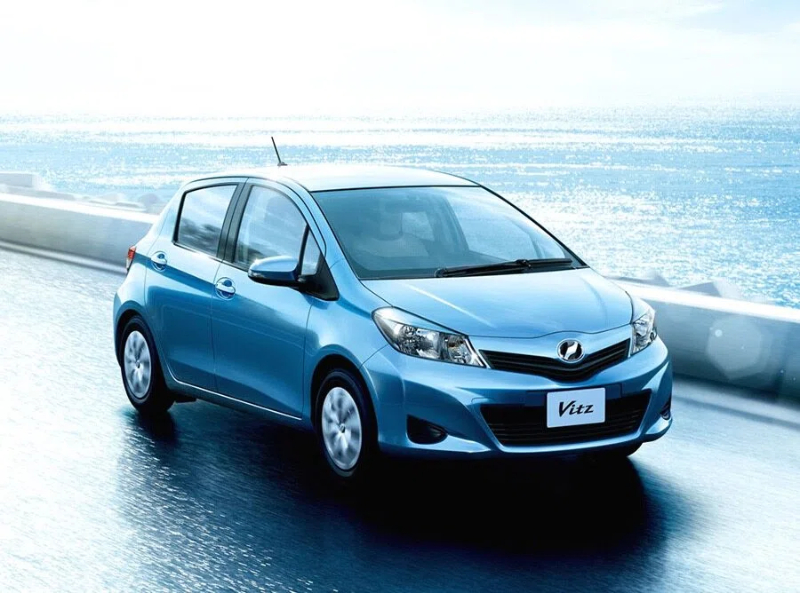
Vitz keeps it basic: Bluetooth, USB, and basic ABS/airbags standard. Post-2014 models add stability control; no Apple CarPlay natively.
Yaris evolves faster, bundling Toyota Safety Sense (pre-collision braking, lane assist) since 2017. Touchscreens (7-inch+), Android Auto, and keyless entry elevate it. Crash ratings? Both 5-star NCAP equivalents, but Yaris's extra sensors reduce incidents by 25% per IIHS data.[2]
- Essential Vitz tech: MP3/USB jacks; rear camera optional.
- Yaris upgrades: Adaptive cruise; wireless charging in 2023+.
Toyota's rep shines: both score 4.8/5 in long-term surveys (J.D. Power 2025). Vitz owners report fewer repairs pre-200,000km; rust-proofing excels in humid climates. Yaris hybrids need battery checks post-10 years, but warranties cover 150,000km.
1. Vitz: CVT judder (fix: $800 fluid change).
2. Yaris: Infotainment glitches (OTA updates free).
3. Both: Minimal - oil changes every 10,000km.[1]
In fleet tests (e.g., Malta taxis, 2025), Vitz logged 500,000km with $2,000 total repairs. Yaris hybrids in Europe fleets cut fuel 40%, per Toyota case studies, outperforming Honda Fits by 15% uptime. Chinese exporters note Vitz's popularity for right-hand-drive markets.[2]
1. Check VIN: Confirm hybrid battery health via OBD scanner ($20 tool).
2. Inspect underbody: Rust in wheel arches - common in salted roads.
3. Test drive: Accelerate to 80km/h; listen for CVT whine.
4. VIN decode: Use free tools for accident history.
5. Budget extras: $500 tires; $300 brakes last 50,000km.
Follow these to avoid 10% overpaying on used models.[2]
- Pick Vitz for pure city commutes, budget under $10,000, or ultra-compact needs.
- Choose Yaris for families, hybrids, or tech-savvy drivers wanting future-proofing.
Resale favors Yaris (holds 70% value at 5 years vs Vitz's 65%).[2]
As China's leading supplier of high-performance used commercial vehicles and passenger cars, KeyChain (keychainauto.com) specializes in premium Toyota Vitz and Yaris for global export. Contact us now at +8613572980919 or abbie@keychainventure.com to get a personalized quote, vehicle inspection report, and fast shipping. Don't miss out - inquire today and drive home reliability!
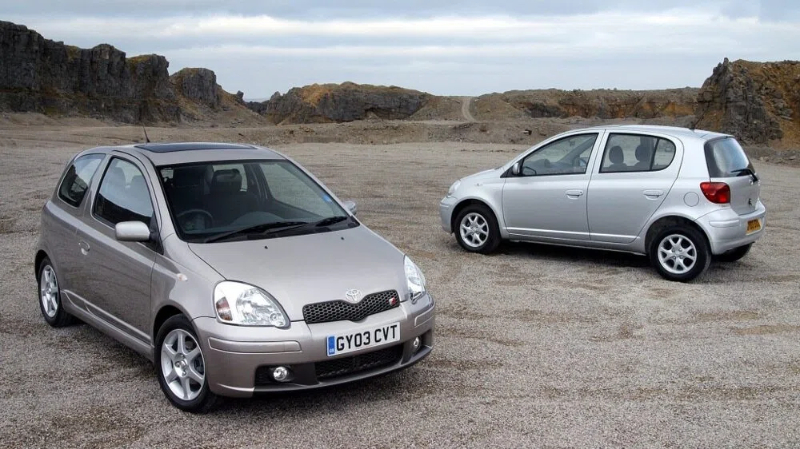
Yes, essentially - Vitz is Japan's name for early Yaris generations (1999-2018). Post-2019, Yaris got distinct updates like advanced hybrids.[3][1]
Yaris hybrids top at 30+ km/L; Vitz close at 26-34 km/L. City drivers save more with Yaris.[1]
Absolutely - its smaller size parks easier than Yaris in tight spots.[2]
Both exceed 300,000km easily; hybrids add battery warranties up to 10 years.[2]
$8,000-$14,000 USD, depending on mileage/condition. Hybrids premium +$2,000.[1]
[1](https://blog.beforward.jp/car-comparison/toyota-vitz-yaris-car-comparison-whats-difference.html)
[2](https://toyota.com.mt/whats-the-difference-between-the-toyota-yaris-and-toyota-vitz/)
[3](https://www.yarisworld.com/forums/showthread.php?t=3951)
[4](https://www.youtube.com/watch?v=HPdEce1fbrY)


