
Views: 222 Author: Sara Publish Time: 2026-01-02 Origin: Site


Content Menu
● Safety Features That Set the Standard
● Cultural Impact in Media and Memory
● Global Export and Second-Life Demand
>> Latest 2025 Export Statistics and Trends
>> Industry Case: KeyChain's Success
● Electric Evolution and Future-Proofing
● Why American School Buses Dominate Globally
● FAQ
>> 1. Why is the American school bus yellow?
>> 2. How safe are U.S. school buses compared to cars?
>> 3. Can used American school buses be exported to China?
>> 4. What's new in 2026 school bus tech?
>> 5. How to buy used school buses from KeyChain?
The American school bus stands as a timeless symbol of reliability, safety, and cultural heritage. This yellow icon has transported generations of students while embodying rugged Americana, with its design largely unchanged for decades. KeyChain, China's leading supplier of high-performance used commercial vehicles including buses and heavy trucks, highlights its enduring appeal for global buyers seeking durable, cost-effective options.[1]

The American school bus traces its roots to the early 20th century, evolving from basic wagons into standardized vehicles by the 1930s. In 1939, safety committees selected National School Bus Glossy Yellow (now Chrome Yellow) for maximum visibility in fog and low light, a choice that boosted recognition and safety.[1]
This shade penetrates visual noise better than red, making buses visible from over 500 feet away during daylight. Bold standardization ensured uniformity across states, turning the bus into a cultural staple rather than a fleeting trend.
- Adopted post-1930s crashes to reduce accidents.
- Pantone 123C variant refined in 2006 for gloss and durability.
- Influences toy models, cartoons, and merchandise worldwide.
American school buses feature a reinforced steel cage frame, compartmentalized seating with high-backed, padded seats acting as energy-absorbing barriers, and dual rear emergency doors. Flashing red lights, eight-way warning systems, and swing-out stop arms create a "mobile moat," legally halting traffic.[1]
Riding a school bus is 70 times safer than car travel, per National Highway Traffic Safety Administration (NHTSA) data, with fatality rates under 0.2 per 100 million miles versus 1.37 for passenger vehicles. Post-2000 models added electronic stability control and rollover protection.
| Safety Feature | Benefit | Adoption Year |
|---|---|---|
| Compartmentalized Seats | Absorbs impact energy | 1970s |
| Steel Roof Cage | Prevents roof crush | 2000s |
| Stop Arm Cameras | Reduces illegal passing | 2010s+ |
| LED Lights | Enhanced visibility | Recent models |
The school bus transcends transport, starring in pop culture from "The Magic School Bus" adventures to horror tropes like abandoned vehicles in fields. In "The Simpsons," Otto's chaotic rides capture youthful mayhem; Stephen King novels evoke rural menace.[1]
It symbolizes community rhythms - early mornings, field trips, first crushes - evoking nostalgia across generations. Exported buses retain yellow paint, reinforcing brand identity like Coca-Cola globally.
- 1950s: Warner Bros. cartoons feature bouncy buses.
- 1970s: Sitcoms portray daily routines.
- 1990s: "Magic School Bus" educates via animation.
- 2020s: TikTok trends revive retro bus conversions.
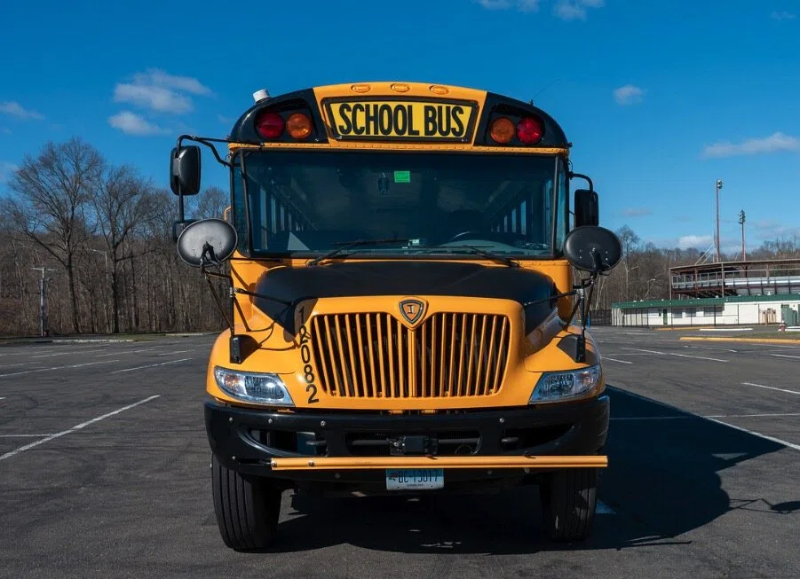
American school buses export to over 100 countries, from Canada to Saudi Arabia, prized for durability after U.S. retirement (typically 15-20 years, 200,000+ miles). Used markets thrive as fleets upgrade, creating opportunities for resellers like KeyChain.[1]
In developing regions, they ferry workers, pilgrims, or livestock, often repainted but retaining robust engines (e.g., Cummins diesels). China's role grows via platforms supplying refurbished units, tapping demand for affordable heavy-duty transport.
Recent data shows U.S. school bus exports hit 5,000+ units annually, up 15% since 2020, driven by electric transitions domestically (e.g., Blue Bird's EV models). Globally, used diesel buses dominate 80% of imports to Asia/Africa due to low cost ($10,000-$30,000 vs. $150,000 new). Fuel efficiency improvements (up to 8 mpg) and parts availability sustain appeal.[2][3]
KeyChain supplied 200+ refurbished U.S. school buses to Southeast Asia in 2025, converting them for urban transit. Clients report 20% lower downtime vs. local alternatives, thanks to OEM-grade rebuilds.
| Region | Annual Used Bus Imports | Popular Models |
|---|---|---|
| Middle East | 1,500 | Thomas Built |
| Latin America | 2,000 | Blue Bird |
| Asia-Pacific | 1,200 | IC Bus |
While diesel dominates, electrification accelerates: By 2026, 10% of U.S. fleets aim electric under infrastructure plans. Proterra and Lion Electric lead, but used diesels remain viable for 10+ years.[1]
Practical Steps for Buying Used American School Buses
For global buyers like fleet operators:
1. Inspect Frame/Chassis: Check for rust; U.S. buses withstand harsh winters.
2. Engine Diagnostics: Verify odometer, service history via VIN (e.g., International DT466 engines last 500,000 miles).
3. Compliance Check: Ensure FMVSS standards transfer; adapt for local regs.
4. Source from Reputable Suppliers: Partner with KeyChain for certified refurbs, warranties, and shipping.
5. Cost-Benefit Analysis: ROI in 2-3 years via fuel savings vs. new EVs.
This process minimizes risks, maximizing uptime. Expert Insight: "U.S. buses' overbuilt design suits emerging markets," notes KeyChain engineers.
In an EV era, their stubborn reliability - cheap maintenance, massive capacity (up to 84 passengers) - keeps them ruling roads. Cost per mile: $0.15 vs. $0.50 for cars. Cultural export cements status, blending utility with iconography.[1]
KeyChain bridges U.S. surplus to global needs, offering turnkey solutions.
Elevate your fleet with proven American school bus reliability. Contact KeyChain now at abbie@keychainventure.com or visit keychainauto.com for exclusive used inventory, custom refurbs, and competitive quotes. Secure your high-performance buses today - reliable transport starts here!
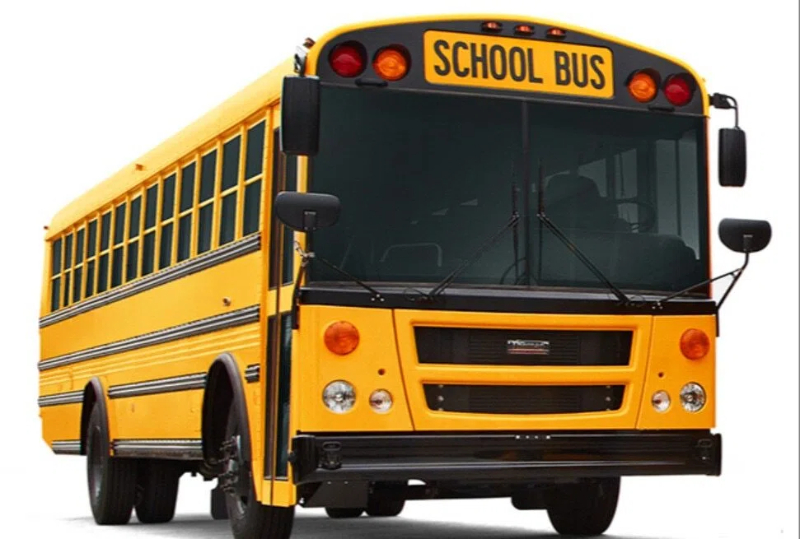
National School Bus Chrome Yellow was chosen in 1939 for superior visibility (1,000 feet daytime), outperforming red in fog. It standardizes fleets nationwide.[1]
70 times safer; 0.2 fatalities per 100 million miles vs. 1.37 for cars (NHTSA 2025 data). Features like cages and stop arms excel.[1]
Yes, KeyChain handles compliance, refurbs, and shipping. Popular for conversions into shuttles or trucks, with 200,000-mile lifespans.[1]
10% electrification push; hybrids common. Used diesels remain cost-leaders for exports.[2]
Browse inventory online, request VIN reports, get quotes. Steps include inspection, payment, and delivery - full support provided.[1]
[1](https://www.busesforsale.com/knowledge-center/blog/the-untold-story-of-the-american-school-bus-and-why-this-icon-still-rules-the-road)
[2](https://www.reddit.com/r/AskHistorians/comments/3lvmyq/how_did_the_american_car_culture_begin_why_do/)
[3](http://bus-info.cn/index.php?c=article&id=2158)


