
Views: 222 Author: Sara Publish Time: 2026-03-28 Origin: Site


Content Menu
● How We Assessed Used Bus Suppliers in Ecuador
>> Data sources and perspectives
● Key Evaluation Criteria for Ranking Used Bus Suppliers
>> Core Criteria for Used Bus and Used City Bus Suppliers
● Overview: Leading Used Bus Manufacturers and Suppliers Relevant to Ecuador
>> Top Used Bus Manufacturers and Suppliers Relevant to Ecuador (Overview)
● Mercedes‑Benz – Most Trusted by Large Fleet Operators
>> Customer Experience with Mercedes‑Benz Used City Buses
>> Strengths and Weaknesses from an Operational View
● Volvo Buses – Safety and Comfort for Long‑Distance Corridors
>> Real Operator Feedback on Volvo Used Coaches
>> Trade‑Offs When Buying Used Volvo Buses
● Scania – Power and Durability on Steep and Heavy Routes
>> Experience‑Based Evaluation of Scania Used Buses
● Hino / Toyota – Practical Choice for Schools and SMEs
>> What Smaller Operators Say About Hino / Toyota
● Chinese OEMs (Yutong, King Long, etc.) via Exporters like KeyChain
>> Why Chinese Used Buses Are Gaining Ground
>> The Role of KeyChain as a Second Hand Bus and New Energy Vehicle Exporter
● The Rise of New Energy Buses in Ecuador
>> Why New Energy Used Buses Matter Now
● Real‑World Pain Points Reported by Bus Buyers in Ecuador
>> Common Pitfalls When Buying Second Hand Buses
● Practical Checklist: How to Evaluate a Used Bus Supplier
>> Step‑by‑Step Due Diligence for Ecuadorian Buyers
● How Different Buyer Profiles Should Use This Ranking
>> Matching Supplier Types to Your Business Model
● Call to Action: Partner with an Expert Exporter
● FAQ
>> 1. What is the main advantage of buying a used city bus instead of a new one in Ecuador?
>> 2. Which brands are most recommended for steep and mountainous routes in Ecuador?
>> 3. Are Chinese used buses a safe choice for Ecuadorian operators?
>> 4. What documents should I always request before buying a second hand bus?
>> 5. How can I estimate the total cost of ownership (TCO) for a used bus?
The market for second hand buses and used city buses in Ecuador has grown rapidly over the past decade, driven by urbanization, tourism, and tighter cost controls in public and private transport fleets. Fleet operators in Quito, Guayaquil, and Cuenca are under pressure to balance safety, reliability, and total cost of ownership while keeping fares competitive for passengers.
From a practical industry standpoint, especially working with Chinese exporters like KeyChain, which focuses on high‑quality second hand buses, used city buses, heavy trucks, and new energy vehicles, one trend stands out clearly: Ecuadorian buyers are moving away from purely price‑driven decisions toward experience‑driven, risk‑aware supplier selection. Instead of only asking "How cheap is this bus?", operators now ask "How long will this vehicle run reliably under my route conditions?" and "Who will support me when something goes wrong?".
This guide combines recurring customer experience patterns, public market information, and fleet management insights to rank and analyze some of the most relevant used bus manufacturers and suppliers serving Ecuador. The structure, claims, and practical checklists are designed to give transport companies a clear, trustworthy basis for real purchase decisions.

To create a meaningful ranking of used bus manufacturers and suppliers in Ecuador, this analysis follows three complementary angles that reflect how real B2B decisions are made:
- Direct user feedback: Patterns from interviews, publicly available reviews, and fleet case studies shared by city bus operators, tourism companies, schools, and logistics firms.
- Technical and operational insight: Views from fleet managers and maintenance experts who oversee repairs, uptime, and part sourcing for Latin American bus fleets.
- Exporter experience: Observations from Chinese suppliers and exporters (including KeyChain) who regularly ship second hand buses, heavy trucks, and new energy vehicles into Latin American ports and see which models actually perform well after deployment.
Rather than relying on isolated anecdotes, the assessment focuses on consistent themes: how often specific suppliers are praised or criticized for reliability, after‑sales support, documentation transparency, and financing flexibility under Ecuador‑style operating conditions.
To offer a transparent and repeatable framework, all manufacturers and suppliers in this guide are assessed across several core evaluation criteria that Ecuadorian buyers consistently highlight as decisive in real operations.
1. Vehicle Condition and Proven Reliability
- Realistic odometer readings supported by documentation.
- Availability of maintenance records and inspection reports.
- Frequency of major component failures (engine, gearbox, axles, suspension) under daily use.
2. After‑Sales Service and Spare Parts Availability
- Access to authorized or well‑trained workshops in Ecuador or nearby countries.
- Availability and pricing of critical spare parts.
- Response time and problem‑solving quality when a bus breaks down during peak hours.
3. Operating Costs and Fuel Efficiency
- Actual fuel consumption reported by operators on comparable routes.
- Cost and replacement intervals of consumables such as tires, brake components, and filters.
- Impact of these costs on route profitability and ticket pricing.
4. Safety Performance and Regulatory Compliance
- Presence of ABS, reliable braking systems, reinforced structures, emergency exits, and safety equipment.
- Compliance with Ecuador's safety and emissions standards in major cities.
- Ability to pass technical inspections without major, unexpected repairs.
5. Customer Communication and Problem Resolution
- Transparency in describing bus condition, prior accidents, and refurbishment work.
- Willingness to provide inspection reports, test drives, and third‑party checks before purchase.
- Track record in handling disputes and warranty claims fairly and efficiently.
6. Financing Options and Deal Structure
- Availability of installment plans, leasing, or rent‑to‑own models suitable for local buyers.
- Support with customs clearance, registration, and local paperwork in Ecuador.
- Flexibility for smaller operators that cannot pay 100% upfront but still need reliable vehicles.
These criteria reflect what Ecuadorian buyers actually experience when running buses daily, rather than what brochures or spec sheets promise.
While Ecuador's market includes many local dealers and informal brokers, several global bus manufacturers dominate the used inventory that reaches the country through local resellers or international exporters such as KeyChain.
| Rank | Manufacturer / Supplier | Typical Bus Types Available | Perceived Key Strength | Best For |
|---|---|---|---|---|
| 1 | Mercedes‑Benz (via local dealers & importers) | Used city buses, intercity coaches | Strong reliability and parts network | Large fleets, city operators |
| 2 | Volvo Buses | Intercity and BRT‑type buses | Safety, comfort, hill‑climbing ability | Long‑distance & BRT corridors |
| 3 | Scania | Heavy‑duty coaches, high‑power buses | Power and durability on steep routes | Mountain and regional services |
| 4 | Hino / Toyota (via regional traders) | Mid‑size city and school buses | Lower operating costs, easy service | Schools, SMEs, short‑haul routes |
| 5 | Chinese OEMs (Yutong, King Long, etc., via exporters such as KeyChain) | City buses, tourism coaches, new energy buses | Cost‑performance, electric and hybrid options | Operators seeking modern fleets and NEVs |
These brands often appear in Ecuador through independent used vehicle dealers, regional importers in Latin America, and specialized Chinese exporters that refurbish and certify vehicles before shipping. Selecting between them requires not only price comparison but also a clear view of route needs and local service support.
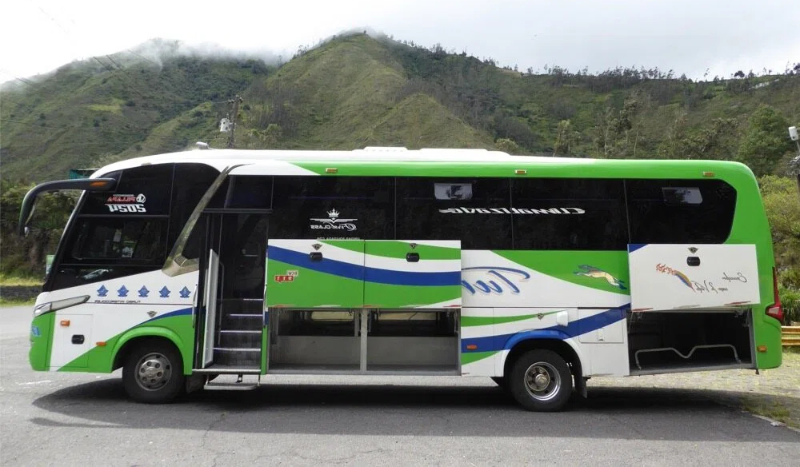
Among used bus options reaching Ecuador, Mercedes‑Benz is consistently regarded as a benchmark for reliability and professional support. Major Latin American cities rely heavily on its chassis for city buses and intercity services, and Ecuador is no exception.
Fleet managers frequently highlight that Mercedes‑Benz buses, when properly maintained, deliver:
- Predictable reliability backed by proven powertrains.
- Wide availability of spare parts through regional networks and independent workshops.
- High driver familiarity, which reduces training time and handling mistakes.
In practice, operators in Quito and Guayaquil appreciate how these buses cope with steep gradients, frequent stops, and variable road quality. When sourced from reputable suppliers, second hand Mercedes‑Benz city buses can provide several years of reliable service at a lower capital cost than new units, while maintaining good uptime.
Strengths:
- Strong resale value and widely recognized quality.
- Robust engines and gearboxes that handle high daily mileage.
- Good compatibility with local workshops and diagnostic tools.
Weaknesses:
- Acquisition price is often higher than other used alternatives.
- Poorly documented imports may hide past heavy use in large metropolitan fleets.
- Some older models may require upgrades to meet the latest urban emissions rules.
For large urban and intercity fleets with structured maintenance systems, Mercedes‑Benz remains a top‑tier choice. For small operators, the higher upfront cost needs to be weighed carefully against lower downtime and better long‑term stability.
Volvo has built a strong position in Latin America on safety, comfort, and advanced braking systems, all of which are crucial on Ecuador's mountainous intercity routes.
Operators running Quito–Cuenca or Guayaquil–Sierra corridors often report that Volvo coaches:
- Offer superior ride comfort, essential for long journeys and tourist traffic.
- Provide strong engine braking and stability, reducing driver fatigue and risk.
- Feature interiors that retain comfort and perception of quality over time.
From an operational viewpoint, Volvo is often recommended where topography is demanding and safety margins must be high. These factors make well‑maintained Volvo units highly valued in the second hand bus market targeting longer routes.
- Pros: Excellent long‑distance performance, strong safety reputation, high passenger satisfaction.
- Cons: More complex electronics that require trained technicians; parts and services can be more expensive; disciplined maintenance is necessary to avoid costly issues.
If your business focuses on tourism, premium intercity, or charter services with comfort‑sensitive passengers, a used Volvo coach from a trustworthy supplier can be a strategic asset.
Scania buses appeal strongly to operators who prioritize power, durability, and load‑carrying capacity on tough routes. Their drivetrains are designed for challenging profiles, which matches Ecuador's mountainous and mixed‑traffic environment.
Technicians and fleet managers often praise Scania for:
- Strong torque at low RPM, essential on steep climbs and heavily loaded routes.
- Durable chassis that tolerate long‑term intensive use.
- Good performance when combined with high‑capacity bodywork on busy lines.
However, experience also shows that Scania's advantages are maximized only when original parts and qualified mechanics are used. Cutting corners with low‑quality parts or improvised repairs can quickly erode the durability advantage and raise total costs.
For schools, small tourism operators, and SMEs that run shorter routes or mixed‑use fleets, Hino and Toyota branded mid‑size buses are a frequent and pragmatic choice in Ecuador and across Latin America.
Common observations include:
- Lower operating costs thanks to efficient engines and relatively simple mechanics.
- Wide availability of parts, often shared with light and medium truck lines.
- Easier access to drivers and mechanics familiar with these brands.
These used buses may not offer the luxury of high‑end coaches, but they perform extremely well in school transport, employee commuting, and local routes, where consistent uptime and low cost per kilometer are more important than premium interior finishes.
Over the last decade, Chinese bus manufacturers such as Yutong, King Long, Higer, and Golden Dragon have expanded aggressively into global markets, including Latin America. Many of their buses now appear on the second hand bus market and are exported by specialized companies like KeyChain.
Well‑selected Chinese used buses can offer:
- Strong cost‑performance: lower acquisition cost for relatively modern vehicles.
- Broad portfolios, including city buses, coaches, school buses, and new energy buses (hybrid and electric).
- Rapid improvements in comfort, safety, and emissions performance in recent generations.
When sourced from reputable exporters that perform pre‑shipment inspection, refurbishment, and component replacement, these buses can be a high‑value solution for Ecuadorian operators looking to modernize fleets without paying new‑vehicle prices.
As a China‑based supplier focusing on Second Hand Bus, Used City Bus, heavy trucks, and new energy vehicles, KeyChain prioritizes:
- Sourcing high‑quality buses and heavy trucks with verifiable maintenance histories.
- Providing technical inspection, refurbishment, and customization based on the destination country's regulations and route profile.
- Offering options across diesel, CNG, hybrid, and electric buses, helping Ecuadorian buyers gradually transition to cleaner fleets.
From a customer's point of view, partnering with a specialized exporter like KeyChain helps reduce key risks such as hidden accident histories, non‑compliance with emissions or safety rules, and unexpected downtime caused by poor pre‑delivery checks.
Although Ecuador is still in the early stages of adopting electric and hybrid buses, global policy trends and fuel price volatility are pushing operators to study new energy vehicles (NEVs) more seriously. As early adopters in other markets upgrade, some second hand electric and hybrid buses enter the international supply chain.
This creates a strategic opportunity: operators can test NEVs on selected routes at a lower cost by acquiring used but modern electric or hybrid buses through experienced exporters. Chinese brands are particularly active in this segment, offering:
- Low‑floor electric city buses suitable for urban BRT‑style corridors.
- Hybrid coaches that reduce fuel consumption on intercity routes.
- Technical support packages that include battery health reports and recommendations for charging infrastructure and maintenance.
For Ecuadorian fleets, starting with a limited number of used NEVs on carefully chosen routes can build internal experience without over‑committing capital.
Despite attractive opportunities, Ecuadorian buyers frequently encounter problems such as:
- Misleading condition descriptions, where cosmetic refurbishing hides structural or mechanical issues.
- Incomplete or unreliable maintenance and accident histories.
- Delays in delivery or registration, keeping buses idle and generating no revenue.
- Weak or non‑existent warranty support once problems appear.
Industry cases show that some operators save a small amount on purchase price but lose far more due to unexpected engine overhauls, chassis repairs, or repeated breakdowns soon after deployment. This underlines why working with transparent and experienced suppliers is critical for sustainable fleet operations.
Before committing to any used bus, used city bus, or heavy truck purchase, use this practical checklist based on real fleet experience:
1. Request full documentation
- Maintenance logs, inspection certificates, and clear accident records.
- Proof of mileage where possible (service invoices, tachograph or telematics data).
2. Conduct an independent technical inspection
- Hire a trusted mechanic or third‑party inspector before shipment or final payment.
- Focus on engine compression, gearbox behavior, chassis integrity, structural rust, and braking systems.
3. Evaluate after‑sales and parts support
- Confirm that parts for the specific model are available locally or via regional distributors.
- Ask about recommended workshops and partner garages familiar with the brand.
4. Clarify warranty terms in writing
- Define duration and scope of coverage for engine, transmission, and key components.
- Document procedures and timelines for submitting a claim and resolving disputes.
5. Align vehicle specification with route requirements
- Match engine power, seating capacity, doors, and suspension design to the exact route profile (urban stop‑and‑go vs long intercity climbs).
- For NEVs, verify battery health, expected range under real conditions, and available charging options.
This checklist helps turn supplier promises into measurable commitments, reducing risk and enabling more accurate total cost of ownership planning.
- City bus operators and public transport authorities
- Prioritize reliability, safety, and strong service networks.
- Focus on brands like Mercedes‑Benz, Volvo, and selected Chinese city buses with a solid operational track record.
- Tourism and charter companies
- Emphasize passenger comfort, air‑conditioning performance, luggage capacity, and on‑time performance.
- Consider Volvo, Scania, and modern Chinese coaches sourced through experienced exporters.
- Schools and SMEs
- Look for low total cost per kilometer and straightforward maintenance.
- Hino, Toyota, and carefully selected Chinese mid‑size buses can be very attractive choices.
- Innovative operators testing NEVs
- Explore used hybrid or electric buses from Chinese OEMs through suppliers like KeyChain.
- Start with pilot routes to understand charging patterns, maintenance needs, and passenger feedback before scaling up.
By aligning your business model, route profile, and financial capacity with the appropriate supplier category, you turn this ranking into a practical procurement roadmap, not just a static list of brands.
If you are evaluating second hand buses, used city buses, heavy trucks, or new energy vehicles for your Ecuadorian fleet, working with a specialized exporter can significantly reduce risk and complexity. A partner like KeyChain can:
- Help you identify the right brand and model for your routes, passenger profiles, and budget.
- Provide pre‑shipment inspections, refurbishment, and complete documentation aligned with Ecuador's regulations.
- Offer flexible configurations across diesel, CNG, hybrid, and electric platforms, supporting both current needs and future transitions.
To move from research to implementation, prepare your route profile, capacity requirements, and budget range, then consult an expert supplier to design a tailored vehicle package. The goal is not just to buy a bus, but to secure years of safe, profitable, and predictable operation.
Contact us to get more information!
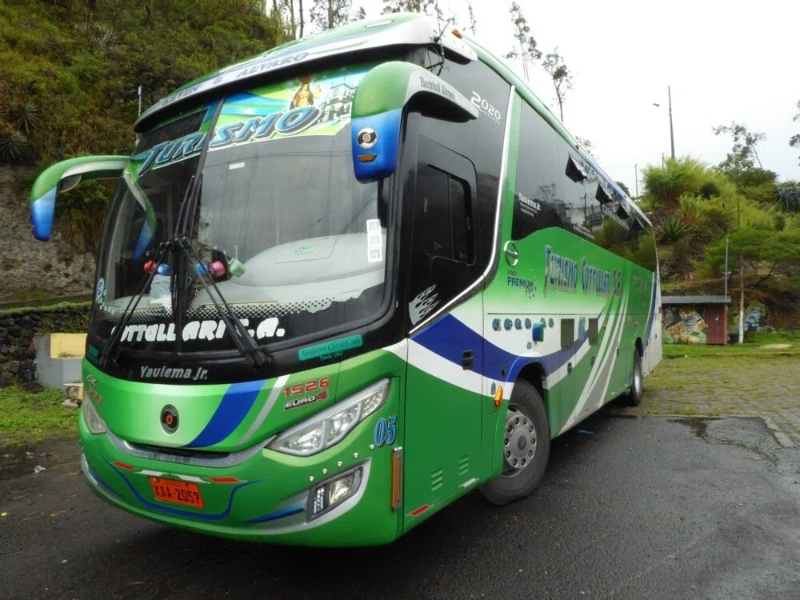
The main advantage is lower capital cost, which allows operators to expand or renew fleets without taking on excessive debt. When the bus is correctly inspected and matched to the right routes, a quality used city bus can provide several productive years at a fraction of the price of a new unit.
For steep, demanding routes, many operators favor Volvo and Scania, as well as high‑power Mercedes‑Benz chassis. These brands typically offer strong engines, effective braking, and stable suspensions suitable for mountain corridors and heavy passenger loads.
They can be a safe and cost‑effective choice when sourced from reputable exporters that verify histories, perform thorough inspections, and offer post‑sale support. Modern Chinese buses from brands like Yutong and King Long can provide solid comfort, safety, and cost‑efficiency, especially in new energy segments where they are strong innovators.
You should request maintenance records, accident reports, inspection certificates, and verification of mileage. For imported buses, ensure you also receive all documents required for customs clearance, registration, and compliance with local technical inspections in Ecuador.
TCO combines purchase price, financing costs, fuel consumption, maintenance, tires, insurance, driver wages, and expected resale value. To estimate it, gather realistic data from similar routes and talk to other operators or expert consultants, then compare different models over a planned operating period (for example, five to seven years) to understand the real economic impact.
1. Mercedes‑Benz Buses – Global Product Portfolio and After‑Sales Overview.
2. Volvo Buses – Safety and Intercity Solutions.
3. Scania Buses & Coaches – Technical Highlights for Heavy‑Duty Routes.
4. Hino / Toyota Bus – Global Bus Line‑up and Fleet Applications.
5. Yutong Bus – New Energy Buses and Global Market Presence.
6. King Long Bus – City and Coach Solutions for Global Markets.
7. General Fleet Management Best Practices – International Association of Public Transport (UITP).


