
Views: 239 Author: Keychain Venture Publish Time: 2026-08-18 Origin: Site


Content Menu
>> What Made the Original Fiesta Different?
● Ford Fiesta Generations: 1976 to 2023
● Mk1 Ford Fiesta (1976–1983): The Compact Original
● Mk2 Ford Fiesta (1983–1989): More Choice and Better Usability
● Mk3 Ford Fiesta (1989–1997): A More Grown-Up Supermini
● Mk4 Ford Fiesta (1995–2002): Zetec Power and New Design
● Mk5 Ford Fiesta (2002–2008): Safer, Stronger, and More Modern
>> Fiesta ST: A Modern Hot Hatch
● Mk6 Ford Fiesta (2008–2016): Global Ambition and EcoBoost Technology
>> Motorsport Success and Rally Heritage
● Mk7 Ford Fiesta (2016–2023): The Final Generation
● Why the Ford Fiesta Remains Popular
>> What Used-Car Buyers Should Check
● What the Fiesta Teaches the Modern Vehicle Industry
● Moving Forward with New-Energy Mobility
>> When was the Ford Fiesta first launched?
>> When did Ford stop making the Fiesta?
>> How many Ford Fiesta generations were produced?
>> Why was the Ford Fiesta so popular?
>> Which Ford Fiesta is best for enthusiasts?
The Ford Fiesta is more than a small hatchback. For nearly five decades, it gave millions of drivers an affordable, practical, and enjoyable way to travel.
First introduced in 1976, the Fiesta became one of Europe's most recognisable compact cars. It served first-time drivers, young families, commuters, small businesses, fleet operators, and driving enthusiasts. Its formula was simple but highly effective: compact dimensions, useful space, low running costs, dependable everyday usability, and confident handling.
Production ended in 2023, but the Fiesta's influence has not faded. It remains one of the most familiar and active models in the used-car market, proving that a well-designed vehicle can retain value long after its production line has stopped.
| Item | Key Detail |
|---|---|
| First launched | 1976 |
| Production ended | July 2023 |
| Vehicle category | B-segment supermini |
| Original project name | Project Bobcat |
| Key body styles | Three-door hatchback, five-door hatchback, van, sedan in selected markets |
| Key strengths | Compact design, affordability, practical layout, low operating costs |
| Famous performance versions | XR2, XR2i, RS Turbo, RS1800, Zetec S, Fiesta ST |
| Long-term relevance | One of the UK’s most popular used cars |
The Fiesta succeeded because it adapted to changing driver expectations. Early versions focused on simple and efficient personal transport. Later generations added stronger safety equipment, improved refinement, better engines, infotainment systems, driver-assistance features, and high-performance ST variants.
During the 1970s, the European automotive market was changing rapidly. Rising fuel costs, increasing urban congestion, and changing household budgets made compact vehicles more attractive. Drivers wanted cars that were easier to park, cheaper to run, and practical enough for everyday life.
Ford already had successful larger models, including the Escort and Cortina. However, the company needed a dedicated small car capable of competing in the growing supermini category.
The development programme was known as Project Bobcat. Ford chose the name "Fiesta," meaning celebration in Spanish, partly reflecting the company's manufacturing presence in Spain.
The original Fiesta introduced an important engineering direction for Ford. It used a transverse front-mounted engine and front-wheel drive. This arrangement helped maximise passenger and luggage space within a very compact body.

The first Fiesta offered several important advantages:
- Compact exterior dimensions for city driving and easy parking
- Front-wheel-drive packaging that created more usable cabin space
- Affordable ownership costs for budget-conscious households
- Hatchback practicality for shopping, luggage, and daily tasks
- A van derivative for small business and local delivery applications
The original model quickly became a success. It proved that a small car did not need to feel basic or limited. Instead, it could be practical, efficient, and enjoyable to own.
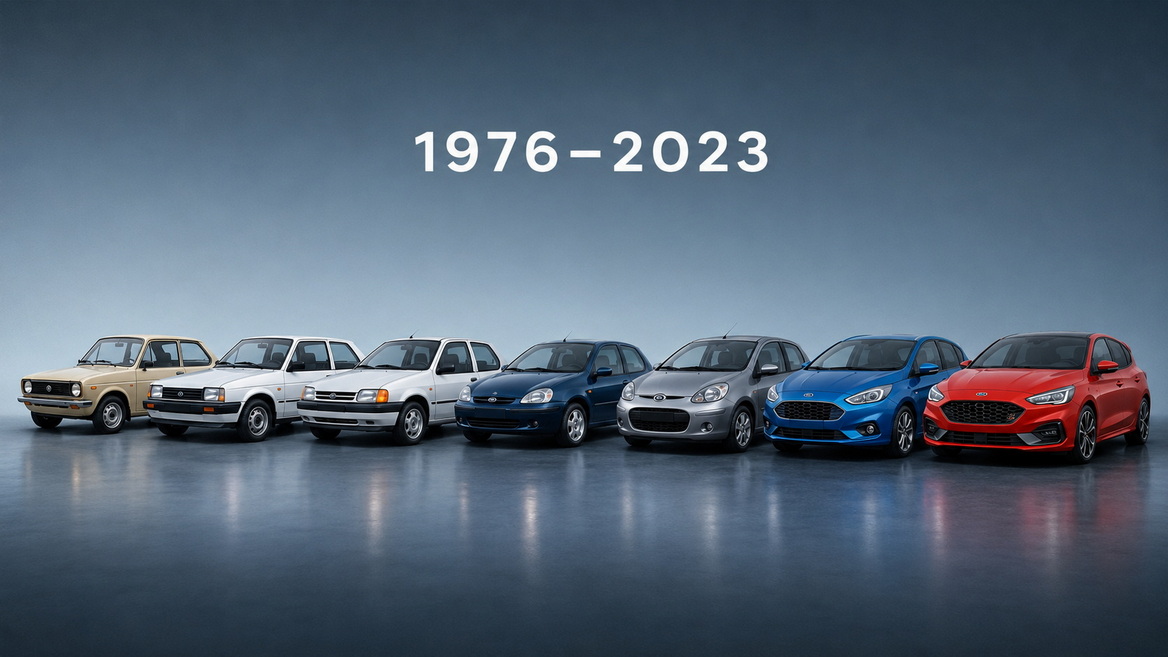
The way Ford Fiesta generations are counted can differ between publications. Some classify major facelifts as separate generations, especially models introduced during the mid-1990s and early 2010s.
For clarity, this article follows the commonly used seven-generation timeline.
| Generation | Production Period | Main Developments |
|---|---|---|
| Mk1 | 1976–1983 | Original front-wheel-drive hatchback and van |
| Mk2 | 1983–1989 | New styling, diesel option, five-speed gearbox availability |
| Mk3 | 1989–1997 | First five-door Fiesta, more space, improved performance models |
| Mk4 | 1995–2002 | Rounded design, Zetec engines, later design update |
| Mk5 | 2002–2008 | More modern design, stronger safety equipment, Fiesta ST |
| Mk6 | 2008–2016 | Global development, EcoBoost technology, rally success |
| Mk7 | 2016–2023 | Active, Vignale, and ST versions; final generation |
The first-generation Ford Fiesta created the foundation for everything that followed. It was small, light, straightforward, and affordable. Ford designed it as a practical vehicle for ordinary motorists rather than as a luxury product.
The three-door hatchback body offered useful flexibility. With the rear seats folded, owners could carry larger items than many small saloons of the era. The Fiesta Van expanded the vehicle's appeal to small businesses, tradespeople, and delivery operators.
Early models were modestly powered, but they delivered good fuel economy and easy handling. This made them especially suitable for city travel and young drivers.
Toward the end of the Mk1 era, Ford introduced more sporting versions. The Fiesta Supersport and Fiesta XR2 added stronger engines, distinctive styling, and a more exciting driving character.
The XR2 helped establish a key part of the Fiesta identity: even a small and affordable hatchback could be engaging to drive.
The second-generation Fiesta was an evolution of the original rather than a complete redesign. Ford retained the familiar compact shape while improving exterior styling, equipment options, engine choices, and daily comfort.
The Mk2 used revised headlights and a more modern front-end design. It also brought more variety to the range. Buyers could choose from economical petrol engines, a diesel option, and versions fitted with a five-speed manual gearbox.
This generation arrived during intense competition in the UK supermini market. Rivals included the Vauxhall Nova, Austin Metro, Peugeot 205, and Fiat Uno. The Fiesta remained highly competitive because it was easy to drive, simple to maintain, and available in a broad selection of specifications.
The Mk2 XR2 continued the performance tradition. It became a desirable choice for drivers who wanted a compact car with a more spirited personality.
The Mk3 Fiesta represented a major step forward. It looked more aerodynamic, felt more refined, and offered more everyday practicality than earlier versions.
One of the most important additions was the first five-door Fiesta. This made the model more accessible for families, passengers, and drivers who regularly used rear seats. The longer wheelbase also supported a roomier cabin and improved overall comfort.
Ford improved the suspension, interior layout, seating, and engine options. The car became more mature without losing its easy-to-drive character.
This generation produced some of the best-known sporting Fiesta models:
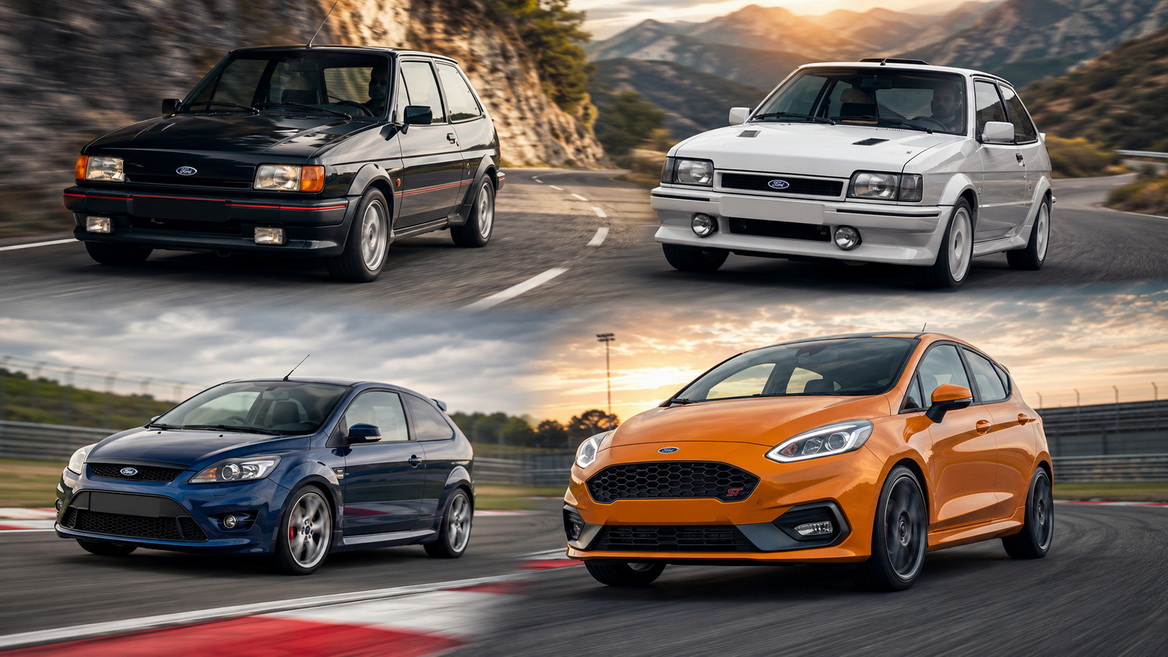
- Fiesta XR2i featured sportier styling and stronger performance
- Fiesta RS Turbo added turbocharged power and became a major 1990s icon
- Fiesta RS1800 replaced the RS Turbo and delivered a more refined sporting package
The RS Turbo remains especially memorable because of its turbocharged engine, sporty wheels, bold bodywork, and strong tuning potential. Today, original and well-maintained examples are valued by collectors and enthusiasts.
Ford introduced the Mk4 Fiesta in 1995 with rounder bodywork, smoother surfaces, and a more modern cabin. While the model retained familiar proportions, it offered a noticeably more contemporary driving experience.
The introduction of Zetec SE petrol engines was particularly significant. These engines provided improved refinement, responsive performance, and better efficiency compared with previous units.
Ford also changed its approach to performance models. The XR and RS badges disappeared from the mainstream range, while the Fiesta Zetec S became the accessible sporting choice. It was lighter on visual drama than some earlier models but retained agile handling and a lively character.
A later update introduced Ford's "New Edge" styling language. This gave the Fiesta a sharper front end, revised headlights, updated bumpers, and a more distinctive road presence.
The facelift also brought equipment and safety improvements, helping the Fiesta remain competitive during a period when small cars were becoming more sophisticated.
The 2002 Fiesta was a major step forward in design, quality, safety, and perceived value. It had a more substantial appearance than previous generations, while retaining the compact size that made the model so popular.
Ford placed greater emphasis on occupant protection and convenience features. Anti-lock brakes and passenger airbags became more widely available, while later versions introduced practical features such as Bluetooth connectivity, MP3 compatibility, automatic headlights, and folding mirrors.
This generation showed that buyers no longer viewed superminis as basic transport only. They expected comfort, technology, safety, and style.
The Mk5 Fiesta ST became one of the most admired performance hatchbacks of its time. Its 2.0-litre petrol engine produced around 150 bhp, giving it lively acceleration and a strong character.
However, the Fiesta ST's appeal was not only about engine output. It was respected for its steering response, compact dimensions, well-balanced chassis, and direct connection between driver and road.
For many enthusiasts, it represented a return to the original hot-hatch principle: accessible performance, simple mechanical character, and enjoyable handling.
The sixth-generation Fiesta was developed as part of Ford's global product strategy. Rather than creating substantially different small cars for different regions, Ford aimed to develop one core product that could appeal across multiple markets.
This approach improved manufacturing efficiency and helped create a more consistent international identity for the Fiesta.
The Mk6 was sharper, more sculpted, and more technologically advanced than previous generations. It offered better cabin quality, more safety systems, improved infotainment, and stronger engine choices.
One of the most important developments was the arrival of the 1.0-litre EcoBoost engine. This turbocharged petrol engine demonstrated that a compact engine could offer a balance of fuel efficiency and usable performance.
The Fiesta also strengthened its motorsport reputation during this generation. It became a serious presence in international rallying and competed in the World Rally Championship.
Its rally programme helped reinforce the road car's image as agile, responsive, and capable. Motorsport success also created a stronger emotional link between everyday Fiesta owners and the performance-oriented ST models.
The Fiesta ST from this era became especially respected for combining turbocharged power with sharp handling and practical everyday usability.
The final-generation Fiesta refined rather than reinvented the successful formula. Ford retained the compact hatchback format but created a wider choice of versions for different lifestyles and buyer needs.
The range included:
- Fiesta Trend for everyday value and practicality
- Fiesta Titanium for added comfort and technology
- Fiesta ST-Line for sport-inspired styling
- Fiesta Active for crossover-inspired design and a slightly raised stance
- Fiesta Vignale for more premium trim and equipment
- Fiesta ST for high-performance driving
The Fiesta Active reflected the growing demand for crossover-style vehicles. It offered rugged-looking body cladding, a raised ride height, and a more adventurous visual identity while preserving the compact Fiesta platform.
The Vignale version targeted buyers who wanted a more premium cabin experience, while the ST continued to satisfy drivers looking for a highly capable compact performance car.
Ford confirmed that Fiesta production would end as the company shifted its European strategy toward electric vehicles and newer mobility products.
The final Fiesta was produced in July 2023. Its departure marked the end of one of the longest-running and most influential nameplates in the European small-car market.
The decision reflected a broader industry transition. Automakers are investing heavily in electrification, battery technology, connected systems, and new vehicle platforms. These changes require major manufacturing investment and often lead companies to reassess which existing models remain part of their future product plans.
The end of new-car production has not removed the Fiesta from everyday roads. Its continued popularity is driven by several practical factors.
First, there are many Fiestas in circulation. Decades of strong sales created a large used-car supply across different age groups, specifications, and price levels.
Second, the Fiesta suits many different drivers. A budget-conscious buyer can find a basic early model, while an enthusiast can search for a well-kept ST, XR2, RS Turbo, or Zetec S. Families may prefer a five-door model, and commuters may prioritise efficient petrol or diesel variants.
Third, the Fiesta benefits from extensive familiarity among mechanics, parts suppliers, and vehicle owners. That makes it easier for many buyers to understand, maintain, and repair.
A Ford Fiesta can be an excellent used-car option, but the individual vehicle matters more than the model name alone.
Before buying, consider the following:
1. Confirm the exact model year and engine. Different generations and facelifts can have very different equipment, engines, and maintenance requirements.
2. Review the service history. A complete maintenance record is usually more valuable than low mileage without supporting paperwork.
3. Inspect tyres, brakes, suspension, and clutch operation. These are important wear items that can affect immediate ownership costs.
4. Check electrical systems. Test windows, central locking, air conditioning, infotainment, lights, and dashboard warning messages.
5. Look for accident repairs. Inspect panel gaps, paint consistency, tyre wear, and the vehicle history.
6. Arrange an independent inspection. This is particularly valuable for high-mileage cars, performance models, or vehicles with incomplete records.
For collector-focused versions, originality is especially important. A well-documented, unmodified XR2, RS Turbo, RS1800, or Fiesta ST may offer stronger long-term appeal than a heavily modified alternative.
The Fiesta's history offers an important lesson: a successful vehicle is not defined by one specification or one technology. It succeeds when it meets real customer needs consistently.
The most successful vehicle programmes typically combine:
- A clear role in the market
- Reliable and serviceable engineering
- Reasonable operating costs
- Practical interior and cargo space
- Safety and regulatory compliance
- Accessible parts and maintenance support
- Technology that solves everyday problems
- Different product versions for different users
These principles apply far beyond compact passenger cars. They are also highly relevant to buses, heavy-duty trucks, logistics fleets, and new-energy vehicle operations.
For commercial vehicle owners, the purchase price is only one part of the decision. Long-term value depends on operating efficiency, route suitability, charging or refuelling infrastructure, maintenance requirements, vehicle uptime, parts availability, and after-sales support.
As transport moves toward electrification, vehicle suppliers and operators must focus on the complete ownership experience. The strongest solutions will balance performance, reliability, safety, energy efficiency, and operational practicality.
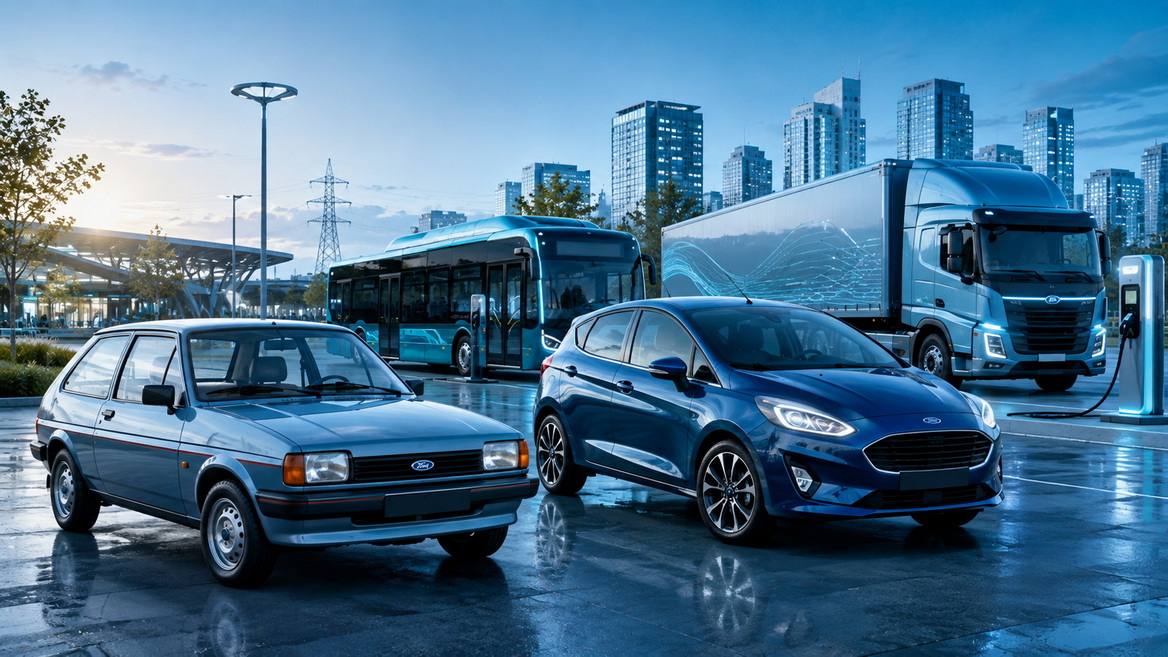
The Ford Fiesta's long-term success came from understanding everyday mobility needs. It proved that thoughtful design, practical engineering, and customer-focused product planning can create lasting value across generations.
Today, the global transport industry faces a new transition. Electric buses, heavy-duty electric trucks, and other new-energy vehicles are reshaping how cities, logistics operators, and fleet managers approach mobility.
KeyChain provides high-quality buses, heavy trucks, and new-energy vehicle solutions for domestic and international markets. Our approach focuses on practical performance, reliable operation, and configurations designed around real transport requirements.
Whether the priority is urban passenger transport, commercial logistics, fleet electrification, or specialised vehicle sourcing, the right solution starts with a clear understanding of routes, payloads, infrastructure, operating conditions, and long-term service needs.
The Ford Fiesta was first launched in 1976. It was developed as a compact and affordable vehicle for the growing European small-car market.
Ford ended Fiesta production in July 2023 after approximately 47 years of production.
The Ford Fiesta is commonly described as having seven main generations. However, some publications classify major facelifts as separate generations, so the count may vary depending on the source.
The Fiesta was popular because it combined compact dimensions, affordable pricing, useful hatchback practicality, low running costs, a wide model range, and engaging handling.
Popular enthusiast models include the Fiesta XR2, XR2i, RS Turbo, RS1800, Zetec S, Mk5 Fiesta ST, Mk6 Fiesta ST, and final-generation Fiesta ST. The best option depends on budget, condition, originality, maintenance records, and driving preferences.
1. Cook, Edward. " The Complete History of the Ford Fiesta <a href="https://www.evanshalshaw.com/blog/history-of-the-ford-fiesta/" "="" target="_blank" rel="nofollow noopener">https://www.evanshalshaw.com/blog/history-of-the-ford-fiesta/" *Evans Halshaw*.
2. Top Gear. " Official: Ford Fiesta Production Will End in June 2023 <a href="https://www.topgear.com/car-news/british/official-ford-fiesta-production-will-end-june-2023" "="" target="_blank" rel="nofollow noopener">https://www.topgear.com/car-news/british/official-ford-fiesta-production-will-end-june-2023"
3. Carscoops. " Ford Fiesta Production to End July 7, Final Two Cars Heading to Heritage Fleets <a href="https://www.carscoops.com/2023/07/ford-fiesta-production-to-end-july-7-final-two-cars-heading-to-brands-heritage-fleets/" "="" target="_blank" rel="nofollow noopener">https://www.carscoops.com/2023/07/ford-fiesta-production-to-end-july-7-final-two-cars-heading-to-brands-heritage-fleets/"
4. Motor1. " Ford Fiesta Named UK's Best-Selling Used Car in Q1 <a href="https://www.motor1.com/news/719706/ford-fiesta-best-selling-used-car-april/" "="" target="_blank" rel="nofollow noopener">https://www.motor1.com/news/719706/ford-fiesta-best-selling-used-car-april/"
5. Top Gear. " The Ford Fiesta Is Still the UK's Best-Selling Used Car <a href="https://www.topgear.com/car-news/used-cars/ford-fiesta-still-uks-best-selling-used-car" "="" target="_blank" rel="nofollow noopener">https://www.topgear.com/car-news/used-cars/ford-fiesta-still-uks-best-selling-used-car"
6. Car Dealer Magazine. " Used-Car Buyers Are Still Keen for a Fiesta as Ford Tops Sales Charts Again <a href="https://cardealermagazine.co.uk/used-car-buyers-are-still-keen-for-a-fiesta-as-much-loved-ford-tops-sales-charts-yet-again/322007" "="" target="_blank" rel="nofollow noopener">https://cardealermagazine.co.uk/used-car-buyers-are-still-keen-for-a-fiesta-as-much-loved-ford-tops-sales-charts-yet-again/322007"


