
Views: 230 Author: Keychain Venture Publish Time: 2026-08-17 Origin: Site


Content Menu
● Why Choose an 18–26 Foot Refrigerated Truck?
● Understanding Refrigerated Truck Capacity
>> Cargo Volume Versus Payload
>> Refrigerated Truck Specification Checklist
● Refrigeration Performance and Temperature Control
>> Important Features for Cold-Chain Protection
● Selecting the Right Truck for Your Delivery Route
>> Route Planning Questions to Answer
>> Choosing a Loading and Door Configuration
● Cargo Securement and Interior Layout
>> Recommended Cargo Management Features
>> Multi-Temperature Transport
● Driver Safety and Daily Usability
>> Features That Improve Driver Experience
● New-Energy Refrigerated Truck Options
>> Factors to Review Before Choosing an Electric Reefer Truck
● Refrigerated Truck Pre-Dispatch Checklist
● Summary
● FAQ
>> What is an 18–26 foot refrigerated truck used for?
>> What is the main difference between an 18-foot and 26-foot refrigerated truck?
>> Do refrigerated trucks need a liftgate?
>> Can one refrigerated truck carry frozen and chilled products?
>> Why is insulation important in a refrigerated truck?
An 18–26 foot refrigerated truck is a versatile choice for businesses transporting perishable, chilled, frozen, or temperature-sensitive cargo. It provides more carrying capacity than a refrigerated van while remaining practical for city deliveries, regional routes, distribution centers, and multi-stop operations.
For food distributors, grocery suppliers, pharmaceutical logistics providers, florists, dairy businesses, and cold-chain fleets, the right refrigerated truck protects product quality from loading to final delivery. The best configuration is not simply the longest body or the largest refrigeration unit. It is a vehicle designed around your cargo temperature, payload, delivery frequency, road conditions, loading method, and operating market.
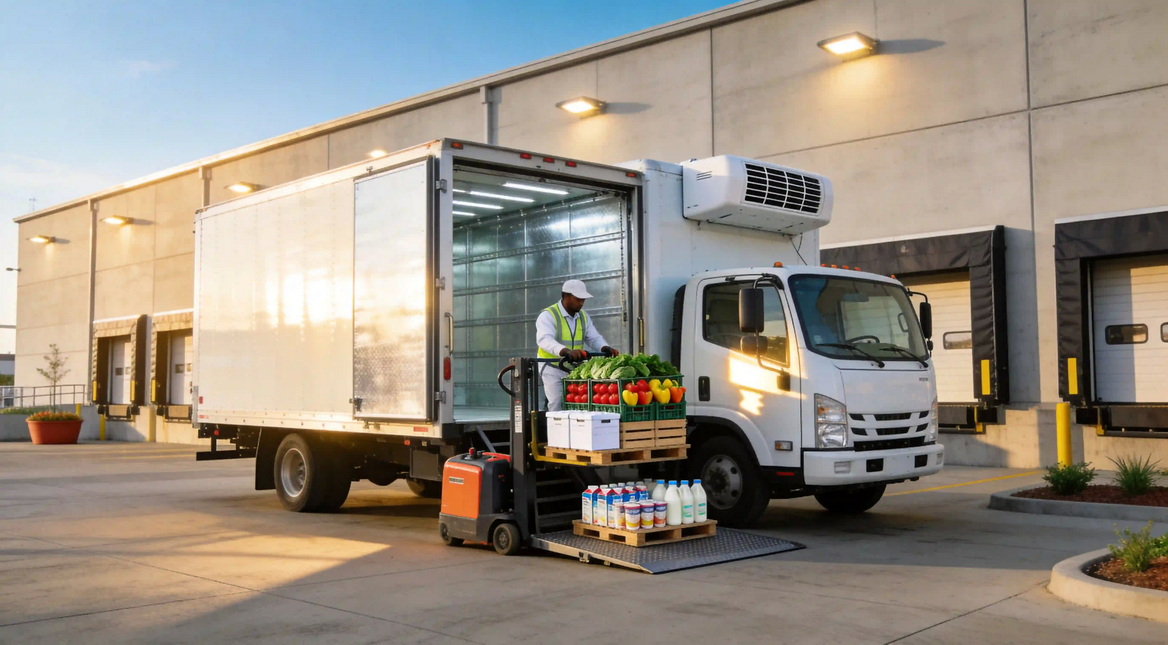
An 18–26 foot refrigerated box truck fills an important position between compact delivery vehicles and full-size refrigerated trailers. It can carry significant palletized cargo while offering easier maneuverability in urban streets, retail loading zones, restaurants, hospitals, and local distribution routes.
Depending on the chassis and body configuration, refrigerated trucks in this category can offer substantial internal cargo volume, a high gross vehicle weight rating, and payload capacity suitable for many medium-duty transport tasks.
These vehicles are commonly used for:
- Grocery and supermarket replenishment
- Fresh produce transport
- Frozen-food distribution
- Dairy and beverage delivery
- Meat and seafood logistics
- Foodservice supply routes
- Pharmaceutical and healthcare deliveries
- Floral and plant transportation
- Meal-kit and central-kitchen distribution
- Specialty retail and e-commerce fulfillment
A refrigerated truck is more than a box body with a cooling unit. It is a mobile cold-chain environment. Its insulated body, refrigeration equipment, airflow design, cargo restraints, doors, monitoring system, and loading equipment must work together to keep goods protected.
Buyers often focus on body length first. However, length alone does not determine whether a refrigerated truck is suitable for the job.
A 26-foot refrigerated truck may have more usable loading space than an 18-foot model, but it may also face tighter maneuvering conditions, higher operating costs, or weight limitations depending on the cargo type and vehicle specification.
Cargo volume tells you how much physical space is available. Payload tells you how much weight the truck can legally and safely carry.
This distinction is especially important for dense goods such as:
- Frozen meat and seafood
- Dairy products
- Beverages
- Packaged foods
- Medical supplies
- Bulk produce
- Palletized ingredients
Refrigeration equipment, insulated body panels, liftgates, fuel, batteries, cargo restraints, and optional equipment all reduce the remaining capacity available for freight.
The practical payload calculation is:
Usable Payload=GVWR−Curb Weight−Driver and Passengers−Fuel or Energy Load−Optional Equipment
A truck with a large body is not always the best choice if the final payload is too limited for your highest-volume or heaviest delivery days.
| Specification | Why It Matters | What to Confirm |
|---|---|---|
| Body length | Determines cargo space and route suitability | Verify interior dimensions, not only external length |
| Cargo volume | Affects pallet count and product storage | Confirm usable cubic capacity after insulation and equipment |
| Payload | Determines legal and practical carrying capacity | Calculate with fuel, driver, reefer unit, and liftgate included |
| GVWR | Influences compliance and vehicle selection | Confirm local licensing and operating rules |
| Refrigeration unit | Maintains the required cargo temperature | Match cooling output to climate, cargo, and delivery pattern |
| Insulation | Reduces heat transfer and energy consumption | Review wall, roof, floor, and door insulation construction |
| Liftgate | Supports loading without a dock | Match lift capacity to the heaviest pallet or equipment |
| Door design | Influences loading speed and heat loss | Consider rear, side, and multi-door configurations |
| Cargo restraints | Prevents shifting and product damage | Include E-track, load bars, straps, and partitions |
| Monitoring system | Supports traceability and operational control | Consider temperature logging, GPS, and real-time alerts |
Temperature control is one of the most important parts of refrigerated truck operation. The vehicle must maintain a stable cargo environment during driving, traffic congestion, repeated deliveries, hot outdoor conditions, long unloading periods, and overnight operation.
The refrigeration display setpoint is only one part of the process. Product condition depends on the temperature inside the cargo area, air circulation around the load, packaging quality, pre-cooling practices, door-opening frequency, and the condition of the vehicle's insulation and seals.
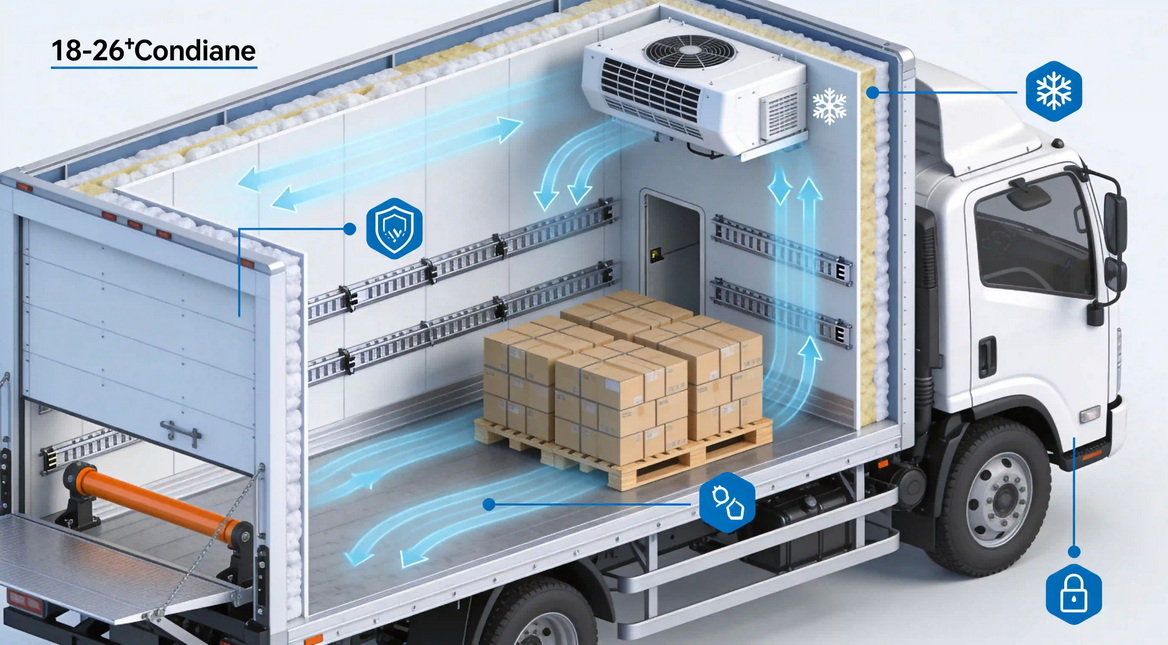
A well-designed refrigerated truck should include:
- High-performance insulation in the roof, walls, floor, and doors
- Durable, tightly sealed rear and side doors
- A refrigeration unit sized for expected ambient temperatures
- Airflow channels around palletized goods
- Temperature sensors in appropriate cargo zones
- Digital temperature logging for delivery records
- Door-open alarms or remote monitoring
- Interior lighting for safe loading and unloading
- Multi-temperature partitions where different products are carried together
- Easy-to-clean interior materials suitable for the cargo application
For food transport, many operators use a temperature target of 41°F (5°C) or below for chilled products that require cold holding. Frozen items, pharmaceuticals, flowers, and specialty cargo may require different operating temperatures.
Pre-cooling is often overlooked, especially during busy loading periods. A refrigerated truck should reach the required cargo temperature before goods are loaded.
Loading warm products into an uncooled box can create a temperature recovery problem. The refrigeration unit may need significant time and energy to bring the cargo compartment back to the target range, particularly when the weather is hot or the truck makes frequent stops.
A practical pre-cooling process includes:
1. Inspecting the cargo box for cleanliness and damage.
2. Closing all doors before starting the refrigeration unit.
3. Running the unit until the required setpoint is reached.
4. Confirming that product temperature matches loading requirements.
5. Loading goods without blocking airflow paths.
6. Closing and securing doors immediately after loading.
7. Starting temperature monitoring before departure.
The best refrigerated truck specification begins with an accurate understanding of real operating conditions. A multi-stop urban food route requires a different setup from a long-distance pharmaceutical route or a regional frozen-food distribution operation.
Before selecting a refrigerated truck, identify:
1. Average and maximum daily route distance.
2. Number of delivery stops per day.
3. Typical door-open duration at each stop.
4. Cargo type and required temperature range.
5. Average and maximum cargo weight.
6. Number of pallets or roll cages per delivery.
7. Whether customer sites have loading docks.
8. Road conditions, parking constraints, and urban-access restrictions.
9. Typical outdoor temperatures throughout the year.
10. Vehicle licensing and regulatory requirements in the destination market.
11. Availability of vehicle service, refrigeration maintenance, and spare parts.
12. Need for temperature reports, location tracking, and remote alerts.
This information makes it easier to select the right chassis, body dimensions, insulation package, refrigeration capacity, liftgate, cargo-control system, and energy solution.
Loading equipment should match the delivery environment. A truck serving large distribution centers may operate efficiently with a standard rear door and dock loading. A truck serving restaurants, shops, hospitals, or street-level customers may benefit from a liftgate and side-access door.
Common options include:
- Rear roll-up doors for dock loading
- Rear swing doors for wide access
- Side doors for frequent urban deliveries
- Folding or tuck-under liftgates
- Cantilever liftgates for heavier palletized loads
- Step bumpers for manual unloading
- Interior shelving for small-package delivery
- Roll-cage retention systems for retail distribution
A liftgate is particularly valuable when customers do not have a loading dock. It can reduce manual handling risks and speed up deliveries, but its capacity should be based on the heaviest expected load rather than typical daily freight.
Cargo security is essential for safety, product protection, and stable airflow. When pallets, cartons, cages, or containers move during transport, they can cause product damage, block circulation, damage the refrigerated body, or create a safety hazard during unloading.
The interior layout should allow operators to secure freight quickly without reducing usable space unnecessarily.
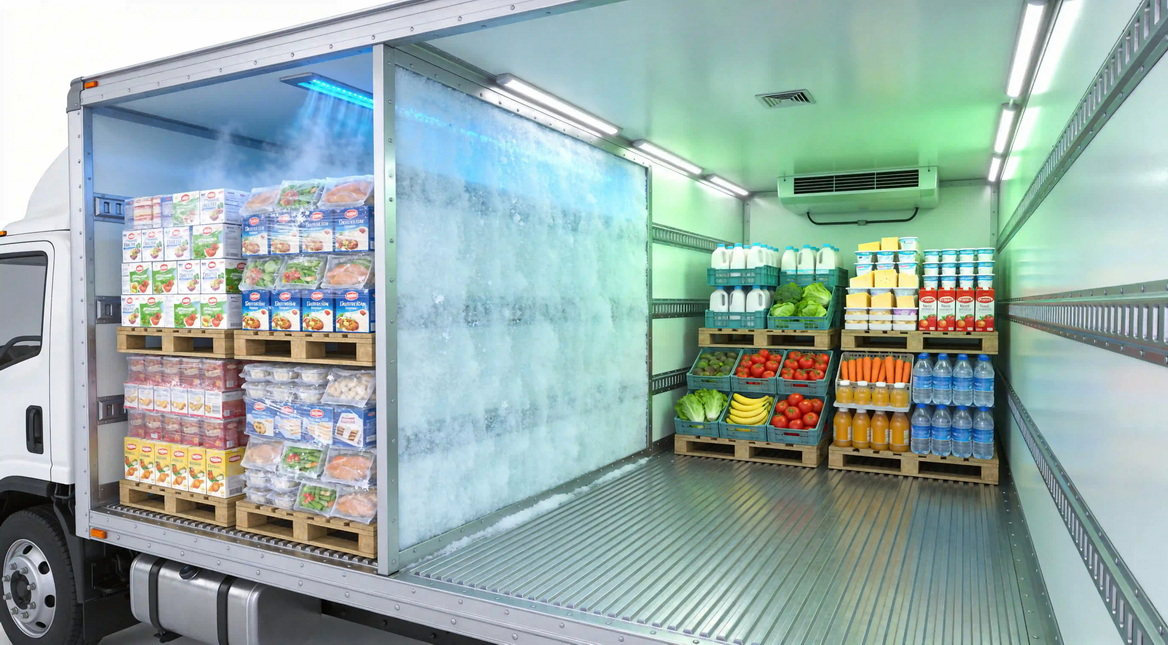
Consider including the following items in the refrigerated body specification:
- Horizontal and vertical E-track systems
- Adjustable load bars
- Cargo straps with suitable fittings
- Insulated movable bulkheads
- Anti-slip flooring
- Pallet stops
- Interior wall protection
- Partition systems for separate product zones
- Air chutes to maintain circulation
- Floor drains where appropriate
- LED interior lighting
- Tie-down points for roll cages or containers
A well-organized cargo area also improves unloading speed. Drivers can locate products faster, reduce delivery errors, and avoid unnecessary door-open time.
Some businesses transport frozen, chilled, and ambient products on the same route. In these cases, a multi-temperature body can improve efficiency by allowing separate cargo compartments.
A multi-temperature configuration may include:
- Fixed insulated compartments
- Sliding insulated bulkheads
- Separate evaporators
- Independent temperature sensors
- Dedicated airflow zones
- Different loading doors for each compartment
This approach should be designed carefully. Incorrect partition placement, insufficient refrigeration capacity, or blocked airflow can reduce performance and create temperature inconsistencies.
A refrigerated truck must perform well for the driver as well as the fleet manager. Drivers often work in congested city centers, tight warehouse yards, retail loading zones, and changing weather conditions.
Cab comfort, visibility, vehicle access, and simple controls can improve daily productivity and reduce fatigue.
Useful features include:
- Automatic transmission
- Power steering
- Clear instrument displays
- Rear-view camera systems
- Parking sensors
- Blind-spot monitoring where available
- LED headlights and work lights
- Wide mirrors and heated mirror options
- Three-point cab access
- Ergonomic driver seating
- Air conditioning and heating
- Easy-access refrigeration controls
- Telematics displays for route and temperature information
The driver should be able to inspect the truck quickly before departure. Important checks include tire condition, lights, mirrors, door seals, refrigeration alarms, cargo restraints, liftgate operation, fluids, and temperature records.
New-energy commercial vehicles are becoming more relevant for urban distribution and predictable regional operations. Electric refrigerated trucks can reduce local tailpipe emissions and may be particularly suitable for return-to-base fleets with established charging infrastructure.
However, refrigeration adds continuous energy demand. Buyers must evaluate both vehicle propulsion energy and refrigeration energy when assessing range and operating capability.
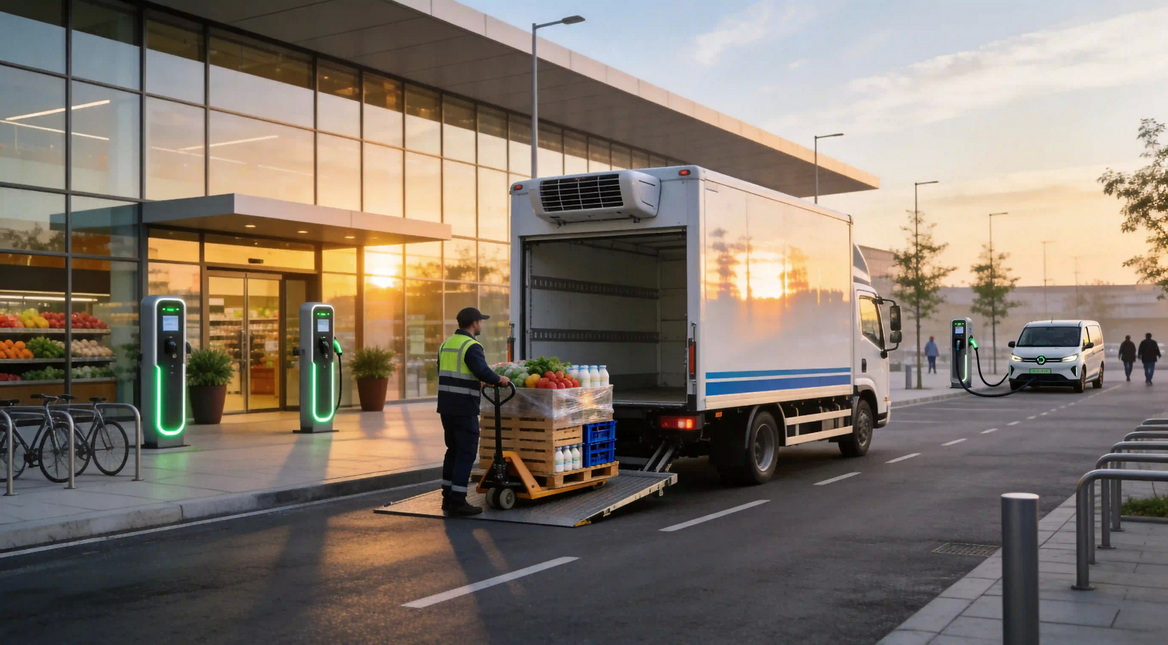
- Daily route distance
- Cargo weight and payload requirements
- Number of delivery stops
- Door-open frequency
- Refrigeration temperature range
- Outdoor temperature conditions
- Charging availability at the depot
- Charging time between shifts
- Electricity capacity at the operating site
- Maintenance support for vehicle and refrigeration systems
- Required backup or standby refrigeration arrangements
For certain fleets, electric standby refrigeration can help maintain cargo temperature while the truck is parked at a depot. Hybrid or alternative-energy configurations may also be suitable where route conditions do not yet support full electrification.
The correct energy solution should be selected based on actual operating data, not only expected range figures.
A consistent pre-dispatch inspection process helps protect cargo, reduce unplanned downtime, and improve delivery reliability.
1. Confirm that the refrigeration unit is operating correctly.
2. Pre-cool the cargo box to the required temperature.
3. Verify the temperature display and monitoring system.
4. Inspect rear and side door seals for cracks, gaps, or damage.
5. Check that cargo airflow channels are clear.
6. Load goods without blocking evaporators or vents.
7. Secure pallets, cartons, cages, and containers.
8. Test the liftgate and inspect its controls.
9. Check tires, lights, mirrors, brakes, and fluid levels.
10. Confirm sufficient fuel or battery capacity for the full route.
11. Ensure temperature logging is active.
12. Record and report any vehicle defect before departure.
An 18–26 foot refrigerated truck can be a highly effective solution for businesses that need dependable, medium-duty cold-chain transportation. It combines useful cargo capacity with operational flexibility for urban delivery, regional distribution, foodservice supply, retail replenishment, pharmaceutical logistics, and specialty product transport.
The strongest truck configuration is built around the real work it must perform. Buyers should consider payload, body design, insulation, refrigeration capacity, loading equipment, cargo restraints, driver usability, monitoring systems, maintenance support, and future energy requirements before making a final decision.
KeyChain provides commercial vehicle solutions for customers seeking dependable buses, heavy-duty trucks, dump trucks, refrigerated trucks, and new-energy vehicles. Each vehicle configuration can be aligned with target markets, cargo characteristics, route conditions, and operational requirements.
An 18–26 foot refrigerated truck is commonly used to transport chilled, frozen, fresh, or temperature-sensitive cargo. Typical applications include food distribution, supermarket replenishment, pharmaceutical delivery, floral transport, dairy logistics, and restaurant supply routes.
The main difference is cargo capacity. A 26-foot model generally provides more interior volume and pallet capacity, while an 18-foot truck may be easier to maneuver, park, and operate in dense urban areas.
Not every refrigerated truck needs a liftgate. However, a liftgate is useful for deliveries to locations without loading docks, particularly when transporting pallets, roll cages, heavy cartons, or equipment.
Yes. A multi-temperature refrigerated body can carry frozen and chilled goods in separate zones. This setup usually requires insulated partitions, appropriate refrigeration capacity, separate airflow control, and temperature monitoring for each compartment.
Insulation reduces heat transfer between the outside environment and the cargo area. Good insulation helps the refrigeration system maintain temperature more efficiently, protects cargo during hot weather, and can reduce energy consumption.
1. Penske. " Vehicle Spotlight: 18 to 26 Foot Refrigerated Truck – CDL https://www.gopenske.com/blog/vehicle-spotlight-18-to-26-foot-cdl-refrigerated-truck/ " Information on refrigerated truck applications, capacity, liftgate options, and operating features.
2. Federal Motor Carrier Safety Administration. " Cargo Securement Rules https://www.fmcsa.dot.gov/regulations/cargo-securement/cargo-securement-rules " Guidance on commercial vehicle cargo securement requirements.
3. Federal Motor Carrier Safety Administration. " Cargo Securement: 49 CFR 393.100 https://csa.fmcsa.dot.gov/safetyplanner/MyFiles/SubSections.aspx?ch=22&sec=64&sub=132 " Additional information on safe cargo immobilization and restraint.
4. U. S. Environmental Protection Agency. " SmartWay Program: Promoting Supply Chain Sustainability at Ports https://www.epa.gov/ports-initiative/smartway-program-promoting-supply-chain-sustainability-ports " Information on lower-emission freight transportation and temperature-controlled shipping solutions.
5. Xenia. " Food Holding Temperature: FDA Hot and Cold Ranges https://www.xenia.team/food-safety-ops/food-holding-temperature " Summary of common food temperature-control guidance.


