
Views: 222 Author: Sara Publish Time: 2026-02-02 Origin: Site


Content Menu
● First Generation (1993-2003): Rugged Origins and Off-Road Roots
● Second Generation (2004-2010): Modern Makeover and Family Appeal
● Third Generation (2011-2015): Style Revolution and Efficiency Gains
● Fourth Generation (2016-2021): Tech Explosion and Premium Positioning
● Fifth Generation (2022-2025): Hybrid Dominance and Futuristic Design
● Reliability and Common Problems by Generation
● Fuel Economy and Running Costs Deep Dive
● 2026 Market Trends and Expert Buying Advice
● FAQ
>> 1. What is the most reliable Kia Sportage year?
>> 2. How do Kia Sportage generations differ in size and space?
>> 3. Are used Kia Sportage hybrids worth buying?
>> 4. What are common problems by generation?
>> 5. Best place for affordable used Kia Sportage in 2026?
The Kia Sportage has transformed from a rugged, off-road pioneer in 1993 to a sophisticated, hybrid-powered SUV by 2025, making it a top choice for used Kia Sportage buyers worldwide. This comprehensive guide details Kia Sportage model year differences, covering engines, features, reliability, fuel economy, and smart buying tips to help you select the ideal Kia Sportage generation based on budget, needs, and performance.

The inaugural Kia Sportage (1993-2003) debuted as a compact, body-on-frame SUV inspired by the Mazda Bongo, prioritizing adventure over luxury. Available in 3-door convertible or 5-door wagon variants, it targeted budget-conscious off-roaders with its high ground clearance and selectable four-wheel drive. Core engines included the 2.0L FE inline-four petrol engine producing 95-127 horsepower, a DOHC upgrade for better performance, and a 2.0L RF diesel option for torque-heavy tasks. Transmission choices were limited to a 5-speed manual or 4-speed automatic, emphasizing simplicity and durability in rough terrain.
Key strengths of this generation:
- Affordable pricing: Used models now sell for under $3,000, ideal for entry-level SUV ownership.
- Off-road prowess: Part-time 4WD with low-range gearing handled trails better than many contemporaries.
- Spacious cargo: Up to 55 cubic feet with seats folded, practical for gear-hauling.
However, weaknesses were notable. Rust plagued the unibody frame, especially in salty climates, often leading to structural failures after 10 years. Interiors felt dated with manual everything—no power windows standard—and fuel economy hovered at 15-20 mpg combined, burdensome for daily use. Safety was basic: no airbags until late models, and crash tests were absent. Owners reported frequent suspension wear from off-road abuse.
For buyers today, inspect undercarriages meticulously for corrosion. This era suits restoration projects or farm use, but skip for city commuting due to high maintenance. With proper care, engines often exceed 200,000 miles, proving Kia's early resilience.
The 2004-2010 Kia Sportage marked a pivotal shift, sharing the Hyundai Tucson platform for refined unibody construction, improved ride quality, and car-like handling. Lengthened by 6 inches, it gained a more upscale stance with available 17-inch alloys. Engine lineup expanded to a 2.0L inline-four (140-150 hp) in petrol or CRDi diesel, plus a 2.7L Delta V6 (173 hp) for power seekers. A 2005 facelift sharpened styling with projector headlights, while 6-speed manuals/5-speed automatics boosted efficiency to 20-25 mpg.
Standout upgrades:
- Safety advancements: Dual front airbags, ABS, and electronic stability control became standard mid-cycle.
- Interior comfort: Leather options, power seats, and a quieter cabin for five passengers.
- AWD availability: Full-time systems improved wet-road traction without fuel penalties.
Common pitfalls included V6 timing belt failures every 60,000 miles—replace proactively—and early diesel emissions issues in Europe. Used prices range $4,000-$8,000, offering strong value for families. Reliability climbed, with fewer breakdowns than rivals like the Ford Escape. This generation bridged Kia's budget image to mainstream contender, earning praise for low ownership costs around $500 annually.
The 2011 Kia Sportage stunned with "Tiger Nose" grille and coupe-like roofline, boosting sales 50% overnight. Built on an extended Tucson chassis, it prioritized urban agility. Powertrains featured a 2.0L Theta GDI petrol (176 hp), turbocharged variant (260 hp in some markets), and 2.0L/2.2L R-series diesels (136-184 hp). A 2014 facelift added LED accents, revised bumpers, and refined 6-speed automatics, pushing fuel economy to 23-28 mpg.
Highlight features:
- Tech integration: Bluetooth, USB ports, and optional navigation in EX trims.
- Safety suite: Rearview camera, hill-start assist, and 5-star NHTSA ratings across the board.
- Cargo versatility: 26-54 cubic feet, with 60/40 split-folding seats.
Pros included sporty dynamics and Kia's industry-leading 10-year/100,000-mile powertrain warranty, building buyer trust. Cons were cramped rear legroom (36 inches) and diesel turbo lag. Early models had minor oil consumption; post-2013 fixes resolved it. Used market prices: $7,000-$12,000. Perfect for young professionals wanting flair without premiums of Honda CR-Vs.
Fully redesigned for 2016, the Kia Sportage 2016-2021 grew to midsize dimensions on the iQ platform, rivaling Toyota RAV4s. Engines comprised a 2.4L GDI (181 hp), potent 2.0L turbo (240 hp in SX), and efficient diesels. FWD standard, AWD optional with torque vectoring. Fuel economy hit 21-26 mpg, aided by idle-stop tech. 2018+ models integrated Apple CarPlay, Android Auto, and 7-inch touchscreens standard.
Major enhancements:
- Driver aids: Forward collision avoidance, blind-spot detection, and lane-keeping assist in higher trims.
- Luxury touches: Panoramic sunroofs, heated/ventilated seats, and Harman Kardon audio.
- Ride quality: Independent suspension smoothed highways while retaining light off-road chops.
J.D. Power reliability soared to 82/100, outpacing segment averages. Issues were minor: infotainment freezes (OTA updates fixed) and occasional CVT shudder in prototypes. Used values: $12,000-$22,000 hold firm due to demand. Families love the 30 cubic feet behind seats, expanding to 60+ folded.
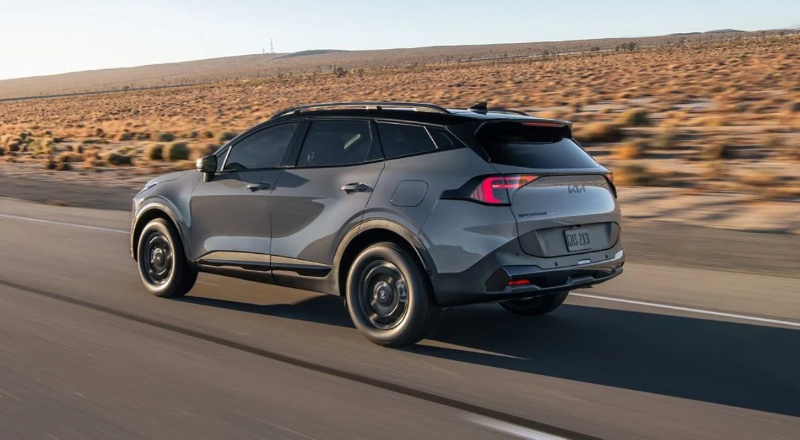
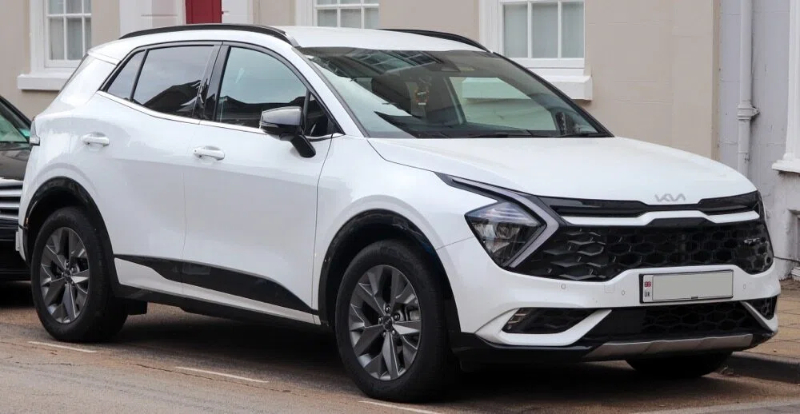
The 2022-2025 Kia Sportage arrived on the N3 platform with EV9-inspired cues—wide stance, angular lights, and 183.5-inch length. Power options dazzle: 2.5L Atkinson I4 (187 hp), Hybrid (1.6T + electric, 227 hp, 38-43 mpg), and Plug-in Hybrid (261 hp, 34-mile EV range). 2023 X-Line/X-Pro trims added all-terrain tires; 2025 refines with 12.3-inch dual panoramas, Highway Driving Assist II, and seven Terrain Modes (mud, sand, snow).
2025 innovations:
- Infotainment: Wireless charging, OTA updates, Kia Connect app for remote start/preconditioning.
- Space mastery: 39.6 cubic feet cargo (74 max), segment-leading rear legroom at 41 inches.
- Safety tech: Surround-view monitors, parking collision avoidance, and 5-star IIHS Top Safety Pick+.
Hybrids dominate with 42 mpg real-world, slashing costs. Minimal issues reported; batteries warrantied 10 years. Used prices: $20,000-$35,000+ for low-mileage units. This gen redefines SUVs for eco-conscious drivers.
Kia Sportage reliability trajectory is upward: First-gen 3/5 (rust dominant), second/third 4/5 (electronics/AC woes), fourth/fifth 4.5-5/5 (J.D. Power leaders). Expect 150,000-250,000 miles with $400-700 yearly maintenance.
Generation-specific fixes:
- 1993-2003: Undercarriage rust—zinc coat repairs.
- 2004-2010: V6 timing belts at 60k miles; diesel DPF cleans.
- 2011-2015: Theta II engine oil monitoring; turbo coolant checks.
- 2016-2021: Software flashes for nav glitches.
- 2022+: Hybrid battery cooling system inspections.
Proactive VIN checks via Carfax reveal recalls—over 20 for early models, few post-2016.
Kia Sportage MPG evolves dramatically: 18 mpg average (1993) to 42 mpg hybrids (2025). EPA/Fuelly data shows 2025 PHEV saving $1,200 yearly vs. 2005 V6 (15k miles, $3.50/gal). Ownership math: 5 years/60k miles costs $18k total for hybrids vs. $25k gas (insurance/fuel/maintenance).
Cost-saving steps:
1. Choose hybrids for 30% fuel cuts.
2. AWD only if needed—drops 2-3 mpg.
3. Premium fuel? Skip unless turbo-specified.
Tax perks: Up to $4,000 used clean vehicle credit in 2026.
Used Kia Sportage market booms 18% YoY amid new-car shortages, per AutoTrader. Resale retains 68% after 5 years—best-in-class. Top picks: 2018-2021 value kings ($15k sweet spot); 2023+ hybrids for future-proofing. Avoid flood cars post-2024 events.
Smart checklist:
- Budget <$10k: 2004-2015 dailies.
- Off-road: X-Pro trims.
- Family: 2022+ with captain seats.
- Test: Scan OBD-II, road-test all modes.
Global sourcing shines—China's KeyChain specializes in inspected imports.
As China's premier commercial vehicle used car supplier, KeyChain (keychainauto.com, +8613572980919, abbie@keychainventure.com) offers high-performance used Kia Sportage alongside buses/trucks. Contact us now for stock lists, warranties, and worldwide shipping!
Contact us to get more information!
2016-2025 models lead with 4.5/5 ratings, especially hybrids exceeding 200,000 miles. Early gens reliable if rust-free.
Length from 13.2 ft (1993) to 15.1 ft (2025); cargo 22-74 cu ft. Fifth-gen offers most rear room.
Absolutely—42 mpg saves $1,000+/year, plus 10-year battery warranty and strong resale.
Rust (early), AC failures (mid), software glitches (late)—all fixable under $1,000 usually.
KeyChain for vetted globals from $1,500, full inspections included.
1. https://blog.beforward.jp/car-review/kia-sportage-review-1993-2021-model-year-differences.html
2. https://www.cars.com/research/kia-sportage/
3. https://www.cargurus.co.uk/Cars/articles/kia-sportage-models


