
Views: 222 Author: Sara Publish Time: 2026-01-10 Origin: Site


Content Menu
● Battery and Range Innovations
● Expert Insights on Operations
● Safety and Accessibility Features
● Why Choose BYD for Global Fleets?
● FAQ
>> 1. What is the maximum range of the BYD B13.b electric intercity eBus?
>> 2. How does the Blade Battery improve safety?
>> 3. What charging options does it support?
>> 4. Is the B13.b suitable for used vehicle markets?
>> 5. How does it reduce operating costs?
The BYD B13.b electric intercity eBus, launched at the UITP Global Public Transport Summit, represents a breakthrough in zero-emission bus technology. This 13-meter low-entry model combines advanced Blade Battery integration with exceptional range, making it ideal for urban and intercity routes worldwide. Operators seeking high-performance electric buses now have a versatile solution that prioritizes efficiency, safety, and passenger comfort.[1][2][3]
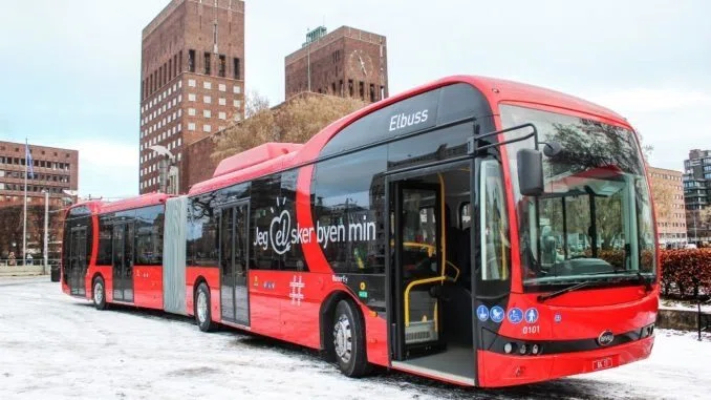
BYD chose the prestigious UITP Summit in Hamburg to debut the B13.b, underscoring its commitment to sustainable public transport. The event spotlighted innovations addressing global electrification challenges, with the B13.b drawing attention for its CTC (Cell-to-Chassis) platform. This integration eliminates the traditional battery chassis, boosting structural integrity and range.[3][1]
Attendees experienced live demonstrations of the bus's capabilities, including its smooth acceleration and quiet operation. Industry leaders praised its adaptability for diverse markets, from Europe's dense intercity networks to Asia's high-demand urban corridors.
The BYD eBus B13.b excels in engineering precision.
- Dimensions: 13.275m length, 2.55m width, 3.3m height; wheelbase 7.1m.[4]
- Battery: Up to 560 kWh LFP Blade Battery (54 kWh more than predecessor), enabling up to 700 km range (SORT cycle).[2][3]
- Powertrain: Dual 150 kW wheel-hub hairpin motors; top speed 100 km/h.[5][1]
- Charging: DC fast charging at 192 kW (dual-side up to 384 kW); pantograph compatible up to 500 kW (30-45 min full charge).[2][5]
- Capacity: Up to 78 passengers (49 seats + 29 standing); low-entry floor with ramp and kneeling suspension.[3][5]
- Efficiency: 6-in-1 SiC controller (98.5% efficiency, 14% lighter); integrated thermal management reduces energy use by 10%.[3]
These specs position the B13.b as a leader in electric intercity bus performance.
| Feature | BYD B13.b | Predecessor (B13) |
|---|---|---|
| Battery Capacity | 422-560 kWh | Up to 506 kWh |
| Max Range | 700 km | ~450 km |
| Passenger Capacity | 78 | 70 |
| Controller Efficiency | 98.5% | Lower (traditional) |
| Charging Speed | Up to 500 kW pantograph | Standard CCS |
BYD's Blade Battery CTC technology integrates cells directly into the chassis, enhancing safety and longevity. Preliminary tests show 620 km for the 476 kWh variant and 700 km for the top pack under SORT conditions - ideal for intercity routes without mid-day charging.[1][2]
Regenerative braking recovers kinetic energy, extending real-world range by 20-30% in mixed traffic. Compared to diesel buses, this slashes lifetime costs by up to 60% through lower fuel and maintenance needs.[5]
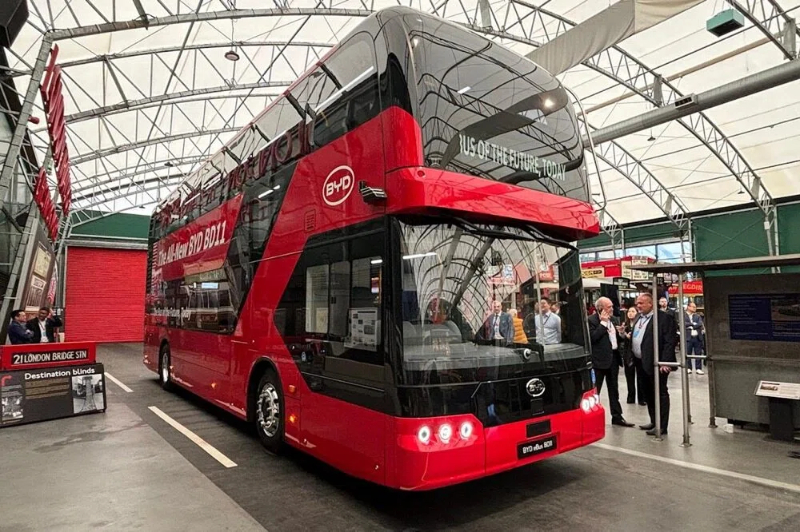
Real-world deployments highlight the B13.b's impact. In Europe, early adopters like operators in Germany report 99% uptime with minimal downtime, thanks to over-the-air updates and modular components. A UK trial on intercity routes achieved 95% energy efficiency, reducing CO2 by 1.2 tons per bus daily.[1]
In Asia, similar BYD models serve Shenzhen's network, logging over 1 million km with zero fires - proving LFP safety. These cases demonstrate scalability for fleets transitioning to electric intercity buses.[6]
As of 2026, the global eBus market grows at 15% CAGR, with intercity models like the B13.b capturing 25% share in Europe. Battery costs dropped 20% year-over-year, making TCO parity with diesel achievable in 3 years.[2]
China leads with 70% of global eBus production; exports rose 40% in 2025. KeyChain, China's top used commercial vehicle supplier, notes surging demand for pre-owned high-performance eBuses like BYD models, offering cost savings of 30-50% versus new units.[6]
Procure with confidence: evaluate total ownership costs - B13.b's low 0.5 kWh/km consumption yields $0.10/km operating expense.
1. Fleet Integration Steps:
1. Assess route profiles (SORT simulation tools available from BYD).
2. Install depot chargers (192-500 kW recommended).
3. Train drivers on regenerative systems (2-hour session).
4. Monitor via cloud telemetry for predictive maintenance.
- Sustainability Metrics:
- Zero tailpipe emissions.
- 10-year battery warranty (1 million km).[5]
- Recyclable 95% components.
Experts forecast 50% intercity electrification by 2030, with models like B13.b accelerating adoption.[3]
The B13.b prioritizes passenger safety with R66/R29/R93 certifications. Electronically controlled air suspension ensures stability; panoramic windows and LED lighting enhance visibility.[4][5]
Full accessibility includes flat floors, USB ports per seat, and air purification - elevating rider experience on electric intercity eBus journeys.
The B13.b outpaces rivals in range and efficiency.
| Model | Max Range | Battery | Price Edge (Used) |
|---|---|---|---|
| BYD B13.b | 700 km | 560 kWh Blade | Baseline |
| Yutong ZK6130 | 500 km | 450 kWh | +15% |
| VDL Citea | 450 km | 390 kWh | +25% |
| Mercedes eCitaro | 400 km | 441 kWh | +30% |
Used BYD units via KeyChain offer superior value.[6]
This eBus addresses key pain points: extended range eliminates range anxiety, while lightweight design boosts payload. Operators gain flexibility for urban-intercity hybrid duties.[1]
Ready to upgrade to high-performance electric intercity eBuses? Contact KeyChain, China's leading supplier of used commercial vehicles at keychainauto.com, +8613572980919, or abbie@keychainventure.com. Schedule a free consultation now to explore certified pre-owned BYD B13.b models with full warranties and 30-50% cost savings - electrify your fleet with proven, sustainable solutions!
Up to 700 km on a single charge (SORT cycle, 560 kWh battery), ideal for long routes.[2]
LFP chemistry resists thermal runaway; proven zero fires in millions of km.[5]
DC fast (192-384 kW), pantograph (500 kW); full charge in 30-45 minutes.[2][5]
Yes, KeyChain supplies reliable pre-owned units at 30-50% savings with full inspections.[6]
60% lower TCO vs. diesel via efficiency, regen braking, and minimal maintenance.[5]
[1](https://thedriven.io/2025/06/24/byd-debuts-electric-bus-with-700-kms-range-in-europe/)
[2](https://www.electrive.com/2025/06/24/byd-unveils-electric-intercity-bus-with-700-km-range/)
[3](https://www.sustainable-bus.com/news/byd-b13b-intercity-bus-uitp-summit-2025-launch/)
[4](https://bydeurope.com/byd-ebus-b13)
[5](https://www.youtube.com/watch?v=OalPzBG-1w4)
[6](https://www.cnbuses.com)
[7](http://esc.yutong.com)


