
Views: 284 Author: Keychain Venture Publish Time: 2026-08-13 Origin: Site


Content Menu
● Start With the Operating Requirement
● Select the Right Dump Truck Configuration
>> Axle Configuration and Payload
● Inspect the Chassis and Frame Carefully
>> Tires, Wheels, and Suspension
● Test the Engine, Transmission, and Drivetrain
>> Engine Inspection Checklist
>> Transmission and Axle Performance
● Check the Dump Body and Hydraulic System
>> Hydraulic System Inspection
● Review Maintenance Records Before Payment
● Calculate the Real Cost of Ownership
>> Questions to Ask Before Comparing Prices
● Reduce Risk When Buying Remotely
>> A Practical Remote Verification Process
● Use Genuine Customer Experience Carefully
>> What should I inspect first on a used dump truck?
>> Is lower mileage always better when buying a used dump truck?
>> Why is the hydraulic system important on a dump truck?
>> Should I arrange an independent inspection?
>> What documents should I request before importing a used dump truck?
A used dump truck can be a practical investment for construction companies, material-hauling contractors, mining operations, municipal fleets, and equipment dealers. It can help expand carrying capacity without the higher initial cost of a new vehicle.
However, a low-priced truck may become expensive if it has hidden chassis damage, an unreliable hydraulic system, poor maintenance history, or limited spare-parts availability. The most suitable used heavy-duty truck is the one that can safely complete its intended work with consistent uptime and manageable operating costs.
Before comparing listings, define the job clearly. Then inspect the truck systematically, verify its records, and calculate the full cost of putting it into service.

The first step is to understand what the truck will carry, where it will operate, and how often it will work.
A dump truck used for short-distance urban construction projects may need a compact wheelbase and easy maneuverability. A truck hauling aggregates over long highway routes may require a larger body, stable axle configuration, fuel-efficient drivetrain, and road-oriented tires. Quarry, mining, and off-road applications may demand stronger suspension, improved traction, higher ground clearance, and more durable body materials.
Before contacting a supplier, prepare a basic operating profile:
- Type of material: sand, gravel, soil, rock, demolition waste, ore, asphalt, or agricultural products
- Average payload per trip
- Estimated daily trips and annual operating distance
- Typical road conditions
- Required body volume
- Local axle-load and gross vehicle weight limits
- Preferred engine, transmission, and fuel type
- Available maintenance facilities and spare-parts support
- Destination country registration and import requirements
Payload should never be considered separately from material density. A high-volume dump body may be useful for lightweight materials such as wood chips or demolition debris. However, dense materials such as wet sand, gravel, and stone can exceed legal axle limits before the body is full.
The goal is not to buy the largest truck. The goal is to choose a configuration that carries the correct legal load, performs reliably on the route, and supports profitable operations.
Used dump trucks are available in many axle layouts, body designs, drivetrain combinations, and cab configurations. The best choice depends on the operating environment.
| Operating Condition | Key Truck Considerations |
|---|---|
| Urban construction delivery | Compact wheelbase, responsive steering, suitable body volume, practical cab access |
| Highway aggregate hauling | Stable axle layout, efficient drivetrain, strong brakes, road-appropriate tires |
| Quarry or rough-site transport | Reinforced chassis, durable suspension, traction-focused axles, high ground clearance |
| Mountain or steep-road operation | Reliable engine braking, suitable gear ratio, cooling capacity, dependable brake system |
| Mixed road and site work | Balanced suspension, versatile tire selection, durable body, manageable operating weight |
| International fleet operation | Familiar components, available parts, clear documentation, practical maintenance support |
Axle arrangement affects payload capacity, maneuverability, traction, tire wear, and compliance with local weight rules.
A single-axle or tandem-axle truck may be suitable for smaller projects, municipal work, or local delivery. A tri-axle or multi-axle configuration may offer improved payload potential and load distribution, but it can also increase maintenance, tire replacement, and operating complexity.
Ask the supplier for the truck's full specification, including:
- Gross vehicle weight rating
- Front and rear axle ratings
- Wheelbase
- Tire size
- Suspension type
- Body capacity
- Chassis model
- Engine output and torque
- Transmission model
- Final drive ratio
A truck should be selected based on legal payload and actual route conditions, not on appearance or body size alone.
The chassis frame is one of the most important parts of any used heavy-duty truck. It carries the load, supports the dump body, absorbs operating stress, and influences long-term safety.
A truck that has been repeatedly overloaded may show structural fatigue even if the engine and cab appear well maintained.
Inspect the following areas closely:
- Frame rails for cracks, corrosion, bending, or unauthorized welding
- Crossmembers for distortion or damage
- Suspension mounting points
- Dump body mounting brackets
- Rear hinges and body pivot points
- Areas around the hydraulic cylinder mounts
- Subframe alignment
- Signs of uneven load stress
- Evidence of previous accident repair
Look for fresh paint, uneven welding, inconsistent corrosion, or patch repairs around the frame. These can indicate previous damage or structural repairs.
Minor surface corrosion may be manageable depending on the operating environment. Deep corrosion, cracked frame rails, sagging sections, or poor welding repairs should be treated as serious warning signs.
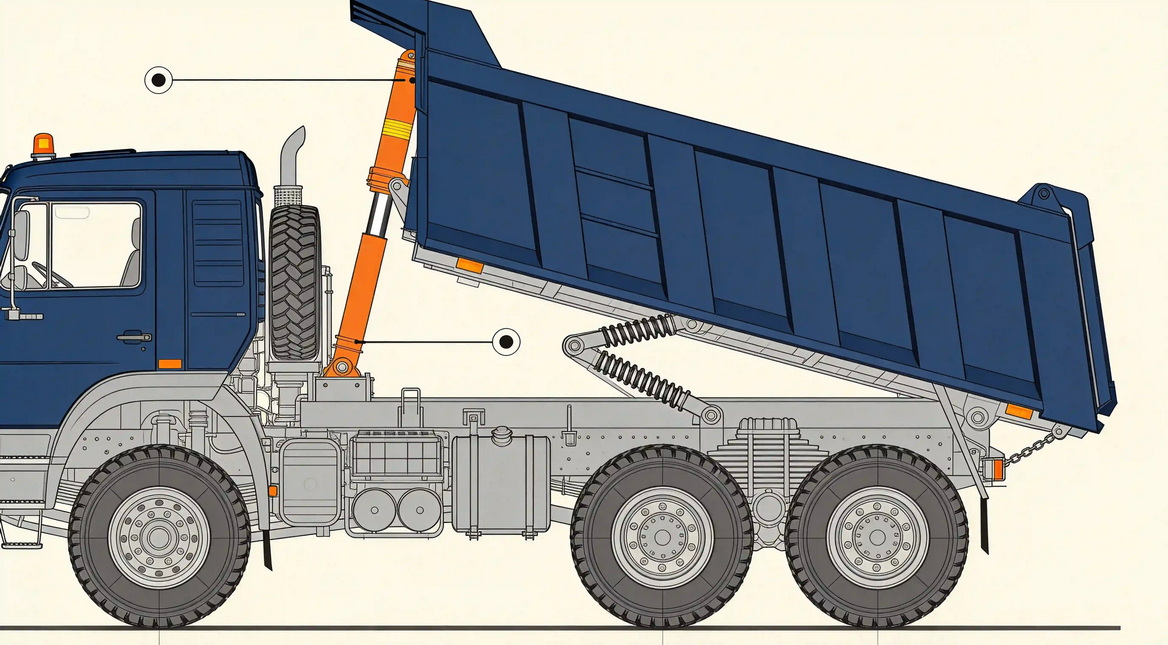
Tires can reveal how the truck has been operated and maintained. Uneven tire wear may indicate alignment issues, worn suspension parts, steering problems, or axle damage.
Check for:
- Uneven tread wear
- Sidewall cuts or bulges
- Cracked rims
- Loose or missing wheel fasteners
- Oil leakage around hubs
- Damaged leaf springs
- Worn bushings
- Broken suspension brackets
- Weak or leaking shock absorbers
- Excessive movement in steering components
Tires that are still legally usable may still need replacement soon. Include tire condition in the total cost calculation before making a final decision.
The powertrain determines how effectively the truck can operate under load. A used dump truck should be assessed during cold start, idle, acceleration, braking, and loaded operation whenever possible.
Start the engine from cold if possible. Observe whether it starts promptly and runs smoothly.
Check for:
- Hard starting
- Excessive white, blue, or black exhaust smoke
- Unusual knocking or metallic noise
- Engine warning lights
- Unstable idle
- Oil leaks
- Coolant leaks
- Damaged belts or hoses
- Signs of overheating
- Poor throttle response
Inspect engine oil, coolant, transmission fluid, and hydraulic oil. Contaminated fluids, metallic particles, milky oil, or strong burnt odors may suggest underlying mechanical issues.
Ask whether the engine has been rebuilt, replaced, or repaired. If major work has been completed, request supporting invoices, repair records, or service documentation.
During a road test, observe the transmission under normal acceleration and under load.
The truck should shift smoothly without excessive delay, slipping, harsh engagement, or abnormal vibration. Listen for unusual sounds from the differential, driveshaft, wheel hubs, and axle housings.
Check the condition of:
- Transmission mounts
- Driveshafts
- Universal joints
- Differential housings
- Axle seals
- Brake drums or discs
- Air system components
- Parking brake system
A truck may drive acceptably when empty but show problems when carrying a load. Where possible, test the truck under realistic operating conditions.
The dump body and hydraulic lift system are central to a dump truck's productivity. A truck with a reliable engine but a failing tipping system can still create costly downtime and missed deliveries.
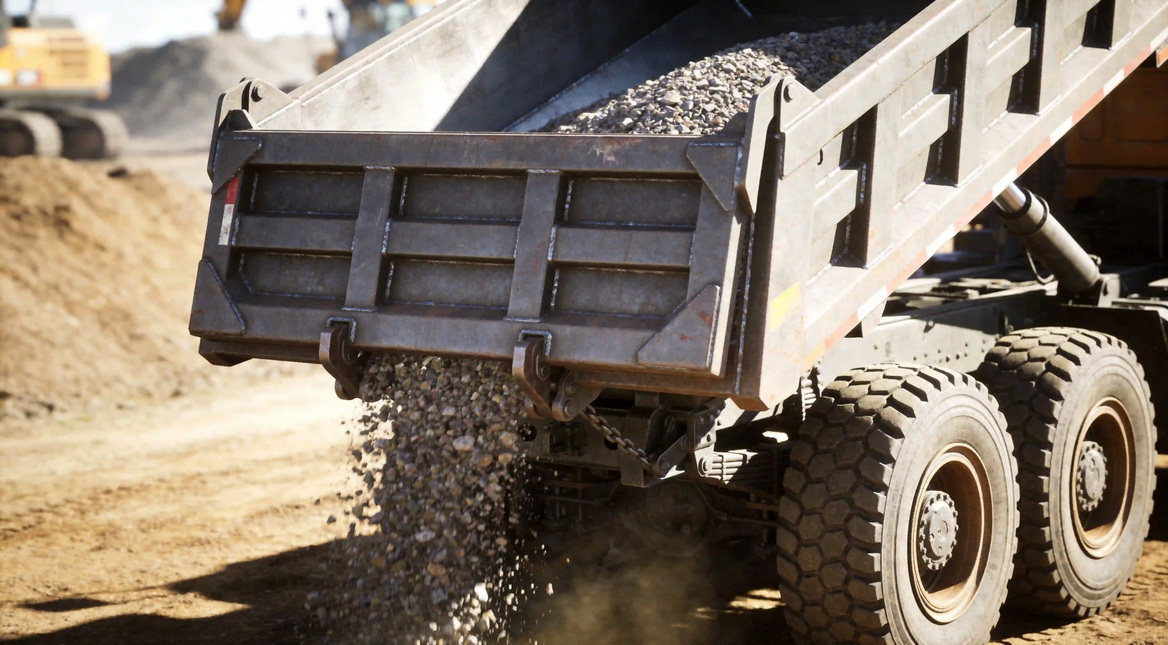
Operate the dump body several times during inspection. Watch the complete lifting and lowering cycle from a safe distance.
Check for:
- Hydraulic oil leakage
- Damaged or scored cylinder rods
- Worn cylinder seals
- Cracked hydraulic hoses
- Loose fittings
- Abnormal noise from the hydraulic pump
- Uneven body lifting
- Slow lifting speed
- Unstable lowering
- Faulty power take-off operation
- Oil contamination in the hydraulic reservoir
The body should lift smoothly and evenly. Any sudden movement, unusual vibration, delayed response, or visible oil leakage should be investigated before purchase.
The dump body is exposed to abrasion, impact, weather, and repeated loading cycles. Inspect the body floor, side panels, tailgate, headboard, reinforcement ribs, and hinges.
Pay close attention to:
- Cracks in the body floor
- Rust-through or corrosion
- Bent side panels
- Worn tailgate locks
- Damaged hinges
- Previous patch repairs
- Weak reinforcement ribs
- Uneven body alignment
- Damaged liners
- Excessive wear in high-impact loading areas
A body used to haul stone, demolition waste, or ore may have much higher wear than a body used for lighter construction materials. Ask the seller what materials the truck has carried and whether it has operated in quarry, mining, or off-road conditions.
Mileage is important, but it is not the only indicator of value. A higher-mileage truck with complete maintenance records can be a more dependable investment than a lower-mileage truck with unknown service history.
A well-maintained truck should have evidence of regular oil changes, filter replacement, brake servicing, tire maintenance, cooling-system checks, and repairs to major components when needed.
Before placing an order or making a deposit, request the following:
1. Vehicle identification number and clear identification plate photos
2. Registration or ownership documents
3. Service and maintenance history
4. Repair invoices for major components
5. Full engine, transmission, axle, and chassis specifications
6. Current exterior, interior, undercarriage, and engine-bay photos
7. Cold-start and road-test videos
8. Hydraulic lifting and lowering videos
9. Inspection report
10. Commercial invoice with exact vehicle details
11. Shipping terms and delivery schedule
12. Warranty details, if available
13. Spare-parts recommendations
14. Pre-delivery inspection confirmation
Make sure the VIN, chassis number, engine number, and commercial documents are consistent. Any mismatch should be clarified before payment.
The purchase price is only one part of the investment. A used dump truck should be evaluated by its expected total operating cost.
A practical cost calculation includes:
Total Cost of Ownership=Purchase Price+Transport+Taxes and Fees+Fuel+Maintenance+Repairs+Insurance+Downtime Cost−Resale Value
A lower-priced truck may require immediate spending on tires, brakes, hydraulic repairs, body work, cooling-system repairs, or drivetrain servicing. These expenses can quickly reduce the value advantage of a cheaper listing.
- Will the truck need repairs immediately after delivery?
- Are tires, brakes, and suspension components close to replacement?
- Are spare parts available in the destination market?
- Does the truck meet local registration and emission requirements?
- Is there a reliable workshop that can service the vehicle?
- What will the truck cost per working day or per delivered ton?
- How much downtime can the operation tolerate?
The best purchase is usually not the lowest-priced truck. It is the truck that offers the strongest balance of condition, application fit, operating reliability, and predictable maintenance cost.
Remote purchasing can be efficient, especially for international buyers, but it requires a clear verification process.
Do not rely only on catalog images or a short quotation. Request current information that proves the truck's condition and identity.

1. Confirm the required payload, body type, axle configuration, and operating environment.
2. Request full vehicle specifications and identification details.
3. Review date-stamped photos from all angles.
4. Ask for a live video walkaround.
5. Watch the engine cold start, dashboard operation, hydraulic lift cycle, and road test.
6. Review the undercarriage, frame, tires, brakes, and dump body.
7. Arrange an independent inspection for high-value purchases.
8. Confirm payment terms, export documents, delivery timing, and responsibilities in writing.
9. Prepare a maintenance plan and spare-parts list before delivery.
A documented process helps reduce misunderstandings and makes it easier to compare multiple trucks objectively.
Customer feedback can help prospective buyers understand how a truck performs in real operating conditions. However, only genuine, authorized, and verifiable reviews should be published.
A credible customer-experience section should include practical details such as:
- Truck type or configuration
- Country or operating environment
- Type of material hauled
- Purchase period
- Main operational result
- Customer authorization status
For example:
> "The truck was selected for aggregate transport on mixed paved and unpaved roads. The vehicle specification, inspection materials, and spare-parts preparation helped our workshop place the truck into operation efficiently."
> — Verified customer, construction-material transport operation
Avoid exaggerated claims, anonymous quotations, or reviews that cannot be verified. Specific operational details are more useful and more believable than overly promotional language.
Buying a used dump truck requires more than checking the price, year, and mileage. The truck must be suitable for its intended workload, route, payload, and maintenance environment.
A careful buyer should inspect the chassis, frame, engine, transmission, brakes, suspension, tires, dump body, and hydraulic system. Maintenance records, ownership documents, inspection reports, and operating-cost estimates should also be reviewed before a purchase decision is made.
For buyers sourcing used dump trucks, heavy-duty trucks, buses, or new-energy commercial vehicles for domestic or international markets, KeyChain can help identify suitable vehicle configurations based on payload, application, destination requirements, and operating conditions.
Start with the chassis frame, hydraulic system, engine, transmission, brakes, suspension, tires, and dump body. Also verify the vehicle identification details and request maintenance records before making payment.
No. A truck with higher mileage but complete maintenance records may be a better choice than a lower-mileage truck with poor service history. Operating conditions, payload history, repair quality, and component condition all matter.
The hydraulic system raises and lowers the dump body. Problems with cylinders, pumps, hoses, seals, or controls can create downtime, safety risks, and costly repairs.
Yes, especially for high-value purchases or remote transactions. An independent inspector can provide a more objective assessment of the truck's mechanical, structural, and hydraulic condition.
Common documents include the commercial invoice, vehicle identification details, ownership or export documents, maintenance history, inspection report, shipping documents, and destination-specific compliance paperwork.
1. Penske Truck Leasing. Penske Used Trucks Shopping Checklist https://www.gopenske.com/blog/used-trucks/penske-used-trucks-shopping-checklist/
2. Penske Used Trucks. Help Center https://www.penskeusedtrucks.com/help-center/
3. National Heavy Vehicle Regulator. Heavy Vehicle Inspection Checklist https://www.nhvr.gov.au/files/media/document/651/202502-1202-nhvas-heavy-vehicle-inspection-checklist.pdf
4. Ritchie Bros. 5 Tips to Protect You When Buying Used Heavy Equipment and Trucks https://blog.ritchiebros.com/5-tips-to-protect-you-when-buying-used-heavy-equipment-and-trucks/
5. Load King. Dump Truck: A Complete Guide to Help You Buy a New or Used Waste Hauling Vehicle https://www.loadkingmfg.com/dump-truck-a-complete-guide-to-help-you-buy-a-new-or-used-waste-hauling-vehicle/
6. Rush Truck Centers. Pre-Trip and Post-Trip Inspection Checklist for Truck Drivers https://www.rushtruckcenters.com/blog/2025/12/pre-trip-and-post-trip-inspection-checklist-for-truck-drivers


