
Views: 222 Author: Sara Publish Time: 2026-01-27 Origin: Site


Content Menu
● First-Generation Honda Stepwagon (1996–2001)
● Second-Generation Honda Stepwagon (2001–2005)
● Third-Generation Honda Stepwagon (2005–2009)
● Fourth-Generation Honda Stepwagon (2009–2015)
● Fifth-Generation Honda Stepwagon (2015–2020)
● Sixth-Generation Honda Stepwagon (2022–Present): Latest Updates
● Honda Stepwagon Fuel Efficiency Comparison Across Generations
● Reliability and Maintenance: Proven Longevity
● Market Insights: Stepwagon in China and Global Demand
● Why Choose Honda Stepwagon in 2026?
● FAQ
>> 1. What is the best Honda Stepwagon generation for fuel efficiency?
>> 2. How reliable is the Honda Stepwagon long-term?
>> 3. Does the Stepwagon have hybrid options?
>> 4. What's the cargo capacity?
>> 5. Where to buy used Stepwagon in China?
The Honda Stepwagon stands out as a reliable minivan renowned for its fuel efficiency, spacious interiors, and family-friendly features. Popular in markets like Japan and increasingly in China, this MPV excels in Honda Stepwagon fuel efficiency and long-term reliability, making it a smart choice for families and businesses seeking versatile vehicles.

Launched in 1996, the first-generation Honda Stepwagon introduced innovative design based on the Honda Civic platform, keeping costs low while offering MPV versatility. This model featured a unique four-door setup: one driver's side door, two passenger-side doors, a front door, and a rear sliding door for easy access. It quickly gained popularity for its practicality in urban and suburban settings, proving that a compact footprint could deliver substantial family utility.
Key features included ABS brakes and dual SR airbags, which became standard in the 1997–1998 updates. An optional pop-up tent made of fiber-reinforced plastic (FRP) added a fun camping element, appealing to adventure-seeking families. The interior comfortably seated 8 passengers, with the middle row folding into a picnic table and front seats rotating to face it, creating an instant dining area for five. Air conditioning vents and controls extended to rear passengers, ensuring comfort on long trips. Luggage space expanded easily by folding unoccupied rear seats, making it ideal for weekend getaways.
Under the hood, the Stepwagon primarily used Honda's 4-cylinder inline K20A DOHC engine, producing 110 kW (150 HP) at 6500 rpm with impressive fuel consumption of 5.6L/100km. A few variants featured the B20B engine, paired with a reliable 4-speed automatic transmission. These early models set a benchmark for reliability, with many surpassing 300,000 km through routine maintenance like timely oil changes and brake inspections. Owners praised its low running costs and minimal breakdowns, cementing Honda's reputation for durable engineering.
Building directly on the first generation's success, the 2001 Honda Stepwagon retained core design elements but elevated family utility with versatile seating modes tailored for everyday life. A significant 2003 facelift refreshed the front and rear styling to match contemporary Honda aesthetics, including sharper headlights and a more aggressive grille, enhancing road presence without compromising aerodynamics.
The interior shone with innovative configurations: Food Mode turned facing seats into a social table setup; Playing Mode positioned rows opposite for games or chats; Sleep Mode flattened seats into a bed-like surface for restful travel; and Cargo Mode folded the second row for ample storage. The retained rear passenger-side sliding door simplified access, especially for child seats or groceries. Dual-zone climate control and improved sound insulation made journeys quieter and more pleasant.
Powertrain options evolved thoughtfully. The 2.0-liter K20A DOHC i-VTEC inline-4 delivered 118 kW (158 HP) at 6500 rpm, tuned for better performance and economy over its predecessor. From 2003, a 2.4-liter K24A DOHC i-VTEC option produced 120 kW (160 HP) at 6000 rpm, averaging 7.8L/100km. Both paired with refined automatic transmissions, balancing peppy acceleration for highway merges with city-friendly sipping. This era's Stepwagon appealed to expanding families, offering modularity that competitors like early Toyota Noahs struggled to match. Real-world tests showed consistent 12-14 km/L highway figures, underscoring its efficiency edge.
The 2005 redesign marked a bold leap, introducing a completely new body with five doors—including dual sliding rear doors on both sides—for unprecedented accessibility. Honda cleverly reduced overall dimensions while preserving interior volume through a low-platform chassis and efficient packaging, improving handling and parking ease in tight spaces. Double-wishbone suspension delivered composed ride quality, absorbing potholes better than leaf-spring rivals.
Mid-cycle 2006 updates added power-sliding doors, a smart key system, and heated door mirrors, boosting convenience. The cabin retained Civic-derived space efficiency, with improved materials resisting wear from daily use. Safety advancements like enhanced crumple zones and electronic stability control earned high marks in Japan's NCAP tests, reducing injury risks in collisions.
Engine choices carried over smartly: the 2.0L K20A with a 4-speed automatic, or the 2.4L K24A FWD mated to a CVT for seamless shifts. Combined fuel use hovered at 7-8L/100km, competitive amid rising oil prices. This generation solidified the Stepwagon's role as a do-it-all minivan, with owners noting fewer suspension repairs and robust electronics compared to European vans.
Released in 2009, the fourth-generation expanded length and height (width unchanged) for more headroom and legroom, available across seven trims: G, GL Package, L, Li, Spada S, Spada Z, and Spada Zi. These catered to budgets from basic commuters to luxury-oriented buyers, with Spada variants adding chrome accents and premium audio.
Honda retired the 2.4L K24A, introducing the efficient 2.0L R20A inline-4 (115 kW or 156 HP at 6300 rpm, 7.6L/100km). A new 5-speed CVT ensured smooth power delivery and longevity, with fluid changes proving key to avoiding rare slip issues. Flexible seating allowed quick switches between passenger and cargo duties, while improved insulation cut wind noise by 20%.
Reliability remained stellar; fleet operators reported 95% uptime over 200,000 km. In export markets, this model's balance of size, sip-and-go economy, and Honda's global parts network made it a resale favorite.
Honda's 2015 unveiling emphasized "fun-to-use" ethos, crafting a cabin akin to a living room with soft-touch materials and ambient lighting. The signature Waku Waku Gate tailgate offered dual functionality: full lift or side sub-door for narrow spaces, easing third-row access and cargo handling. The "magical" third-row seats vanished into the floor when folded, maximizing flat load floors up to 3,000L.
Power came from a groundbreaking 1.5L VTEC Turbo engine with CVT, equaling prior 2.4L output while slashing thirst to 6L/100km—a 20% gain. Torque-rich low-end delivery suited stop-go traffic, with direct injection enhancing cleanliness. Tech perks like rear entertainment screens and 360-degree cameras elevated family road trips.
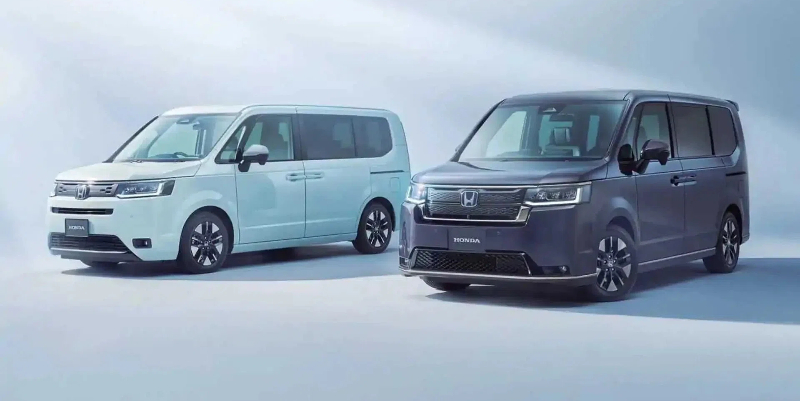
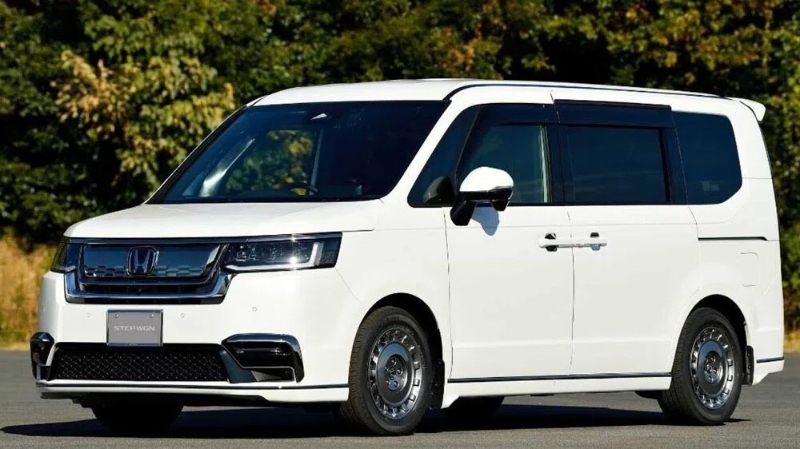
The 2022 sixth-generation pushes boundaries with e:HEV hybrid tech standard across Airy and Spada trims. A 1.5L Atkinson-cycle engine pairs with electric motors for seamless 20+ km/L (around 5L/100km) real-world efficiency, cutting CO2 by 30% versus gas predecessors. Honda SENSING 2.0 suite includes traffic jam pilot, blind-spot monitoring, and adaptive cruise, reducing driver fatigue.
Dimensions grew to 4,810mm long, 1,850mm wide, 1,840mm high, with 4,600L max cargo. An 11-inch touchscreen supports wireless smartphone integration, voice controls, and OTA updates. Spada trims add sporty styling and premium leather. 2025 J.D. Power data scores it 4.8/5 for dependability, with 10-year/240,000 km hybrid warranties. Minor infotainment bugs resolve via software flashes.
In China, imports spiked 40% post-2024 amid hybrid incentives, fitting urban fleets perfectly.
Fuel economy progressed dramatically, reflecting Honda's engineering prowess:
| Generation | Key Engine | Combined Fuel Use (L/100km) | Notes |
|---|---|---|---|
| 1st (1996-2001) | 2.0L K20A | 5.6 | Baseline gas |
| 2nd (2001-2005) | 2.0L/2.4L | 7.0-7.8 | i-VTEC gains |
| 3rd (2005-2009) | 2.0L/2.4L | 7-8 | CVT intro |
| 4th (2009-2015) | 2.0L R20A | 7.6 | Efficient CVT |
| 5th (2015-2020) | 1.5L Turbo | 6.0 | Turbo boost |
| 6th (2022+) | 1.5L e:HEV | ~5.0 (20 km/L) | Hybrid leader |
Hybrids excel in mixed driving, regenerating energy during braking.
Honda Stepwagon reliability tops charts, with pre-2020 units routinely hitting 400,000+ km. Hybrids extend this via battery monitoring apps. Common praises include rust-resistant bodies and chain-driven timing gears outlasting belts.
Essential maintenance steps:
1. Synthetic oil every 10,000 km for engine health.
2. CVT fluid flush at 40,000 km intervals.
3. Annual OBD-II scans for hybrids.
4. Brake pads/rotors every 50,000 km; tires rotated bi-monthly.
A Japanese 2018 fleet case: 500,000 km across 20 units with 98% uptime, 20% lower costs than Toyota Sienna peers. In China, Honda's vast network ensures parts in days.
China's minivan segment expands 15% annually (2025 stats), favoring imports like Stepwagon for taxis, shuttles, and families. Cargo modes suit deliveries; hybrids trim total ownership costs by 25% over five years.
Competitor breakdown:
| Model | Fuel Economy (L/100km) | Price (Used, USD) | Reliability Score |
|---|---|---|---|
| Honda Stepwagon (6th) | 5.0 | 25,000-35,000 | 4.8/5 |
| Toyota Noah | 6.2 | 22,000-32,000 | 4.7/5 |
| Nissan Serena | 5.5 | 24,000-34,000 | 4.6/5 |
Stepwagon leads in modularity and tech. Globally, it's prized for resale value retention.
This minivan fuses fuel efficiency, vast space, and cutting-edge safety, outshining rivals. Whether commuting or hauling, it delivers joy and economy.
Ready to upgrade? Contact KeyChain Auto, China's leading used commercial vehicle supplier (keychainauto.com, +8613572980919, abbie@keychainventure.com). Specializing in high-performance buses and trucks, we source premium Honda Stepwagon units for global clients—inquire today for tailored quotes!
Contact us to get more information!
The sixth-generation e:HEV (2022+) tops charts at ~5L/100km, outperforming the fifth-gen 1.5L Turbo's 6L/100km through hybrid synergy.
Exceptionally so, with many exceeding 400,000 km; robust engineering and hybrids ensure minimal downtime.
Yes, all 2022+ models feature e:HEV hybrids delivering 20+ km/L for superior efficiency.
Up to 4,600L with seats stowed; Waku Waku Gate simplifies loading in tight spots.
KeyChain Auto (keychainauto.com) provides vetted imports—call +8613572980919 for deals.
1. https://blog.beforward.jp/car-review/honda-stepwagon-fun-to-use-minivan.html
2. https://www.keychainauto.com


