
Views: 222 Author: Keychain Venture Publish Time: 2026-04-13 Origin: Site


Choosing a new bus for your business is no longer just a transportation decision. It is a strategic investment in safety, uptime, customer experience, and long-term operating efficiency. For operators comparing a new bus vs. used bus, the biggest advantage is simple: a modern vehicle helps you reduce risk while improving service quality from day one. [thebuscenter]
Whether you run a shuttle service, tour company, school transportation fleet, private charter operation, or commercial mobility business, the right bus can strengthen your brand and lower your total cost of ownership over time. In this article, we break down the 10 most important reasons to invest in a new bus, and we add practical buying guidance, 2026 market context, and expert insights to help you make a more confident decision. [busntruckchicago]
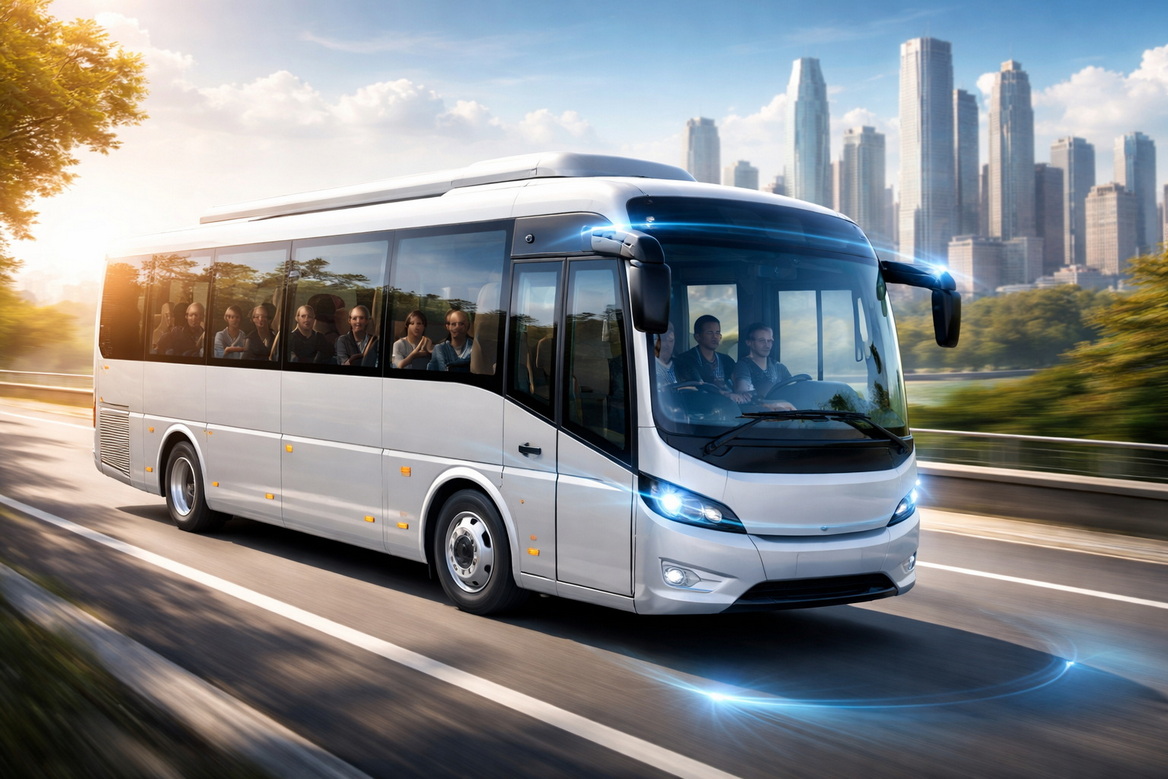
A bus is not just a vehicle; it is a revenue-generating asset that affects customer satisfaction, maintenance planning, and operational reliability. New buses generally come with stronger warranty protection, better component reliability, and more up-to-date safety and comfort features than older units. [americanbussales]
For many fleets, the decision comes down to downtime versus dependability. Every unexpected breakdown can disrupt schedules, damage your reputation, and raise repair costs. A new bus helps protect your operation against those hidden losses while supporting a more predictable service model. [busntruckchicago]
Safety is one of the strongest reasons to buy a new bus. Modern buses can be equipped with advanced systems such as electronic stability control, automatic emergency braking, backup cameras, and improved braking technology, all of which help reduce crash risk on the road. [metro-magazine]
This matters because heavy vehicles face unique safety challenges, especially in braking, lane control, and rollover situations. NHTSA has long recognized the value of stability control in large buses and heavy vehicles, and recent proposals continue to push the industry toward more active safety technology. For passenger-facing businesses, better safety features also improve customer trust. [nhtsa]
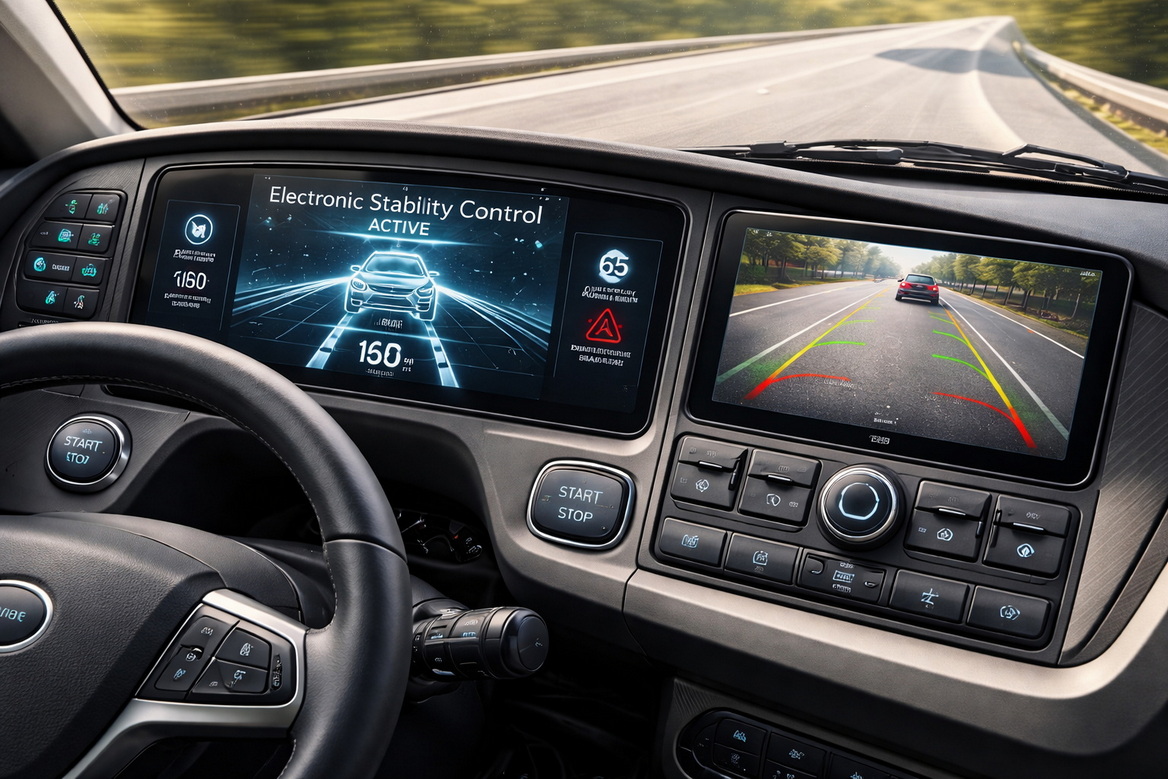
New buses typically need fewer immediate repairs than older vehicles, especially during the first years of ownership. That means fewer unscheduled service events, fewer roadside delays, and less pressure on your maintenance budget. [thebuscenter]
A modern bus also tends to use newer components that are designed for durability and easier servicing. When combined with preventive maintenance, this can significantly reduce lifecycle expenses and extend vehicle usefulness. In practical terms, fewer repairs often mean more revenue-generating time on the road. [network.demandstar]
Fuel economy is a major cost factor for any fleet. New buses often benefit from more efficient engines, better drivetrain engineering, and lighter materials that help reduce fuel consumption compared with older models. [middletonmeads]
Even small gains in fuel efficiency can produce meaningful annual savings for high-mileage fleets. Industry analysis suggests that operational improvements such as better fuel economy and lower maintenance can contribute to stronger ROI over time. For businesses operating daily routes, that can directly improve margins. [linkedin]
A strong warranty is one of the most practical financial advantages of buying a new bus. Manufacturer warranties commonly cover major systems such as the engine, transmission, and other core components during the early ownership period. [americanbussales]
That coverage helps shield your business from expensive surprises while the vehicle is still in its highest-value service years. American Bus Sales also emphasizes that warranty terms matter because the wrong coverage structure can create hidden risk later. If you are comparing new and used buses, warranty protection is often one of the clearest differentiators. [americanbussales]
Passengers notice comfort immediately. New buses can offer better seating, climate control, smoother rides, quieter cabins, and more modern entertainment or connectivity options. [americanbussales]
That matters for tours, corporate shuttles, employee transport, and premium charter services. A better ride experience can increase repeat bookings and strengthen your reputation in competitive markets. In service businesses, comfort is not a luxury; it is part of the product.
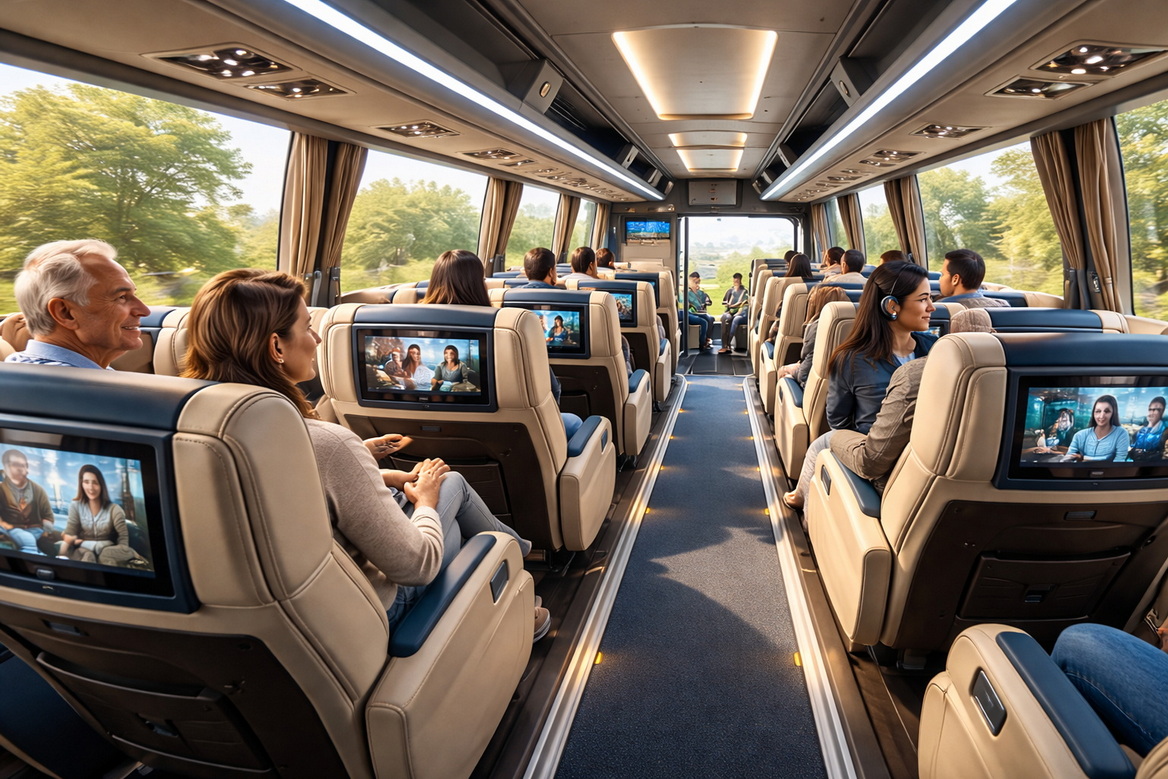
One of the most valuable advantages of buying new is customization. You can select layouts, seating capacity, accessibility options, storage configurations, and branded design elements that fit your exact route or service model. [americanbussales]
This flexibility is especially useful for operators with specialized needs, such as airport transfers, school programs, senior transport, or luxury charters. Instead of adapting your operation to an old vehicle, you can configure the bus around your service strategy. That leads to better efficiency and a more polished customer experience.
Your bus is often a moving advertisement. A clean, modern vehicle with your logo and colors sends a message of professionalism, reliability, and scale. [americanbussales]
This visual credibility can influence customer decisions before they ever speak to your sales team. In many transportation markets, buyers associate newer fleets with better maintenance, better service, and better safety. That perception can become a real competitive advantage.
Accessibility is both a compliance issue and a business opportunity. Many new buses can be configured to support easier boarding, mobility devices, wider entry points, and other inclusive features that make service available to more riders. [americanbussales]
That wider accessibility can help you serve schools, senior groups, healthcare transport, community organizations, and public-facing service contracts. In other words, an accessible bus is not only the right thing to do; it can also broaden your customer base. Businesses that prioritize inclusive transport often gain access to more contracts and more repeat demand.
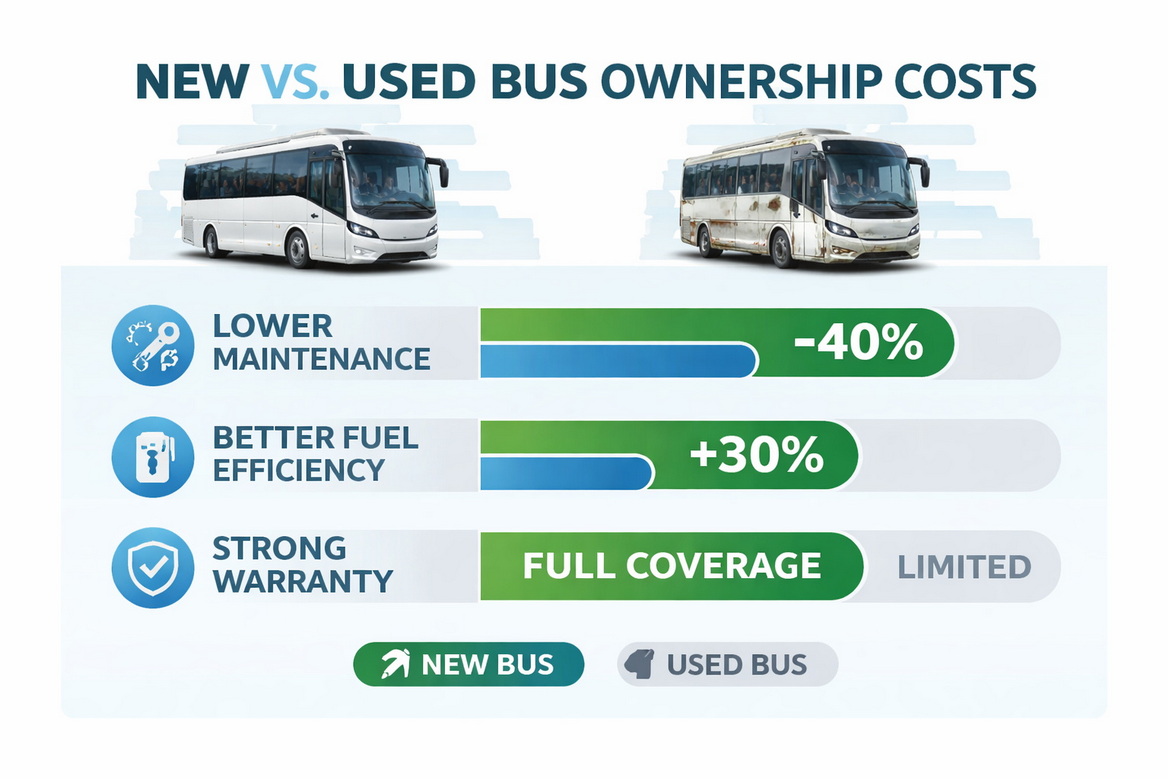
The purchase price is only part of the equation. The real question is how much the vehicle costs you over its full service life. New buses often perform better in the areas that matter most to fleet economics: reliability, fuel efficiency, warranty support, and resale value. [linkedin]
Here is a simple way to think about it:
| Cost factor | New bus | Older bus |
|---|---|---|
| Repair frequency | Lower in early ownership | Higher and less predictable |
| Warranty protection | Stronger | Often limited or absent |
| Fuel efficiency | Usually better | Often weaker |
| Passenger experience | More modern | More dated |
| Brand perception | Stronger | Less impressive |
When you combine these factors, a new bus may be the more economical choice even if the upfront price is higher. This is especially true for businesses that depend on consistent route performance and customer satisfaction.
A new bus is not just about solving today's transportation needs. It also positions your business for future growth, especially if you plan to expand routes, add premium services, or electrify part of your fleet later. [hbfuller]
The wider industry is moving toward cleaner and more advanced transportation options, with electric and alternative-fuel buses gaining momentum in many markets. Buying new helps you stay closer to those changes, rather than trying to catch up with an outdated fleet. For growth-minded operators, that flexibility can be a major strategic advantage. [insideclimatenews]
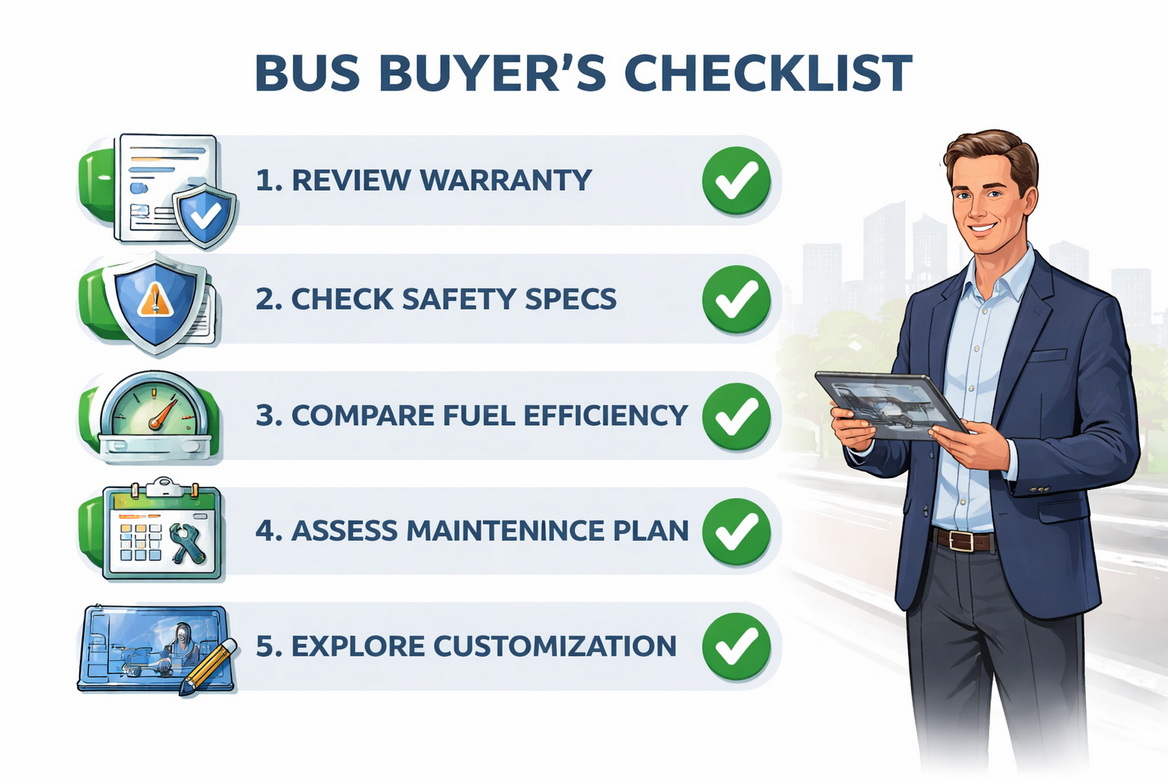
Before you commit to a bus purchase, evaluate more than just the model name. Focus on the details that affect uptime and long-term value.
1. Warranty coverage, including engine, transmission, and labor terms. [americanbussales]
2. Safety package, such as ESC, AEB, cameras, and braking systems. [metro-magazine]
3. Fuel and powertrain specs, especially for high-mileage routes. [middletonmeads]
4. Maintenance requirements, because poor maintenance can reduce reliability and coverage protection. [network.demandstar]
5. Interior layout and passenger needs, including comfort and accessibility. [americanbussales]
This checklist helps you compare buses on business value, not just purchase price. It also makes procurement decisions easier for owners, fleet managers, and operations teams.
In 2026, fleet buyers face a more complex environment than before. Safety rules, emissions expectations, warranty terms, and passenger expectations are all evolving at the same time. That makes it even more important to choose a bus that is ready for current demands, not one that only looks affordable on paper. [sustainable-bus]
From an operator's perspective, the best fleet investment is the one that minimizes surprises. A new bus does exactly that by improving predictability across safety, maintenance, service quality, and financing. That is why many experienced buyers see new vehicles as a growth tool rather than just a replacement asset. [thebuscenter]
If your business depends on uptime, passenger comfort, and a stronger market image, a new bus can be one of the smartest fleet decisions you make. Contact your supplier, request a detailed quote, and compare warranty, safety, and customization options before you buy. [linkedin]
Yes, for many operators it is. A new bus often reduces maintenance risk, improves fuel efficiency, and comes with better warranty protection, which can lower total cost of ownership over time. [thebuscenter]
Look for electronic stability control, automatic emergency braking, backup cameras, strong braking systems, and any route-specific safety options your operation needs. [nhtsa]
A warranty protects major components during early ownership and can reduce unexpected repair bills. New buses usually come with stronger manufacturer-backed coverage than used vehicles. [americanbussales]
Yes. Many new buses can be configured for seating layout, accessibility, branding, luggage space, and service-specific needs. [americanbussales]
Because they look modern, perform more reliably, and signal professionalism to passengers and clients. That can increase trust and strengthen your market position. [thebuscenter]
1. American Bus Sales. "10 Reasons to Invest in a New Bus For Your Business." [https://americanbussales.net/10-reasons-to-invest-in-a-new-bus-for-your-business/]
2. American Bus Sales. "What To Look For in a Bus Warranty (and What's Usually Excluded)." [https://americanbussales.net/what-to-look-for-in-a-bus-warranty-and-whats-usually-excluded/]
3. American Bus Sales Blog. "Blog - Page 2 of 37." [https://americanbussales.net/blog/page/2/]
4. American Bus Sales. "FAQs When Buying a New School Bus." [https://americanbussales.net/faqs-when-buying-a-new-school-bus/]
5. The Bus Center. "5 Benefits of Investing in a New Bus for Your Fleet." [https://thebuscenter.com/about/news-blogs/5-benefits-of-investing-in-a-new-bus-for-your-fleet/]
6. Bus and Truck Chicago. "5 Key Benefits of a Preventative Fleet Maintenance Program." [https://www.busntruckchicago.com/blog-posts/5-key-benefits-of-a-preventative-fleet-maintenance-program]
7. H.B. Fuller. "Electrifying the Future: 2026 Trends in Bus Manufacturing." [https://www.hbfuller.com/en/blog/thegluetalkblog/2025/november/electrifying-the-future-bus-trends-2026]
8. DemandStar. "Fleet Procurement Strategies - Safe & Economically Sound." [https://network.demandstar.com/blogs/fleet-procurement-strategies-safe-economical/]
9. Middleton Meads. "The Vital Role of Commercial Bus Maintenance in Ensuring Safety and Reliability." [https://www.middletonmeads.com/the-vital-role-of-commercial-bus-maintenance-in-ensuring-safety-and-reliability/]
10. Metro Magazine. "NHTSA mandates anti-rollover tech in buses." [https://www.metro-magazine.com/news/nhtsa-mandates-anti-rollover-tech-in-buses]
11. Inside Climate News. "EPA's Clean School Bus 'Revamp' Means Less Support for EVs." [https://insideclimatenews.org/news/20022026/epa-clean-school-bus-revamp/]
12. American Bus Sales. "Warranties." [https://americanbussales.net/warranty/]
13. NHTSA. "NHTSA and FMCSA Propose New Safety Standard Requiring Automatic Emergency Braking Systems in Heavy Vehicles." [https://www.nhtsa.gov/press-releases/heavy-vehicles-automatic-emergency-braking-proposed-rule]
14. Sustainable Bus. "EPA to revise $5 billion Clean School Bus Program." [https://www.sustainable-bus.com/news/epa-clean-school-bus-program-restructuring-biofuels/]
15. American Bus Sales. "What To Look For in a Bus Warranty (and What's Usually Excluded)." [https://americanbussales.net/what-to-look-for-in-a-bus-warranty-and-whats-usually-excluded/]


