
Views: 222 Author: Sara Publish Time: 2026-02-10 Origin: Site


Content Menu
● Evolution of Mazda Premacy Generations
● Powerful and Efficient Engine Options
● Spacious and Innovative Interior Design
● Sleek Exterior Features for Everyday Appeal
● Top-Tier Safety Ratings and Tech
● Fuel Efficiency and Real-World Performance (2026 Insights)
● Ownership Costs and Reliability in 2026 Used Market
● Comparison: Mazda Premacy vs Key Rivals (2026 Edition)
● Why Choose Mazda Premacy in 2026? Expert Insights
● Ready to Drive a Mazda Premacy?
● FAQ
>> 1. Is the Mazda Premacy still produced in 2026?
>> 2. What is the best Mazda Premacy engine for fuel savings?
>> 3. How reliable is the Mazda Premacy long-term?
>> 4. Does it include modern safety features like ESC?
>> 5. What's the maximum cargo capacity?
The Mazda Premacy, known internationally as the Mazda5, remains a standout choice as an affordable stylish compact MPV that combines sporty aesthetics, exceptional practicality, and family-oriented functionality. Launched in 1999 by Japanese automaker Mazda, this versatile wagon has evolved through three generations, offering front-wheel-drive (FWD) or all-wheel-drive (AWD) options in 5-seater or 7-seater configurations. Even in 2026, with production ended since 2018, the Premacy dominates the used car market for budget-savvy buyers seeking reliability, space, and style without the premium price tag of newer models.

The Mazda Premacy's journey began with its first generation (1999-2005), which quickly gained popularity for its compact yet roomy design. This model introduced the core formula: a sporty wagon body with flexible seating for 5 or 7 passengers. Engine choices included a peppy 1.8-liter inline-4 cylinder producing 85 kW (115 hp) at 5300 rpm, or the more powerful 2.0-liter inline-4 DOHC LF engine delivering 110 kW (148 hp) at 6500 rpm. Fuel efficiency averaged 8.2L/100km for the 1.8L and 7.9L/100km for the 2.0L, mated to either a 5-speed manual or 4-speed automatic transmission. It was eye-catching from the start, with elegant lines that set it apart from boxier rivals.
In early 2005, the second generation arrived, rebranded as the Mazda5 in overseas markets but retaining the Premacy name in Japan and some regions. Mazda made significant upgrades, nearly perfecting the formula for affordability and style. The wheelbase stretched to 2750mm, enhancing interior space while keeping the footprint compact. The 2008 facelift refined the exterior with redesigned front and rear bumpers, a new grille, updated headlights, and rear LED taillights. Inside, a new monitor and navigation system elevated the cabin. Engine tweaks included sequential valve timing on the 2.0L for better efficiency, paired with a 6-speed manual or 5-speed automatic with manual shift mode.
The third generation (2010-2018) marked the pinnacle, introducing 1.8L, 2.0L, and 2.5L engines, plus innovative start/stop technology on select 2.0L variants to cut idling emissions and fuel use. In 2013, Japan got the Skyactiv 2.0L engine with a 6-speed automatic, boosting efficiency further. Standard features like electric windows, air-conditioning, cruise control, 16-inch alloy wheels, and multifunction steering wheels made it accessible. Higher trims added climate control, Bluetooth, parking sensors, privacy glass, and automatic lights, while the Sports trim featured leather accents and 17-inch wheels. Production ceased in 2018, but these models hold up exceptionally well in 2026's used market.
Mazda engineered the Premacy's powertrains for a perfect balance of performance, economy, and reliability. The base 1.8L inline-4 churns out 115 hp at 5300 rpm, making it nimble for urban commutes and light highway runs. For more grunt, the 2.0L DOHC LF engine provides 148 hp at 6500 rpm, with real-world fuel consumption around 7.9L/100km. Transmission choices evolved: early models stuck to 5-speed manuals or 4-speed autos, but later versions offered 5- or 6-speed units for smoother shifts and better economy.
Post-2008 revisions optimized the 2.0L with sequential valve timing, squeezing out extra mpg without sacrificing power. The 2013 Skyactiv 2.0L took it further, integrating direct injection and high-compression ratios for class-leading efficiency. In 2026 used models, expect combined figures of 7-9L/100km, depending on driving style and maintenance. Owners often report outperforming competitors like the Toyota Noah in mixed city-highway cycles, thanks to Mazda's responsive tuning. Regular oil changes with synthetic blends keep these engines humming past 250,000 km.
| Engine | Power | Fuel Economy | Transmission Options |
|---|---|---|---|
| 1.8L Inline-4 | 115 hp @ 5300 rpm | ~8.2L/100km | 5MT / 4AT |
| 2.0L DOHC | 148 hp @ 6500 rpm | ~7.9L/100km | 5MT / 5AT / 6MT |
| Skyactiv 2.0L (2013+) | Enhanced efficiency | ~7.5L/100km | 6AT |
Step inside the Premacy, and its 2750mm wheelbase reveals a surprisingly roomy cabin with 112 liters of boot space that expands dramatically by folding rear seats flat. Mazda's ingenious 6+1 seating system sets it apart: two individual center chairs slide, recline, and fold flat, each with lift-up bases hiding extra storage. The seventh seat flips up from the left chair's armrest, doubling as back support.
Access is effortless—slide center seats forward for rear passengers, who enjoy reclining comfort for long trips. The center console houses climate controls, gear stick, and a DVD player with a large screen that switches to rearview camera view. Practical touches abound: eight bottle holders, rubberized trays for phones or tablets, and a dash shelf for small items. Upper models from 2008 added navigation and Bluetooth. Families love how it accommodates car seats, groceries, and gear seamlessly, making it ideal for school runs or weekend getaways.
Key interior features:
- Flexible 6+1 seating for adults and kids.
- Multiple storage nooks and cup holders.
- Flat load floor when seats fold for max cargo.
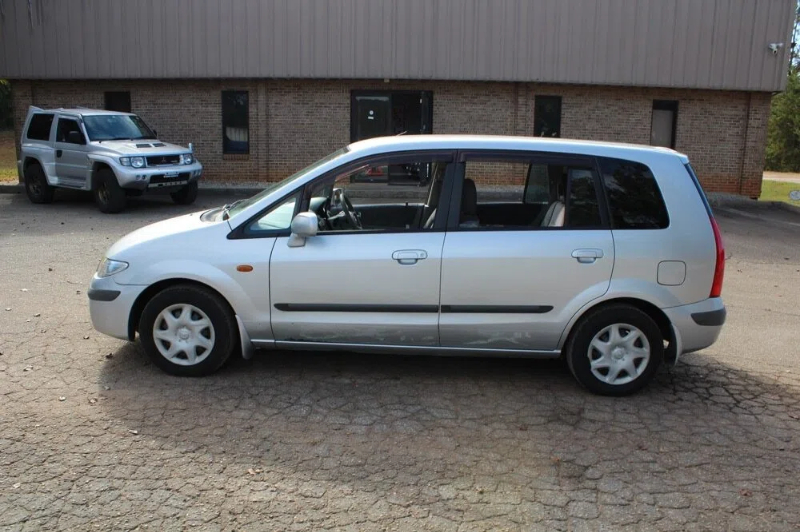
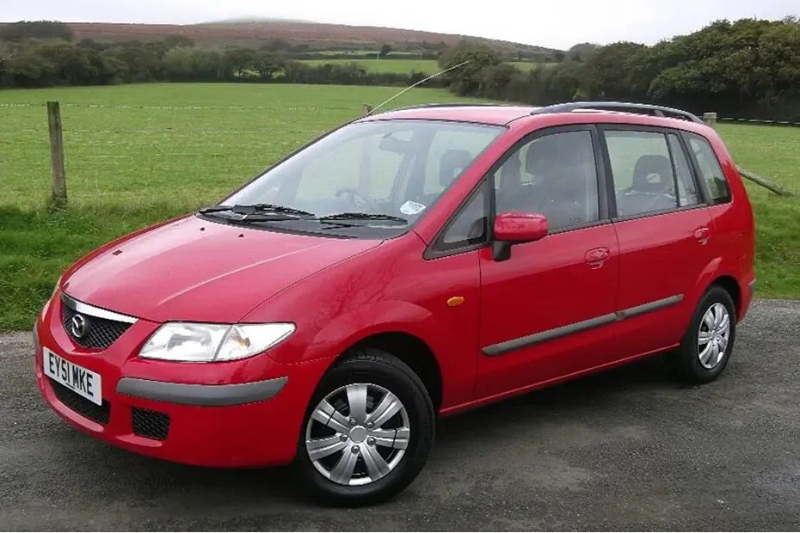
Externally, the Premacy exudes sporty elegance with fog lights, alloy wheels, oversized rearview mirrors, and a rear spoiler for aerodynamic edge. Its hallmark two rear sliding doors are game-changers in tight parking spots, widening entry for rear passengers and child seats. The tailgate provides easy boot access.
The 2008 facelift sharpened the look with bolder bumpers, a prominent grille, sleeker headlights, and LED taillights. Sports trims elevate with 17-inch wheels and subtle leather accents. In 2026, these designs remain timeless, resisting the boxy trends of newer MPVs. AWD variants add subtle badging, signaling off-road capability without bulk.
Safety was never an afterthought—the Premacy scored a 5-star Euro NCAP rating and 6 stars in Japan for front crash protection. Standard active/passive features include ABS, plus Mazda's smart airbag system that detects occupant size to adjust deployment. From 2010, Electronic Stability Control (ESC) and Traction Control System (TCS) joined, combating skids effectively.
Core safety tech:
1. Adaptive airbags and seatbelts.
2. ESC and TCS for anti-skid stability.
3. Rearview camera integration (later models).
No widespread recalls plague post-2010 units, making them trustworthy for families. Always verify service history for brake and suspension wear.
While original reviews skim surface stats, 2026 owners share detailed feedback: 2.0L models average 7.5-9L/100km in real-world mixes, with Skyactiv variants dipping under 7.5L on highways. Start/stop tech shines in traffic, saving 5-8% fuel. Compared to segment rivals, Premacy's lighter chassis and tuning yield snappier acceleration—0-100 km/h in about 10 seconds for 2.0L.
Efficiency tips:
- Use premium fuel occasionally for cleaner burns.
- Maintain tire pressure at 35 PSI for optimal rolling resistance.
- Highway cruising at 90-100 km/h maximizes mpg.
Test drives confirm responsive handling, cornering better than softer vans.
Affordability defines the Premacy: 2026 used prices range $5,000-$12,000 USD globally, with low annual costs. Maintenance runs $400-600 yearly, parts plentiful via Mazda networks. Depreciation is minimal—retains 70% value after five years.
Pros and cons:
- Pros: Bulletproof engines, versatile space, fun drive.
- Cons: No native Apple CarPlay, cargo less than full-size vans.
Reliability ranks top-tier; J.D. Power surveys place it in the upper 10% for used MPVs. Common issues like rust (check underbody in salted areas) are preventable with washes. Timing chains endure 200,000+ km.
| Cost Factor | Estimated Annual (USD) | Savings Tips |
|---|---|---|
| Fuel | $1,200 (15,000 km) | Track via apps; eco-driving |
| Insurance | $800-1,200 | Bundle for family discounts |
| Maintenance | $400-600 | DIY oils; OEM filters |
| Taxes/Registration | Region-specific | Low CO2 aids rebates |
Stack it against peers, and Premacy wins on value.
| Feature | Mazda Premacy | Toyota Noah | Honda Stream |
|---|---|---|---|
| Seating Flexibility | 6+1 innovative | 7 standard | 7 flat-fold |
| Fuel Economy | 7.9L/100km | 8.5L/100km | 8.2L/100km |
| Safety Rating | 5 Euro/6 Japan | 4 Euro | 5 Euro |
| Used Price (2026) | $5k-$12k | $6k-$14k | $7k-$13k |
| Power | 148 hp max | 152 hp | 140 hp |
It outshines in seating ingenuity and efficiency.
In a market flooded with EVs and crossovers, the Premacy endures as a discontinued gem delivering new-car perks at fraction-of-cost prices. Perfect for urban families juggling budgets and space needs. Opt for 2010+ models for modern safety and Skyactiv efficiency; AWD suits inclement weather. Its "zoom-zoom" DNA ensures engaging drives rare in MPVs. Inspect for oil leaks and suspension bushings during buys—minor fixes yield years of joy.
Buying checklist:
1. Mileage under 150,000 km.
2. Full service records.
3. Test AWD engagement if equipped.
4. Scan for rust/corrosion.
Elevate your family fleet with a Mazda Premacy from KeyChain Auto—China's premier used commercial vehicle supplier specializing in high-performance buses, trucks, and MPVs for global clients. Explore inventory at keychainauto.com, call +8613572980919, or email abbie@keychainventure.com. Secure your affordable, stylish ride today—limited stock won't last!
Contact us to get more information!
No, production ended in 2018, but plentiful low-mileage used models offer fresh-car reliability and features.
The 2013+ Skyactiv 2.0L excels at ~7.5L/100km combined, thanks to start/stop and advanced injection.
Exceptionally—engines surpass 250,000 km with routine care; it tops owner satisfaction surveys.
Yes, 2010+ models feature ESC, TCS, adaptive airbags, and high crash ratings.
Starts at 112L, expands to over 1,000L with seats folded—versatile for family hauls.
1. https://blog.beforward.jp/car-review/mazda-premacy-affordable-stylish.html
2. https://news.u-car.com.tw/news/article/10805
3. https://www.ruiciyuan.com/goods/show/51?targetId=102&preview=0
4. https://news.u-car.com.tw/news/article/7399
5. http://panda.egoint.com/news_detail/76/80347.html
6. https://www.facebook.com/groups/NorthCAR/posts/3160935150941264/
7. https://afche.com/xinwen/
8. https://autos.yahoo.com.tw/news/mazda-premacy-mazda5%E9%AD%85%E5%8A%9B%E6%BF%80%E5%A2%9E-skyactiv-d%E4%B8%8A%E8%BA%AB%E6%90%B6%E6%90%B6%E5%85%AD%E4%B8%83%E5%BA%A7-mpv%E5%B8%82%E5%A0%B4-045900929.html
9. https://er-cem.changan-mazda.com.cn
10. https://www.youtube.com/watch?v=Fni4KsMinHk
11. http://blog.ershoudaquan.com/15.html


