
Views: 222 Author: Sara Publish Time: 2026-01-22 Origin: Site


Content Menu
● Why Open Payments Matter for Bus Fleets
● Evolution of Contactless Ticketing in Public Transit
● Core Components of Open Payments Systems
● Step-by-Step Implementation Guide for Bus Operators
● Latest Industry Data and Trends (2026 Insights)
● Real-World Case Studies from Global Leaders
>> Sydney Opal Network: Urban Scale Triumph
>> Shenzhen BYD Electric Fleet: Asia's Benchmark
>> Chicago CTA: Overcoming Legacy Hurdles
>> Bogotá TransMilenio: Emerging Market Win
● Overcoming Implementation Challenges
● Cost-Benefit Analysis for Fleet Decision-Makers
● Integration with High-Performance Bus Solutions from KeyChain
● Future-Proofing Your Contactless Ticketing Strategy
● FAQ
>> 1. What is the difference between open and closed ticketing systems?
>> 2. How much does contactless ticketing cost for a 100-bus fleet?
>> 3. Can open payments work seamlessly on electric buses?
>> 4. What EMV standards are essential for bus ticketing?
>> 5. How do operators handle peak-hour overloads with contactless?
Open payments contactless ticketing systems revolutionize public transportation by enabling seamless, secure fare collection via credit cards, mobile wallets, and EMV standards. Bus operators worldwide adopt these open payments contactless ticketing systems to boost ridership, reduce revenue leakage, and enhance passenger convenience. This comprehensive guide explores implementation strategies, benefits, challenges, best practices, and future trends for contactless ticketing in buses, tailored for fleet managers seeking maximum efficiency.

Open payments contactless ticketing allows passengers to simply tap their bank cards, credit cards, or smartphones without needing to pre-register or purchase proprietary tickets, unlike traditional closed-loop systems. This user-friendly approach aligns perfectly with global transit trends, where convenience drives adoption. By 2025, surveys indicated that over 70% of major transit agencies worldwide planned full EMV-based open payments rollout, a figure that has since climbed even higher amid rising demand for frictionless travel.
Traditional cash or paper-based ticketing often leads to significant delays at bus entry points, with average dwell times reaching 5-7 seconds per rider during peak hours. Contactless systems slash this to under 3 seconds, directly improving on-time performance and route efficiency. For operators, this translates to higher passenger throughput—up to 30% more riders per hour—and appeals strongly to tourists, occasional users, and tech-savvy demographics like millennials and Gen Z.
Beyond speed, open payments for buses deliver strategic advantages:
- Real-time revenue tracking through direct bank settlements, eliminating cash handling risks.
- Fraud reduction via advanced tokenization, where each transaction uses a unique digital token instead of card details.
- Rich data analytics for route optimization, demand forecasting, and personalized marketing.
- Accessibility gains, supporting contactless options for disabled riders via voice-guided taps.
In urban environments like Los Angeles or Beijing, where traffic congestion amplifies every second of delay, these systems prove transformative, fostering loyalty and expanding market share.
The journey to open payments contactless ticketing systems began with early closed systems in the 1990s, evolving through RFID cards to today's NFC and EMV standards. Pioneers like London's Oyster card paved the way, but open payments marked a paradigm shift post-2010, starting with trials in cities like Chicago and Sydney. Today, account-based ticketing (ABT) hybrids blend open payments with app-based wallets, offering operators granular control over pricing and subsidies.
Post-pandemic acceleration has been key: health-conscious riders shunned cash, pushing adoption rates up 40% globally by early 2026. In Asia, particularly China, government mandates in Tier-1 cities have made contactless mandatory for new fleets, processing billions of taps annually. This evolution underscores a core truth—bus contactless ticketing isn't just technology; it's a revenue engine and passenger magnet.
At the heart of any robust open payments contactless ticketing system lies interoperable hardware and software designed for the harsh bus environment. Key components include:
- Frontline Validators: Rugged, IP54-rated NFC readers mounted at doors, capable of 100ms tap detection even amid vibrations and crowding.
- Central Backend Platform: Cloud-hosted systems handling authorization, clearing, settlement, and exception management.
- EMV Payment Kernel: Certified software ensuring compliance with Visa, Mastercard, and UnionPay standards for secure, high-volume transactions.
- Merchant Acquirer Integration: Gateways linking to banks for real-time fund transfers.
For fleets, scalability is crucial. Validators must support 1,000+ transactions per second during rush hours, with 99.99% uptime via redundant 5G/4G failover. Software layers add value through dashboards visualizing KPIs like tap success rates and revenue per mile.
| Component | Primary Function | Essential Features |
|---|---|---|
| NFC Reader/Validator | Captures tap data | Vibration-proof, supports Apple Pay/Google Wallet, 100ms response |
| Edge Processor | Local transaction queuing | Offline mode for 48 hours, AI anomaly detection |
| Cloud Gateway | Acquirer communication | API-driven, real-time reporting, GDPR-compliant |
| Mobile App Integration | Rider self-service | QR fallback, balance checks, journey history |
These elements form a modular ecosystem, allowing phased upgrades without full fleet overhauls.

Implementing contactless ticketing for buses requires precision to avoid disruptions. Here's a proven 8-step roadmap refined from global deployments:
1. Fleet and Infrastructure Audit: Map existing validators, Wi-Fi coverage, and power systems. Budget $400-600 per bus for retrofits.
2. Stakeholder Alignment: Engage drivers, IT teams, and banks early; form a cross-functional task force.
3. Vendor RFP and Selection: Choose EMV Level 3-certified providers (e.g., those with transit-specific kernels). Prioritize local support.
4. Pilot Program Launch: Test on 5-10% of high-traffic routes for 90 days, targeting 98% tap success and <1s average time.
5. Comprehensive Staff Training: Deploy interactive modules and simulations; aim for 95% driver proficiency in handling rejects.
6. Phased Rollout: Scale to 50% fleet in Month 4, full deployment by Month 7, with 24/7 support hotlines.
7. Performance Monitoring: Track metrics via dashboards—dwell time, revenue uplift, abandonment rates.
8. Continuous Optimization: Leverage AI for predictive maintenance and dynamic fare adjustments.
London's TfL pilot exemplifies success: 15% ridership boost with zero downtime after initial tweaks. For used fleet operators, start with pre-equipped vehicles to cut timelines by half.
As of January 2026, open payments adoption in buses has reached 65% in North America and 85% in Europe/Asia, fueled by 5G latency reductions to 10ms. China leads with 2.5 billion annual taps, per ministry reports, while U.S. agencies like Chicago CTA report 20% revenue gains.
Critical trends:
- EV Bus Synergy: Contactless validators integrate with telematics for route optimization tied to battery life.
- AI Enhancements: Machine learning detects fraud patterns, boosting accuracy to 99.8%.
- Hybrid Models: QR codes as backups for low-signal areas.
- Sustainability Link: Paperless ticketing cuts emissions by 10,000 tons yearly in large cities.
Projections to 2027: Blockchain for settlements and biometric options (e.g., palm scans) will emerge, with 90% of new buses factory-fitted.
Sydney's 2024 expansion across 1,500 buses delivered 18% faster boarding and $60M in savings. Modular retrofits overcame legacy issues, with rider satisfaction hitting 92%.
China's Shenzhen runs 12,000+ EVs with dual validators, slashing cash use to 4%. Uptime exceeds 99.6%, thanks to edge computing—ideal for humid, high-density ops.
CTA integrated open payments amid old hardware, yielding 25% revenue growth. Early acquirer partnerships ensured smooth settlements.
Latin America's largest BRT added contactless in 2025, lifting informal ridership 30% via tourist-friendly taps.
These cases prove scalability across climates, sizes, and economies, with average ROI in 16 months.
Common hurdles in bus contactless ticketing include network drops, rider resistance, and costs. Proven solutions:
- Connectivity Fixes: Offline caching and satellite backups handle 72-hour outages.
- Privacy Assurance: Tokenization anonymizes data; comply with CCPA/GDPR via audits.
- Change Management: Multilingual campaigns and demo booths educate 80% of riders pre-launch.
- Budget Constraints: Leasing halves CapEx; grants available in EU/U.S. for green upgrades.
Expert tip: 65% of delays trace to training gaps—invest in VR simulations for zero-cost scalability.
ROI calculations for open payments contactless ticketing systems are compelling:
| Metric | Baseline (Cash/Tickets) | Post-Implementation | Annual Benefit (500-Bus Fleet) |
|---|---|---|---|
| Dwell Time per Rider | 6 seconds | 2.5 seconds | $1.5M (faster cycles) |
| Revenue Leakage | 9% | 1.5% | $3.2M |
| Initial CapEx | N/A | $300K | Recouped in 14 months |
| Transaction Fees | N/A | 2.5% | Offset by volume growth |
| Total Year 1 ROI | - | 350% | $4.8M net gain |
Small fleets (<100 buses) break even in 20 months; larger ones in under a year. Factor in indirect wins like 12-20% ridership uplift.
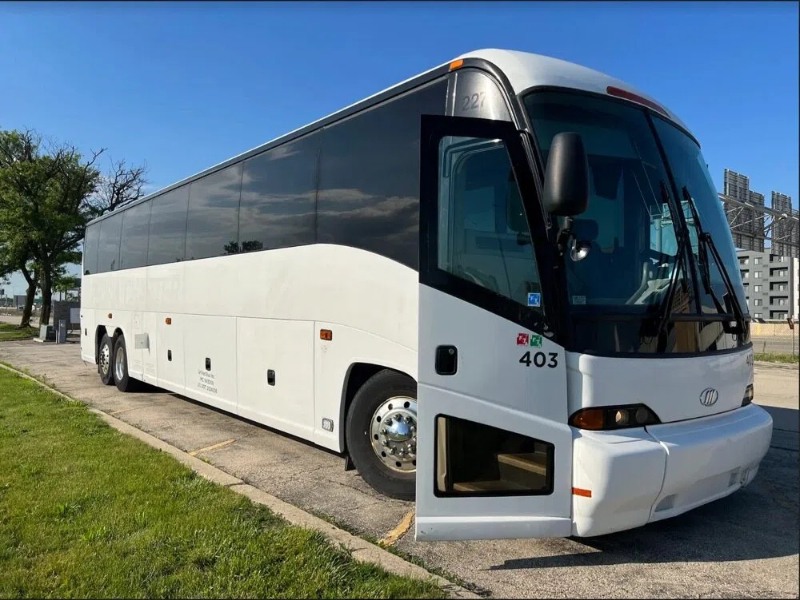
KeyChain, China's leading supplier of used commercial vehicles (keychainauto.com), specializes in high-performance buses and heavy trucks pre-retrofitted for open payments contactless ticketing. Global clients benefit from our turnkey systems, including validators tuned for EMV and local networks. Contact us at +8613572980919 or abbie@keychainventure.com for tailored fleets that slash deployment time and costs. Our Shenzhen-sourced EVs exemplify reliability, ready for immediate worldwide shipping.
Look ahead to QR-EMV hybrids, biometric verification, and IoT-driven predictive pricing. Modular designs ensure 12-year lifespans, while KeyChain's refurbished buses provide affordable entry. Stay competitive by annual kernel updates and rider feedback loops.
Elevate your fleet with proven open payments contactless ticketing systems. Contact KeyChain today at +8613572980919 or abbie@keychainventure.com via keychainauto.com. Secure your high-performance, retrofitted buses and launch seamless transit—start your upgrade now!
Contact us to get more information!
Open payments accept standard bank cards and mobiles without registration, offering flexibility for all riders. Closed systems use agency cards, limiting usability but allowing subsidies. Open boosts casual ridership by 25-30%.
Upfront: $250K-$450K ($2.5K/bus hardware + software). Annual fees: 2-3% of transactions. Most operators recoup via 15% revenue growth within 18 months.
Absolutely—integrated validators thrive in EV fleets like Shenzhen's, with 99.7% reliability. KeyChain supplies pre-equipped models for plug-and-play deployment.
EMV Level 3 certification handles high-speed, high-volume taps securely, preventing fraud via chip authentication. It's the global benchmark for transit.
Deploy multi-reader doors, ceiling mounts, and AI queuing. Successful systems like Sydney's maintain <3s taps, even at 100% capacity.
1. https://bus-news.com/implementing-an-open-payments-contactless-ticketing-system/
2. https://www.keychainauto.com


