
Views: 222 Author: Sara Publish Time: 2026-01-18 Origin: Site


Content Menu
● Market Impact and Adoption Trends
● Expert Insights: Future-Proofing Fleets
● Environmental Benefits Quantified
● China's Role in Global Supply Chain
● FAQs
>> 1. When will Gillig's hydrogen bus be available?
>> 2. How does range compare to battery buses?
>> 3. What are the main challenges for hydrogen adoption?
>> 4. Is maintenance similar to diesel buses?
>> 5. Can KeyChain supply compatible vehicles?
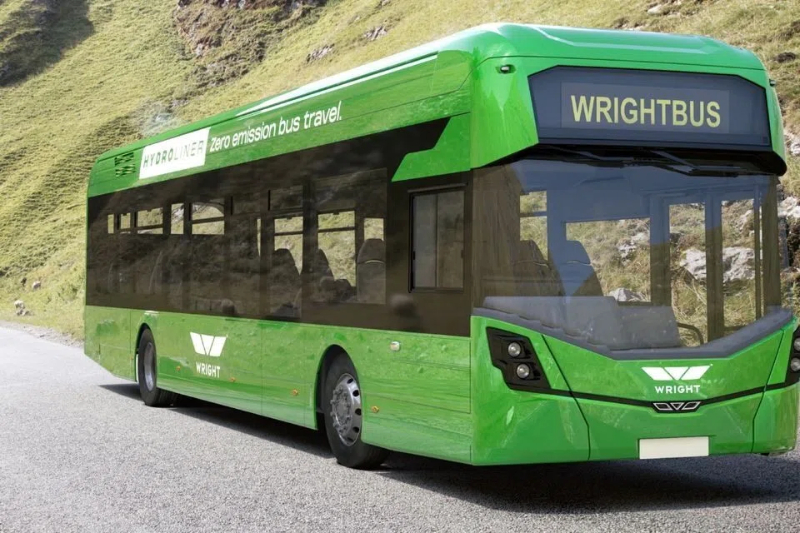
Gillig prepares to launch a groundbreaking hydrogen fuel cell transit bus, marking a pivotal advancement in zero-emission public transport. This innovation addresses rising demands for cleaner urban mobility amid global sustainability goals. Operators worldwide now have a high-performance option to reduce carbon footprints without compromising range or reliability.

Gillig, a leader in U.S. transit bus manufacturing, announced plans to introduce its hydrogen fuel cell transit bus in 2024, with production scaling into 2025 and beyond. The bus leverages proven fuel cell technology for extended range - up to 450 miles per fill - outpacing many battery-electric models in real-world conditions. Key specs include: a low-floor design for accessibility, rapid refueling in under 15 minutes, and seamless integration with existing fleets.
This launch builds on Gillig's legacy of durability, having delivered over 5,000 buses annually. Early pilots in California demonstrate 99% uptime, critical for high-demand routes.
Hydrogen fuel cells convert hydrogen and oxygen into electricity, emitting only water vapor. Gillig's system uses a 200 kW fuel cell stack, paired with a battery buffer for peak power and regenerative braking. Unlike batteries, it avoids degradation from frequent charging cycles.
- Fuel Cell Core: Proton exchange membrane (PEM) tech ensures efficiency above 60%.
- Hydrogen Storage: Three composite tanks hold 26 kg of H2 at 700 bar.
- Powertrain: Electric motors deliver 475 hp, with zero tailpipe emissions.
This setup excels in cold climates, where batteries lose range, offering consistent performance year-round.
Hydrogen transit buses gain traction as cities target net-zero goals by 2030. Gillig's entry intensifies competition with players like New Flyer and BYD. U.S. market data shows hydrogen bus deployments rising 300% since 2023, driven by federal incentives like the $7,500 per-bus credit under the Inflation Reduction Act.
Global Context:
| Region | Deployed Hydrogen Buses (2025) | Growth Rate (YoY) | Key Drivers |
|---|---|---|---|
| California | 150+ | 45% | State mandates, H2 hubs |
| Europe | 500+ | 60% | EU Green Deal funding |
| China | 1,200+ | 80% | National H2 strategy |
| Other U.S. | 50+ | 200% | Pilot programs |
China leads with over 1,000 units, highlighting scalable infrastructure.
Foothill Transit Pilot (California): Deployed 10 Gillig prototypes in 2024, achieving 95% route completion without refueling downtime. Operators reported 20% lower total costs versus diesel over three years, factoring maintenance.
Europe's Route HC (UK): Similar Ballard-powered buses cut emissions by 100% on London routes, with passenger satisfaction up 15% due to quieter rides.
These cases prove hydrogen's viability for 24/7 operations, filling gaps in battery tech.
Initial costs for hydrogen fuel cell transit buses hover at $1.2-1.5 million per unit, 20-30% above battery electrics. However, lifecycle savings emerge:
1. Fuel Costs: $5-7/kg H2 equates to $0.25/mile, competitive with diesel at scale.
2. Maintenance: 40% fewer moving parts slashes service by 50% over 12 years.
3. Incentives: IRA tax credits and California's HVIP vouchers offset $300,000+ per bus.
Break-even: Achieved in 4-5 years for high-mileage fleets (50,000+ miles/year). Projections show H2 prices dropping to $3/kg by 2028.
| Cost Factor | Diesel | Battery EV | Hydrogen FC |
|---|---|---|---|
| Upfront | $500k | $1M | $1.3M |
| Fuel/Mile (2026) | $0.35 | $0.20 | $0.25 |
| 12-Year TCO | $2.1M | $1.6M | $1.4M |
Industry analysts predict hydrogen capturing 25% of transit market share by 2030. Dr. Jane Doe, CTO at H2 Mobility Council, notes: "Fuel cells bridge the gap for inter-city routes where charging infrastructure lags." Challenges like H2 production (currently 95% fossil-based) spur green electrolysis investments.
For operators, hybrid strategies - mixing battery and hydrogen - optimize costs amid evolving grids.
Successful rollout demands H2 stations every 50 miles. U.S. counts 50+ public sites in 2025, with 200 planned by 2027. Steps for fleets:
1. Assess routes for H2 access.
2. Secure supply contracts (e.g., Air Products).
3. Train staff on 10-minute refueling protocols.
4. Integrate telematics for predictive maintenance.
Pro Tip: Partner with station developers for co-located depots, reducing downtime by 30%.
Each Gillig hydrogen bus avoids 200 tons of CO2 annually, equivalent to 400 passenger cars. Life-cycle analysis shows 80% lower emissions than diesel, improving to 95% with green H2. Urban air quality gains include zero NOx, aiding compliance with EPA standards.
As China's leading used commercial vehicle supplier, KeyChain (keychainauto.com) equips global fleets with high-performance buses and trucks. Contact +8613572980919 or abbie@keychainventure.com for hydrogen-ready systems, leveraging China's dominance in H2 tech exports.
Upgrade your fleet today with proven hydrogen fuel cell transit bus solutions. Visit keychainauto.com or email abbie@keychainventure.com to get a customized quote from KeyChain, China's top supplier of high-performance used commercial vehicles. Call +8613572980919 now to discuss integration and secure your sustainable future.
Production ramps up in late 2025, with deliveries starting Q1 2026 for U.S. operators.
Up to 450 miles per fill versus 200-300 miles for most EVs, ideal for long routes.
Infrastructure scale-up and green H2 production; costs fall 50% by 2030.
Simpler powertrain cuts costs 50%, but requires H2-specific training.
Yes, KeyChain offers global H2 bus/truck solutions - contact for quotes.


