
Views: 222 Author: Sara Publish Time: 2025-12-31 Origin: Site


Content Menu
● Understanding Modern Bus Financing
● Why Financing Matters For Both Sides
● Traditional Commercial Vehicle Loans
● Credit Union And Community‑Bank Options
● Government‑Backed And Development‑Focused Financing
● Dealer And Third‑Party Financing Programs
● Leasing: Operating Lease Vs. Finance Lease
● Additional Tools: Lines Of Credit, Grants, And Subsidies
● What Drives The True Cost Of Financing
● Typical Terms And Structures (Quick Overview)
● Practical Preparation Checklist For Buyers
● Techniques To Improve Financing Outcomes
● How Sellers Can Make Financing Easier For Buyers
● Clear CTA: Plan Your Bus Financing Strategy With KeyChain
>> FAQ 1: What documents are usually required to apply for bus financing?
>> FAQ 2: Can smaller organizations such as schools or churches arrange bus financing?
>> FAQ 3: Is it possible to finance used buses as well as new ones?
>> FAQ 4: How do I decide between a loan and a lease for my bus purchase?
>> FAQ 5: What can I do if my credit profile is not strong?
Bus financing can shape the success of every vehicle transaction, from a single shuttle to an entire fleet. Clear, well‑structured financing helps buyers protect cash flow and helps sellers convert more serious leads into completed deals.
Bus financing allows organizations to acquire new or used buses while spreading the cost over time instead of paying everything upfront. Most structures use the bus as collateral and require fixed monthly payments over an agreed term.
Bus financing is widely used by operators such as charter companies, school transportation providers, shuttle services, and tour fleets. For these users, the right financing structure often matters just as much as the technical specification of the vehicle.

Financing influences cash flow, fleet age, and long‑term profitability for buyers, and it strongly affects sales velocity and margins for sellers. When both parties understand financing basics, they can align expectations early and avoid last‑minute surprises.
For buyers, structured financing preserves working capital for fuel, drivers, maintenance, and marketing. For sellers, making financing easy signals professionalism and reduces the risk of losing qualified prospects right at the decision stage.
Most bus deals are built around a small group of well‑understood structures. The right choice depends on ownership goals, credit profile, and how long the bus will stay in service.
Key options include:
- Traditional commercial vehicle loans
- Credit union and community‑bank loans
- Government‑backed financing programs
- Dealer and third‑party lending solutions
- Operating and finance leases
Each of these approaches can be adapted for buyers ranging from small nonprofits to large regional fleets.
A commercial vehicle loan is a fixed‑term agreement where a lender advances the purchase funds and the buyer repays principal and interest over several years. Ownership passes fully to the buyer once the loan is repaid and any security is released.
This type of loan is best suited to organizations planning to run a bus for many years on established routes. Because the bus is a long‑life asset, spreading the cost over its productive life often aligns well with actual revenue.
Credit unions and local banks can be attractive for smaller organizations and regional operators. They may offer competitive rates along with more flexible underwriting for long‑standing customers.
These lenders sometimes consider factors such as donation history, membership stability, or school enrollment when evaluating churches, charities, and education providers. That makes them a strong option for community groups that do not fit perfectly into traditional commercial underwriting models.
In some markets, government‑linked financing programs exist to support equipment purchases or small business expansion. These programs typically involve a private lender whose risk is partially guaranteed by a government agency or development bank.
Such structures often feature longer repayment terms and more favorable interest rates than many standard commercial loans. They can be particularly useful for fleet expansion, depot investment, or upgrading to safer, more efficient buses.
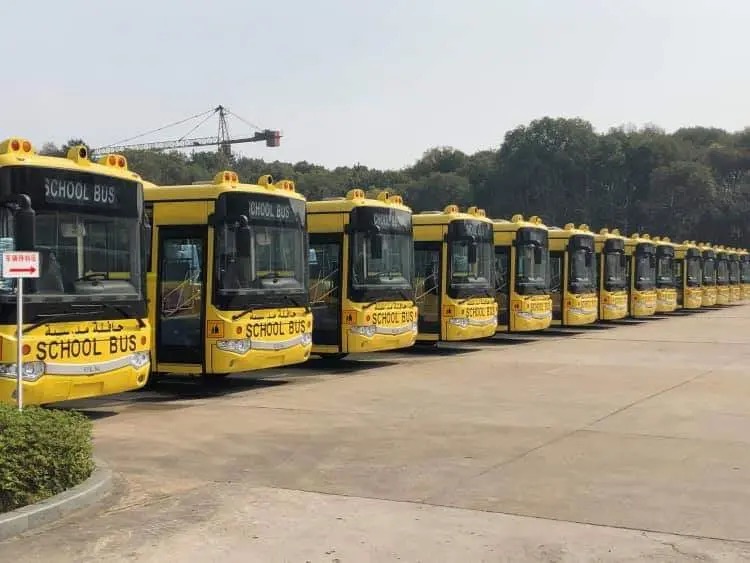
Dealers, brokers, and marketplaces frequently partner with lenders that specialize in commercial vehicles. These lenders understand typical bus lifecycles, resale values, and utilization patterns, which helps them move quickly on applications.
These programs focus on speed, flexibility, and the practical realities of bus operations rather than just generic credit metrics. They are especially useful for buyers who need a rapid decision to secure a specific bus or to meet seasonal demand.
Leasing allows buyers to use a bus for a defined period while making recurring payments, with different options at the end of the term. The two main categories are operating leases and finance leases.
An operating lease is designed around use rather than ownership, often with mileage limits and return conditions at the end. A finance lease is closer to a loan in economic terms and often includes a path to eventual ownership after the final payment.
Beyond standard loans and leases, several tools can help close a financing gap. One example is using a business line of credit to cover deposits, refurbishment, or registration while a longer‑term facility handles the main purchase.
In some segments, buyers may also be able to access grants, subsidies, or targeted funding programs. These mechanisms can reduce the amount that must be financed and improve the economics of upgrading to newer or cleaner buses.
The real cost of financing a bus comes from several interacting factors, not just the interest rate on the contract. Understanding these drivers helps buyers evaluate offers and helps sellers explain proposals transparently.
Key elements include:
- Purchase price and negotiated discounts
- Down payment size and any trade‑in value
- Nominal interest rate and effective annual cost
- Fees for documentation, origination, or early repayment
- Term length and payment frequency
A careful review of all these items prevents buyers from focusing only on the monthly figure while overlooking total lifetime cost.
The table below summarizes typical ranges that many bus buyers encounter. Actual terms will always depend on lender policy, credit strength, and vehicle characteristics.
Structure type | Upfront payment range | Common term range | End-of-term position | Typical use-case |
Commercial vehicle loan | Moderate down payment | Medium to long term | Full ownership | Long-term fleet assets |
Credit union / local bank loan | Similar or slightly flexible down payment | Short to medium term | Full ownership | Community and nonprofit users |
Government-backed facility | Structured contribution from buyer | Long term | Full ownership | Expansion and development projects |
Dealer / specialist lender loan | From low to moderate upfront cost | Short to long term | Full ownership | Fast decisions and tailored structures |
Operating lease | Lower initial cash outlay | Medium term | Return or upgrade | Flexible fleets and trial routes |
Finance lease | Low to moderate initial cost | Medium term | Path to ownership | Ownership with smoother cash flow |
Preparing early can turn a complex financing process into a controlled, predictable project. A short planning phase before shopping for vehicles makes negotiations easier and speeds up approvals.
Recommended steps:
1. Define operational needs. Clarify route types, passenger loads, and daily mileage so the bus specification aligns with real‑world use.
2. Set a realistic budget. Include taxes, registration, compulsory insurance, and any export or import expenses in addition to the purchase price.
3. Plan the down payment. Decide how much capital you can allocate without compromising working capital for daily operations.
4. Choose a preferred structure. Decide early whether you value long‑term ownership, flexibility, or minimal initial outlay more.
5. Prepare documentation. Collect financial statements, bank records, fleet information, and business registrations in advance.
This preparation shows lenders that the buyer is organized and reduces time‑consuming back‑and‑forth during underwriting.
Experienced buyers often apply a few repeatable techniques across all major vehicle purchases. These practices can improve approval chances and reduce total cost across a bus fleet.
Helpful techniques include:
- Presenting a clear business case that links the bus to revenue‑generating contracts or routes.
- Comparing multiple offers rather than accepting the first approval letter received.
- Negotiating both price and financing at the same time instead of in isolation.
- Matching repayment schedules to the seasonality of ticket sales or charter contracts.
By standardizing these methods, even smaller organizations can approach financing like a professional fleet operator.
Sellers who support buyers through financing inquiries often see higher conversion rates and stronger repeat business. This is particularly true when selling to international customers who must manage both vehicle selection and cross‑border payment flows.
Effective seller actions include:
- Mentioning that financing or external lender support is available in listings and marketing materials.
- Providing detailed technical specifications, maintenance records, and clear photos to facilitate lender review.
- Coordinating communication between the buyer and recommended lenders without pressuring either side.
- Helping buyers start pre‑qualification or pre‑approval early in the sales conversation.
These steps position the seller as a partner in solving the buyer's transport problem rather than just a source of vehicles.
There are several recurring mistakes that both new and seasoned buyers tend to make when arranging bus financing. Recognizing them early can save time, reduce stress, and prevent unnecessary cost.
Frequent pitfalls include:
- Waiting until a specific bus has been selected before learning basic financing requirements.
- Comparing only headline interest rates and ignoring fees or balloon payments.
- Assuming all lenders treat older or imported buses the same way.
- Underestimating insurance, regulatory, and compliance costs associated with commercial passenger transport.
Avoiding these traps helps keep projects on schedule and prevents last‑minute deal failures.
Successful bus deals combine the right vehicle with the right financing structure and a realistic implementation timeline. Choosing a partner that understands both commercial vehicles and financing expectations across different regions reduces risk and shortens your path to deployment.
If you are planning to upgrade or expand your bus fleet, now is the ideal moment to organize your financing strategy. Reach out to KeyChain's sales and support team to discuss your routes, budget, and timeline, and receive tailored guidance on suitable loan, lease, or hybrid structures that align with your operational goals.
Lenders commonly request business registration details, identification for owners, recent financial statements, bank records, and information about existing vehicles and contracts. Having these items ready at the start of the process speeds up both review and approval.
Yes, many smaller organizations arrange financing successfully through local banks, credit unions, or specialist lenders. Clear budgeting, a stable financial history, and realistic expectations about vehicle size and price all help in obtaining an approval.
Used buses are regularly financed, especially when they have verifiable maintenance histories and suitable mileage for the intended duty cycle. Some lenders may adjust terms or down‑payment requirements depending on the age, condition, and configuration of the vehicle.
A loan is often appropriate when you plan to keep a bus in service for many years and want full ownership at the end of the term. A lease may be better when you value flexibility, lower initial cash outlay, and the option to refresh vehicles more frequently as routes or regulations change.
Buyers with weaker credit profiles still have options, though terms may be stricter or more expensive. Improving documentation, considering a larger down payment, adding a co‑signer, or working with a specialist commercial‑vehicle lender can all help move an application forward.


