
Views: 281 Author: Keychain Venture Publish Time: 2026-08-15 Origin: Site


Content Menu
● Why Roadside Assistance Matters for Used Dump Trucks
● What a Commercial Truck Roadside Assistance Plan Should Include
>> Essential Support Services to Verify
>> Dump-Truck-Specific Support Requirements
● Safe Roadside Breakdown Procedures for Drivers
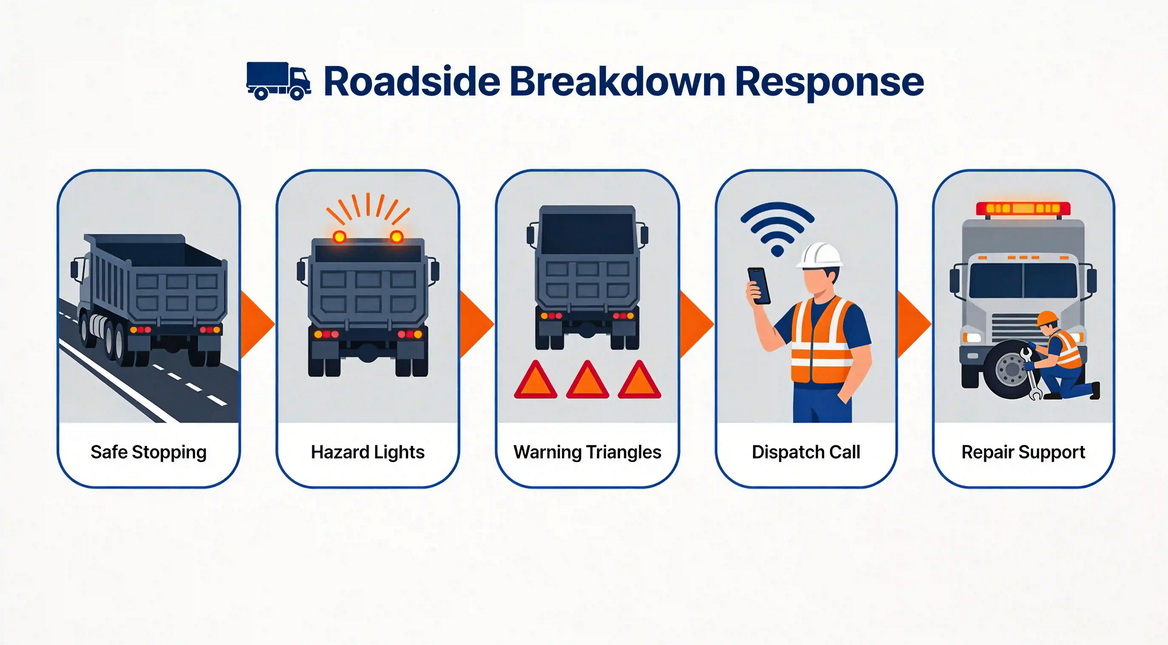
>> Five Steps to Follow During a Breakdown
● Preventive Maintenance: The Strongest Uptime Strategy
>> Daily Pre-Trip Inspection Checklist
>> Turning Maintenance Records Into Better Decisions
● Roadside Readiness for New Energy Commercial Vehicles
>> Questions to Ask Before Operating New Energy Vehicles
● How to Evaluate a Used Dump Truck Before Purchase
>> Used Dump Truck Buyer Checklist
● Build a More Reliable Fleet With KeyChain
>> Does roadside assistance come with every used dump truck?
>> What information should a driver give to a roadside assistance dispatcher?
>> Can a heavy-duty dump truck be towed while loaded?
>> What is the best way to reduce dump-truck breakdowns?
>> Is roadside support different for electric commercial vehicles?
Buying a used dump truck is not only about payload, engine condition, or purchase price. Roadside assistance planning is equally important because a breakdown can interrupt projects, delay deliveries, expose drivers to roadside risk, and create unplanned repair costs.
For contractors, fleets, distributors, and owner-operators purchasing used heavy-duty trucks, the right approach combines dependable vehicle specifications, preventive maintenance, clear emergency procedures, and access to qualified roadside repair support.

A used dump truck can be a cost-effective way to expand a fleet. However, a lower acquisition cost should never mean a lower standard for operational readiness. In construction, mining, municipal hauling, and bulk-material transport, the real value of a truck depends on its ability to work consistently.
A roadside assistance plan helps protect that uptime. It gives drivers and fleet managers a clear route to support when a truck suffers a tire failure, battery issue, hydraulic fault, engine warning, air-brake problem, or mechanical breakdown.
For heavy-duty vehicle buyers, roadside readiness should be treated as part of the complete vehicle solution—not as an optional afterthought.
A practical plan should answer several important questions:
- Who can provide support after a breakdown?
- Is assistance available 24 hours a day?
- Can the provider handle heavy-duty towing?
- Is mobile repair available before towing is required?
- What happens if the truck is loaded?
- Who approves emergency repair costs?
- Which services are excluded from the plan?
- Can local service partners support the truck after export delivery?
Downtime is more than a repair issue. It can lead to missed deliveries, project delays, additional labor costs, cargo disruption, dissatisfied customers, and reduced fleet utilization.
Commercial roadside support differs significantly from standard passenger-car assistance. A dump truck may require specialized recovery equipment, a technician familiar with heavy-duty systems, tire support for large wheels, and access to appropriate repair parts.
Before purchasing a used dump truck, buyers should request a clear written explanation of the service scope.
| Service Area | What Buyers Should Confirm | Why It Matters |
|---|---|---|
| 24/7 dispatch | Hours of operation, languages, communication channels, and coverage regions | Truck problems can occur outside normal working hours |
| Heavy-duty towing | Weight limits, axle configuration, loaded-truck policy, and recovery capability | Dump trucks need equipment designed for commercial vehicles |
| Mobile repair | Technician qualifications, diagnostic tools, and response availability | Some faults can be repaired without moving the vehicle |
| Tire assistance | Tire sizes supported, roadside fitting, and supplier network | Tire damage can stop a truck immediately |
| Battery and electrical support | Jump-starting, battery replacement, and electrical diagnosis | Electrical problems affect both diesel and electric vehicles |
| Fuel and fluid support | Availability of fuel, coolant, oil, and diesel exhaust fluid | Prevents extended downtime from avoidable shortages |
| Repair authorization | Emergency spending limits and approved decision-makers | Helps control unexpected maintenance expenses |
| Driver support | Driver transport, alternate equipment, or cargo recovery options | Helps maintain delivery and project commitments |
Do not assume that a roadside plan includes every service listed above. Coverage may have limits related to truck age, vehicle weight, location, towing distance, component exclusions, accident recovery, or off-road access.
Dump trucks work in demanding environments. Construction sites, quarries, mines, and unpaved roads can create operating conditions that differ from ordinary highway freight transport.
A roadside support plan for dump trucks should consider:
- Hydraulic hose leaks and cylinder failures
- PTO and hydraulic pump faults
- Air-brake leaks and compressor issues
- Tire damage from rocks, debris, and rough surfaces
- Cooling-system problems during high-load operation
- Electrical connector faults caused by vibration or moisture
- Vehicle recovery from job sites, gravel roads, and restricted-access areas
- Towing requirements for loaded or partially loaded trucks
A provider may be able to tow a truck from a highway shoulder but may not be able to recover it safely from an active construction zone or quarry. Confirm site-access capability in advance, especially when vehicles operate away from paved roads.
Roadside assistance is most effective when drivers follow a clear safety routine. Fast dispatch is valuable, but safe action during the first minutes of a breakdown is equally important.
When a commercial vehicle stops on a highway or shoulder because of a mechanical issue, the driver should activate hazard warning lights and use approved warning devices according to applicable local regulations and operating conditions.
1. Move to the safest available position.
If the truck can be moved safely, pull away from active traffic as far as conditions allow. Avoid sudden movements or unsafe stopping locations.
2. Activate hazard warning lights immediately.
Make the vehicle visible to approaching traffic before beginning any further checks.
3. Protect the area around the truck.
Place warning triangles or other approved warning devices as required. Drivers should avoid standing between the truck and moving traffic.
4. Provide complete details to the dispatcher.
Share the truck model, chassis number, current location, direction of travel, load status, visible symptoms, dashboard warning lights, tire size, and any safety hazards.
5. Document the incident after support arrives.
Record the problem, repair actions, replacement parts, downtime, repair cost, and any repeat faults. These records support stronger maintenance decisions later.
A simple emergency card inside the cab can make this process faster. It should include dispatch contacts, fleet-management contacts, insurance information, truck identification details, preferred repair providers, towing instructions, and emergency approval limits.
The best roadside assistance program is supported by strong preventive maintenance. Roadside service is important, but it should not replace daily inspections, scheduled maintenance, driver reporting, or repair planning.
Used commercial trucks should be inspected carefully before delivery and maintained through a structured schedule after they enter service.
Before each shift, drivers and maintenance teams should check the following areas:
- Tire pressure, tread condition, sidewall damage, and wheel fasteners
- Brake response, air pressure, hoses, and visible air leaks
- Engine oil, coolant, fuel, and diesel exhaust fluid levels
- Battery terminals, cables, lights, and dashboard warning indicators
- Hydraulic hoses, cylinders, pumps, and dump-body controls
- Steering response, mirrors, horn, wipers, and camera systems
- Trailer connections and coupling equipment, where applicable
- Fire extinguisher, reflective triangles, first-aid kit, and personal protective equipment
- Fluid leaks, unusual vibration, smoke, overheating, or abnormal noise
Drivers should report defects immediately. Small issues can become major failures when they are ignored, especially in high-load dump-truck applications.

Maintenance documents should not be treated as paperwork only. They can reveal patterns that help fleet managers make better operating and purchasing decisions.
For example, repeated overheating incidents may point to more than low coolant. The root cause could involve radiator contamination, fan operation, heavy duty cycles, incorrect coolant type, restricted airflow, excess vehicle loading, or an engine-management issue.
Likewise, repeated tire failures may suggest jobsite hazards, improper inflation, overloading, alignment problems, or unsuitable tire selection.
A useful maintenance record should connect:
- Daily inspection findings
- Driver defect reports
- Repair invoices
- Diagnostic fault codes
- Replacement parts
- Tire and brake history
- Downtime hours
- Repeat failures
- Operating conditions and load patterns
This information creates a more complete picture of vehicle condition and can help reduce future roadside incidents.
Electric trucks, electric buses, hybrid commercial vehicles, and other new energy models can help fleets modernize their operations. However, their roadside support requirements may differ from traditional diesel vehicles.
High-voltage systems, battery packs, charging equipment, and vehicle-specific recovery procedures require preparation before a vehicle enters service.
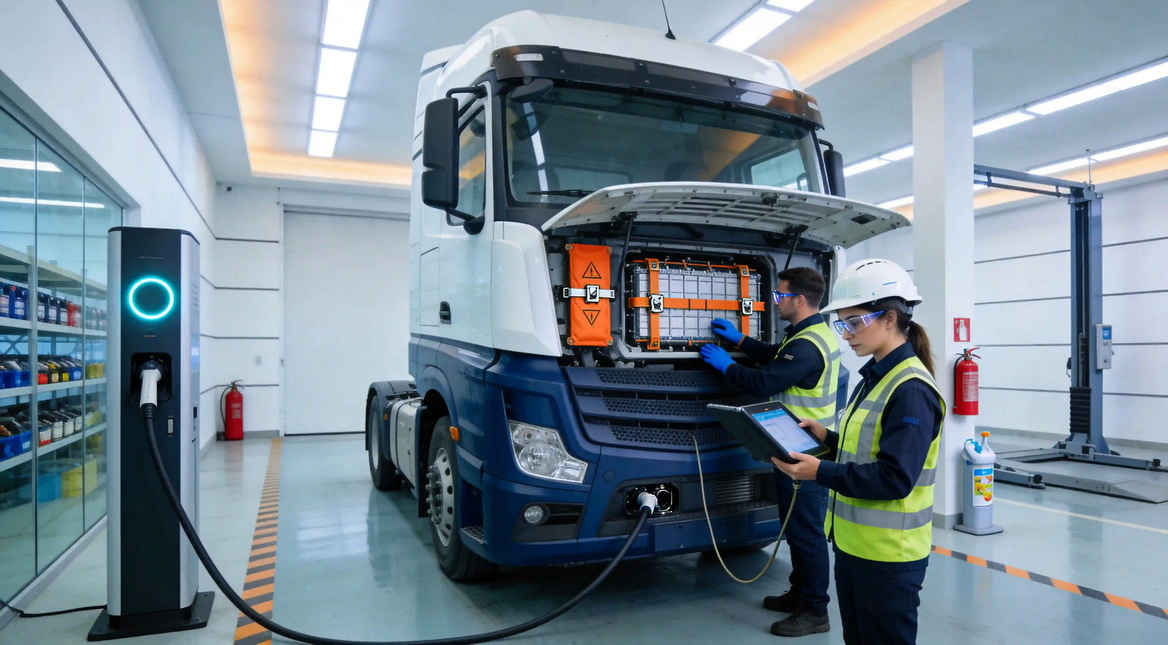
- Is the roadside provider trained to work safely around high-voltage components?
- Does the towing company understand the manufacturer's transport instructions?
- Is there a process for battery isolation after a collision, fire, or water exposure?
- Are charging locations available along the intended operating routes?
- Can local technicians access suitable diagnostic equipment?
- Are approved replacement parts available in the destination market?
- Who is authorized to inspect the vehicle after a high-voltage incident?
High-voltage repairs should never be improvised at the roadside. Drivers should secure the vehicle, follow the manufacturer's emergency instructions, contact qualified assistance, and avoid damaged electrical components or exposed high-voltage cables.
For export buyers, it is especially important to confirm local technical capability, charging infrastructure, spare-parts availability, and towing procedures before delivery.
Roadside support should strengthen a reliable truck purchase—not compensate for a poorly inspected vehicle. A detailed evaluation before purchase helps buyers identify potential risks and plan maintenance more effectively.
| Inspection Category | Questions to Ask |
|---|---|
| Vehicle identification | Is the chassis number verified and matched with the available documentation? |
| Engine and drivetrain | Are service records, diagnostic reports, leak checks, and transmission inspections available? |
| Chassis and suspension | Is there corrosion, frame damage, abnormal wear, or evidence of poor repair work? |
| Tipping body and hydraulics | Does the body lift smoothly? Are cylinders, hoses, PTO systems, and pumps functioning correctly? |
| Tires and brakes | What is the remaining tire life? Are brake components and air systems in suitable condition? |
| Electrical system | Are lights, wiring, batteries, sensors, and warning indicators functioning correctly? |
| Export preparation | Are manuals, spare-parts lists, technical documents, and shipment requirements available? |
| Service preparation | Can the buyer obtain technical guidance, parts, and qualified repair support after delivery? |
A reliable supplier should discuss both vehicle strengths and service limitations clearly. Buyers should be cautious when a seller promises extensive after-sales support without explaining spare-parts availability, repair procedures, local service capability, or response responsibilities.
KeyChain supplies and exports high-quality dump trucks, buses, heavy-duty trucks, and new energy vehicles for domestic and international customers. Our approach focuses on helping customers select commercial vehicles that match their payload requirements, operating environment, route conditions, and long-term maintenance needs.
A practical vehicle-support preparation package can include:
- Vehicle configuration guidance based on operating needs
- Pre-delivery inspection and condition documentation
- Initial spare-parts recommendations
- Maintenance and driver-operation guidance
- Technical documents for the applicable vehicle configuration
- Service-readiness planning for diesel and new energy commercial vehicles
- Consultation on local service and parts requirements in the destination market
A dependable commercial vehicle begins with the right specification, continues with disciplined maintenance, and is protected by a practical roadside response plan. KeyChain is ready to help customers identify the right dump truck, heavy-duty truck, bus, or new energy vehicle solution for their operating requirements.
Not always. Coverage depends on the seller, dealer, insurer, or service provider. Buyers should request written confirmation of the coverage duration, included services, exclusions, towing limits, vehicle eligibility, and operating regions.
The driver should provide the exact location, truck model, chassis number, vehicle weight, load status, visible fault, dashboard warning lights, tire size, road conditions, and any safety risks around the truck.
It may be possible, but the decision depends on the truck's weight, axle configuration, load condition, road access, recovery equipment, local regulations, and site safety requirements. Always tell the dispatcher if the vehicle is loaded.
Daily inspections, timely repair of reported defects, correct loading, scheduled maintenance, tire monitoring, clean cooling systems, and accurate driver reports are among the most effective ways to reduce unplanned downtime.
Yes. Electric and new energy vehicles may require high-voltage safety procedures, specialized towing methods, trained technicians, vehicle-specific emergency guidance, and careful battery inspection after an incident.
1. Penske Used Trucks to Offer Roadside Assistance Plan https://www.gopenske.com/blog/used-trucks/penske-used-trucks-to-offer-roadside-assistance-plan/)
2. Understanding the True Cost of Downtime for Fleets — Penske Truck Leasing https://www.pensketruckleasing.com/resources/resource-library/cost-of-downtime/)
3. Vehicle Inspections — Federal Motor Carrier Safety Administration https://csa.fmcsa.dot.gov/safetyplanner/MyFiles/SubSections.aspx?ch=22&sec=65&sub=148)
4. Emergency Warning Devices for Stopped Commercial Motor Vehicles — Federal Motor Carrier Safety Administration https://csa.fmcsa.dot.gov/safetyplanner/MyFiles/SubSections.aspx?ch=23&sec=68&sub=168)
5. Driver Vehicle Inspection Report Guidance — Federal Motor Carrier Safety Administration https://www.fmcsa.dot.gov/safety/question-25-section-39611-requires-driver-completion-each-days-work-prepare-written-report)
6. Emergency Response Guides for Electric Vehicles — National Highway Traffic Safety Administration https://www.nhtsa.gov/emergency-response-guides


