
Views: 222 Author: Keychain Venture Publish Time: 2026-05-16 Origin: Site


The history of the school bus is really the story of how we decided that children's safety in daily transportation is non‑negotiable, and why today's operators—especially those buying second hand buses—carry such a heavy responsibility. Writing as a long‑time commercial vehicle consultant working with global buyers of used buses and coaches, I have seen how lessons from 140+ years of school transportation now shape decisions about vehicle selection, refurbishment, and fleet upgrades worldwide.
A modern school bus is any dedicated vehicle owned or contracted by an education authority to transport students to and from school or school‑related activities. In North America, that usually means the iconic yellow, high‑floor bus with specific construction and safety standards; in other regions, it may be a coach or city bus repurposed for school duty but still configured around pupil safety.
Key characteristics include:
- Clearly marked school transport livery and signage.
- High‑visibility color schemes and lighting systems.
- Reinforced body structure and compartmentalized seating.
- Operating rules that prioritize safe boarding, alighting, and roadside behavior.
From a fleet buyer's perspective, a school bus is not "just another used bus"; it is a safety platform with a very specific duty cycle, often making many short trips packed with young passengers in dense urban traffic or on rough rural roads.
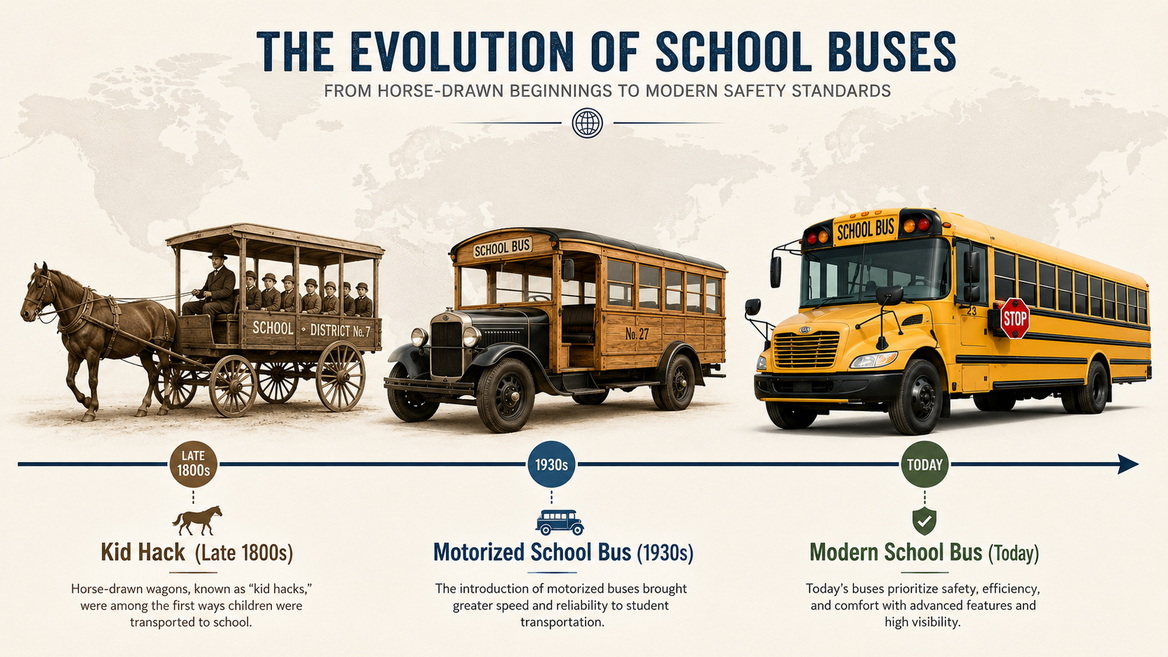
In the late 19th century, many rural children walked miles on muddy tracks or rode farm wagons to reach scattered schoolhouses. As compulsory education laws spread across U. S. states, local authorities needed a consistent way to move pupils, giving rise to the first school transportation solutions.
- Horse‑drawn wagons known as "kid hacks" or "school wagons" began to appear in the late 1800s.
- Early designs used perimeter wooden benches, open sides, and rear entry so horses would not be startled.
These primitive vehicles were far removed from modern standards, yet they introduced the central idea that dedicated pupil transport is part of delivering education, not an optional extra.
In 1892, Indiana‑based Wayne Works produced one of the first purpose‑built "school cars," still horse‑drawn but designed specifically for children, with a dedicated body and rear entrance. By 1914, the company moved to motorized versions, combining early automotive chassis with a bus‑style body, and became a dominant manufacturer in the emerging school bus market.
For today's used‑bus buyers, these early innovations are more than historical trivia: they established the basic layout, rear emergency exits, and pupil‑focused interior that still define school bus design.
In the 1920s, Georgia dealer Albert Luce Sr. mounted a wooden bus body on a Ford truck frame to serve school districts, but rural roads quickly revealed the limits of wood‑only structures. To solve the durability problem, he added a steel frame under the wooden body, significantly improving strength and longevity, a step that led to the founding of Blue Bird and changed bus body engineering.
By the 1950s:
- Buses shifted to heavier‑duty truck chassis to increase seating capacity.
- Transit‑style bodies grew in length and height, carrying 70–90 students per trip.
- The first diesel‑engined and tandem‑axle school buses entered service to meet rising demand.
From an industry expert's viewpoint, this era marks the transition from adapted trucks to true, long‑life bus platforms, creating the structural backbone that still underpins many second hand school buses in circulation today.
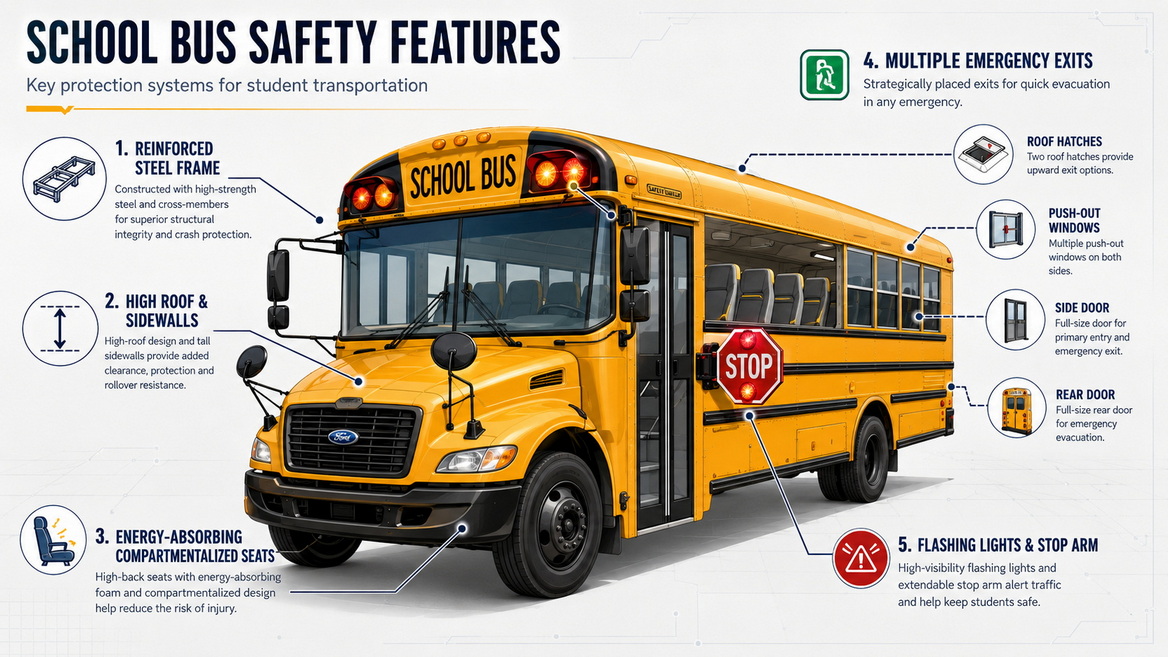
Modern school buses in the U. S. and many other markets are often described as the safest form of surface transportation for children, thanks to layers of design standards and regulations developed over decades. These safety components include:
- High, strong sidewalls and rollover‑resistant frames.
- Compartmentalized seating with closely spaced, energy‑absorbing seat backs.
- Multiple emergency exits (rear door, side doors, roof hatches, and windows).
- Flashing lights, stop arms, and high‑visibility color schemes for roadside safety.
Regulators and engineers learned from early accidents that children are safest when the vehicle itself absorbs impact energy, rather than relying solely on restraints. This is why many school buses emphasize compartmentalization, reinforced shells, and speed control, especially at low‑speed urban operation.
Hardware alone is not enough; over time, school districts implemented strict operational rules, driver training, and inspection programs. Daily pre‑trip checks, scheduled maintenance, and periodic overhauls have become standard, keeping buses in service for long lifecycles that often extend into the second‑hand market.
For used‑vehicle exporters like KeyChain, this history translates into a practical advantage: ex‑school buses are often well‑maintained, low‑speed, and structurally robust, making them an excellent base for refurbishment and repurposing.
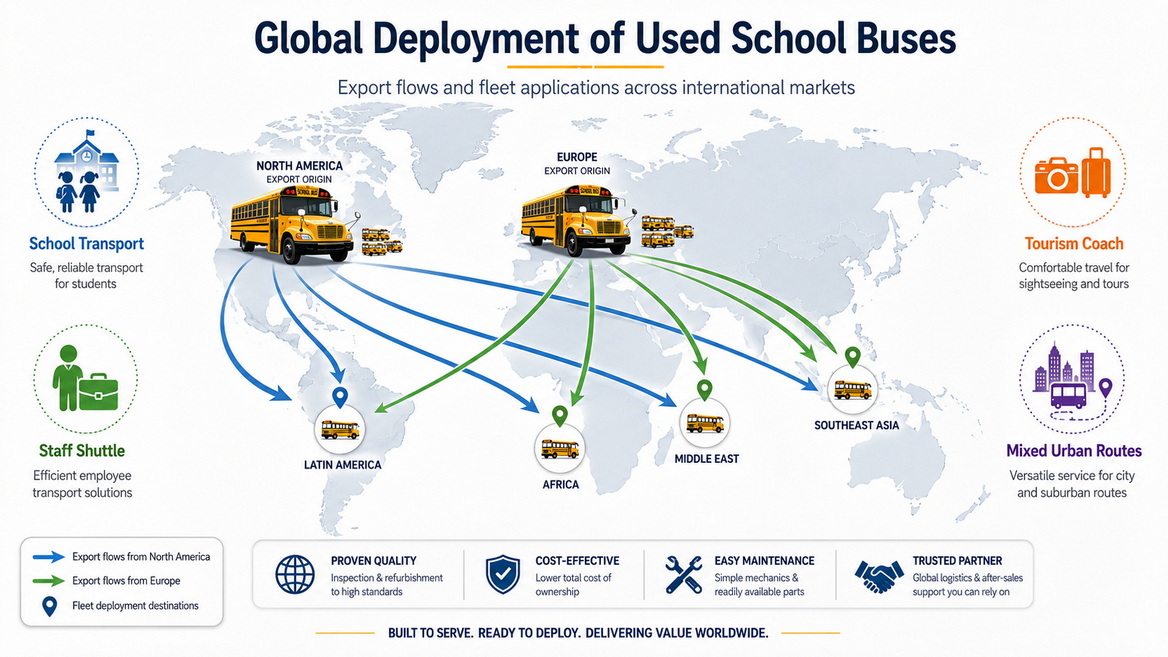
As education systems expanded globally, the concept of a dedicated school bus spread far beyond North America. In many countries, operators adapted city buses, intercity coaches, and mid‑buses for school runs, importing proven safety features such as reinforced structures, emergency exits, and high‑visibility paint schemes.
In my consulting work with buyers in Africa, the Middle East, Southeast Asia, and Latin America, I have observed three common patterns:
- Imported used buses from established markets provide a cost‑effective starting point.
- Local regulations and road conditions require custom configuration of seating, doors, and climate systems.
- Operators increasingly ask for documented maintenance records and refurbishment reports before committing to a vehicle.
This is precisely where professional refurbishers and exporters add value, bridging the gap between historical design intent and the real‑world needs of modern school and staff transport programs.
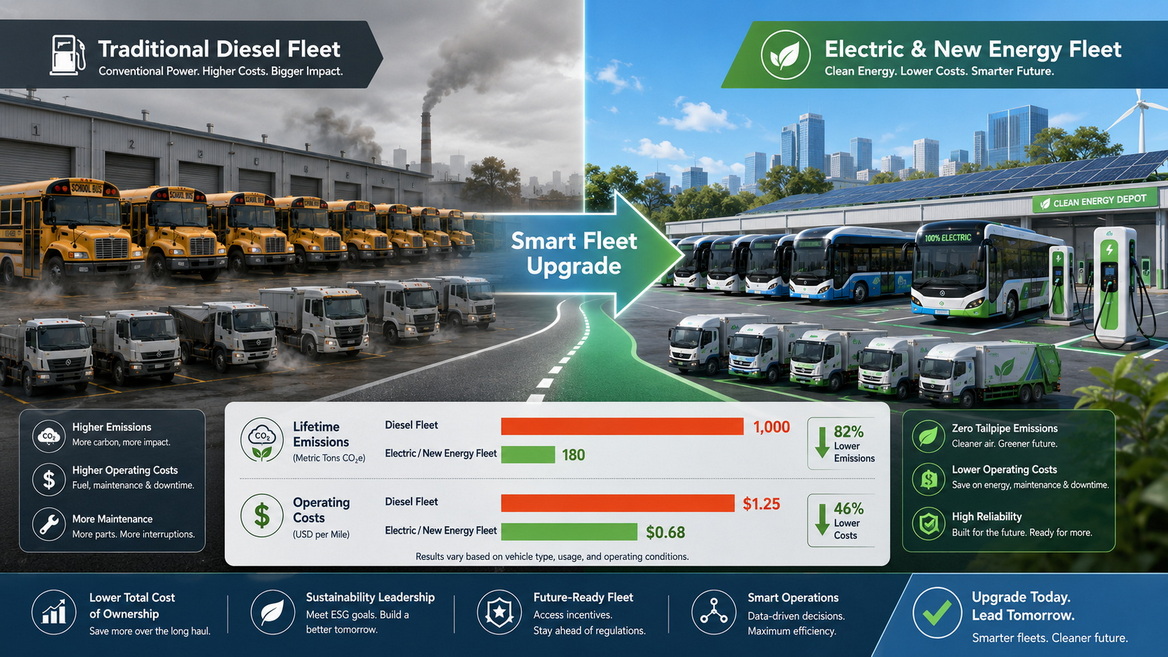
Today, school transportation faces a new challenge: reducing emissions without sacrificing safety or affordability. Many governments are pushing fleets toward cleaner diesel, natural gas, hybrid, and fully electric buses, often starting with school and municipal vehicles because of their public visibility and predictable routes.
As a result:
- New school buses increasingly feature low‑emission or zero‑emission drivetrains.
- Charging and depot infrastructure is being planned around fixed, repetitive school routes.
- Fleet managers must balance upfront cost, long‑term fuel savings, and residual value.
For buyers in developing markets, brand‑new electric school buses can still be financially out of reach. However, high‑quality, second hand school buses and other commercial vehicles—especially those with newer emissions technology—offer a pragmatic path to safer and cleaner fleets when paired with professional refurbishment.
Companies like KeyChain focus on:
- Selecting well‑maintained used buses and coaches from reputable fleets.
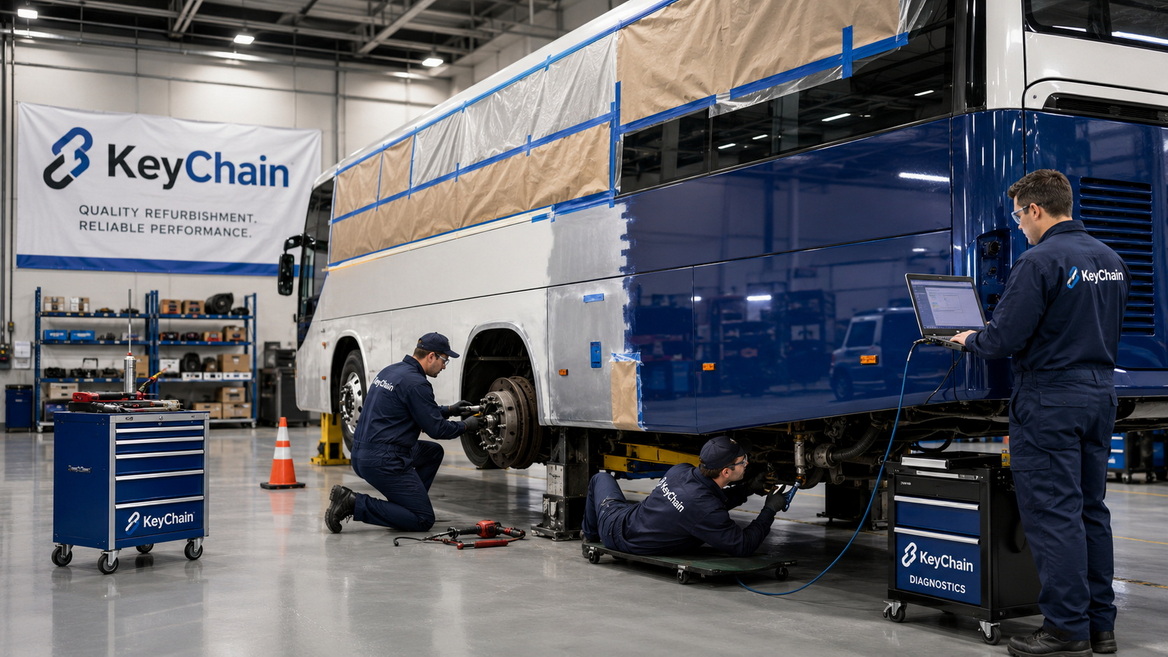
- Refurbishing key systems such as brakes, suspension, electronics, and interiors to near‑new standards.
- Guiding customers on when to opt for modern diesel, when to consider gas conversions, and how to plan for future NEV upgrades in their fleet mix.
As electrification accelerates in major markets, a new wave of used new‑energy vehicles (NEVs)—from electric city buses to hybrid coaches—will flow into the second‑hand channel, creating fresh opportunities for cost‑effective, lower‑emission school and staff transport solutions worldwide.
Drawing on more than a century of school bus development and my own experience supporting international buyers, there are several practical takeaways for organizations evaluating used buses for school, staff, or mixed transport:
1. Start with structure and safety
- Inspect the frame, pillars, roof bows, and floor for corrosion or collision repair.
- Confirm the functionality of all emergency exits, lighting, and braking systems.
2. Understand the original duty cycle
- Ex‑school buses usually come from low‑speed, high‑frequency routes, which is ideal for structural health but may mean high door cycles and more wear on suspension and steering.
3. Plan refurbishment strategically
- Prioritize brakes, steering, suspension, and tires for immediate upgrade.
- Refresh interior seating, flooring, and HVAC to match the comfort level your passengers expect.
4. Align with local regulations
- Ensure seat configuration, door placement, and safety equipment meet your national and regional standards.
- For cross‑border operations, plan for inspection and certification in all jurisdictions.
5. Look at total cost of ownership
- Factor in fuel or energy costs, maintenance, expected service life, and resale value.
- Consider whether a high‑quality second hand diesel bus today positions you to move more easily into NEVs tomorrow.
Professional exporters and refurbishers like KeyChain use structured inspection and maintenance workflows to help buyers navigate these decisions and avoid costly surprises.
As a specialized Chinese supplier and exporter of second hand buses, high‑quality coaches, heavy‑duty trucks, and new energy vehicles, KeyChain has built its process around many of the principles first proven in school transportation.
From an insider's perspective, three elements stand out:
- Rigorous technical inspection
Every vehicle undergoes a detailed assessment of its chassis, braking system, suspension, driveline, and electronic components before it is approved for export or redeployment.
- Targeted refurbishment and upgrades
Priority systems—especially brakes, steering, suspension, and safety electronics—are overhauled or upgraded to meet contemporary standards, extending economic life while preserving safety margins.
- Application‑driven configuration
Whether the end use is school transport, intercity coach routes, staff shuttles, or heavy cargo, configurations are adjusted to match route profiles, passenger density, and local regulatory requirements.
By combining the long‑proven safety DNA of school buses with professional refurbishment standards, KeyChain helps operators in developing and developed markets alike to build fleets that are safer, more reliable, and better aligned with future energy transition plans.
If you are planning your next fleet upgrade—whether for school transport, staff shuttles, tourism, or heavy‑duty logistics—the history of the school bus offers a clear message: invest in vehicles with proven safety, solid structure, and responsible maintenance, then manage them with discipline and care.
KeyChain stands ready to help you:
- Source structurally sound, high‑quality second hand buses and heavy trucks.
- Design refurbishment plans around your specific routes, regulations, and budget.
- Plan a realistic roadmap from conventional diesel to new energy vehicles without compromising safety.
To discuss your requirements or request current stock lists, you can reach out to KeyChain's team of commercial vehicle specialists through the company's official channels. A short conversation today can lay the foundation for a safer, more efficient fleet over the coming decade.
School buses are built with reinforced structures, compartmentalized seating, multiple emergency exits, and high‑visibility external features, all governed by strict safety standards and inspection regimes.
When they have verified maintenance histories and undergo professional refurbishment of critical systems, second hand school buses can offer high structural safety and good value compared with newly built, lower‑spec vehicles.
Service life depends on original build quality, operating environment, and maintenance, but with proper inspections and component replacement, many buses can deliver several additional years of reliable, safe operation.
The answer depends on your budget, charging infrastructure, and route patterns; for some fleets, high‑quality second hand diesel or gas buses are a realistic intermediate step toward future NEV adoption.
Focus on structural integrity, braking and steering performance, documented maintenance, compliance with your local regulations, and the refurbisher's process for inspecting and upgrading key safety components.
1. BusBoss. "Exploring the Fascinating History of School Buses." https://www.busboss.com/blog/history-of-school-buses
2. Onspot Blog. "The school bus: A history of safety and innovation." https://intblog.onspot.com/en-us/the-school-bus-a-history-of-safety-and-innovation
3. Wikipedia. "School bus." https://en.wikipedia.org/wiki/School_bus
4. SFS School Bus Safety. "History of School Bus Safety — Why Are School Buses Built as They Are?" http://www.sfschoolbus.org/sbhistor.pdf
5. Smithsonian Magazine. "A Brief History of the School Bus." https://www.smithsonianmag.com/innovation/history-school-bus-180980554/
6. KeyChain / KCV. "High‑Quality Used Bus Exporter & Commercial Vehicle Supplier." https://www.keychainauto.com
7. KeyChain / KCV. Product and refurbishment pages. https://www.keychainauto.com/cooper.html
8. KeyChain marketplace and listings. https://www.facebook.com/groups/busandcoachtrader/posts/1821444871789183/


