
Views: 222 Author: Keychain Venture Publish Time: 2026-05-15 Origin: Site


As someone who has helped churches and faith-based organizations set up and operate bus ministries over the last decade, I've seen firsthand that clear rules and regulations are the difference between a safe, sustainable transportation ministry and one accident that changes everything.
Whether your church runs a 15‑passenger van, a mid‑size shuttle, or a full‑size coach, operating a church bus in the United States means you're stepping into the world of commercial transportation regulations, insurance expectations, and community trust. This guide takes the original "rules and regulations for driving a church bus" content and expands it with expert insights, updated references, and practical checklists you can apply immediately to your ministry.
From my perspective as both an industry consultant and a regular rider on church buses, the goal is simple: keep your people safe, keep your church compliant, and build a transportation program you can confidently scale—whether you operate traditional diesel buses, second‑hand coaches, or newer clean‑energy vehicles.
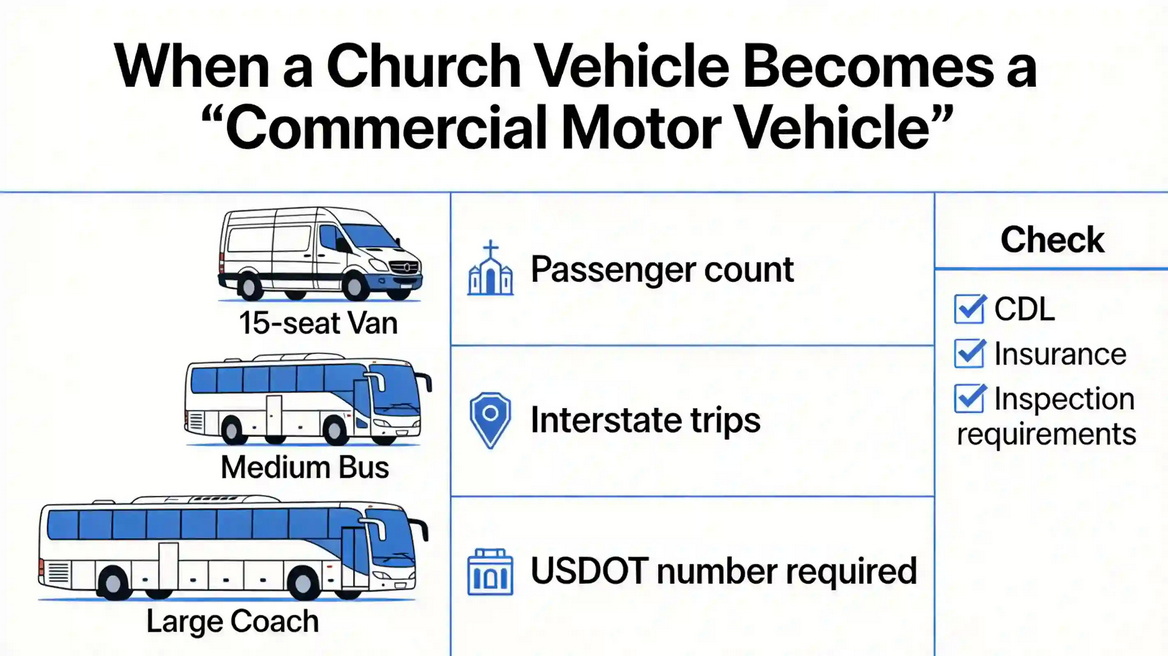
Most churches underestimate when they "cross the line" into commercial-style regulation. Any church that operates larger vehicles or transports groups regularly needs to treat its buses like a professional fleet.
Key situations where regulations usually apply:
- Transporting 16 or more people (including the driver) in one vehicle
- Operating a bus that crosses state lines for retreats, camps, or conferences
- Using a vehicle that fits the federal definition of a commercial motor vehicle
- Receiving compensation or charging fees for transportation services
From an expert standpoint, the safest assumption is this: if you are running a larger bus or a regular bus route, plan for FMCSA‑style safety standards and commercial‑level driver qualifications, even if your state offers narrow exemptions for church vehicles.
In most cases, any church bus with 16 or more seats including the driver requires a Commercial Driver's License (CDL) with a passenger (P) endorsement. Many churches still put volunteer drivers behind the wheel of large buses without a CDL, which is both unsafe and a major liability risk.
- Typical minimum age: 18–21 years, depending on the state, with 21 required for interstate travel.
- Best practice: at least 3–5 years of clean driving history before authorizing a driver for passengers.
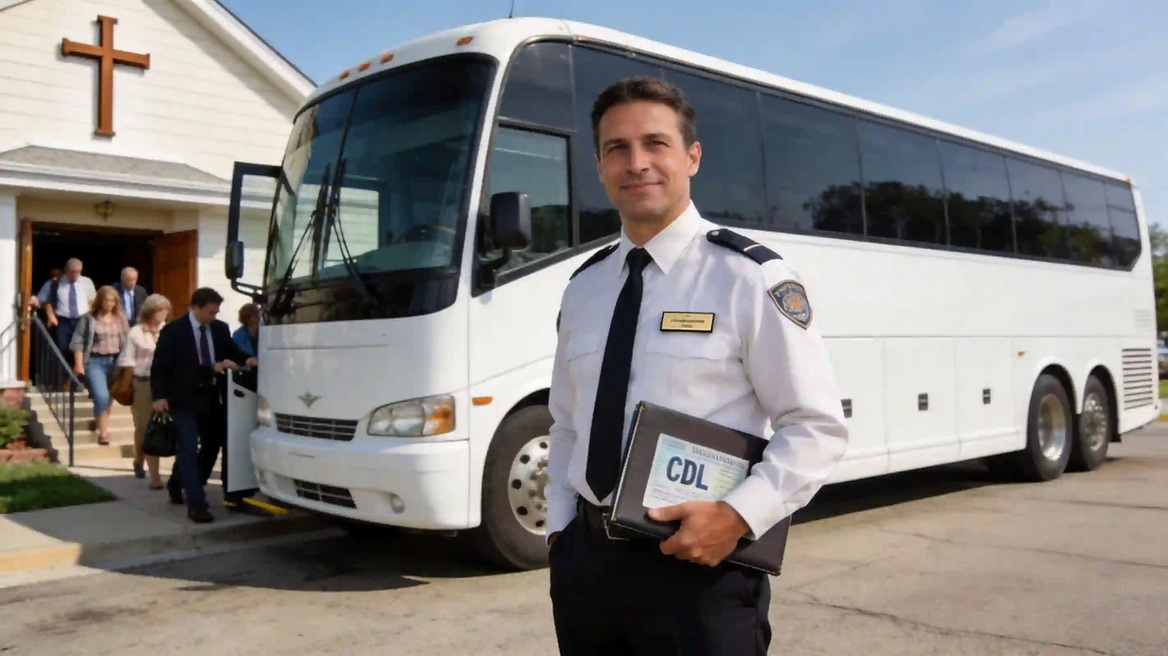
A CDL alone is not enough. Drivers also need:
- Passenger (P) endorsement for carrying people
- Air brake endorsement if the bus uses an air brake system
- Documented training on church‑specific transportation policies
From a risk‑management view, your driver list should be treated like a controlled asset: only trained, documented, and approved drivers ever get the keys.
Professional church bus drivers—paid or volunteer—must meet the same medical and fitness standards as other CDL drivers when operating qualifying vehicles.
- Regular DOT medical exams and a valid medical certificate are required for CDL drivers.
- Drivers must be able to safely handle long drives, night driving, and emergency maneuvers.
Federal rules require:
- Pre‑employment testing for CDL drivers
- Random drug and alcohol testing while employed
- Post‑accident testing after qualifying incidents
Ignoring this requirement is one of the most serious compliance risks a church can take, especially in the event of a collision with injuries.
To prevent fatigue‑related crashes, CDL drivers must comply with Hours of Service limits that control how long they drive and how much rest they get between trips.
Typical best practices for church fleets include:
- No more than 10 hours of driving after at least 8 consecutive hours off duty
- Scheduled driver changes on long overnight trips
A church bus is legally treated much like any commercial coach when it meets certain size or passenger thresholds. That means your bus must meet federal safety standards and pass regular inspections.
Key systems that must be in safe working order at all times:
- Brakes, steering, and suspension
- Tires and wheels
- Lights, reflectors, and mirrors
- Emergency exits and signage
- Fuel systems and electrical components
FMCSA rules also require that vehicles operated in interstate commerce display a USDOT number and the legal name of the carrier. Many churches overlook this when they begin traveling to out‑of‑state conferences or mission trips.
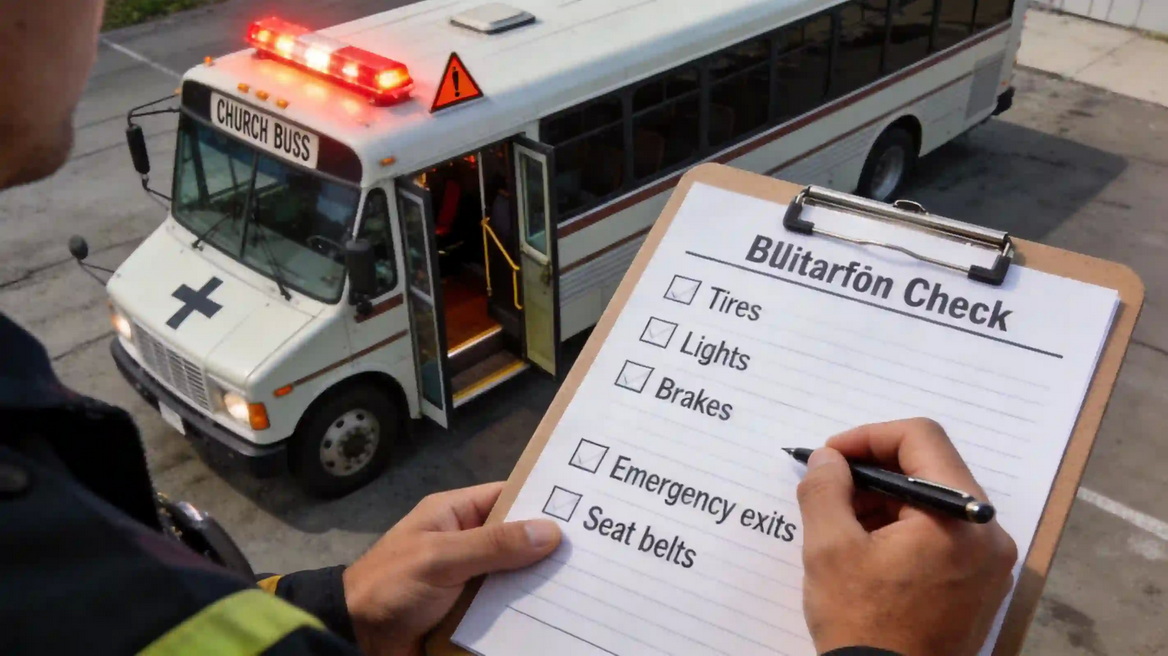
Expert‑level church fleets standardize inspections using simple checklists:
1. Driver completes a pre‑trip inspection (tires, lights, brakes, emergency exits).
2. Any defects are documented and addressed before departure.
3. A post‑trip walk‑around notes anything that changed during the trip.
This practice not only improves safety but also supports insurance claims and regulatory audits.
Most churches assume their standard policy covers "whatever happens," but insurers treat buses and 15‑passenger vans as high‑risk exposures.
- Vehicles with up to 15 passengers: commonly at least USD 1.5 million in liability coverage recommended.
- Larger buses: insurers may require USD 5 million or more in coverage.
Many church insurance carriers strongly discourage or refuse to insure certain 15‑passenger van models due to rollover risk, recommending purpose‑built buses instead.
To protect both your church and passengers, keep:
- A current list of approved drivers
- Copies of CDLs, endorsements, and medical certificates
- Maintenance and inspection logs
- Written transportation policies and emergency procedures
- Proof of insurance and any endorsements specific to passenger transport
Beyond formal regulations, most claims and near‑miss incidents come down to basic operational discipline.
- All passengers seated before the bus moves
- Side doors and emergency exits securely closed before departure
- Full stop at all railroad crossings, even when signals are clear
- Drivers and all passengers use seat belts when provided
- Strict adherence to posted speed limits or below
- No use of mobile phones while driving (except hands‑free emergency contact)
Leading church insurers and safety advisors emphasize rider rules such as:
- Stay seated and face forward
- Keep noise at a level that does not distract the driver
- Keep all body parts inside the vehicle
- Follow instructions from the driver or attendant immediately

Around the world—and increasingly in North America—churches and faith‑based organizations are exploring electric and new‑energy buses for their fleets. While these vehicles fall under the same basic safety and licensing rules, they introduce unique operational considerations.
Lessons from large electric bus deployments, such as those in China's public transit systems, show that electric buses can reduce operating emissions but require careful planning for charging, route design, and battery range. For a church, that means you must align your event schedules and trip distances with reliable charging access and realistic range assumptions, especially in hot or cold climates that impact battery performance.
Working with experienced suppliers of second‑hand and new‑energy buses can help churches select models that match their real‑world usage, from short urban shuttle routes to long highway trips to camps and retreats.
Having "rules" is not enough; they must be written, communicated, and enforced. Churches with exemplary safety records tend to share a similar pattern in their transportation policy design.
Key components of an effective policy:
- Clear driver qualifications and approval process
- Step‑by‑step pre‑trip, en‑route, and post‑trip procedures
- Passenger behavior standards and supervision ratios
- Incident reporting and investigation requirements
- Scheduling, reservation, and usage priorities for the bus
Regularly reviewing this policy with drivers, ministry leaders, and your insurance advisor ensures it stays aligned with evolving regulations and best practices.
From a church leadership perspective, the question is simple: "Are we safe and compliant right now?" The following high‑level checklist comes from real audits of church transportation programs:
1. Confirm every bus driver has the appropriate CDL, endorsements, and current medical certificate.
2. Verify that your vehicles meet all inspection and maintenance requirements, with logs on file.
3. Ensure that your insurance policy is sized to your passenger capacity and vehicle type.
4. Adopt and enforce a written transportation policy covering safety, scheduling, and emergencies.
5. Review your fleet strategy: are any high‑risk vans still in use where a purpose‑built or newer‑energy bus would be safer and more sustainable?
The table below summarizes key differences churches should consider when choosing between a small passenger van and a full‑size bus.
| Factor | Small Church Van (≤15 passengers) | Full‑Size Bus (≥16 passengers) |
|---|---|---|
| Typical insurance need | Around USD 1.5M liability recommended | Often USD 5M liability or more |
| Licensing | May not require CDL in some states | CDL with passenger endorsement required |
| Safety risk | Some 15‑passenger models considered high‑risk | Purpose‑built for passengers, higher crash resilience |
| Regulatory oversight | Varies by state, sometimes less strict | More likely under FMCSA and DOT rules |
| Best use case | Short local trips, small groups | Regular routes, larger groups, long distances |

For many churches, the most strategic safety decision happens before the first mile is driven—when selecting the vehicle itself. Working with a professional bus and truck supplier that understands second‑hand coaches, heavy‑duty trucks, and new‑energy buses can help you:
- Choose a bus that already meets current safety and emissions standards
- Validate that the vehicle is suitable for your passenger count and route profile
- Plan a realistic maintenance and inspection schedule
- Explore cleaner and more efficient new‑energy options without compromising reliability
This partnership approach combines your ministry's vision with industry‑grade vehicle and compliance expertise.
To turn these regulations and guidelines into practical ministry safety, church leaders should:
- Audit your current drivers, vehicles, and policies against the checklist above.
- Engage your insurance carrier to confirm coverage levels and risk concerns.
- Schedule driver training and policy reviews at least annually.
- Evaluate your fleet mix, and where appropriate, consider upgrading to safer, purpose‑built, or new‑energy buses with help from a professional supplier.
If your church is exploring the purchase of a second‑hand coach, heavy‑duty bus, or new‑energy vehicle for ministry use, now is the time to align your vehicle choice with the safety and regulatory expectations described in this guide. A well‑chosen bus and well‑trained drivers will serve your congregation for many years—safely and responsibly.
Contact us to get more information!
Not always, but any driver operating a bus designed to carry 16 or more passengers (including the driver) generally needs a CDL with a passenger endorsement, especially for interstate trips.
Some small, intrastate operations may fall into limited exemptions, but larger buses and interstate trips usually bring the church under FMCSA safety rules, including driver qualification and vehicle standards.
Safety studies and major church insurers have warned that many 15‑passenger vans are higher‑risk, particularly when fully loaded or improperly maintained, and often recommend purpose‑built buses instead.
At minimum, buses should undergo pre‑trip and post‑trip inspections by the driver and periodic professional inspections as required by state and federal law, as well as preventive maintenance recommended by the manufacturer.
For churches with predictable routes and access to charging, electric or other new‑energy buses can work well, drawing on lessons from large public transit deployments, but require careful planning around range and charging schedules.
1. Nations Bus – "Rules And Regulations For Driving A Church Bus." https://nationsbus.com/rules-and-regulations-for-driving-a-church-bus/
2. Federal Motor Carrier Safety Administration – "Faith Based Organization‑Related Transportation" and related tip sheet. https://www.fmcsa.dot.gov/sites/fmcsa.dot.gov/files/docs/regulations/77836/dot-faith-based-organization-transportation-tip-sheet508728.pdf
3. Church Bus Safety Guide – Worker Ministries. https://www.workerministries.com/downloads/church%20bus%20safety%20guide.pdf
4. XPastor – "DOT Number for a Church Bus?" and "Understanding Federal Requirements for Church Vehicles." https://www.xpastor.org/operations/facility-policy/dot-number-for-a-church-bus/
5. Church Bus Basics – "Guidelines for the Bus Ministry." https://www.churchbusbasics.com/bus-ministry/guidelines-for-the-bus-ministry/
6. Church Property Insurance – "Church And School Bus Safety Procedures." https://churchpropertyinsurance.com/blog/church-and-school-bus-safety-procedures/
7. Carpenter Bus – "Complete Guide to Church Transportation." https://www.carpenterbus.com/blog/churches/complete-guide-to-church-transportation/
8. Church Law Center – "Regulating Church‑Owned Transportation Vehicles." https://www.churchlawcenter.com/church-law/regulating-church-owned-transportation-vehicles/
9. LifeWay – "Is Your Church Van Safe?" https://www.lifeway.com/shop/services/church-administration/church-buses/is-your-van-safe
10. World Resources Institute – "Overcoming the Operational Challenges of Electric Buses: Lessons Learnt from China."https://wri.org.cn/sites/default/files/2021-12/overcoming-operational-challenges-electric-buses.pdf


