
Views: 222 Author: Keychain Venture Publish Time: 2026-05-24 Origin: Site


Proper off‑season bus storage can make the difference between a reliable fleet and a headache of unexpected breakdowns, especially when you are running second hand buses, heavy trucks, or new energy vehicles for global export. As a China-based supplier (KeyChain) that sources, refurbishes, and exports used buses and heavy vehicles worldwide, we have seen firsthand how disciplined storage and maintenance can extend vehicle life and protect resale value.
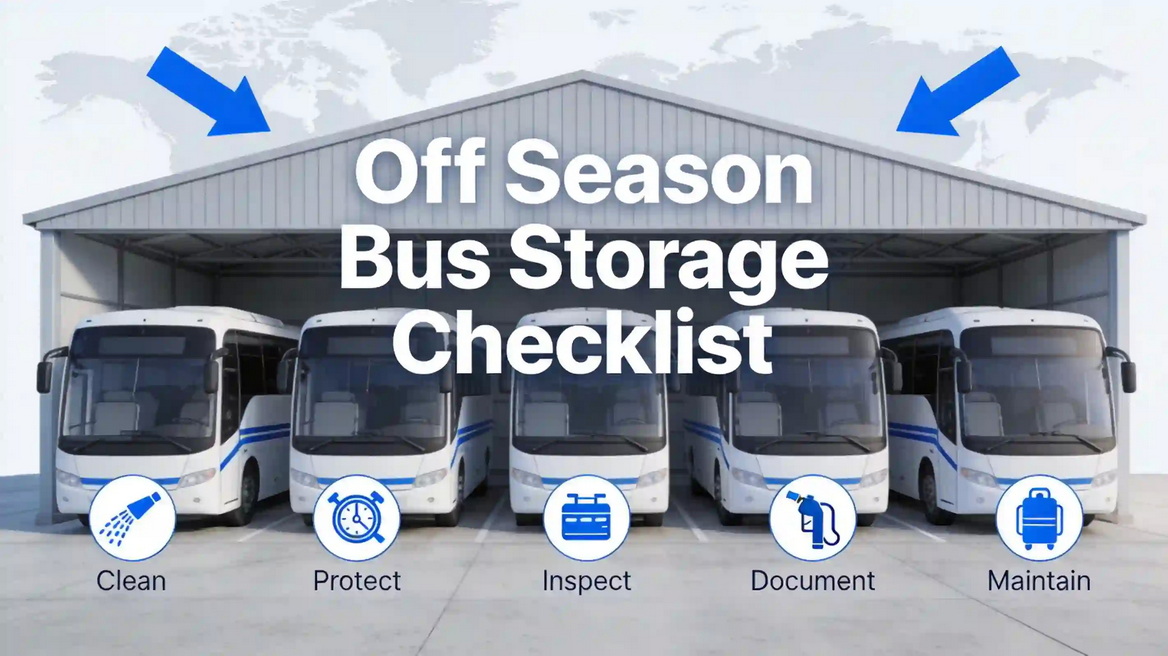
When a bus or heavy truck sits idle for months, every system—engine, fuel, tires, electrics, and interior—starts to degrade in ways that are easy to ignore and expensive to fix later. For second hand buses and pre‑owned heavy vehicles, those risks are amplified because many components are already mid‑life or later in their lifecycle.
From our experience helping overseas clients deploy used Chinese buses into Africa, Southeast Asia, and South America, the fleets that follow a clear off‑season storage checklist consistently report:
- Lower total maintenance costs over 3–5 years
- Fewer sudden breakdowns at the start of a new school or tourist season
- Higher resale values when upgrading to newer stock
If you are running school buses, intercity coaches, staff shuttles, or tourist fleet operations, think of off‑season as your best window to protect your investment instead of just parking vehicles and forgetting them.
This guide is written from both a practitioner's and industry expert's perspective to help you with:
- Off‑season bus storage best practices
- How to maintain buses during off‑seasons
- Long‑term storage for second hand buses and heavy trucks
- Special considerations for new energy buses (EVs and hybrids)
It is designed for:
- Fleet managers of school buses, city buses, and coaches
- Owners of second hand bus fleets and used heavy trucks
- Export buyers of Chinese used buses who need clear SOPs for storage
- Maintenance supervisors and workshop heads
Most existing guides on off‑season bus storage cover the basics: cleaning, fluid checks, battery care, and tire pressure. These are important, but they often miss three critical realities we see every day in international second hand fleets:
- Vehicles may sit in tough environments (high humidity, dust, coastal corrosion).
- Maintenance budgets are tight and staff can be under‑trained.
- Fleets include mixed technologies—older diesel buses parked next to new energy vehicles.
So instead of just listing "10 tips," this guide will help you build a practical storage strategy that fits real‑world constraints: minimal extra cost, realistic workshop capacity, and mixed fleets that include aging diesel buses and modern EVs.
Use this section as your high‑level SOP. Each step is broken out in later sections.
1. Deep clean and dry the bus (inside and out).
2. Fix obvious defects before you park the bus long‑term.
3. Protect against moisture, corrosion, and UV damage.
4. Stabilize fuel and service engine fluids.
5. Set correct tire pressure and prevent flat spots.
6. Isolate or maintain batteries (ICE and EV).
7. Secure the interior against pests and mold.
8. Choose the right storage environment and layout.
9. Create a simple inspection schedule during storage.
10. Document everything for future resale and compliance.
If you operate mixed fleets, add one extra layer: a separate storage protocol for EV and hybrid buses, especially around high‑voltage batteries and software settings.
Before storage, every bus should be thoroughly washed, including the roof, wheel arches, and undercarriage. Road salt, dust, and industrial pollutants quickly trigger rust if left for months.
For high‑mileage second hand buses exported from China, we recommend:
- High‑pressure wash for chassis and wheel arches
- Degreaser on engine bay areas (avoiding direct spray on sensitive electronics)
- Application of a light anti‑corrosion coating on vulnerable steel sections in coastal or humid regions
If your fleet operates near the sea or in regions with heavy winter road salt, underbody protection can add years to the lifespan of a used coach or city bus.
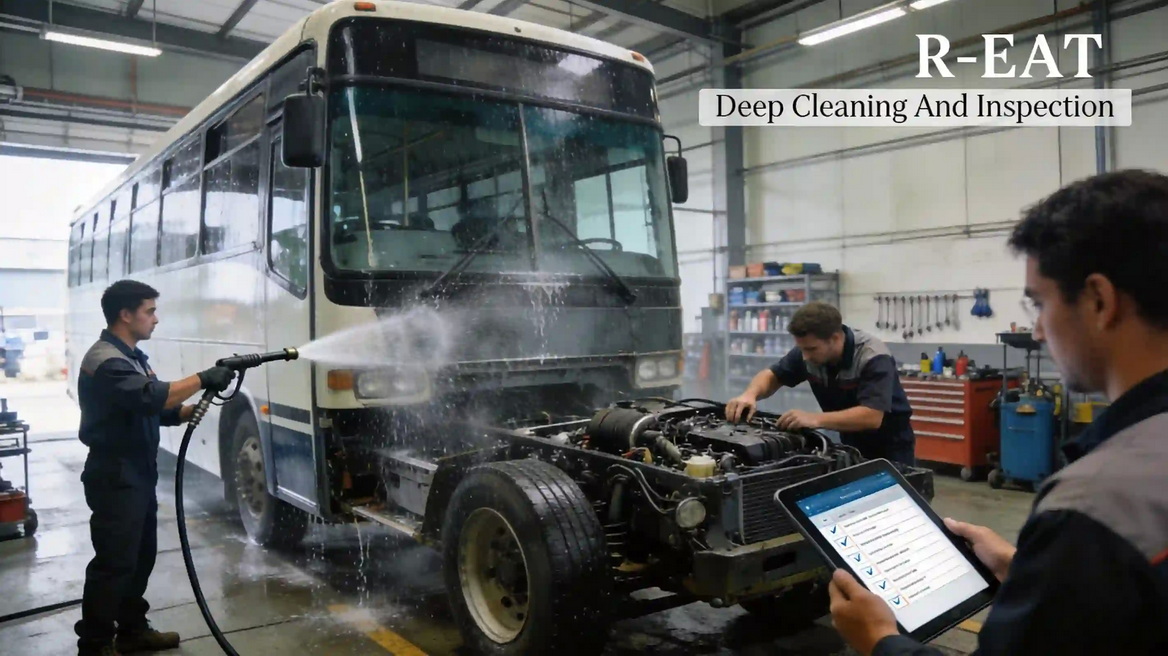
Odors and interior wear are common negative comments from bus buyers and passengers, especially with second hand vehicles. A proper pre‑storage interior routine should include:
- Removing all trash and food to avoid pests
- Wet vacuuming seats and carpets
- Cleaning AC vents and return grilles
- Using appropriate disinfectants in high‑touch areas
In our customer feedback, overseas buyers frequently mention that buses stored with a clean, dry interior arrive with fewer odor and mold issues, which directly improves customer satisfaction and resale value.
Parking a bus for 3–6 months with unresolved issues is the fastest way to turn a minor defect into a major repair. This is especially true for already‑used buses and heavy trucks.
Before long‑term storage, your team should:
- Repair visible rust patches and seal exposed metal.
- Fix cracked windshields and leaking windows to avoid water intrusion.
- Address any known oil, coolant, or air leaks.
- Perform essential safety repairs (brakes, steering components, suspension).
From our workshop data, fleets that complete essential repairs before storage report fewer "no‑start" or "sudden breakdown" events when they restart the season.
Ideally, off‑season buses should be stored in a covered, well‑ventilated facility. When that is not possible, the next‑best options are:
- Outdoor parking with high‑quality, breathable covers
- Elevated parking on compacted ground or concrete with drainage
- Avoiding direct tree coverage that drops sap and organic debris
Where possible, store buses on slightly raised platforms or wooden planks to reduce contact with damp concrete and pooled water.
In humid climates, mold can form in as little as a few days in a closed vehicle. To protect second hand fleets and prevent customer complaints:
- Place moisture absorbers (silica gel, calcium chloride) inside cabins.
- Leave windows slightly cracked if stored in a secure, dry indoor area.
- Run the AC on "fresh air" mode for 10–15 minutes before final shutdown to dry ducts.
For export fleets, documenting that you have taken moisture control measures helps explain your quality process to buyers and supports higher pricing.
When diesel or gasoline buses sit for months, fuel can oxidize, form gums, and allow moisture into the tank. For long‑term storage:
- Fill fuel tanks to reduce air and moisture.
- Add an appropriate fuel stabilizer and run the engine briefly to circulate it.
In our experience, this simple two‑step practice dramatically reduces starting problems for second hand buses after shipping and off‑season storage.
Old oil contains contaminants that continue to attack internal engine surfaces during storage. Before long idle periods:
- Change engine oil and filter if you are close to the service interval.
- Check coolant concentration and level to ensure freeze and corrosion protection in cold climates.
For fleets that run on tight budgets, we recommend prioritizing oil changes on vehicles with known heavy usage or upcoming resale to secure better reliability and valuation.
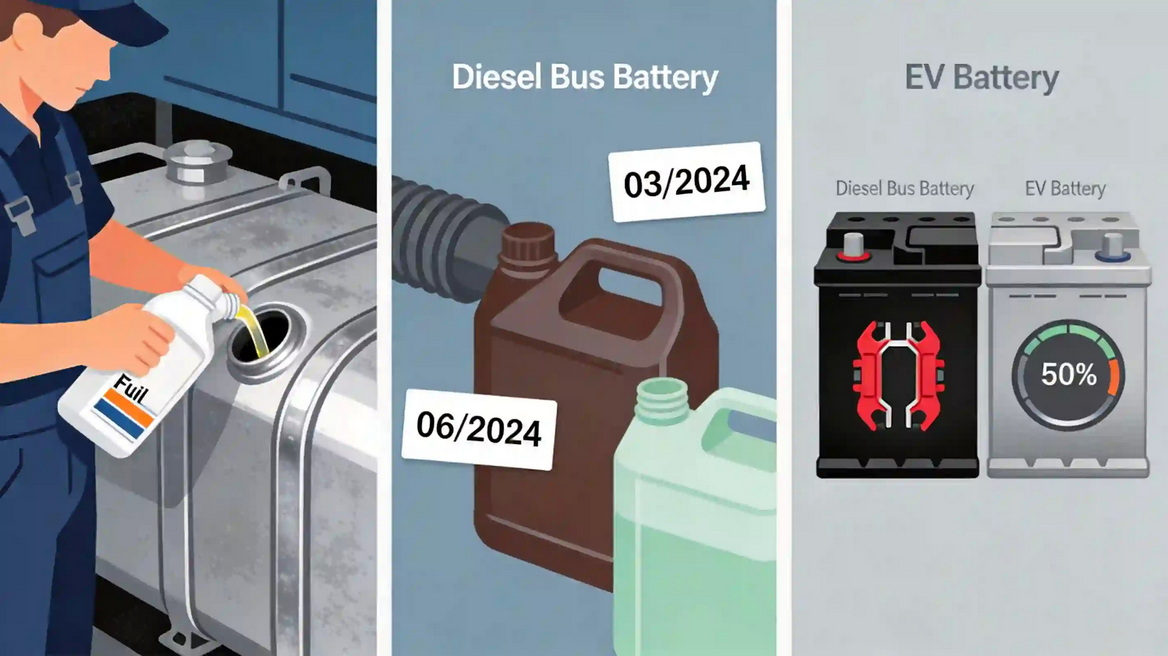
Static loads on buses cause tire flat spots and sidewall damage if left unattended for months. To prevent this:
- Inflate tires to recommended (or slightly above) storage pressure.
- Park on level, clean surfaces free of sharp debris.
- Move the bus a short distance (or rotate wheels) every few weeks where possible.
On high‑value coaches or long off‑season periods, consider using wheel cradles or jack stands to relieve pressure on tires and suspension.
Brakes can seize or corrode when parked for long durations, especially in humid or coastal locations. Best practice includes:
- Releasing parking brakes and using wheel chocks if safe and allowed.
- Periodically rolling the vehicle to break light surface rust on rotors and drums.
Fleets that skip this step often report dragging brakes and increased wear at the first post‑storage inspection.
For diesel or gasoline buses, the main risks are parasitic drain and sulfation of lead‑acid batteries. Recommended approach:
- Disconnect batteries if storage is truly long‑term and the vehicle will not be accessed.
- Alternatively, use battery maintainers if the facility has safe, stable power.
Mark battery service dates clearly; this is useful evidence for buyers evaluating second hand buses from China or other export markets.
Electric and hybrid buses require different storage strategies because of high‑voltage battery behavior. Industry guidance for EVs suggests:
- Storing vehicles at 40–60% state of charge, not 100%.
- Using built‑in "storage" or "deep sleep" modes where available.
- Keeping buses in cooler, shaded, or indoor environments to reduce battery aging.
If you operate a mixed fleet of second hand diesel buses and newer electric buses from Chinese OEMs, create separate checklists so technicians do not apply diesel habits to EV systems.
Rodents, insects, and birds can cause surprising damage to wiring, upholstery, and insulation in stored buses. To reduce this risk:
- Seal obvious entry points and ensure doors and windows are fully closed.
- Avoid storing any food or organic waste inside the bus.
- Consider traps or professional pest control solutions in high‑risk yards.
From our export customers, one of the most common complaints about poorly stored used buses is "hidden" rodent damage to wiring looms, which can be expensive to diagnose and repair at destination.
One overlooked aspect of off‑season storage is documentation. Well‑kept records are a powerful tool when you later sell buses or need to prove maintenance standards to regulators and clients.
We recommend every fleet maintains a simple log including:
- Storage start and end dates for each bus
- Pre‑storage inspection results and work orders
- Fuel, oil, and coolant actions taken
- Battery disconnection/charging dates
- Periodic in‑storage checks (every 2–4 weeks)
At KeyChain, we provide our overseas buyers with maintenance and storage documentation where available so they can verify how a second hand bus was treated before export. This level of transparency builds trust and can justify better pricing.
To illustrate how these concepts work in practice, consider a regional operator with:
- 20 used diesel school buses purchased from China
- 5 used intercity coaches
- 5 new energy city buses (battery electric)
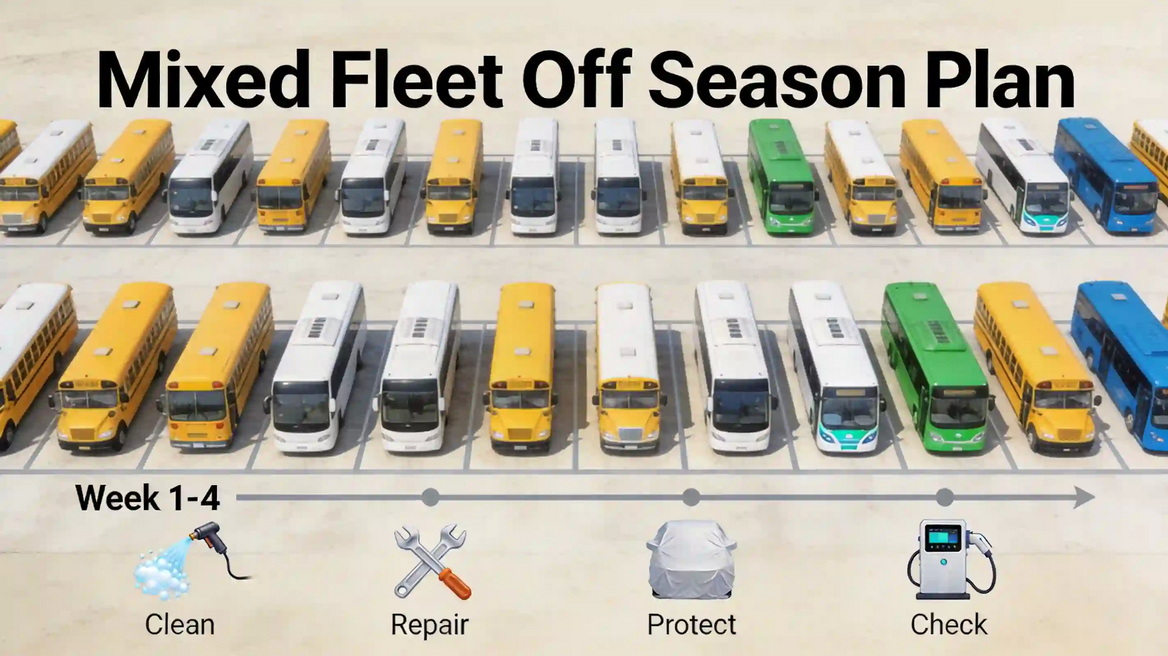
A realistic off‑season plan might look like this:
- Week 1–2: Deep cleaning, exterior washing, underbody inspection, and essential repairs.
- Week 3: Fuel stabilization and oil changes for high‑mileage units; tire pressure checks and repositioning.
- Week 4: Battery disconnection for diesel buses; EV buses configured to 50% SOC and "storage mode."
- Monthly during storage: Quick inspections for leaks, pests, tire condition, and security; short movement of selected units.
By breaking the work into scheduled blocks and assigning responsibilities, this fleet can protect its investment without overwhelming the workshop.
| Storage Area | Key Actions | Why It Matters |
|---|---|---|
| Exterior & underbody | Wash, degrease, anti‑corrosion spray in high‑risk areas | Reduces rust and protects used buses during long storage |
| Interior | Remove waste, deep clean, dry AC ducts | Prevents odors, mold, and poor passenger experience |
| Engine & fuel | Full tank, fuel stabilizer, timely oil change | Avoids starting issues and internal corrosion |
| Tires & brakes | Correct pressure, occasional movement, release parking brake where possible | Prevents flat spots and sticking brakes |
| Batteries | Disconnect or use maintainers; EVs at 40–60% SOC | Preserves battery health and ensures reliable start‑up |
| Environment | Covered, ventilated area, moisture control | Reduces UV damage, condensation, and corrosion |
As a specialist in second hand buses, heavy trucks, and new energy vehicles from China, KeyChain does more than just export units—we help clients build long‑term fleet value. Based on our field experience and customer feedback, we typically support buyers in three ways:
- Helping them choose models with known strong durability in their climate and operating conditions.
- Providing pre‑export inspection, basic refurbishment, and storage recommendations tailored to destination country.
- Offering guidance on off‑season storage and maintenance so that older assets can safely run for several more years.
If you are planning to purchase second hand buses from China, integrating a robust off‑season storage plan from day one is one of the easiest ways to protect your return on investment.
If you manage a bus or heavy truck fleet and you are unsure whether your current off‑season storage practices are enough, this is the right time to upgrade your approach. Applying the best practices for off‑season bus storage in this guide will immediately reduce risk and extend vehicle life.
KeyChain can help you:
- Select appropriate second hand buses, coaches, and trucks that match your climate and route profile.
- Design a simple, practical storage checklist that your team can follow every season.
- Plan upgrades to include fuel‑efficient or new energy buses, with correct storage SOPs from the start.
Contact our team to discuss your fleet requirements, request example checklists, or explore available second hand buses and heavy vehicles from China that are prepared for long‑term, reliable service.
Most issues begin to appear after 30–60 days of inactivity, especially with batteries and tire flat spots, which is why a structured storage plan is important for any off‑season longer than one month.
If your buses will sit for several months, especially in humid environments, fuel stabilizer helps prevent moisture and oxidation, reducing hard‑start problems and injector issues later.
The most common mistake we see is parking buses "as is" without cleaning, repairing minor leaks, or managing batteries, which leads to compounded corrosion, electrical faults, and higher restart costs.
For EV buses, focus on keeping batteries at 40–60% state of charge, using storage modes, and minimizing extreme temperatures, rather than simply disconnecting the battery like a diesel bus.
Indoor storage is best, but if it is not available, good covers, moisture control, and regular inspections can still deliver strong protection for second hand fleets parked outdoors.
- American Bus Sales. "Properly Storing and Maintaining Buses During Off‑Seasons." https://americanbussales.net/tips-for-properly-storing-and-maintaining-buses-during-off-seasons/
- Pacific Rim Storage. "Expert Guide to Preserving Your Vehicle in Long-Term Self Storage." https://pacificrimstorage.ca/expert-guide-preserving-your-vehicle-in-long-term-self-storage/
- BusRide. "Effective Strategies for Seasonal Bus Care and Maintenance." https://busride.com/effective-strategies-for-seasonal-bus-care-and-maintenance/


