
Views: 222 Author: Keychain Venture Publish Time: 2026-05-31 Origin: Site


Content Menu
● Why Second Hand Buses Still Matter in 2026
● Main Types of Buses on the Market Today
>> School Buses
>> Church, NGO, and Community Buses
● Second Hand Bus vs New Bus: Which Is Right for You?
● What to Check Before Buying a Second Hand Bus
>> 1. Vehicle Source and Documentation
>> 2. Exterior and Body Condition
>> 3. Interior and Passenger Area
>> 4. Powertrain: Engine and Transmission
>> 5. Chassis, Suspension, and Brakes
>> 7. Electronic and Safety Systems
● The Role of Heavy Trucks and New Energy Vehicles in Your Fleet
● Real‑World Use Cases from International Buyers
● How to Choose the Right Second Hand Bus for Your Operation
>> Step 1: Define Your Operating Scenario
>> Step 2: Set a Total Cost of Ownership (TCO) Budget
>> Step 3: Shortlist Trusted Suppliers
>> Step 4: Inspect, Negotiate, and Plan for Upgrades
● Why Work with a Professional Exporter Like KeyChain
● Call to Action: Start Your Second Hand Bus Project with KeyChain
● Frequently Asked Questions (FAQ)
>> 1. Is a second hand bus reliable enough for long‑distance routes?
>> 2. How old should a used bus be when importing it?
>> 3. Which brands are most common for second hand buses from China?
>> 4. What documents do I need when importing a second hand bus?
>> 5. Can I convert a used school bus into a staff or tourism bus?
When you are investing in a second hand bus or heavy-duty vehicle for your fleet, you are not just buying metal and wheels—you are buying reliability, safety, and long-term operating efficiency. As a China-based supplier and exporter of high-quality second hand buses, heavy trucks, and new energy vehicles, our team at KeyChain has spent years helping buyers in Africa, Southeast Asia, the Middle East, and Latin America choose the right vehicle for their routes, budgets, and regulatory environments.
In this guide, I will combine hands-on industry experience with up‑to‑date market insights to help you understand the major types of buses, how the used bus market works, and how to evaluate a second hand bus before you ship it across borders.
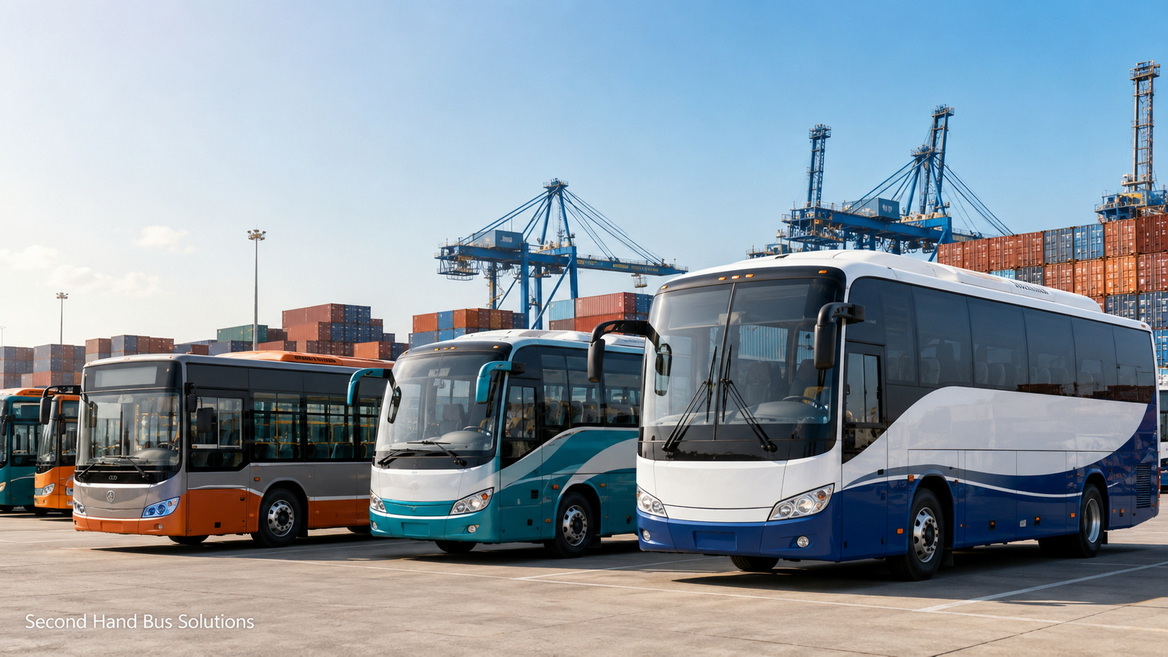
In many emerging markets, a well‑maintained used coach or city bus can deliver 5–10 years of additional service life at a fraction of the cost of a new vehicle. From our export projects, we see three clear reasons why fleets continue to choose second hand buses:
- Lower upfront investment: Used buses typically cost 40–70% less than new units, depending on age, mileage, and brand.
- Faster payback period: Lower capital expenditure means operators can recoup their investment more quickly through daily operations.
- Proven reliability: A bus with a documented service history and stable performance record can be more predictable than a brand‑new model in a harsh operating environment.
However, the value of a second hand bus depends heavily on how carefully you select it and who you buy from, which is where working with a professional exporter becomes critical.
Before you choose a second hand bus, you should understand the major bus categories and their ideal use cases. This helps you match your purchase to your routes and business model, rather than buying on price alone.
School buses are designed primarily for student safety, with reinforced structures, specific lighting, and strict regulatory standards. Many markets import used Type C or Type D school buses and convert them for staff transport, worker shuttles, or rural routes.
- Type A: Small, van‑based school buses for 10–30 passengers; ideal for special routes, daycare, or compact streets.
- Type C: The "classic" school bus with a front engine and 40–78 passenger capacity.
- Type D: Transit‑style, flat‑front buses with higher capacity (up to around 90 passengers), often used in larger districts.
In international markets, used school buses are often repainted and reconfigured, but operators still benefit from the original safety engineering and durable frames.
Transit buses are designed for short, frequent trips with many stops, typically in urban public transport systems.
- Key features: Low‑floor or step‑low designs for easy boarding, wide doors, standing room, and robust drivetrains designed for stop‑and‑go traffic.
- Typical routes: City centers, BRT corridors, industrial zones, and busy suburban lines.
For buyers in developing markets, a second hand city bus can be an economical way to launch or expand a municipal or private urban route network.
Shuttle buses bridge the gap between small vans and full‑size buses. They are often built on a van or light truck chassis and carry 8–30 passengers.
- Common in airports, hotels, campuses, factories, and residential compounds.
- Often equipped with ADA‑compliant lifts or ramps and flexible interiors.
From our experience, they are popular in export markets for staff shuttles, hotel services, and tourism transfers, especially where road conditions favor smaller vehicles.
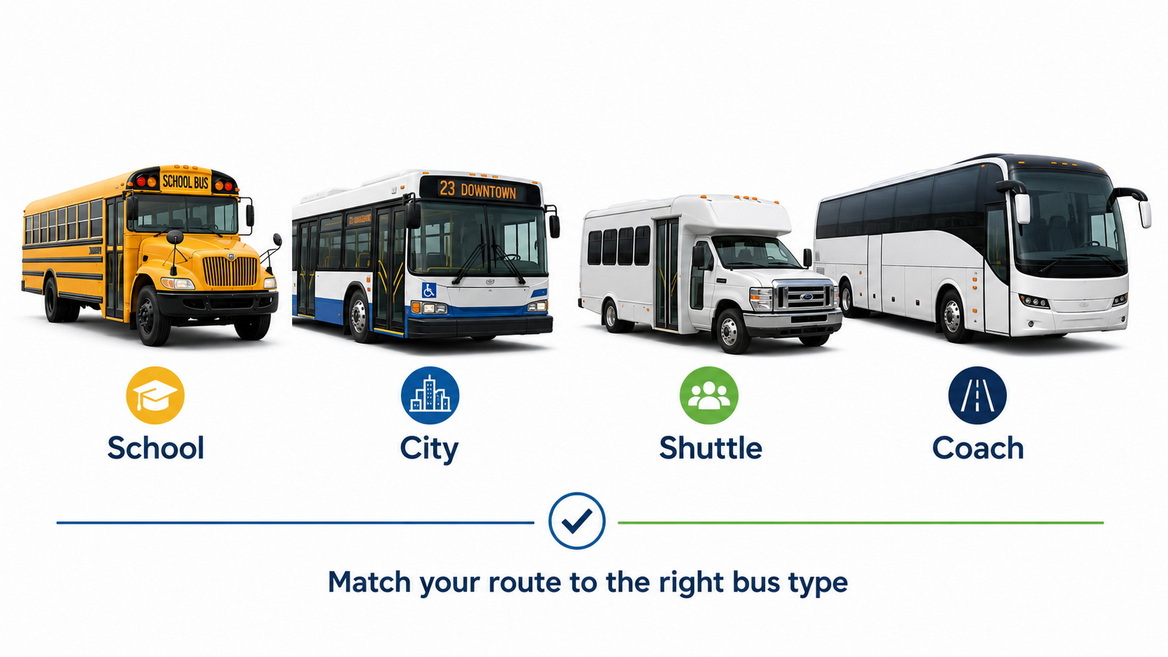
Coach buses (also called motorcoaches or long‑distance coaches) are built for intercity and long‑haul travel.
Typical characteristics:
- High‑back reclining seats, luggage bays, restrooms, air conditioning, and sometimes onboard entertainment.
- Ideal for tourism, intercity transport, and corporate group travel.
Many of the used units we export—particularly from leading Chinese brands like Yutong, King Long, Higer, and Golden Dragon—are coaches previously used in domestic tourism or long‑distance services, giving overseas buyers a comfortable, high‑spec option at used‑vehicle prices.
Churches, NGOs, and community organizations often repurpose used school, shuttle, or coach buses because of their affordability and flexible layouts. They value:
- Simple maintenance and reliable parts availability
- Configurable seating and space for supplies or equipment
- The ability to brand the vehicle with community or organizational logos
For these buyers, a second hand bus can become a mobile classroom, clinic, or outreach vehicle, especially in remote areas.
At the high end, luxury and executive buses offer features like leather interiors, workstations, Wi‑Fi, and meeting spaces for VIP transport, corporate roadshows, and entertainment tours. While fewer of these enter the second hand export market, some fleets do acquire used executive coaches and adapt them to premium tourism or corporate shuttle services.
To help you decide whether a second hand bus fits your strategy, consider the comparison below:
In our projects, smaller operators and emerging markets tend to benefit strongly from second hand buses, while large state‑owned or national carriers may prefer a mix of new and used units.
As an exporter, we often see that the real risk is not in buying used—but in buying blindly. Here is a structured checklist adapted from our internal inspection process and industry best practices.
- Verify the source: established dealer, fleet operator, or reputable trading platform—avoid unlicensed or informal sellers.
- Check registration documents, VIN, and engine numbers against records.
- Request maintenance logs, accident records, and modification history where available.
- Inspect for scratches, dents, rust, and repainting; uneven paint may signal previous accidents.
- Check window seals, roof integrity, and signs of water leaks.
- Confirm that doors and emergency exits open and close smoothly.
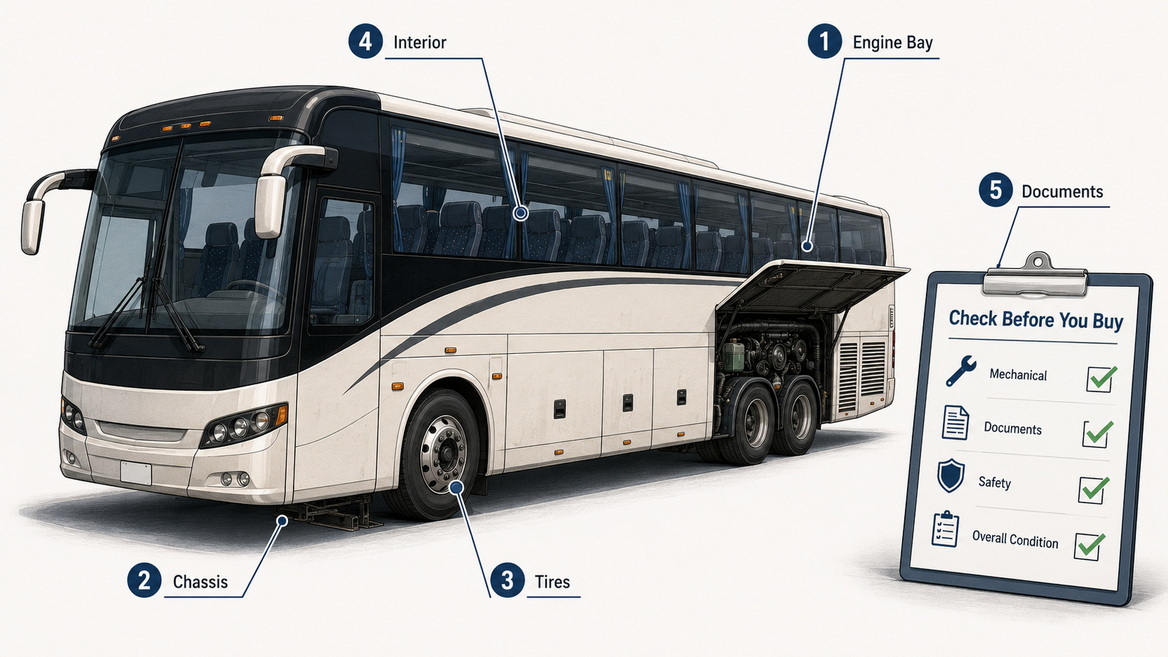
- Examine the seats, flooring, dashboard, and panels for excessive wear or damage.
- Test air conditioning, lighting, audio systems, and any onboard electronics.
- Pay attention to unusual smells, which might indicate water damage or poor maintenance.
- Start the bus and listen for abnormal engine noises, smoke, or rough idling.
- Check for oil leaks, coolant leaks, and fuel system issues.
- During a test drive, verify smooth gear changes and stable acceleration.
- Inspect the chassis for rust, cracks, or impact marks, especially on older vehicles.
- Check suspension components for sagging, uneven ride height, or excessive bouncing.
- Test the brake system for responsiveness, unusual noises, and even braking.
- Evaluate tread wear and sidewall condition across all tires; uneven wear can indicate alignment problems.
- Confirm correct tire pressure and inspect for wheel deformation or damage.
- Verify that seat belts, warning systems, and emergency lights function properly.
- For newer buses, test ABS, stability control, and any installed driver‑assist features.
We strongly advise buyers to engage a professional inspector or trusted partner on the ground when possible, especially for high‑value coaches and heavy trucks.
Many of our global clients do not buy buses alone—they operate a mixed fleet including heavy trucks and new energy vehicles for logistics and passenger services.
- The high‑performance truck market is projected to grow steadily through 2035, driven by infrastructure projects and logistics upgrades worldwide.
- Operators are also gradually adding electric and hybrid buses on shorter routes where charging infrastructure is feasible, balancing these with conventional diesel coaches for long‑distance work.
From an operational point of view, aligning your second hand bus purchases with your truck and NEV strategy can simplify parts management, driver training, and fuel planning.
Based on feedback from our overseas customers and broader industry observation, here are a few typical scenarios:
- African intercity operators often purchase used Chinese coaches and repurpose them for long‑distance routes between major cities, valuing their air conditioning, luggage capacity, and robust chassis.
- Southeast Asian tourism businesses use second hand coaches and shuttle buses to serve coastal tourism routes and airport transfers, where a balance of comfort and fuel efficiency is critical.
- Middle Eastern industrial zones rely on used city buses and shuttle buses to move workers between housing, plants, and warehouses, prioritizing capacity and simple maintenance.
In all these cases, the combination of lower acquisition cost and reasonable remaining service life makes second hand buses an attractive option.
To transform all this information into an actionable decision, we recommend a four‑step process that we also use in our consulting work with buyers.
Write down the main use case:
- City route, intercity coach, staff shuttle, tourism, school transport, or mixed use
- Average daily distance and road conditions
- Expected passenger load and peak times
This helps narrow the choice between transit bus, coach, shuttle, or school bus platforms.
Instead of focusing only on the purchase price:
- Estimate fuel costs based on engine type and route profile.
- Factor in maintenance and parts availability in your country.
- Consider any import duties, taxes, and homologation costs.
A slightly higher‑priced bus with better fuel efficiency and parts support can be cheaper over five years than a low‑priced unit with high operating costs.
Look for exporters who:
- Have business licenses and verifiable export history.
- Provide detailed photos, videos, and inspection reports.
- Offer support with shipping, documentation, and customs.
As a buyer, you should not be afraid to ask for references, sample contracts, and after‑sales support terms.
- Use the inspection checklist above to assess each candidate bus.
- Negotiate not only on price, but also on included services (e. g., repainting, basic refurbishment, spare parts package).
- Plan for any local upgrades, such as new branding, additional safety equipment, or interior reconfiguration.
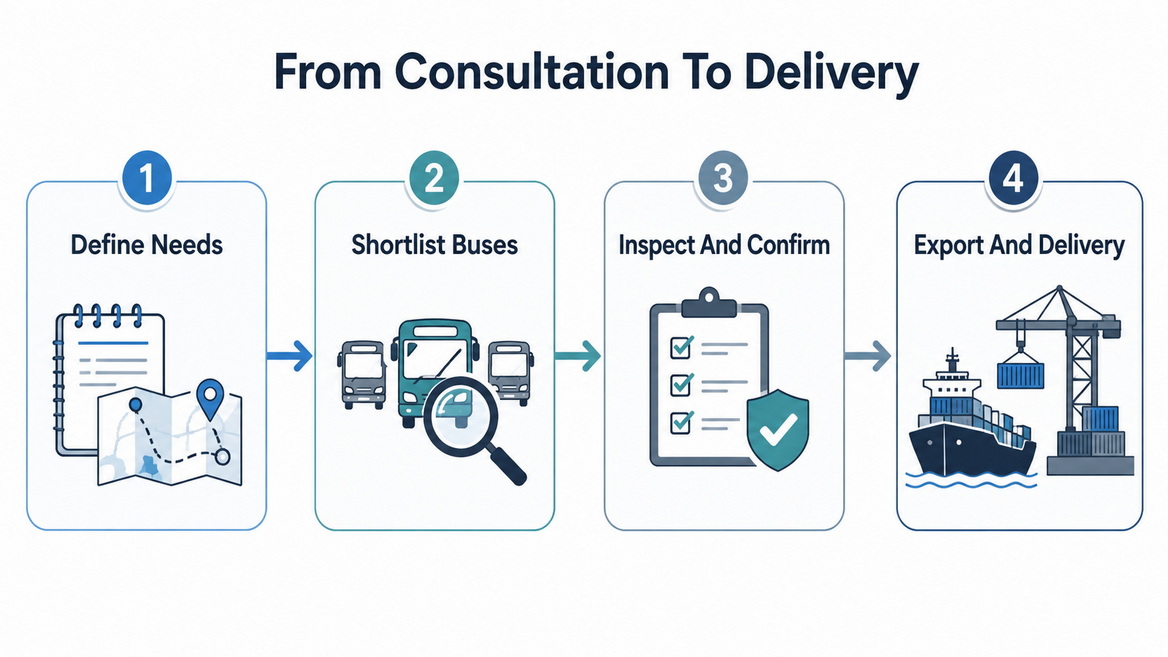
From our perspective as a China‑based supplier and exporter of second hand buses, heavy trucks, and new energy vehicles, three factors consistently determine project success:
1. Transparency: Sharing full vehicle histories, real photos, and honest assessments builds trust and reduces after‑sale disputes.
2. Customization: Many buyers require specific seating layouts, branding, or equipment, which we can handle before export to reduce local costs.
3. End‑to‑end support: Managing inspection, documentation, and logistics from Chinese ports to destination countries saves buyers time and risk.
We see our role not just as a seller, but as a long‑term fleet partner, especially for clients who plan to grow their operations over multiple purchase cycles.
If you are planning to import second hand buses, heavy trucks, or new energy vehicles from China, our team at KeyChain can guide you from vehicle selection to port delivery.
- Tell us your routes, budget, and preferred brands, and we will shortlist suitable units.
- We can arrange third‑party inspections, provide detailed photo and video reports, and assist with shipping and documentation.
Contact us today to discuss your next project and see how a carefully selected second hand bus can strengthen your fleet and profitability.
Yes—if you choose a bus with a solid maintenance history, verified mileage, and a good inspection report, a second hand coach can operate reliably on intercity routes for many years.
Most buyers target buses between 5 and 12 years old, balancing remaining service life with affordable pricing, though local regulations on maximum import age must always be checked.
Popular Chinese brands in the used export market include Yutong, King Long, Higer, Golden Dragon, and Ankai, alongside selected international models depending on stock.
Typical documentation includes the bill of lading, commercial invoice, packing list, vehicle registration and deregistration documents, and any required inspection or conformity certificates for the destination country.
Yes, many operators repaint and refit used school buses for staff transport, community use, or tourism, but they must ensure the conversion complies with local safety regulations and seating rules.
1. "Understanding the Different Types of Buses on the Market," American Bus Sales. Available at:
https://americanbussales.net/understanding-the-different-types-of-buses-on-the-market/
2. "Used Buses for Sale from China," Tianying Used Bus. Available at:
https://www.tianyingusedbus.com/products/
3. "Your Guide to the Different Types of Commercial Buses," Empire Truck Sales. Available at:
https://www.empiretruck.com/blog/your-guide-to-the-different-types-of-commercial-buses--92226
4. "8 Types of School Buses – Understanding the Classification," Transfinder. Available at:
https://www.transfinder.com/resources/types-of-school-buses
5. "Bus Export Companies in China," VehicleBus. Available at:
https://www.vehiclebus.com/bus-export-companies-in-china/
6. "China Used Bus Export Company," Facebook page. Available at:
https://www.facebook.com/china.used.bus.export/
7. "High Performance Trucks Market," Future Market Insights. Available at:
https://www.futuremarketinsights.com/reports/high-performance-trucks-market
8. "Different Types of Buses: A Complete Guide for Group Travel," Connect BBC. Available at:
https://www.connectbbc.com/helpful-links/different-types-of-buses-a-complete-guide-for-group-travel
9. "Global Buses and Coaches Market," Global Information Inc. Available at:


