
Views: 222 Author: Sara Publish Time: 2026-02-24 Origin: Site


Content Menu
● National Express Expansion at a Glance
● Why National Express Is Expanding: Demand and Market Trends
● New Routes and Destinations: What Has Changed?
● New Airport–City Coach Corridors
>> London Luton and Stansted Airport Links
>> Heathrow and Gatwick Connectivity
● Strengthening Intercity and Cross‑Country Links
>> Core North–Midlands–London Corridors
>> Scotland–England Long‑Distance Routes
>> South Coast and South‑West Enhancements
● Weekly Capacity and Fleet Investment
● Passenger Growth and Changing Travel Behaviour
● How to Choose the Best National Express Service for Your Trip
>> Step 1: Define Your Origin and Destination
>> Step 2: Compare Timings and Frequency
>> Step 3: Evaluate Total Journey Time and Cost
>> Step 4: Check On‑Board Facilities
● Practical Tips to Improve Your Coach Travel Experience
● Insights for Fleet Operators and Commercial Vehicle Suppliers
● The Role of Coaches in a Greener UK Transport System
● Summary: What This Expansion Means for Travellers and the Industry
● FAQs
>> 1. How many new routes has National Express added?
>> 2. What is the total weekly capacity after the expansion?
>> 3. How has National Express invested in its fleet?
>> 4. What are the main benefits of choosing coach travel over rail or driving?
>> 5. How does the expansion support sustainable transport goals?
National Express has significantly expanded its UK coach network, adding new routes, boosting weekly capacity and investing in its fleet to meet rising demand for long-distance, airport and intercity coach travel. This comprehensive guide brings together the original announcement and extended analysis so you can clearly understand what is changing, why it matters, and how travellers and operators can benefit.
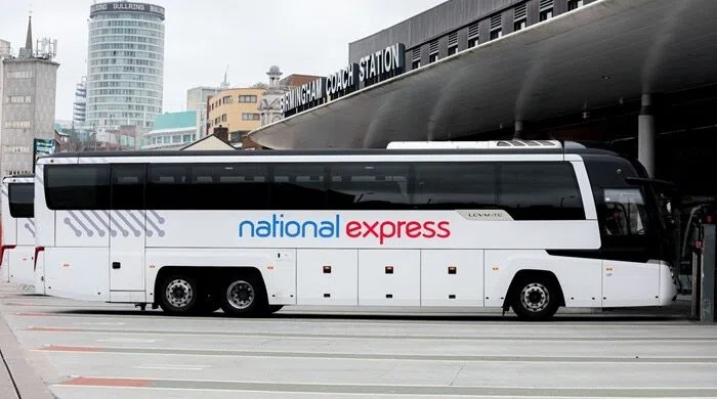
National Express has launched a major expansion of its UK coach network, adding around 15 new routes across the country and introducing approximately 130 additional coaches to its fleet. This upgrade lifts the network to roughly 11,000 coach journeys each week, reinforcing the operator's position as one of the UK's leading long-distance coach providers.
The expansion focuses on three core promises: faster journeys, more frequent services and more sustainable travel options. By strengthening links between major cities, regional hubs and the UK's busiest airports, National Express is responding to strong passenger growth and shifting travel patterns across the country.
Over the last few years, coach travel in the UK has rebounded strongly, driven by a combination of economic, operational and environmental factors. National Express previously reported year‑on‑year growth in passenger numbers, with a sharp increase compared with the immediate post‑pandemic period, and coach demand has continued to build as more people return to long‑distance public transport.
Multiple dynamics underpin this trend:
- Rising fuel costs have made private car use more expensive on long journeys.
- Disruption and strike action on rail services have pushed some travellers to seek more reliable alternatives.
- Tourism and major events, including concerts and sporting fixtures, have helped drive intercity travel demand.
- Travellers are increasingly looking for cost‑effective ways to move between cities and airports without the high price of rail or internal flights.
At the same time, UK‑wide data shows a broader recovery in bus and coach use. Local bus journeys in England, for example, have climbed closer to pre‑pandemic levels, supported by targeted fare caps and public transport investment. Against this backdrop, National Express's expansion is part of a wider shift towards more frequent and better‑connected bus and coach services.
For passengers, the expanded National Express network delivers several tangible advantages:
- More choice of departure times – Higher frequency on key corridors makes it easier to find a service that fits work, flight or event schedules.
- Improved connectivity – New direct routes reduce the need for complex transfers between coaches, trains and local transport.
- Cost savings – Coach travel often remains significantly cheaper than rail, especially for last‑minute bookings or peak travel periods.
- Enhanced comfort – New vehicles typically offer improved seating, air conditioning, Wi‑Fi and power sockets, making long journeys more productive and enjoyable.
- Lower carbon footprint – When coaches run with good occupancy, per‑passenger emissions are generally lower than single‑occupant car trips and can be competitive with other modes on certain routes.
Overall, the upgrade is designed to make coach travel a credible, comfortable and affordable alternative to driving and domestic flights for both leisure and business travellers.
National Express has introduced a wide range of new and enhanced services, focusing on:
- Airport–city connections
- Intercity corridors linking major regional hubs
- Long‑distance routes serving coastal, tourist and peripheral areas
- Overnight and cross‑country services connecting multiple regions
Below, we break down the main additions and improvements by type of route and geographic focus.
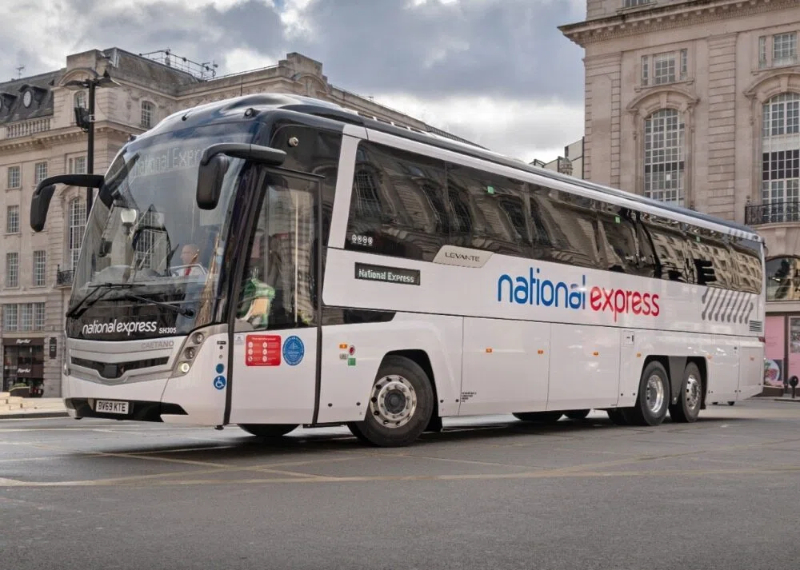
A major component of the expansion is the launch of faster, more direct services between key London airports and the city's core districts, as well as between airports and regional centres.
New routes now connect London Luton Airport and London Stansted Airport to some of the most important locations in central London. These services are designed to give passengers a simple, one‑seat ride between the airport and the city, without having to navigate complex rail interchanges.
Typical calling points include:
- Golders Green
- Finchley Road
- Baker Street
- Paddington
- Marble Arch
These stops provide convenient access to hotels, tourist attractions, business districts and onward rail or Underground connections. For travellers with luggage or tight schedules, a direct coach with guaranteed seating can be significantly less stressful than multiple train changes.
Heathrow and Gatwick also benefit from new and enhanced connections:
- Routes linking Rugby, Coventry and Warwick to Heathrow and London create a valuable gateway for international business travellers and students.
- A South Coast–Gatwick Airport corridor connects key coastal cities such as Poole, Bournemouth, Southampton, Fareham, Portsmouth and Chichester to Gatwick.
- Additional services align better with flight times, supporting late‑night arrivals, early‑morning departures and weekend peaks.
These routes strengthen multi‑modal travel, allowing passengers to combine air travel with long‑distance coach services for seamless national and international journeys.
Beyond airport corridors, National Express has also reinforced key intercity and regional routes, especially between the Midlands, the North of England, Scotland and London.
New and upgraded services include:
- Huddersfield – Bradford – Leeds – Meadowhall – Derby – Birmingham
- Grimsby – Cleethorpes – Louth – Lincoln – Newark‑on‑Trent – Leicester – Birmingham
- Hull – Scunthorpe – Nottingham – London
- Grimsby – Louth – Lincoln – Nottingham – London
These routes connect industrial centres, university towns and commercial hubs, broadening travel options for commuters, students and leisure travellers. They also provide more direct links between regional cities without requiring travellers to route through London.
Several services strengthen cross‑border connectivity, including:
- Edinburgh – Glasgow – Carlisle – Manchester – Liverpool
- Glasgow – Carlisle – Milton Keynes – London
- Edinburgh – Glasgow – Hamilton – Milton Keynes – Golders Green – London
These lines create a flexible corridor between Scotland and England, with multiple boarding points and fewer interchanges. Passengers benefit from more point‑to‑point choices, whether they're travelling for business, tourism or visiting family and friends.
On the southern and south‑western corridors, new and enhanced services include:
- Poole – Bournemouth – Southampton – Fareham – Portsmouth – Chichester – Gatwick Airport
- Penzance – Camborne – Newquay – Launceston – Okehampton – Exeter – Heathrow Airport – London
These routes assist both holidaymakers and residents, opening up direct links from coastal and tourist towns to London and major airports. They also help support regional tourism by making it easier for visitors to reach seaside resorts without a car.
To support these new routes and improved timetables, National Express has significantly lifted its overall capacity:
- Around 11,000 coach journeys now operate each week across the network.
- Approximately 130 new or additional vehicles have been introduced to support increased demand and service reliability.
This capacity boost is vital for managing peak periods such as bank holidays, school breaks and major events, when demand for intercity travel spikes. It also enables:
- More frequent departures on busy corridors, reducing waiting times.
- Better resilience to disruptions, as a larger fleet increases flexibility when dealing with operational issues.
- Higher comfort standards, as newer vehicles typically offer upgraded interiors and modern amenities.
In parallel, the wider UK bus and coach market has seen strong new vehicle deliveries, reflecting renewed investment in fleets and infrastructure across the sector.
National Express's expansion reflects a broader shift in how people travel in and between UK cities:
- Coach passengers appreciate transparent pricing and the possibility of booking affordable long‑distance trips even at short notice.
- Students, families and budget‑conscious travellers often find coaches a better fit for their budget than rail, especially when luggage and flexibility are taken into account.
- More business travellers are using coaches for certain routes where they can work comfortably on board thanks to Wi‑Fi and power outlets.
- Increasing emphasis on sustainability and emissions reductions is encouraging some travellers to choose collective modes of transport over single‑occupancy car journeys.
National and local policies to encourage greener, public transport‑led mobility are also shaping demand. Investments in integrated networks, zero‑emission fleets and cross‑modal ticketing all contribute to an environment where coach operators can play a larger role in the overall transport mix.
To make effective use of the expanded network, travellers can follow a clear, practical decision process.
- If you're travelling city to city, look for routes that start or end at central bus stations or key urban hubs to minimise local transfers.
- If you're travelling city to airport, prioritise direct airport services that match your flight times, especially Luton, Stansted, Heathrow and Gatwick routes.
- For cross‑country travel, consider routes that connect multiple regions (for example, Scotland–North–Midlands–London) to avoid unnecessary detours.
- Check whether there are early‑morning or late‑evening departures that align with check‑in, event start times or meetings.
- Look at how frequently services run during the day; a route with multiple daily departures offers more flexibility if your plans change.
- For overnight journeys, consider services that allow you to sleep on board and arrive in the morning, saving both time and accommodation cost.
When comparing coach and train:
- Consider door‑to‑door time, not just in‑vehicle time. Direct coach services to city centres or airports may eliminate one or two transfers.
- Factor in the cost of connecting trains, taxis or airport parking if you would otherwise drive or use rail.
- Use flexible fares where available if your plans are uncertain, especially around busy periods.
- For long trips, look for services with Wi‑Fi, charging outlets and onboard toilets to ensure comfort and productivity.
- If you are travelling overnight or over several hours, seats with extra legroom and adjustable backrests can make a noticeable difference.
- Some routes may offer additional features, such as reserved seating or enhanced luggage options.
To get the most from National Express's expanded network, consider the following simple but effective tips:
- Arrive early: Plan to be at the departure point at least 15–30 minutes before departure, especially at busy hubs or airports.
- Manage your luggage smartly: Keep essentials – travel documents, valuables, medication and electronics – in a small cabin bag; check larger bags into the hold if the service allows.
- Choose your seat wisely: If seat selection or boarding order allows, window seats in the middle of the coach often balance comfort and stability.
- Prepare for connectivity: Even with on‑board Wi‑Fi, signal may vary along the route; download important documents, playlists or entertainment in advance.
- Stay comfortable: Bring a neck pillow, light scarf or jumper and noise‑cancelling headphones for longer or overnight journeys.
These small preparations can transform a long coach journey into productive working time or a relaxed start to your holiday.
National Express's expansion offers several strategic lessons for other coach operators, bus companies and commercial vehicle suppliers:
- Focus on high‑value corridors: Prioritise routes that connect major economic and population centres – such as regional capitals, airports, university towns and tourist destinations.
- Align services with macro trends: Monitor rail performance, fuel prices, airline network changes and government transport policies to anticipate demand shifts and adjust routes and frequencies proactively.
- Invest in fleet quality: Modern coaches with efficient powertrains and passenger‑friendly interiors can differentiate a service in a crowded market and support premium or business‑oriented offerings.
- Leverage data for scheduling: Use booking data and demand forecasting to optimise timetables, ensuring vehicles are deployed where they can achieve high occupancy and reliability.
- Support sustainability goals: Upgrading to low‑emission or zero‑emission vehicles aligns fleets with national decarbonisation plans and can unlock access to funding or partnership opportunities.
For leading commercial vehicle suppliers and remarketers, such as KeyChain, these trends point to rising demand for reliable, high‑performance used coaches and heavy‑duty buses that can slot quickly into expanding networks. Operators seeking to grow or modernise their fleets often look for trusted partners who can provide well‑specified vehicles, technical support and flexible procurement options.
Coaches have a crucial part to play in the UK's journey towards a lower‑carbon, more efficient transport system:
- By carrying dozens of passengers per vehicle, coaches can significantly reduce per‑person emissions compared with many individual car trips.
- When integrated with rail and local bus networks, they fill gaps in coverage and help reduce the need for short‑haul domestic flights.
- Modern, fuel‑efficient or zero‑emission coaches contribute to better air quality, particularly in urban and suburban areas.
Government policy and regional mobility strategies increasingly emphasise modal shift – encouraging people to move from private cars to buses, coaches, rail, cycling and walking. National Express's expanded network is well‑placed to support this shift, especially on long‑distance and airport routes where viable alternatives to driving are essential.
National Express's expanded UK coach network means:
- More routes and more frequent services between major cities, regional hubs and airports.
- Improved reliability and comfort thanks to substantial fleet investment.
- Better value and more sustainable options for long‑distance and airport transfers.
- New opportunities for operators, local authorities and vehicle suppliers to collaborate on an integrated, greener transport system.
Whether you are a leisure traveller heading to the coast, a student returning to university, a business passenger flying in for meetings or an operator planning your next network move, the enhanced coach network offers more choice, more comfort and more connectivity than ever.
If you are planning intercity or airport travel in the UK, consider using the expanded National Express coach network to enjoy affordable, reliable and more sustainable journeys. For operators and fleet planners looking to capitalise on the growth of long‑distance coach services, partnering with specialised commercial vehicle suppliers can help you source the high‑performance buses and coaches you need to scale quickly and confidently.
Contact us to get more information!
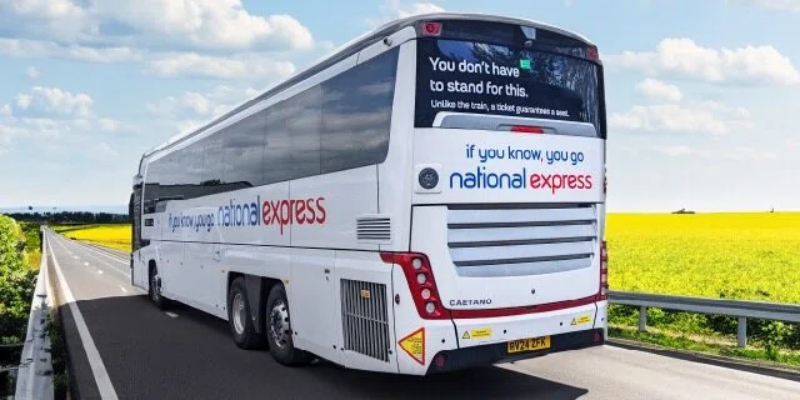
National Express has added around 15 new coach routes across the UK, focusing on key intercity corridors and major airport connections. These include links between regional cities, cross‑border routes connecting Scotland and England, and services that better connect coastal and tourist areas to London and other hubs. Together, they significantly expand the range of destinations accessible by direct coach services.
Following the expansion, the National Express coach network offers in the region of 11,000 journeys each week. This increased capacity allows for more frequent services on busy routes and greater flexibility in handling peak‑period demand. It also gives the operator more room to introduce timetable refinements and additional stops where passenger demand is growing.
To support the expanded network, National Express has introduced approximately 130 additional coaches to its fleet. These newer vehicles typically feature more comfortable seating, climate control, Wi‑Fi connectivity and power sockets, enhancing the passenger experience on long journeys. The modern fleet also helps improve fuel efficiency and emissions performance, aligning with wider sustainability goals.
Coach travel offers several advantages over rail or driving, particularly for long‑distance and airport journeys. Fares are often more affordable, especially for last‑minute bookings or peak travel days. Direct routes can reduce the need for multiple transfers, making door‑to‑door travel times competitive with other modes. Additionally, passengers enjoy guaranteed seating, generous luggage allowances and onboard facilities such as Wi‑Fi and power outlets, which can make journeys more comfortable and productive.
By increasing the number and frequency of coach services, National Express encourages more travellers to shift from private cars and short‑haul flights to shared, collective transport. High‑occupancy coaches can significantly reduce emissions per passenger compared with many car journeys, particularly on busy routes. Combined with newer, more efficient vehicles, the expanded network supports national and local ambitions to cut transport‑related emissions and promote greener travel choices.
1. https://bus-news.com/national-express-announces-expands-uk-coach-network/
2. https://bus-news.com/national-express-further-expands-uk-coach-network/
3. https://www.nationalexpress.com/en/news/national-express-boosts-capacity-on-its-regional-network
4. https://www.velociti-solutions.com/government-bus-statics-2023-2024/
5. https://www.gov.uk/government/statistics/national-travel-survey-2024/nts-2024-trends-in-public-transport-trips
6. https://www.sustainable-bus.com/news/uk-government-funding-public-transport-england/
7. https://www.pailton.com/news/why-was-2024-such-a-good-year-for-uk-buses/


