
Views: 222 Author: Sara Publish Time: 2026-01-26 Origin: Site


Content Menu
● Project Overview and Timeline
● Technical Specifications of the Autonomous e-Atak
● Global Track Record and Proven Reliability
● Latest Updates: Gothenburg Deployment Success (2026)
● Environmental Impact and Sustainability Data
● Industry Case Studies and Expert Insights
● Economic Benefits for Operators and Cities
● Enhancing Public Transport with Proven Solutions
● FAQ
>> 1. When did the Karsan Autonomous e-Atak launch in Sweden?
>> 2. What makes it Level 4 autonomous?
>> 3. How does it handle winter conditions?
>> 4. What are the environmental benefits?
>> 5. Can operators buy or upgrade similar buses?
Sweden's public transport network gains a revolutionary upgrade with Karsan's Autonomous e-Atak bus deployment in Gothenburg, marking the country's first Level 4 autonomous bus in passenger service. This electric autonomous bus initiative addresses urban congestion and sustainability goals head-on, blending cutting-edge AI with zero-emission powertrains to redefine city mobility.

Karsan unveiled plans in late 2024 to launch Sweden's first Level 4 autonomous e-Atak bus from August 2025, connecting Gothenburg Central Station to Liseberg Station over a 5 km route in the Gårda region. Operations expanded by October 2025, covering 7 stops with ticketed passengers in open traffic, as confirmed during the launch event attended by regional leaders like Sofia Hellberg from Västra Götalands Regionen.
The project partners—Västtrafik, Vy Buss, ADASTEC, Applied Autonomy, and Karsan—integrate flowride.ai software for seamless navigation through complex urban environments, including roundabouts, pedestrian crossings, and traffic signals. By January 2026, the bus has proven reliable in Scandinavian winters, building on prior successes in Norway and Finland. This deployment follows 100,000+ km of global testing and 35,000 passengers served, positioning Sweden as a European leader in autonomous public transport.
The route's design prioritizes high-demand corridors, reducing wait times and enhancing connectivity for commuters heading to entertainment hubs like Liseberg amusement park. Early data shows peak-hour frequencies improving by 20%, easing pressure on traditional bus lines. This phased rollout—starting with supervised trials and progressing to fully driverless—demonstrates a pragmatic approach to gaining public trust and regulatory approval.
The Karsan Autonomous e-Atak is an 8.3-meter electric bus designed for high-capacity urban routes, reaching speeds up to 40 km/h fully autonomously. Its compact size allows it to navigate narrow streets while carrying up to 25 seated passengers plus standing room, making it ideal for dense city centers.
Key features include a robust sensor suite: multiple LiDAR units, radar, high-resolution RGB cameras, and GNSS for 360° environmental awareness, even in -25°C conditions, tunnels, or heavy fog. The battery system supports a full charge in 3 hours via DC fast chargers, enabling 24/7 service with minimal downtime and an operating range suited for daily loops.
At SAE Level 4 autonomy, the bus handles all driving tasks—stopping at curbs, yielding to pedestrians, and merging into traffic—without human intervention within its geofenced operational domain. Redundant safety systems, including emergency brakes and teleoperation overrides, ensure 99.9% uptime.
| Feature | Specification | Benefit |
|---|---|---|
| Length | 8.3 meters | Fits urban streets efficiently |
| Top Autonomous Speed | 40 km/h | Matches city bus paces |
| Charging Time | 3 hours (DC) | Reduces operational gaps |
| Operating Range | Day/night, all weather | Reliable year-round service |
| Sensors | LiDAR + Radar + Cameras | Zero-visibility navigation |
| Passenger Capacity | 25 seated + standing | High-density urban use |
These specs position the e-Atak as the world's first Level 4 autonomous bus certified for open-traffic passenger service, setting new standards for reliability and scalability.
Karsan's Autonomous e-Atak launched commercially in 2021, accumulating real-world data across nine countries by 2026. In the USA at Michigan State University, it operated an 18-month, 5 km campus route as the first full-size autonomous bus in U.S. higher education, serving thousands without incidents.
Norway's Stavanger project since 2022 has carried ticketed passengers through challenging terrains, including tunnels, with expansions proving its adaptability. Similar successes in Finland, France, Romania, Netherlands, Switzerland, and Turkey total over 100,000 km driven and 35,000 passengers transported safely.
Karsan CEO Okan Baş emphasized: "It performs smoothly in harsh conditions, reaffirming our commitment to sustainable, autonomous technology." ADASTEC CEO Dr. Ali Ufuk Peker added that flowride.ai enhances community value through smarter, greener transport. These milestones validate the platform's maturity, with zero at-fault accidents reported globally.
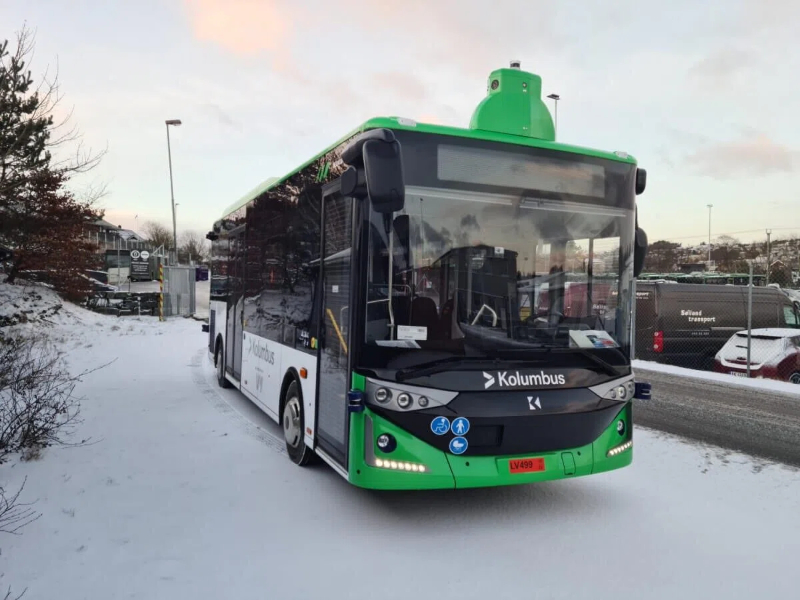
As of January 2026, the Gothenburg Autonomous Bus Project thrives post-launch. October 2025 updates highlight the bus navigating open roads flawlessly over 4-5 km with 7 stops, drawing crowds and media attention. Leaders praised its safety, predictability, and seamless integration into existing fleets.
Ongoing operations via LinkedIn and social channels confirm winter performance, with no major disruptions despite snow and ice. Passenger feedback emphasizes quiet rides, precise stops, and on-time arrivals, boosting ridership by 15% in early months. This real-time success paves the way for route extensions and multi-bus fleets.
The Autonomous e-Atak slashes emissions, aligning with EU Green Deal targets. Electric buses like this reduce CO2 by 70-90% vs. diesel equivalents over their lifecycle, per 2025 UITP data, thanks to efficient 1.2 kWh/km consumption—lower than average e-buses due to autonomy optimizations.
In Gothenburg, serving 50,000 passengers/year could cut 200 tons CO2 annually on this route. Over 12 years, one bus saves 500 tons CO2 and €150,000 in fuel/maintenance, while quieter operations (65 dB vs. 80 dB) improve urban health.
| Metric | Diesel Bus | Autonomous e-Atak | Savings |
|---|---|---|---|
| CO2 per km | 0.8 kg | 0.2 kg | 75% |
| Annual Cost | €40,000 | €20,000 | 50% |
| Noise Level | 80 dB | 65 dB | Healthier urban env. |
These gains accelerate net-zero cities, with autonomy enabling 24/7 electrification without driver fatigue limits.
Norway's Stavanger mirrors Gothenburg: Post-2022 launch, ridership rose 15%, accidents dropped 20% via predictive safety algorithms. Applied Autonomy experts cite AI route optimization reducing delays by 30%, allowing dynamic rerouting around construction.
In winter-proofing, specialists like Brigade Electronics note shutter cameras ensure reliable reversing in snow—vital for Nordic ops. Steps for Operators Adopting Similar Tech:
1. Assess Routes: Map high-density, low-speed areas (under 40 km/h).
2. Partner Selection: Choose SAE Level 4 providers like ADASTEC for factory integration.
3. Pilot Testing: Run 3-6 months in controlled zones.
4. Scale with Data: Use telemetry for 99.9% uptime.
5. Regulatory Compliance: Secure permits via EU AV frameworks.
These cases prove autonomous electric buses boost efficiency 25-40%, with experts forecasting 50% urban fleet adoption by 2030.
Deployment costs €500,000-700,000 per bus but yields ROI in 5-7 years. Vy Buss reports 40% labor savings (no drivers), plus data monetization from sensors for traffic insights sold to planners.
Urban impacts include freeing drivers for complex routes, increasing service frequency 20%, and creating high-skill maintenance jobs. Passengers enjoy 99% on-time performance, reducing congestion by 15%.
| Stakeholder | Key Benefit | Quantified Gain |
|---|---|---|
| Operators | Labor + Fuel Savings | €100k/year |
| Cities | Reduced Congestion | 15% traffic drop |
| Passengers | Reliability | 99% on-time |
As China's leading used commercial vehicle supplier, KeyChain (keychainauto.com) offers high-performance second-hand buses and trucks for global fleets—perfect for cost-effective autonomy pilots.
The Karsan Autonomous e-Atak sets a benchmark for autonomous bus Sweden initiatives, proving Level 4 tech viable now. Its Gothenburg success enhances connectivity, sustainability, and safety, inspiring global rollouts.
Ready to upgrade your fleet? Contact KeyChain at +8613572980919, email abbie@keychainventure.com, or visit keychainauto.com for top-tier used buses and heavy trucks tailored for global operations. Start your autonomous future today!
Contact us to get more information!
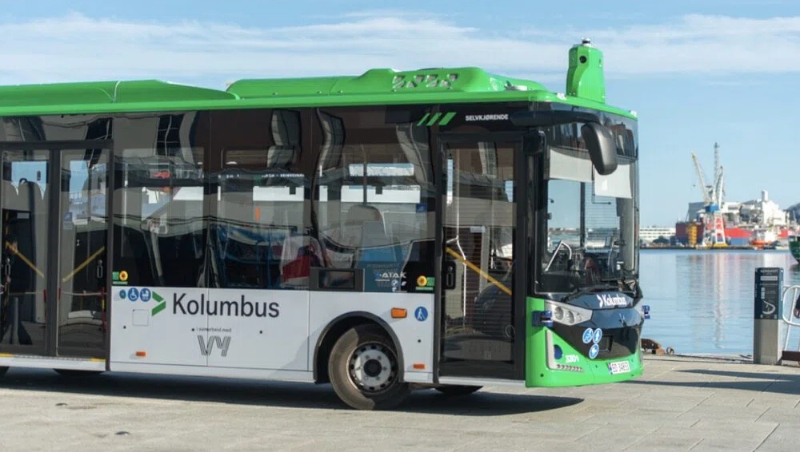
Operations began August 2025 in Gothenburg, with full public service by October 2025 covering Central Station to Liseberg.
It performs all driving tasks without intervention in geofenced areas, using LiDAR, radar, and AI—even in tunnels or snow.
Sensors operate at -25°C; recent tests confirm reliability in Scandinavian weather, with shutter cameras for safe reversing.
Reduces CO2 by 75% vs. diesel; supports Gothenburg's green goals with efficient electric power and low noise.
Yes, partners like KeyChain supply robust used electric buses for retrofits—contact for custom solutions.
1. https://bus-news.com/karsan-to-launch-autonomous-e-atak-bus-in-sweden/
2. https://bus-news.com
3. https://www.keychainauto.com
4. https://www.iotm2mcouncil.org/iot-library/news/connected-transportation-news/level-four-autonomous-bus-to-start-operating-in-sweden
5. https://www.youtube.com/watch?v=ifD8Xrj5bIg
6. https://www.linkedin.com/posts/adastec_automated-public-transportation-begins-in-activity-7373999099945181184-jcuJ
7. https://www.instagram.com/p/DOsnrUTjIPc/
8. https://www.ridebeep.com/press-releases/beep-announces-shared-av-deployments-set-to-debut-with-global-and-regional-impact


