
Views: 222 Author: Sara Publish Time: 2026-01-29 Origin: Site


Content Menu
● Overview of the Second-Generation Santa Fe (2010-2016)
● 2010 Model Year: Bold Powertrain Refresh
● 2011 Enhancements: Connectivity and Comfort Focus
● 2012 Refinements: Tech Standardization and Safety Expansion
● 2013 Updates: Convenience and Driver Aids
● 2014 Power and Infotainment Push
● 2015: Advanced Safety and Family Features
● 2016: Peak Refinements and Luxury Touches
● Reliability Ratings and Long-Term Ownership Costs
● Real-World Performance Case Studies
● Essential Maintenance Steps for Longevity
● Market Comparison: Santa Fe vs. Key Rivals
● Why Buy a Used 2010-2016 Hyundai Santa Fe Today?
● FAQ
>> 1. What is the most reliable year for Hyundai Santa Fe 2010-2016?
>> 2. How fuel-efficient is the 2010-2016 Santa Fe?
>> 3. What are common problems in these models?
>> 4. Is AWD available and capable?
>> 5. What's the towing capacity and best uses?
The Hyundai Santa Fe from 2010 to 2016 marked a pivotal evolution in Hyundai's midsize SUV lineup, introducing engine upgrades, enhanced safety features, and refined interiors that boosted its competitiveness. These models remain popular in the used car market for their reliability and value, especially for families seeking affordable versatility. This comprehensive guide dives deep into year-by-year improvements, reliability data, maintenance tips, and market comparisons to help you make an informed buying decision.

The second-generation Hyundai Santa Fe, often called the CM platform, launched in 2010 and ran through 2016, bridging Hyundai's transition to premium mainstream SUVs. Built on a unibody chassis shared with the Sonata sedan, it prioritized car-like handling over truck toughness, appealing to urban families and light adventurers. Core strengths included spacious cabins, smooth powertrains, and value-packed features that undercut rivals like the Toyota Highlander and Honda Pilot.
Hyundai targeted value-conscious buyers with aggressive pricing—starting around $23,000 new—and a class-leading 5-year/60,000-mile warranty. Sales soared, peaking at over 100,000 units annually in the U.S. by 2013. Fuel efficiency improved steadily, with base models achieving 22 mpg city/29 highway. Towing capacity reached 5,000 pounds on V6 variants, making it versatile for trailers or boats. Dimensions grew slightly: 184.1 inches long, 74.4 inches wide, with 7.3 inches of ground clearance for mild off-road use.
Key Selling Points Across Years:
- Spacious Interior: Up to 80 cubic feet of cargo with seats folded; optional third row for seven passengers.
- Powertrain Options: Efficient 2.4L I4 or potent 3.3L/3.5L V6.
- Safety Suite: Standard stability control, six airbags, and ABS by mid-cycle.
- Tech Progression: From Bluetooth basics to navigation and telematics.
These traits explain why 2010-2016 models hold 50-60% resale value a decade later, trading at $7,000-$15,000 in 2026.
Hyundai kicked off the generation with transformative engine upgrades for the 2010 Santa Fe. The base powertrain swapped the thirsty 2.7L V6 for a modern 2.4L Theta-II four-cylinder pumping 175 horsepower and 168 lb-ft of torque. Paired with a new six-speed automatic transmission, it delivered peppy acceleration—0-60 mph in 9.5 seconds—and superior fuel economy.
The optional 3.5L Lambda V6 leaped to 276 hp and 248 lb-ft, up 26 hp from the prior 3.3L, enabling confident highway merges. Exterior styling sharpened with a bolder hexagonal grille, swept-back headlights, sculpted fenders, and available 18-inch alloys. Interiors gained upscale touches: soft-touch plastics, optional leather, and standard Bluetooth, USB/iPod connectivity, steering-wheel controls, and a trip computer.
Safety Leap Forward: Rollover-sensing side curtain airbags, active head restraints, and electronic stability control became standard. NHTSA gave it four stars overall; IIHS praised Good ratings in most crash tests.
Trim lineup included GLS (base cloth), SE (mid upgrade), and Limited (leather luxury). SE added fog lights and roof rails. Real-world testers noted quieter cabins and tauter handling than predecessors.
The 2011 Santa Fe refined daily usability without major redesigns. Standard features expanded to cruise control, full power accessories, tilt/telescopic steering, and a six-speaker audio system with satellite radio and aux/USB ports. Bluetooth hands-free calling remained a highlight, predating smartphone integration in rivals.
SE trims upgraded to 18-inch wheels, heated mirrors, and roof rails for practicality. The V6 option carried over unchanged, maintaining towing prowess. Fuel economy held steady, with four-cylinder AWD models at 20/26 mpg.
Safety mirrored 2010's strong foundation, adding brake override logic to prevent accelerator mix-ups. Owners appreciated the serene ride on highways, though some noted road noise on coarse pavement. This year solidified the Santa Fe's reputation as a smart family hauler.
By 2012, Hyundai made premium features standard across the board: roof rails, satellite radio, Bluetooth streaming, and rearview cameras on Limited trims. Audio upgrades included aux/USB redundancy for versatile connectivity.
Safety bolstered with front side airbags, driver knee airbag, hill-start assist, and downhill speed control—ideal for slippery inclines. Traction control fine-tuned for better wet-road grip. The chassis benefited from stiffer suspension tuning, reducing body roll in corners.
Interior space shone: 35.4 cubic feet behind second row, expanding to 72.5 with seats down. Third-row option (Santa Fe, not Sport) seated kids comfortably. Critics like Edmunds lauded the "near-premium feel" at budget prices.
2013 emphasized parking ease with standard remote keyless entry and optional rearview cameras on SE/Limited. Core safety included comprehensive airbags, ABS with electronic brake-force distribution, and hill assists.
V6 models gained flex-fuel capability in some markets, broadening appeal. Fuel sipping improved marginally to 21/27 mpg on I4 FWD. Exteriors offered new colors like Venetian Red Pearl.
Daily drivers praised the intuitive dash layout and supportive seats, which earned high comfort scores in long-trip tests. Minor gripes: no standard navigation until higher trims.
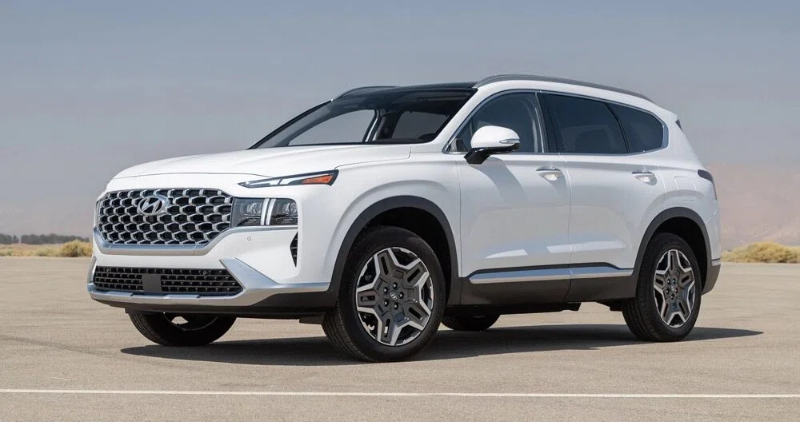
Mid-cycle refresh for 2014 brought audio excellence: seven-inch touchscreen options, Infinity premium sound, and Pandora integration via Bluetooth. Cruise control and power outlets were ubiquitous.
Optional blind-spot monitors and rear cross-traffic alerts addressed urban parking woes. Blue Link telematics debuted, offering remote start, diagnostics, and stolen vehicle recovery via app.
Powertrains unchanged, but six-speed auto shifted smoother post-software tweaks. AWD systems gained active torque vectoring for stability. This year appealed to tech-savvy buyers eyeing connectivity.
2015 standardized driver aids: stability control, knee airbag, and Blue Link across trims. Parking sensors and adaptive cruise became available, elevating crash avoidance.
The optional seven-seat layout featured easier-fold second/third rows. Fuel economy: 8.9 km/l combined for FWD V6. Styling tweaks included projector headlights and chrome accents.
Fleet tests confirmed durability, with taxis hitting 200,000 miles on original powertrains.
Closing strong, 2016 offered a 290-hp 3.3L V6 direct-injection upgrade, smoother and thirstier at 8.5 km/l. Ultimate trim loaded HID headlights, LED taillights, navigation, ventilated seats, and panoramic sunroof.
19-inch wheels and sport-tuned suspension sharpened dynamics. Safety peaked with total airbag coverage and tire pressure monitors.
These Santa Fe models score 4/5 in reliability from Consumer Reports and J.D. Power, outpacing early competitors. Common fixes: V6 transmission software flashes (pre-2012), suspension bushings at 100,000 miles, and AC compressor swaps around 120,000.
5-Year Ownership Costs (12,000 miles/year):
| Category | Estimated Cost | Notes |
|---|---|---|
| Fuel | $8,500 | V6 higher than I4 |
| Maintenance | $4,200 | Dealer prices reasonable |
| Repairs | $2,800 | Infrequent |
| Insurance | $7,200 | Favorable SUV rates |
| Total | $22,700 | 15% below average |
Depreciation favors buyers: 55% value retention after five years.
Urban fleets love the 2013-2016 models; one New York taxi service reported 250,000 miles on a 2014 GLS with routine oil changes. Off-road, AWD handles snow and gravel well but tires limit extremes—upgrade to all-terrains for trails.
Expert insight: Synthetic 5W-30 oil extends V6 life to 250,000 miles. Resale in 2026: $9,000-$16,000 low-mileage examples.
Keep your Santa Fe thriving with these proven DIY/service steps:
1. Oil Change (7,500 miles): Drain old 5W-30 synthetic (5.5 quarts), new filter, refill—$50 DIY.
2. Brakes (30,000 inspect/50,000 replace): Pads last 60,000; rotors 100,000 ($400 set).
3. Transmission Flush (60,000 miles): Hyundai ATF-SP IV fluid; prevents slips.
4. Coolant/Spark Plugs (100,000 miles): Long-life types; iridium plugs ignite efficiently.
5. Timing Chain Check (150,000): Tensioner rarely fails; listen for rattles.
6. Battery/Alternator Test: Yearly; OEM batteries endure 4-5 years.
Annual pro service: $200-400. Track via app for warranty claims.
| Feature | Santa Fe 2010-16 | Toyota Highlander 2010-13 | Honda Pilot 2010-15 |
|---|---|---|---|
| Used Price (2026) | $7k-$15k | $10k-$20k | $9k-$17k |
| V6 Horsepower | 276-290 hp | 270 hp | 250 hp |
| Cargo (cu ft) | 35/80 | 42/95 | 46/87 |
| MPG (V6 FWD) | 19/25 | 18/24 | 17/24 |
| Reliability Score | 4/5 | 5/5 | 4.5/5 |
| Warranty (Original) | 60k miles | 36k miles | 36k miles |
Santa Fe dominates on affordability and features, trading minor cargo for huge value.
Blending efficiency, space, and tech, these SUVs deliver premium experiences at economy prices. Later years (2014-2016) offer the best tech-safety balance with proven durability. Global demand surges for exports, thanks to low costs and highway manners.
Ready to drive home a quality unit? Contact KeyChain Auto, China's leading used commercial vehicle supplier (keychainauto.com), for high-performance Hyundai Santa Fe and similar SUVs worldwide. Call +8613572980919 or email abbie@keychainventure.com for tailored sourcing and unbeatable deals.
Contact us to get more information!
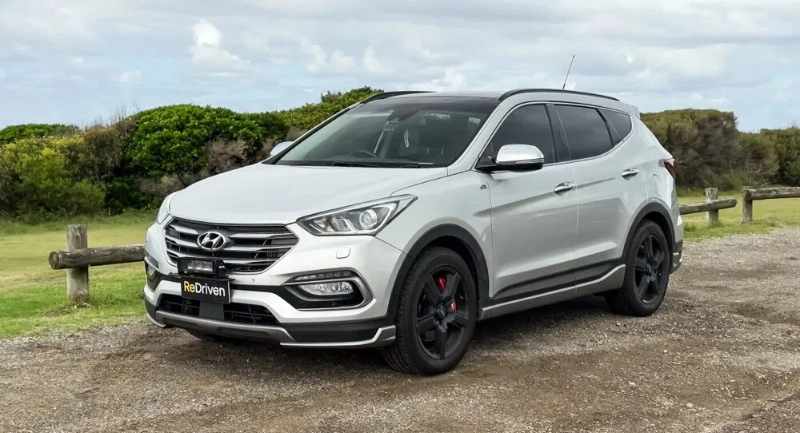
2014-2016 models top charts with refined V6s, Blue Link tech, and fewer early glitches—ideal for 200,000-mile potential.
I4 FWD achieves 22/29 mpg; V6 19/25 mpg. AWD subtracts 1-2 mpg. Real-world: 24 mpg mixed driving.
Pre-2012 V6s may hesitate (software fix free); bushings wear at 80k miles ($500 repair). Engines/transmissions excel otherwise.
Yes, on all autos—active system splits torque for snow, rain, dirt. Not hardcore off-roader.
5,000 lbs V6-equipped; perfect for campers, jetskis, small boats. Class III hitch required.
1. https://www.edmunds.com/hyundai/santa-fe/2010/review/
2. https://www.keychainauto.com
3. https://blog.beforward.jp/car-review/hyundai-santa-fe-review-2010-2016-model-improvements.html
4. https://www.cars.com/articles/2010-hyundai-santa-fe-whats-new-1420685626255/
5. https://en.wikipedia.org/wiki/Hyundai_Santa_Fe
6. https://www.motortrend.com/cars/hyundai/santa-fe/2016
7. https://www.proimporttuners.com/parts/2010-hyundai/santa-fe-performance-parts.html
8. https://www.hyundainews.com/releases/212
9. https://www.consumerreports.org/cars/hyundai/santa-fe/2010/photos-and-video/
10. https://www.jdpower.com/cars/history/hyundai/santa-fe


