
Views: 277 Author: Keychain Venture Publish Time: 2026-08-12 Origin: Site


Content Menu
● Why Engine Oil Checks Matter
● What You Need Before Checking Oil
● How to Check Engine Oil With a Dipstick
>> Step 1: Open the Engine Access Area
>> Step 2: Find the Oil Dipstick
>> Step 3: Remove and Clean the Dipstick
>> Step 4: Reinsert the Dipstick Fully
● How to Top Up Engine Oil Safely
● Choosing the Correct Engine Oil
● What Oil Appearance Can Tell You
● How Often Should You Check Engine Oil?
>> Suggested Oil-Check Schedule
● Oil Checks for Buses and Heavy Trucks
>> A Practical Fleet Inspection Routine
● Hybrid, Plug-In Hybrid and Battery-Electric Vehicles
● When to Contact a Professional
● A Simple Routine That Protects Your Vehicle
>> How long should I wait before checking engine oil?
>> Can I drive if the engine oil is below the minimum mark?
>> Does black engine oil mean it must be changed immediately?
>> Can too much engine oil damage an engine?
>> Do hybrid vehicles need engine-oil changes?
Engine oil performs several essential jobs inside petrol and diesel engines. It lubricates moving components, helps control heat, reduces friction, and carries contaminants toward the oil filter.
When the oil level becomes too low, critical engine parts may not receive sufficient lubrication. This can increase internal wear, raise operating temperatures, and lead to serious mechanical damage.
Too much oil can also create problems. An overfilled engine may experience increased pressure, oil foaming, seal leaks, and reduced lubrication efficiency.
For commercial vehicle operators, the consequences can be significant:
- Unexpected vehicle downtime
- Delayed passenger services or freight deliveries
- Higher repair and roadside-assistance costs
- Reduced fleet availability
- Greater risk of disruption during busy operating periods
A regular check takes only a few minutes, but it can prevent a costly repair or an avoidable service interruption.

Prepare the following items before starting:
- A clean lint-free cloth or paper towel
- Protective gloves
- The correct manufacturer-approved engine oil
- A clean funnel
- The vehicle owner's manual
- A maintenance checklist or digital inspection record
Always use the oil grade and specification approved for the specific engine. The correct oil may depend on engine design, climate, emissions equipment, operating load, and manufacturer requirements.
Park the vehicle on a flat, level surface before checking the oil. A slope can make the oil collect unevenly in the sump and create an inaccurate reading.
Apply the parking brake and switch off the engine. For commercial vehicles, follow your company's standard parking and isolation procedure.
Do not check the oil immediately after stopping the vehicle. Oil may still be circulating through the engine, and hot components can create a burn risk.
In many cases, allowing the engine to rest for around 10 minutes provides a more reliable reading. However, some vehicles have different procedures. Always follow the instructions in the owner's manual.
Most petrol, diesel, bus, and heavy-truck engines use a dipstick to measure oil level. Follow these steps carefully for an accurate result.
Open the bonnet, hood, engine hatch, or service panel.
On passenger vehicles, the engine is normally located at the front. On coaches, city buses, and heavy trucks, access may be through a side panel, rear compartment, or tilted cab.
Make sure the vehicle is stable and secure before opening any engine-access area.
The engine-oil dipstick often has a brightly coloured handle, such as yellow, orange, or red.
Do not assume every dipstick measures engine oil. Some vehicles have separate dipsticks for transmission fluid or other systems. If you are unsure, check the owner's manual or ask a qualified technician.
Pull the dipstick fully out of the tube.
Use a clean cloth or paper towel to wipe all oil from the measuring end. This first wipe is important because oil can splash up the dipstick tube while the vehicle is running.
Insert the dipstick back into its tube until it is fully seated.
Wait a few seconds, then remove it again slowly. Hold it horizontally to prevent oil from running along the stick and affecting the reading.
Most dipsticks have clear markings to show the safe operating range.
| Dipstick marking | Meaning | Recommended action |
|---|---|---|
| MIN / MAX | Minimum and maximum oil level | Keep oil between the marks |
| L / H | Low and high oil level | Add oil if it is at or below “L” |
| Cross-hatched section | Normal operating range | Oil should remain within this area |
| Two lines or holes | Lower and upper limits | Keep the oil level between them |
If the oil level sits between the lower and upper marks, it is generally within a safe range. It does not need to touch the maximum line.
If the level is close to or below the minimum mark, add the correct engine oil before putting the vehicle through a long journey, heavy load, or demanding duty cycle.
Adding engine oil should be done gradually. The goal is to bring the oil level into the safe operating range without overfilling the engine.
1. Confirm the correct oil type and specification.
2. Locate the engine-oil filler cap.
3. Remove the cap carefully.
4. Insert a clean funnel into the oil-filler opening.
5. Add a small quantity of oil.
6. Wait one to three minutes for the oil to settle in the sump.
7. Recheck the level using the dipstick.
8. Repeat only if necessary.
9. Refit the cap securely.
10. Clean up any oil spills from the engine bay.
For a passenger vehicle with low oil, adding a small amount first is safer than pouring in a large volume. The amount needed between the minimum and maximum marks varies by engine, so never rely on assumptions.
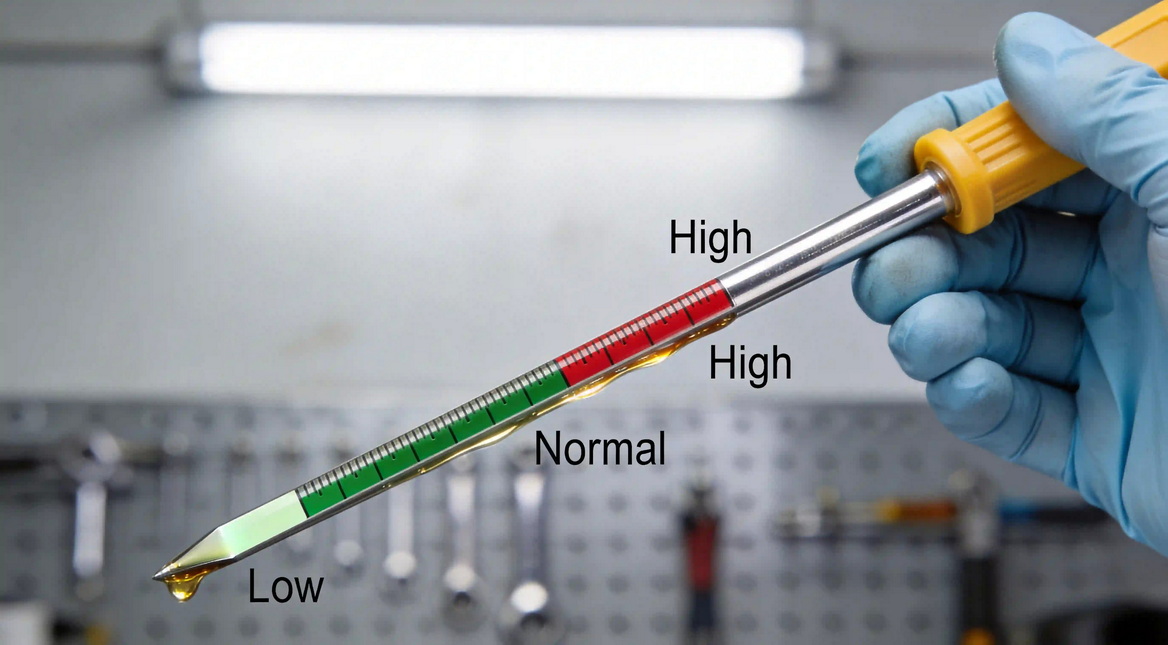
Overfilling can be just as harmful as running low on oil. Excess oil may be whipped into foam by moving engine parts, reducing its ability to lubricate properly.
If the oil level is above the maximum mark:
- Do not continue to add oil
- Do not ignore the problem
- Arrange for the excess oil to be removed safely
- Check whether an incorrect amount was added during a recent service
The correct lubricant is not determined by viscosity alone. A vehicle may require a specific oil grade, performance standard, or manufacturer approval.
Common viscosity grades include:
- 0W-20
- 0W-30
- 5W-30
- 5W-40
- 10W-40
- 15W-40
The numbers describe how the oil flows at different temperatures, but they do not replace the need to meet the correct technical specification.
Heavy-duty diesel engines may require different oil formulations depending on their emissions-control system, fuel quality, climate, engine load, and service interval. Commercial fleet operators should maintain clear lubricant records and avoid mixing unapproved products.
The colour and condition of engine oil can provide useful clues. However, visual checks do not replace professional diagnosis.
| Oil appearance or condition | Possible meaning | Recommended response |
|---|---|---|
| Brown or dark oil | Often normal after use | Follow the planned maintenance interval |
| Low oil level | Possible leak, consumption, or missed service | Top up correctly and investigate the cause |
| Milky or creamy oil | Possible coolant contamination | Stop operation and seek professional inspection |
| Metal particles | Possible internal engine wear | Arrange urgent technical diagnosis |
| Burnt smell | Possible overheating or degraded oil | Check the engine and maintenance history |
| Thick sludge | Possible poor maintenance or contamination | Seek workshop inspection |
Dark oil does not automatically mean it needs immediate replacement. Engine oil naturally darkens as it collects contaminants and performs its cleaning function.
However, milky oil, visible metallic particles, or a strong burnt smell should never be ignored. These signs may indicate a more serious mechanical issue.
The right interval depends on the vehicle type, engine age, route conditions, load, mileage, climate, and maintenance history.
For private passenger vehicles, checking the oil once a month is a sensible routine. It is also wise to inspect it before a long journey.
Older vehicles or vehicles with known oil-consumption issues may need more frequent monitoring.
| Vehicle type | Suggested checking routine |
|---|---|
| Passenger car | Once a month and before long trips |
| Older or high-mileage car | Weekly or at fuel stops, depending on oil use |
| Hybrid or plug-in hybrid | Follow the engine maintenance schedule |
| City bus or coach | During routine pre-trip or daily inspection |
| Heavy-duty truck | As part of daily walk-around checks |
| Battery-electric bus or truck | No engine-oil check required |
Commercial vehicles operating under high load, long-distance routes, frequent idling, high temperatures, steep gradients, or dusty conditions may need closer monitoring.
Oil checks are especially important for buses, coaches, and trucks because these vehicles often operate under sustained load.
A heavy truck travelling long distances with a full payload places much higher demands on the engine than a private car used for short daily trips. A bus working in stop-start urban traffic may also face extended idling periods and higher thermal stress.
Fleet teams should make oil inspection part of a documented routine rather than relying only on warning lights.

Before departure, drivers or maintenance personnel should inspect:
- Engine-oil level
- Coolant level
- Visible oil or coolant leaks
- Tyre condition and pressure
- Brake-system warnings
- Lights and indicators
- Windscreen washer fluid
- Battery connections where accessible
- Warning lights on the instrument panel
Recording the result helps identify patterns. For example, repeated oil top-ups on the same vehicle may reveal a developing leak, increased oil consumption, or an internal engine problem.
New energy vehicles have different maintenance requirements depending on their powertrain.
Hybrid vehicles combine an internal-combustion engine with electric components. They still require engine oil because the engine continues to operate.
Although the engine may run less often than in a conventional vehicle, drivers should still follow the specified time- and mileage-based maintenance intervals.
Plug-in hybrids also use an internal-combustion engine, even if many shorter journeys are completed in electric mode.
Oil condition can still deteriorate over time. This is why the maintenance schedule must be followed even when the engine has accumulated relatively low mileage.
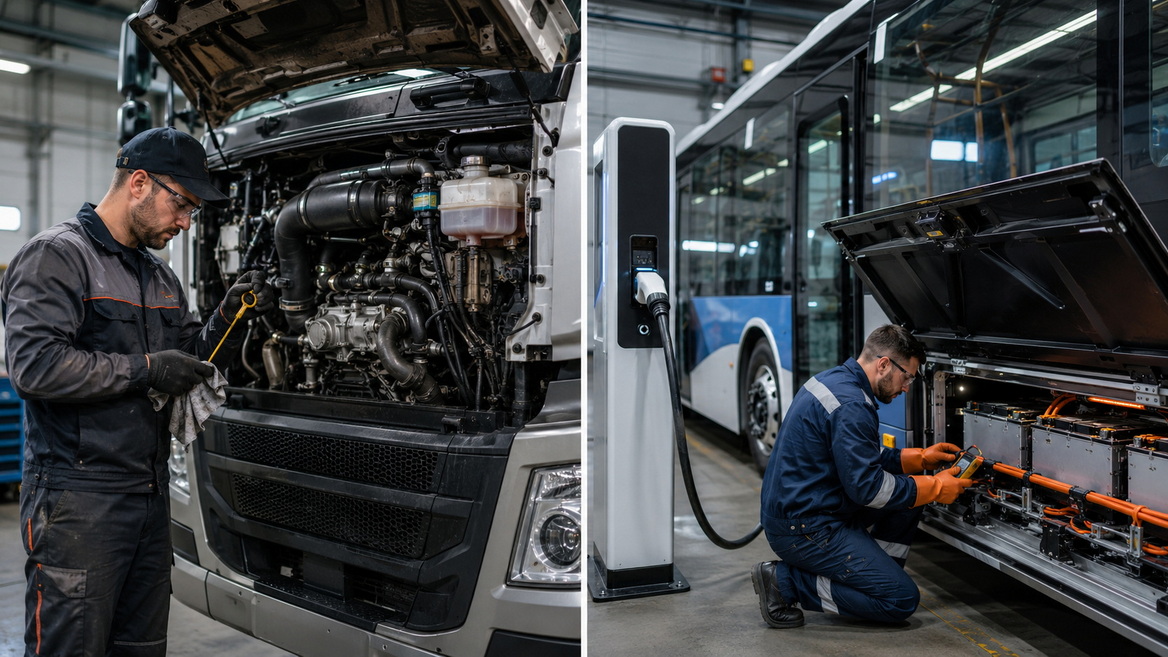
Battery-electric vehicles do not have a conventional engine, so there is no engine-oil dipstick and no routine engine-oil change.
Their maintenance focus shifts to other systems, including:
- Tyres and wheel alignment
- Brake components
- Suspension
- Battery thermal-management systems
- Cooling systems where fitted
- Charging connections
- High-voltage electrical components
- E-axles and reduction gears where applicable
High-voltage inspections and repairs should be carried out only by trained personnel using approved safety procedures.
A simple top-up is appropriate only when you know the correct oil and there are no serious warning signs.
Arrange professional support if you notice any of the following:
- Oil level falls repeatedly between checks
- Oil puddles appear beneath the vehicle
- An oil-pressure warning light appears
- The engine makes knocking, ticking, or unusual noises
- Oil looks milky or contains metal particles
- The oil level is above the maximum mark
- Blue, white, or excessive smoke appears from the exhaust
- You are unsure which oil specification to use
Repeated oil loss should not be treated as normal. Adding more oil without finding the cause may delay a mechanical failure and increase repair costs.
A regular engine-oil check is a small task with a major impact. It helps drivers spot potential issues early, supports safer operation, and protects the engine from unnecessary wear.
For vehicle owners, this routine can support long-term reliability. For fleet operators, it can improve uptime, reduce avoidable workshop visits, and help keep buses and trucks ready for daily service.
KeyChain provides high-quality buses, heavy trucks, and new energy vehicle solutions for domestic and international customers. Whether your operation requires conventional commercial vehicles, hybrid models, or battery-electric transport solutions, selecting the right vehicle and maintenance plan can make daily operations more reliable and efficient.
In many cases, wait around 10 minutes after switching off the engine so the oil can settle. Always check the owner's manual because procedures can differ by manufacturer and model.
Avoid driving long distances or under heavy load when oil is below the minimum mark. Add the correct oil as soon as possible, then investigate why the level became low.
Not necessarily. Oil often darkens during normal use. However, milky oil, metal particles, thick sludge, or a burnt smell may indicate a problem that requires inspection.
Yes. Overfilling can cause oil foaming, increased pressure, leaks, and reduced lubrication performance. Excess oil should be removed safely.
Yes. Hybrid and plug-in hybrid vehicles use internal-combustion engines and require oil checks and changes according to their maintenance schedules.
1. Evans Halshaw. Guide: How to Check and Top Up Your Car's Engine Oil https://www.evanshalshaw.com/blog/hands-on-help-a-guide-on-how-to-check-your-oil/
2. U. S. Department of Energy, Alternative Fuels Data Center. Maintenance and Safety of Electric Vehicles https://afdc.energy.gov/vehicles/electric-maintenance
3. Car and Driver. How to Check Your Car's Oil https://www.caranddriver.com/features/a28246625/how-to-check-engine-oil/
4. Consumer Reports. How to Check Engine Oil the Right Way https://www.consumerreports.org/cars/car-repair-maintenance/how-to-check-car-engine-oil-a7618306432/


