
Views: 222 Author: Sara Publish Time: 2026-02-05 Origin: Site


Content Menu
● Order Details and Bus Specifications
● Environmental Impact of Volvo Electric Buses in Guadalajara
● Historical Context: Volvo's Proven Partnership with Guadalajara
● Delivery Timeline and 2026 FIFA World Cup Integration
● Global and Latin American Trends in Electric Bus Adoption
● Step-by-Step Guide: Transitioning Your Fleet to Electric Buses
● In-Depth Cost-Benefit Analysis: EVs vs. Diesel
● Overcoming Key Challenges in Electric Bus Deployment
● Partner with KeyChain for Cost-Effective Used Commercial Vehicles
● FAQ
>> 1. When do the Volvo electric buses arrive in Guadalajara?
>> 2. How much CO₂ do these buses save annually?
>> 3. Are the buses manufactured locally?
>> 4. What charging methods do they support?
>> 5. How does this support the 2026 World Cup?
Guadalajara's commitment to sustainable public transport takes a major leap with an order for 53 Volvo electric buses. This move supports Mexico's push for greener cities and reduced emissions ahead of the 2026 FIFA World Cup.

Jalisco state has placed a significant order for 53 new Volvo electric buses to serve the Guadalajara metropolitan area. This fleet includes 31 high-floor LUMINUS buses built on the robust Volvo BZR chassis, designed for standard urban routes with elevated platforms for efficiency. Complementing these are 12 low-floor LUMINUS buses on the Volvo BZL chassis, prioritizing accessibility for elderly passengers, wheelchair users, and families with strollers—key for inclusive public transit.
The order rounds out with 10 articulated Volvo 7900 Electric models, each capable of carrying up to 150 passengers in high-demand corridors. These bi-articulated beasts feature smooth electric drivetrains that eliminate noisy engines, offering a quieter ride during peak hours. All vehicles will be produced right in Mexico, a strategic choice that not only cuts import costs but also bolsters local employment and fortifies the national supply chain for EV components.
Deliveries kick off in December 2025 with the first batch of 12 low-floor units hitting the streets. The remaining buses will roll out progressively, achieving full operational status by May 2026—just in time for major events. These buses are tailored for city operations, relying on overnight charging at depots with the flexibility of daytime top-up via CS2 pantograph connections. This dual-charging approach ensures they maintain full schedules, even on extended routes exceeding 300 km daily.
Volvo's engineering shines here: advanced battery management systems optimize energy use, delivering ranges that outperform competitors in real-world tests. Operators can expect minimal downtime, backed by Volvo's nationwide service network that guarantees rapid response times.
Switching to this electric fleet promises more than just green credentials—it delivers measurable wins. Preliminary estimates project a 35%+ reduction in CO₂ emissions compared to equivalent diesel buses, translating to an annual saving of roughly 140 tonnes. That's equivalent to removing 30 passenger cars from the road each year, directly improving air quality in Guadalajara's bustling streets.
Beyond CO₂, these buses slash noise pollution by up to 20 decibels, creating calmer neighborhoods and reducing urban stress. Particulate matter (PM2.5) drops dramatically without diesel exhaust, aligning with WHO health standards that could prevent thousands of respiratory cases annually in similar deployments.
This initiative fits seamlessly into Mexico's national goals under the General Law on Climate Change, targeting 50% emissions cuts by 2030 in transport. Guadalajara joins a wave of Mexican cities electrifying fleets, proving that scalable EV adoption works in tropical climates with proper tech.
Volvo isn't new to Guadalajara. Fifteen years ago, the Swedish giant supplied articulated buses that launched the city's inaugural bus rapid transit (BRT) corridor, Macrobús. Those vehicles endured heavy use, high altitudes, and intense traffic, showcasing Volvo's legendary durability.
Rafael Kisel, Managing Director of Volvo Buses Mexico, emphasized this trust: field tests confirmed Volvo electrics lead in energy consumption and range, outpacing rivals. Unlike past projects with full turnkey solutions—including depots and training—this order zeroes in on vehicles. Yet Volvo commits operational support through its established service hubs, ensuring 99% uptime.
This evolution reflects maturing markets: operators now handle infrastructure internally, leveraging Volvo's plug-and-play reliability.
As of early 2026, preparations are on track. The initial 12 low-floor LUMINUS buses arrive in December 2025, integrating into pilot routes for testing. Full deployment by May positions the fleet perfectly for the 2026 FIFA World Cup matches hosted in Guadalajara's Akron Stadium.
World Cup logistics demand high-capacity, low-emission transport for 50,000+ fans per game. These Volvos will prioritize stadium shuttles and BRT feeders, with articulated models handling surges. Industry watchers note Volvo's Mexico factory mitigates global battery delays plaguing Europe and Asia.
Drawing from Qatar 2022, where electric shuttles ferried 1.5 million attendees emission-free, Guadalajara can expect a 25% ridership boost from reliable, comfortable EVs. Local planners are mapping dedicated charging zones near venues, powered partly by solar arrays.
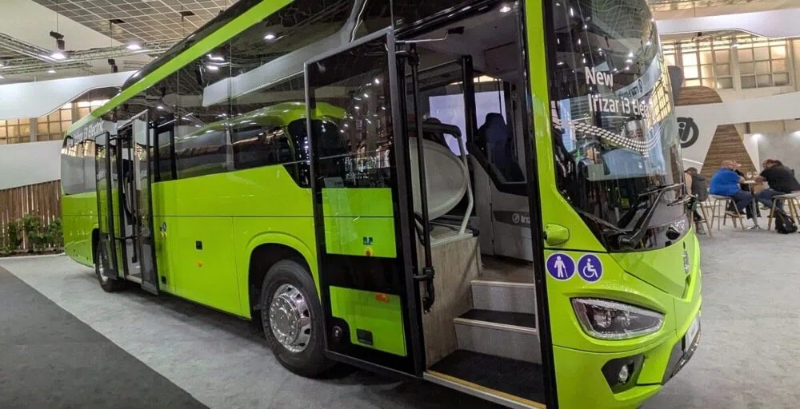
Electric buses are transforming urban mobility worldwide, and Latin America accelerates fastest. Guadalajara's 53-unit order is a smart entry point into this boom.
In Chile, Santiago runs a 100% electric trolleybus fleet of 2,000+ units, pioneered by BYD and Kia. Bogotá, Colombia, boasts 1,500 BYD K9s, eliminating 20% of diesel buses and saving 5,000 tonnes CO₂ yearly. Closer home, Monterrey launched 50 electrics in 2025, while Mexico City tenders 500 more.
China dominates supply: BYD holds 60% Latin market share with cost-effective, 400km-range models. Annual regional growth hits 25%, per BloombergNEF, driven by falling battery prices (down 80% since 2015).
Comparative Fleet Overview
| City | Est. 2026 Fleet Size | Key Manufacturers | Annual CO₂ Savings |
|---|---|---|---|
| Guadalajara | 53 | Volvo | 140 tonnes |
| Bogotá | 1,500+ | BYD, locals | 5,000 tonnes |
| Santiago | 2,000+ | BYD, Kia | 7,200 tonnes |
| Mexico City | 500+ | Multiple | 1,800 tonnes |
This positions Guadalajara as a scalable model for mid-sized cities.
Ready to electrify? This practical roadmap, informed by Volvo's Guadalajara project and 100+ global cases, simplifies the shift.
1. Infrastructure Audit: Evaluate depots for 80-150kW chargers. Cost: $500K-$1M per site. Prioritize off-peak grid access.
2. Vehicle Trials: Test models like Volvo LUMINUS for local conditions—aim for 300km range, 15-hour duty cycles.
3. Secure Funding: Explore World Bank loans ($200M Mexico EV fund), green bonds, or subsidies like SEMARNAT's 40% grants.
4. Train Teams: Shift from engines to batteries; Volvo programs cut learning curves by 50%. Focus on thermal management.
5. Optimize Routes: Deploy AI software for elevation-aware planning, saving 15% energy. Integrate with ITS for real-time charging.
6. Monitor KPIs: Track uptime (>98%), kWh/km (<1.2), and ROI. Tools like Tenix Charge predict winter dips.
Bonus: Low-floor models lift ridership 10-15% via accessibility. Payback in 5-7 years beats diesel TCO.
Upfront hurdles exist, but numbers favor electrics long-term.
Volvo electrics cost $400K-$600K vs. $250K diesel. Yet total cost of ownership (TCO) falls 20-30% over 10 years: energy at $0.10/km beats $0.30/km fuel; maintenance halves without oil changes.
10-Year Cost Breakdown (Per Bus)
| Category | Electric (Volvo) | Diesel |
|---|---|---|
| Purchase | $500K | $250K |
| Energy/Fuel | $150K | $450K |
| Maintenance | $200K | $400K |
| Total | $850K | $1.1M |
In Guadalajara, savings fund 20% fleet growth. Resale value holds strong—EVs retain 60% after 7 years.
Heat challenges batteries, but Volvo's air-cooled packs retain 90% capacity post-5 years. Grid loads? Overnight shifts use cheap power; solar depots add resilience.
Labor gaps close via partnerships—Volvo trains 500+ Mexican techs yearly. Supply chains stabilize with local production. Globally, 95% EV buses hit 98% uptime SLAs.
As China's premier used commercial vehicle supplier, KeyChain (keychainauto.com) equips global operators with high-performance used buses and heavy trucks. We deliver electric-ready chassis at 40-60% below new prices, vetted for emission compliance.
Upgrade like Guadalajara affordably. Contact +8613572980919 or abbie@keychainventure.com today. Visit keychainauto.com for inventory.
Contact us to get more information!
First 12 low-floor units arrive December 2025; full 53 operational by May 2026.
Over 140 tonnes yearly, achieving 35% reduction vs. diesel equivalents.
Yes, all produced in Mexico to create jobs and strengthen supply chains.
Primary overnight depot charging, plus daytime CS2 pantograph top-ups.
Fleet enhances stadium routes with high-capacity, zero-emission transport for fans.
1. https://bus-news.com/mexico-guadalajara-orders-53-volvo-electric-buses/
2. https://bus-news.com


