
Views: 222 Author: Bus Market Demand Map Publish Time: 2026-06-06 Origin: Site


Content Menu
● Why Bus Resale Value Matters
● The Main Factors That Affect Bus Resale Value
>> 2. Maintenance history and service records
>> 4. Brand and model reputation
>> 5. Market demand and timing
>> Battery and drivetrain transparency
>> Compliance and environmental readiness
>> Convertibility and end-user flexibility
>> 1. Maintain the bus proactively
>> 2. Keep the bus visually clean
>> 3. Repair small issues early
>> 4. Store and operate the bus wisely
>> 5. Save every service document
● Expert View: How Dealers Evaluate Value
● Case Examples From the Market
● FAQ
>> 1. What is the biggest factor in bus resale value?
>> 2. Do diesel buses usually hold value better?
>> 3. Does maintenance history really increase resale value?
>> 4. Can upgrades improve resale value?
>> 5. How does market timing affect bus resale?
When it comes to bus resale value, the biggest drivers are still the same: age, mileage, maintenance, condition, brand reputation, and market demand. But if you want a bus to hold value longer, you need to look beyond the basics and understand how buyer confidence, documentation, fuel type, and timing can change the final selling price.
For fleet owners, exporters, and second-hand bus buyers, resale value is not just a number. It is a direct reflection of how well the vehicle was selected, operated, serviced, and positioned in the market.

A bus is a major asset. Whether you run school routes, charter services, shuttle operations, or export programs, resale value affects your total cost of ownership and future replacement budget.
In practical terms, a bus with stronger resale value helps you:
- Recover more capital when upgrading.
- Lower long-term fleet depreciation.
- Reduce the total cost per mile or per year.
- Improve trade-in leverage when negotiating with dealers.
Age and mileage are the first things most buyers check. In general, older buses with more miles sell for less because buyers expect more wear, more repairs, and a shorter remaining service life.
That said, mileage alone does not tell the full story. A high-mileage bus with a clean service history can still outperform a lower-mileage bus that was poorly maintained. Buyers often pay more attention to how the bus was used, whether it ran predictable routes, and whether major components were serviced on schedule.
A complete maintenance file can add real value. Clear documentation reduces uncertainty, which is one of the biggest barriers to a sale.
Strong records should include:
- Oil and filter changes.
- Brake service.
- Tire rotations and replacements.
- Engine, transmission, and HVAC work.
- Inspection reports and repair invoices.
If two buses look similar on paper, the one with better records usually sells faster and for more money.
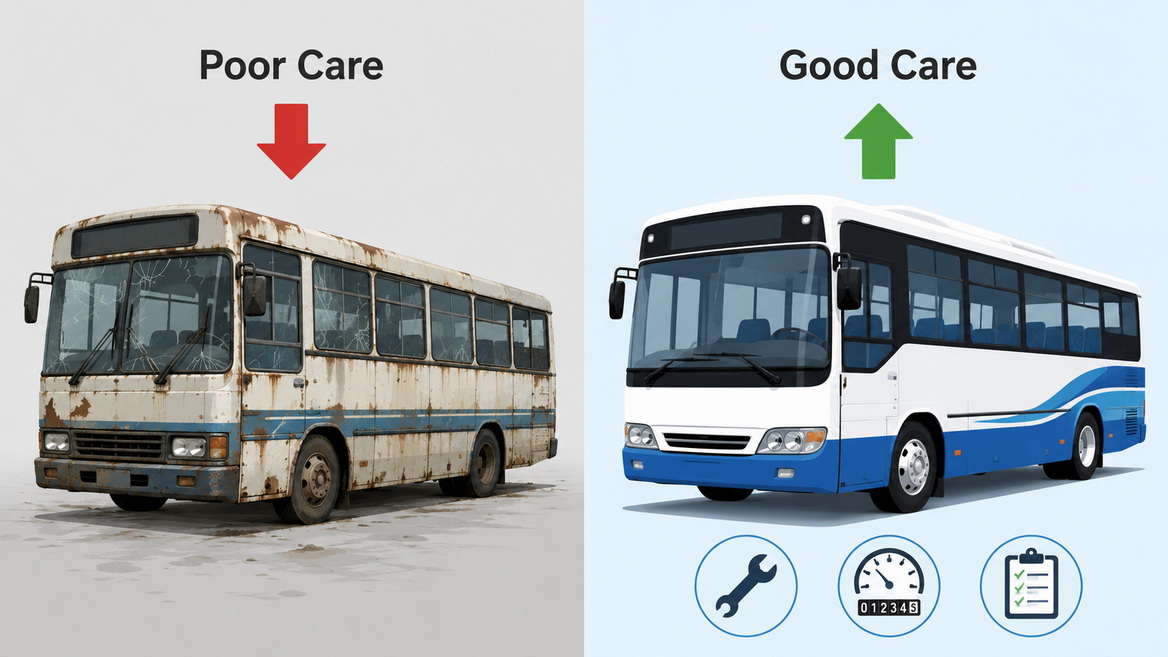
Condition is about more than appearance. Buyers evaluate the exterior, interior, and mechanical condition together.
Watch these value-lowering issues:
- Rust, dents, or faded paint.
- Torn seats or damaged flooring.
- Odors, stains, and poor interior cleaning.
- Engine leaks, suspension noise, or weak brakes.
A bus that looks clean and runs smoothly immediately feels less risky to the buyer.
Some bus brands and models hold value better because they are known for durability, parts availability, and easier maintenance.
This matters especially in the used market. Buyers often prefer buses from manufacturers with strong reputations because they expect fewer surprises after purchase. In resale terms, reputation creates trust, and trust creates demand.
Even a well-kept bus can lose value if you try to sell it when demand is weak. Resale pricing changes with seasonality, fuel prices, replacement cycles, and buyer confidence.
For example, demand often rises when:
- Schools prepare for the next term.
- Charter and shuttle operators refresh fleets.
- New bus supply is tight.
- Export buyers are actively sourcing inventory.
If you can time your sale strategically, you may get a better offer without changing the bus itself.
Fuel type has become a bigger factor in recent years. Traditional diesel buses still dominate many resale markets because of their long service life and broad buyer familiarity.
However, the market is changing:
- Electric bus demand is expanding quickly in North America.
- School bus replacement is being influenced by zero-emission policy trends and fleet modernization pressure.
- Buyers are increasingly asking about operating costs, emissions, and infrastructure needs.
For owners, this means fuel choice affects not only daily operations but also future resale liquidity. A bus that fits more buyer segments will generally be easier to resell.
For electric and hybrid buses, buyers want proof. Range, battery health, charging history, and maintenance logs can influence resale much more than cosmetic details.
This is a major shift from traditional diesel resale logic. In the EV segment, verified battery condition may matter as much as mileage.
Emission compliance can also affect value. Vehicles that align with current regulations and fleet transition goals are easier to place with schools, municipalities, and fleet buyers.
For exporters, compliance matters because different destination markets may have different age limits, emission requirements, and import rules.
A bus that can serve multiple applications tends to hold value better. Shuttle buses, coach buses, and certain school bus platforms can be repurposed more easily for churches, daycare centers, private transport, tours, or export demand.
The broader the potential buyer pool, the stronger the resale position.
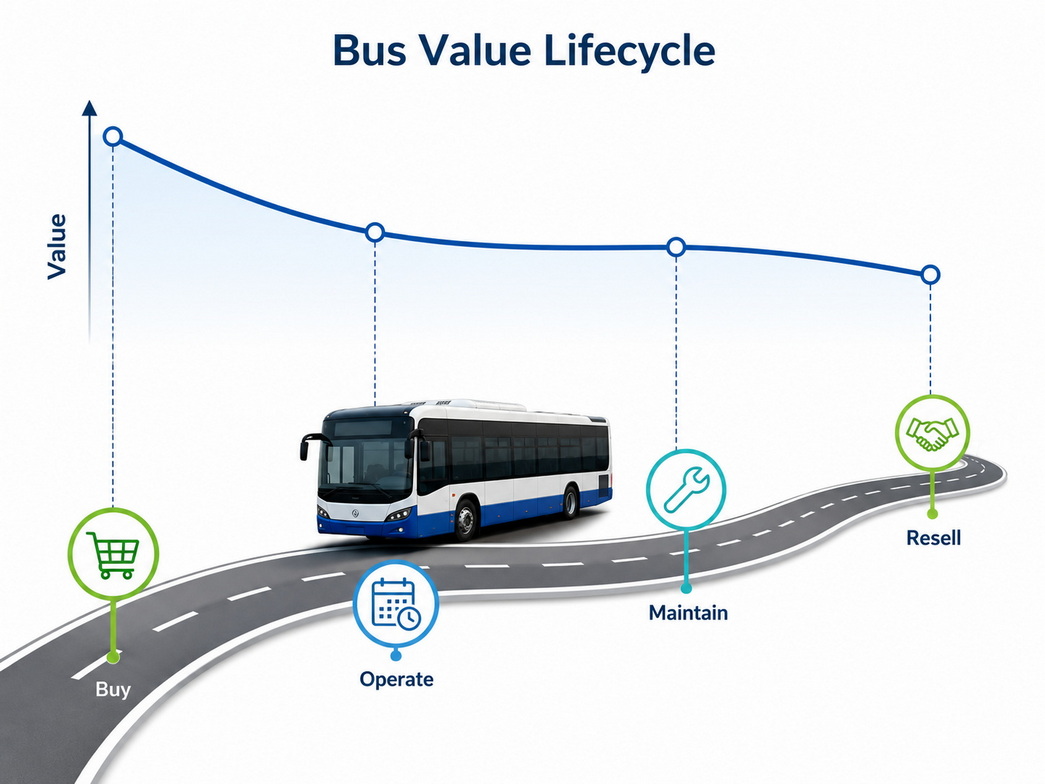
From a buyer's perspective, value is not just about what the seller says. It is about risk reduction. A strong resale candidate usually has the following traits:
- Clean ownership and title history.
- No accident or flood issues.
- Evidence of scheduled maintenance.
- Acceptable tire, brake, and engine condition.
- A clean interior and presentable exterior.
- Practical features that match current demand.
A bus that checks these boxes gives the buyer confidence that the next ownership period will be predictable and manageable.
Preventive maintenance is one of the most effective ways to preserve value. Waiting until something fails usually costs more and leaves a paper trail of repairs that can reduce buyer confidence.
Exterior washing, waxing, and corrosion protection help preserve appearance. Inside, keep the flooring, seats, windows, and ventilation areas clean and odor-free.
Minor damage becomes a negotiation tool for buyers. Fixing small defects before listing the bus can protect your asking price.
How a bus is used matters. Short trips, harsh weather exposure, and overloaded service schedules can accelerate wear. If possible, operate the bus in a way that avoids unnecessary strain on the engine and body.
A strong documentation package is often worth more than a cosmetic upgrade. Keep receipts, inspection sheets, parts records, and title paperwork organized and ready.
Dealers and exporters typically look at resale value in layers. First they check the obvious factors: age, mileage, and visible condition. Then they move to the less visible but equally important elements: mechanical health, marketability, repair risk, and destination demand.
In real-world buying, the best bus is not always the newest bus. It is often the bus that offers the cleanest ownership story and the strongest return-to-risk ratio.
A school bus with one to five years of wear can often be sold into another school or institutional buyer at a stronger price, while older units usually move to churches, daycare centers, exporters, or dismantlers at lower values.
That same logic applies across the wider used bus market. A well-maintained coach bus with low mileage and premium features can remain attractive longer than a neglected bus of the same age.
For second-hand bus exporters, this means preparation matters as much as product selection. The cleaner the condition report and the stronger the service history, the easier it is to place the bus in overseas markets.

Before listing a bus for sale, use this checklist:
1. Verify title status and ownership documents.
2. Gather maintenance and repair records.
3. Inspect tires, brakes, engine, and transmission.
4. Clean and detail the bus inside and out.
5. Photograph the bus in good lighting.
6. Highlight useful features and recent upgrades.
7. Price it according to market demand and seasonality.
This simple process can improve buyer confidence and help support a stronger asking price.
If you are planning to buy, sell, or export a used bus, work with a supplier that understands both product quality and market positioning. KeyChain helps customers source high-quality second-hand buses, heavy trucks, and new energy vehicles with a focus on performance, export readiness, and long-term value.
Age, mileage, maintenance history, and overall condition usually have the biggest impact on resale value.
Yes. Diesel buses have traditionally had strong resale performance because they are durable, familiar to buyers, and widely supported in the market.
Yes. Detailed service records reduce buyer uncertainty and often support a higher selling price.
Some can. Practical upgrades like ADA access, safety features, HVAC, and clean interiors can improve appeal, but not every customization adds value.
Selling during periods of strong demand, such as school fleet replacement season or times of limited inventory, can improve offers.
- American Bus Sales. "What Affects the Resale Value of Your Bus?" https://americanbussales.net/what-affects-the-resale-value-of-your-bus/
- Thomas Built Buses. "Five Ways to Maximize the Resale Value of Your School Buses" https://thomasbuiltbuses.com/resources/articles/resale_value/
- School Bus Fleet. "Beyond the Initial Investment: Long-Term Savings with Used Buses" https://www.schoolbusfleet.com/articles/beyond-the-initial-investment-long-term-savings-with-used-buses
- The Bus Center. "Bus Trade-Ins | Get Fair Value for Your Bus" https://thebuscenter.com/financing-leasing/trade-ins/


