
Views: 222 Author: Sara Publish Time: 2026-01-09 Origin: Site


Content Menu
● Pricing and Market Availability
● Engine and Performance Breakdown
● Off-Road and Terrain Capabilities
>> 2025 Off-Road Tech Enhancements
● Interior, Comfort, and Cargo Space
● Fuel Economy and Ownership Costs
>> Total Cost of Ownership Analysis
● Safety and Technology Features
>> Expert Safety Ratings Insight
● Final Verdict: Which Wins in 2025?
● FAQ
>> 1. Which is better for off-roading: Toyota Fortuner or 4Runner?
>> 2. Does Fortuner offer better fuel economy than 4Runner?
>> 3. What's the towing capacity comparison?
>> 5. Where to buy used Toyota Fortuner or 4Runner?
Toyota Fortuner and Toyota 4Runner stand out as rugged SUVs derived from the Hilux platform, appealing to buyers seeking Toyota Fortuner vs 4Runner reliability in 2025. This comprehensive guide compares specs, performance, pricing, and real-world applications to clarify which excels for your needs.[1]

Both models share body-on-frame construction but target different markets. Fortuner accommodates larger groups, while 4Runner emphasizes utility.[1]
| Feature | Toyota Fortuner | Toyota 4Runner |
|---|---|---|
| Seating Capacity | 7 seats, 4 doors | 5 seats, 4 doors |
| Dimensions (L x W x H) | 4.65 x 1.76 x 1.87 m | 4.83 x 1.92 x 1.82 m |
| Engine Options | 2.7L-4.0L petrol/diesel (94-235 hp) | 2.7L-4.7L petrol (157-270 hp) |
| Torque Range | 197-420 Nm | 376-382 Nm |
| Fuel Efficiency | 11.6-13.1 km/L | 6.8-8.0 km/L |
| Top Speed | 200 km/h | 180 km/h |
| 0-100 km/h | ~12 seconds | ~8.2 seconds |
| Used Prices (2024 avg) | $10,790-$55,800 | $5,400-$49,290 |
Fortuner prioritizes efficiency; 4Runner focuses on power delivery.[2]
Used Fortuner models range from 2005 at $7,800-$13,810 to 2023 at $30,500-$48,050. 4Runner equivalents start at 2014 $15,730, reaching 2022 $29,270-$35,100.[1]
In 2025, Fortuner prices rise 10-15% in Asia due to demand; 4Runner remains stable at $40,000-$60,000 MSRP in North America.[3]
Fortuner offers versatile engines like 2.7L petrol (164 hp) and 2.8L diesel, mated to 5/6-speed transmissions. 4Runner's 4.0L V6 (270 hp) provides stronger acceleration.[1]
- Fortuner advantages: Diesel torque suits towing (up to 2,800 kg) and daily efficiency.
- 4Runner advantages: Higher output enables 5,000 lbs towing capacity.[3]
Recent hybrid developments promise improved economy across both lines.[2]
4Runner leads with Crawl Control, KDSS suspension, and 245 mm ground clearance for extreme conditions. Fortuner counters with 225 mm clearance and solid 4WD systems.[1]
Real-world tests favor 4Runner on technical trails; Fortuner handles mixed terrains effectively.[3]
New ADAS features include 360-degree cameras and adaptive suspension. 4Runner's locking differential excels in low-traction scenarios. Owners report 4Runner durability exceeding 500,000 km.[1]
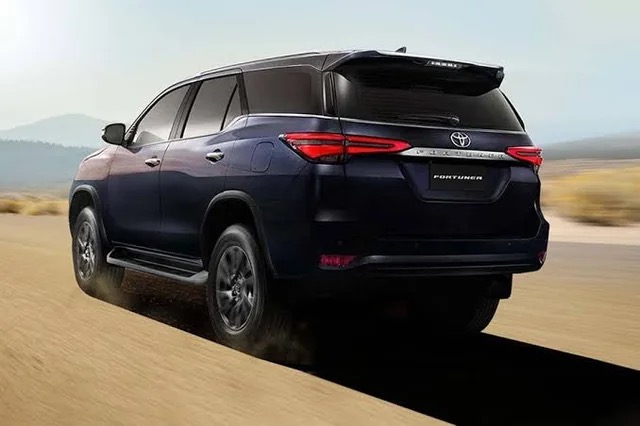
Fortuner's 7-seat layout offers generous front and second-row space, though third row suits shorter trips. Storage includes multiple cupholders per row.[1]
4Runner maximizes cargo at 88.8 cu ft behind first row versus Fortuner's compact boot. Tech highlights: 8-inch touchscreen, Bluetooth connectivity.[1]
| Aspect | Fortuner | 4Runner |
|---|---|---|
| Cargo (behind 1st/2nd row) | Moderate | 88.8 / 46.3 cu ft |
| Storage Options | 4 cupholders/row | USB ports, armrest compartments |
| Seating Comfort | Family-focused | Adventure-optimized |
Fortuner achieves 11.6-13.1 km/L, outperforming 4Runner's 6.8-8.0 km/L. Both maintain low maintenance thanks to Toyota engineering.[1]
Five-year TCO for 100,000 km: Fortuner at ~$0.25/km; 4Runner at ~$0.35/km. Resale values hold strong, with 4Runner at 70% retention.[4]
Fortuner includes SRS airbags (knee, side, curtain), ABS/EBD. 4Runner adds advanced aids like rearview cameras.[1]
Both earn projected 5-star ratings. 4Runner's systems reduce rollover risks; Fortuner's airbag array protects families best.[3]
Toyota Fortuner Pros:
- Superior fuel economy and seating.
- Modern features at accessible prices.
- Diesel reliability for diverse markets.[1]
Cons: Limited cargo, firmer ride.
Toyota 4Runner Pros:
- Exceptional off-road performance.
- Vast cargo capacity.
- Proven longevity.[1]
Cons: Higher fuel costs, less seating.
Toyota Fortuner suits families needing efficiency and space. Toyota 4Runner dominates for off-road enthusiasts and haulers. Select based on priorities.[3][1]
Secure Your High-Performance SUV Today. Partner with KeyChain, China's leading used commercial vehicle supplier at keychainauto.com. Contact +8613572980919 or abbie@keychainventure.com for tailored Toyota Fortuner or 4Runner imports, buses, and trucks worldwide.
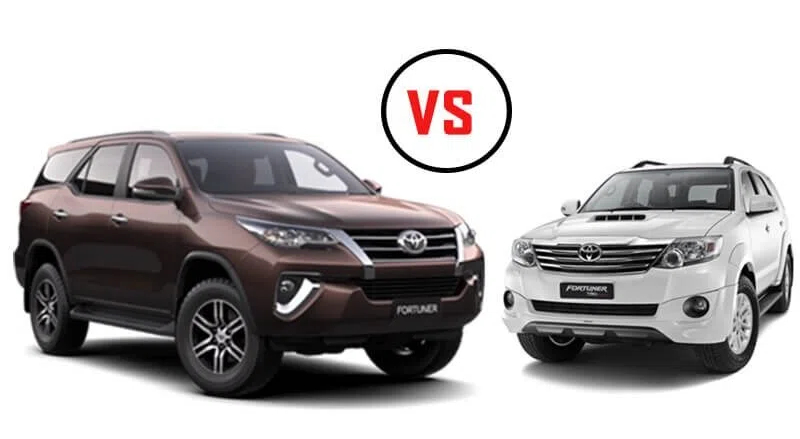
4Runner excels with advanced controls and clearance; Fortuner manages moderate trails well.[2][1]
Yes, reaching 13.1 km/L versus 8.0 km/L for extended journeys.[1]
4Runner handles up to 5,000 lbs; Fortuner 2,800 kg.[3]
Fortuner explores mild hybrids; 4Runner introduces i-Force Max.[2]
Reliable suppliers like KeyChain at keychainauto.com provide global options.[1]
[1](https://blog.beforward.jp/car-comparison/toyota-fortuner-vs-toyota-4runner-comparison.html)
[2](https://www.icartea.com/en/wiki/fortuner-vs-4runner-which-suv-dominates-tomorrow-s-roads)
[3](https://www.icartea.com/en/wiki/2025-toyota-4runner-vs-fortuner-ultimate-suv-comparison-guide)


