
Views: 247 Author: Keychain Venture Publish Time: 2026-08-11 Origin: Site


Content Menu
● Why Snow and Ice Removal Matters for Commercial Fleets
● Winter Driving Responsibilities for Heavy Trucks and Buses
● State Snow and Ice Requirements for Commercial Vehicles
>> New Jersey Commercial Vehicle Rules
>> Pennsylvania Requirements and Safety Exceptions
>> Local Rules and General Enforcement
● A Safe Snow and Ice Removal Procedure
>> Step 1: Inspect Before Release
>> Step 2: Use Safe, Ground-Based Equipment
>> Step 3: Protect Vehicle Components
>> Step 4: Confirm the Vehicle Is Safe to Operate
● Winter Pre-Trip Inspection Checklist
● Winter Readiness Starts With Vehicle Selection
● Common Winter Fleet Mistakes
● Building a Strong Winter Fleet Program
● Winter-Ready Commercial Vehicle Solutions
● FAQs
>> Are heavy trucks required to remove snow from their roofs?
>> Can a driver climb onto a trailer roof to clear ice?
>> What should drivers check after a snowstorm?
>> Can snow and ice affect electric buses and new-energy trucks?
>> What is the best way to remove snow from a truck trailer?
Winter weather affects far more than driving speed and route planning. For operators of heavy trucks, buses, trailers, and new-energy commercial vehicles, snow and ice accumulation can create visibility problems, damage vehicle components, delay deliveries, and increase the likelihood of road incidents.
Snow or ice left on a truck roof, bus roof, trailer, mud flap, wheel well, light assembly, mirror, or camera may detach while the vehicle is moving. At highway speed, even a small sheet of ice can become a dangerous projectile. For commercial fleets, this can result in injuries, property damage, vehicle downtime, insurance claims, penalties, and reputational damage.
For this reason, winter vehicle preparation should not be treated as a simple cleaning task. It should be part of a broader fleet safety process that includes vehicle inspection, route planning, driver training, maintenance, documentation, and safe snow-removal equipment.
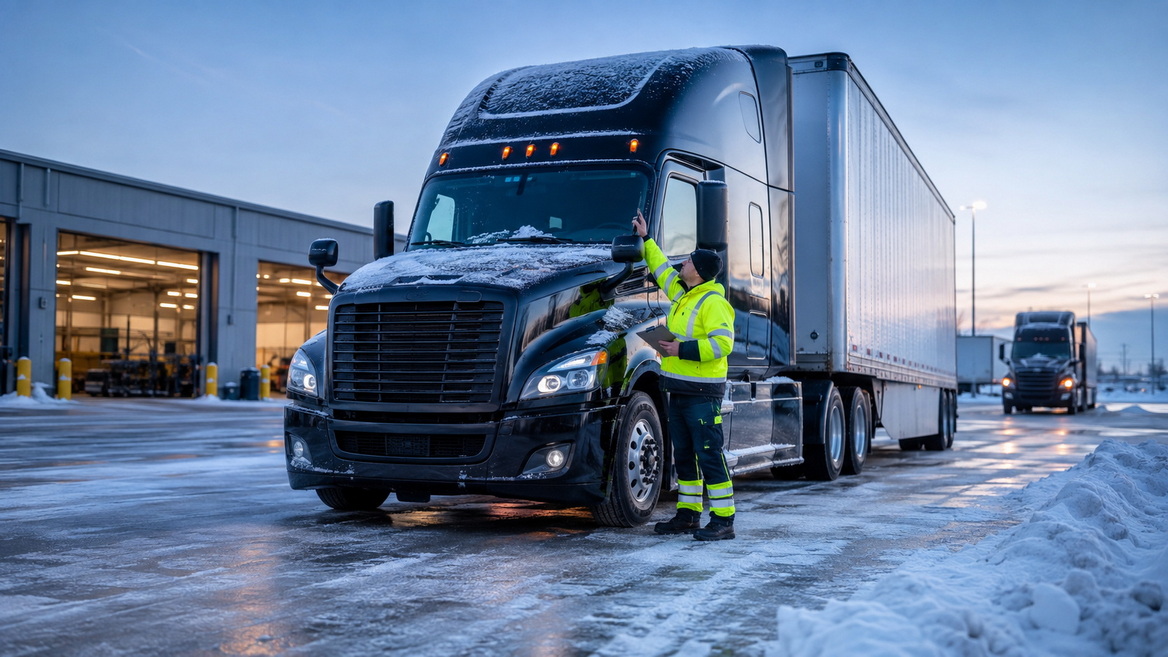
Snow accumulation on a passenger car is relatively easy to notice and remove. On a heavy-duty truck, coach bus, rigid truck, semi-trailer, or electric bus, the risks are often greater because of the vehicle's height, roof surface area, and operating environment.
Large commercial vehicles can retain substantial amounts of snow and ice after a storm. When temperatures rise during the day and fall again overnight, wet snow can refreeze into dense ice sheets. These sheets may remain hidden from the driver's normal ground-level view.
As the vehicle accelerates, vibrates, brakes, or turns, accumulated material can detach unexpectedly. It may land on another vehicle's windshield, force another driver to brake suddenly, create debris on the roadway, or damage nearby vehicles.
Commercial fleets should pay particular attention to the following areas:
- Truck and trailer roofs
- Bus roofs and HVAC housings
- Windshields, side windows, mirrors, and cameras
- Exterior lighting and reflectors
- Wheel wells, mud flaps, and steps
- Air-brake components and couplings
- License plates and safety markings
- Battery cooling areas and sensors on new-energy vehicles
A vehicle may appear ready for departure because its windshield is clear. However, a safe winter inspection must consider the entire vehicle, not only the driver's immediate field of vision.
Commercial vehicle operators must make careful decisions when weather affects traction, visibility, braking distance, or vehicle control. Snow, freezing rain, sleet, fog, and black ice can all change road conditions quickly.
Drivers should be prepared to reduce speed, increase following distance, select safer routes, delay departure, or stop when conditions become unsafe. Fleet managers should support those decisions through realistic schedules and clear internal procedures.
A winter-ready fleet should have written rules for:
| Operating Area | Recommended Fleet Practice |
|---|---|
| Dispatch planning | Review weather conditions, road closures, chain requirements, and route risks before release |
| Driver authority | Allow drivers to delay, reroute, slow down, or stop without pressure to meet unrealistic delivery times |
| Vehicle inspection | Use a winter-specific pre-trip checklist before every departure |
| Maintenance | Check tires, brakes, lights, wipers, defrosters, heaters, batteries, and air systems |
| Documentation | Record inspections, weather alerts, route changes, delays, and safety decisions |
| Training | Provide pre-season training and refreshers after severe weather events |
Winter safety depends on both individual judgment and organizational support. A driver cannot make a safe decision if the fleet's schedule, dispatch process, or reporting culture encourages unnecessary risk.
Snow and ice rules vary across the United States. Some states have specific laws requiring drivers to remove accumulated snow or ice before operating a vehicle. Other states rely on broader vehicle-safety, visibility, debris, negligence, or hazardous-driving provisions.
For fleets that operate across state lines, a single generic policy is not enough. The fleet should identify the states, cities, customer sites, terminals, and mountain routes that create the highest winter exposure.
New Jersey is widely recognized for its strict approach to snow and ice accumulation on vehicles. Drivers are expected to make reasonable efforts to remove snow and ice from exposed vehicle surfaces before driving.
For commercial vehicles, the consequences can be significant when snow or ice falls from a moving vehicle and causes injury or property damage. Fines may apply to both the driver and commercial owner or operator.
For truck fleets, this means that roof snow removal should be planned before dispatch. Drivers should not be expected to solve the problem alone at the edge of a parking lot, fuel station, or customer facility.
Pennsylvania also requires reasonable efforts to remove accumulated snow and ice from vehicles, including the roof. However, the law recognizes that commercial vehicle cleaning must not create an additional workplace hazard.
This is important for heavy trucks and buses. A driver should never be instructed to climb onto an icy trailer roof, bus roof, fuel tank, tire, or bumper without safe access equipment and an approved working procedure.
The safest approach is to use ground-operated removal systems, overhead scraping equipment, controlled wash bays, or designated snow-removal lanes. These methods reduce both road risks and fall hazards.
Even where a state does not have a specific commercial vehicle roof-clearing law, operators may still face enforcement related to unsafe vehicles, blocked visibility, falling debris, or negligent operation.
Some municipalities also establish their own snow and ice requirements. This is especially relevant for local delivery fleets, shuttle buses, school buses, construction vehicles, and service trucks operating from fixed facilities.
The most practical approach is simple: build fleet procedures around the strictest conditions likely to be encountered on the planned route.
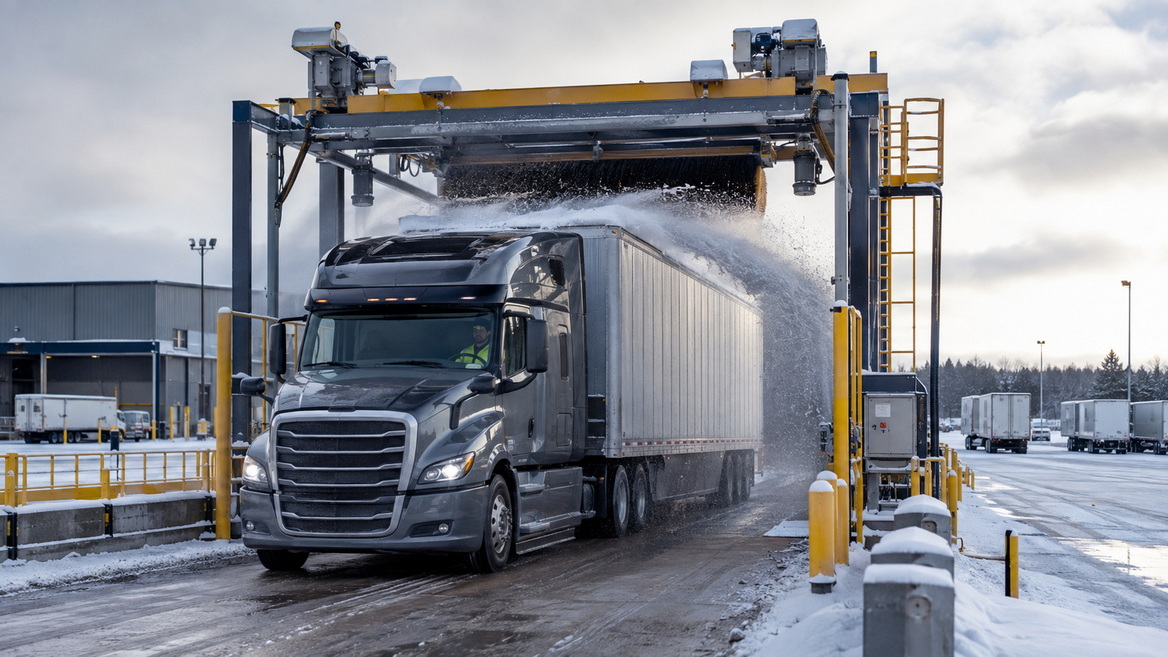
An effective winter program does not depend on drivers improvising after a storm. It provides defined processes, safe equipment, trained personnel, and clear release criteria.
Every vehicle should be inspected after snowfall, freezing rain, or overnight freeze-thaw conditions. The inspection should include roof surfaces, trailers, wheel wells, steps, mirrors, lighting, mud flaps, cameras, windshield areas, and air-brake components.
Snow that appears light can still become dangerous when it melts and refreezes. A thin layer may hide a heavier sheet of ice underneath.
The preferred method is a purpose-built snow-removal system that allows personnel to work from the ground. Depending on fleet size and facility layout, this may include:
- Overhead snow scrapers
- Raised clearing frames
- Trailer snow-removal lanes
- Heated maintenance bays
- Controlled wash facilities
- Long-handled tools designed for commercial vehicle surfaces
Avoid methods that create new hazards. Employees should not stand on truck tires, fuel tanks, ladders placed on icy ground, bumpers, trailer decks, or roof surfaces unless the facility has a properly engineered safety system.
Snow-removal methods should be compatible with the vehicle's design. Excessive force or unsuitable tools can damage roof membranes, exterior coatings, lighting, cameras, mirrors, sensors, seals, and electrical connections.
For electric buses and new-energy trucks, operators should follow manufacturer instructions for cleaning near high-voltage components, charging ports, battery cooling systems, radar units, cameras, and electronic control equipment.
The vehicle should only be released once visibility, lighting, braking, and exterior safety conditions have been confirmed. If conditions remain unsafe, the driver and dispatcher should agree on a delay, alternative route, or other practical solution.
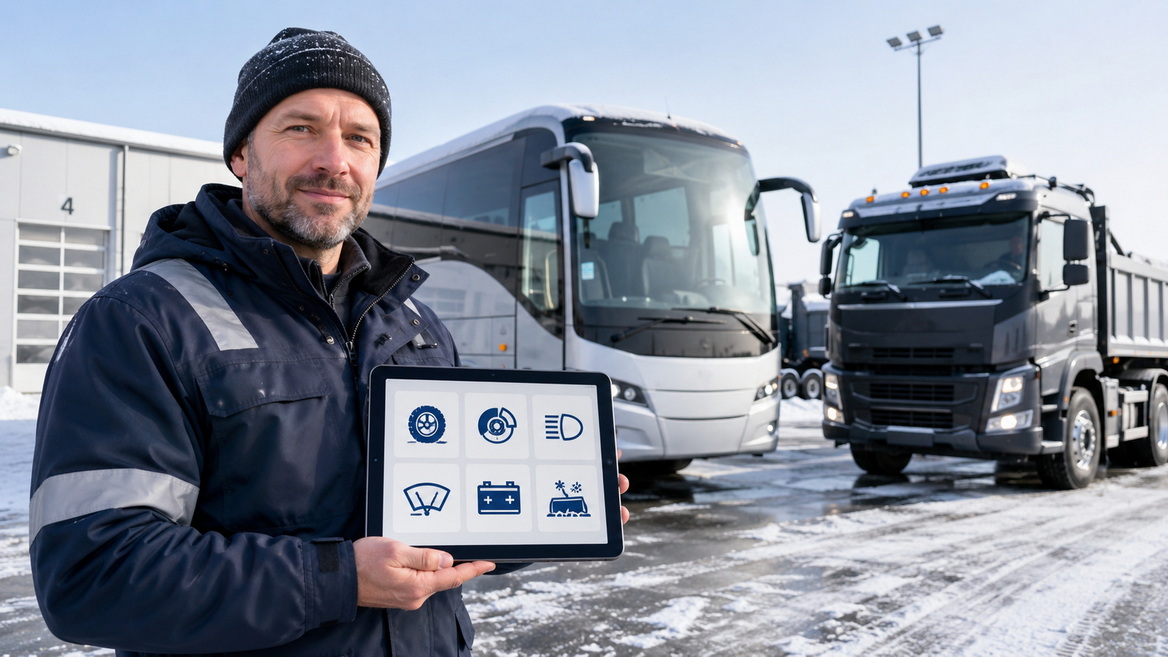
A standard daily vehicle inspection may not be enough after winter weather. Fleets should add a dedicated snow-and-ice checklist.
1. Confirm that the windshield, windows, mirrors, cameras, and lights are clear.
2. Assess snow and ice on the truck, trailer, or bus roof.
3. Inspect wheel wells, mud flaps, steps, and underbody areas for ice buildup.
4. Check that headlights, brake lights, turn signals, reflectors, and license plates remain visible.
5. Test windshield wipers, washer fluid, heater, and defroster performance.
6. Check tire condition, tread depth, and inflation pressure.
7. Inspect air-brake systems for moisture-related or freezing concerns.
8. Confirm that doors, emergency exits, handrails, and passenger steps are safe to use.
9. Review weather warnings, road closures, chain requirements, and route restrictions.
10. Record the inspection result before departure.
A documented checklist helps establish consistency across drivers, shifts, facilities, and operating regions.
Winter operations should be considered before a vehicle enters service. For fleet buyers, the question is not only whether a heavy truck or bus can perform under normal conditions. The better question is whether it can be inspected, maintained, cleaned, and operated safely in difficult conditions.
When selecting commercial vehicles, evaluate the following factors:
| Vehicle Feature | Winter Operating Value |
|---|---|
| Roof design | Can reduce snow retention and simplify inspection |
| Exterior access | Supports safer cleaning and maintenance |
| Heated mirrors and cameras | Helps preserve driver visibility |
| Windshield defrosting | Improves comfort and safe sightlines |
| Lighting location | Makes inspection and snow removal easier |
| Wheel-arch design | Can reduce compacted snow and slush |
| Corrosion protection | Helps withstand road salt and de-icing chemicals |
| Service documentation | Supports consistent maintenance across markets |
| Parts availability | Reduces winter downtime |
For electric buses and new-energy heavy trucks, operators should also assess cold-weather charging performance, battery thermal management, regenerative braking behavior, electrical-system protection, and service support.
Many winter incidents are linked to routine oversights rather than unexpected weather alone.
Common mistakes include:
- Clearing only the windshield and ignoring the roof
- Treating snow removal as a driver-only responsibility
- Sending vehicles out to "let the wind remove it"
- Ignoring compacted ice around mud flaps and wheel wells
- Requiring drivers to climb without safe access systems
- Failing to inspect lighting, mirrors, sensors, and cameras
- Using the same procedure in every state without checking local rules
- Pressuring drivers to continue despite poor road conditions
- Failing to keep inspection and weather-related records
The goal is not simply to avoid penalties. The goal is to prevent avoidable harm to drivers, passengers, customers, and other road users.
A reliable winter program should be practical enough for daily use and structured enough to withstand scrutiny after an incident.
Fleet leaders can strengthen their process through five actions:
1. Identify high-risk routes, terminals, customer sites, and weather zones.
2. Establish written inspection and snow-removal procedures.
3. Provide safe, ground-based equipment at key operating locations.
4. Train drivers, dispatchers, technicians, and supervisors before winter begins.
5. Retain inspection records, maintenance logs, training records, and weather-related operating decisions.
Consistent winter readiness protects people, equipment, schedules, and long-term fleet performance.
Heavy trucks, buses, and new-energy commercial vehicles must perform in demanding real-world conditions. A winter-ready fleet requires more than capable vehicles; it requires thoughtful selection, proper maintenance, safe operating procedures, and informed management decisions.
KeyChain supplies high-quality heavy trucks, buses, and new-energy commercial vehicles for domestic and international customers. For fleet buyers evaluating vehicles for cold climates, long-distance transport, passenger operations, or demanding industrial use, technical configuration, service documentation, and operating conditions should be considered from the beginning.
Choose commercial vehicle solutions that help your fleet operate with confidence through every season.
Requirements vary by state and municipality. Some jurisdictions specifically address snow and ice accumulation on commercial vehicles, while others may enforce broader rules involving unsafe vehicle conditions, visibility, debris, or negligent operation.
Drivers should not climb onto icy commercial vehicle roofs without safe access systems, suitable equipment, training, and fall-protection measures. Ground-based or engineered snow-removal solutions are generally safer.
Drivers should inspect the roof, windshield, windows, mirrors, lights, cameras, wheel wells, mud flaps, steps, tires, brakes, wipers, and defroster systems before departure.
Yes. Snow and ice can block sensors, cameras, charging ports, cooling systems, lights, doors, and steps. Operators should follow the manufacturer's guidance for cleaning and inspecting electrical and high-voltage systems.
The safest method is usually a ground-operated snow-removal system, such as an overhead scraper, clearing frame, heated bay, or dedicated cleaning facility. Avoid unsafe roof climbing and tools that could damage vehicle components.
1. Penske Truck Leasing. "Stay Current on Snow and Ice Removal Lawshttps://www.gopenske.com/blog/stay-current-on-snow-and-ice-removal-laws/
2. Electronic Code of Federal Regulations. "49 CFR § 392.14 — Hazardous Conditions; Extreme Cautionhttps://www.ecfr.gov/current/title-49/subtitle-B/chapter-III/subchapter-B/part-392/subpart-B/section-392.14
3. New Jersey Office of the Attorney General. "New Law Effective October 20 Will Require Motorists to Clear All Ice and Snow from Vehicles Prior to Drivinghttps://www.nj.gov/oag/newsreleases10/pr20101019a.html
4. New Jersey Motor Vehicle Commission. "New Jersey Driver Manualhttps://www.nj.gov/mvc/pdf/license/drivermanual.pdf
5. Pennsylvania General Assembly. "Chapter 37, Title 75 — Vehicleshttps://www.legis.state.pa.us/WU01/LI/LI/CT/HTM/75/00.037..HTM
6. Massachusetts Trial Court Law Libraries. "Massachusetts Law About Snow and Icehttps://www.mass.gov/info-details/massachusetts-law-about-snow-and-ice


