
Views: 222 Author: Sara Publish Time: 2026-02-06 Origin: Site


Content Menu
● First Generation Mazda 6 (2009-2012): Building the Sporty Foundation
● Second Generation Mazda 6 (2013-2017): Skyactiv Revolution and KODO Design
● Third Generation Refinements (2018-2022): Luxury, Turbo Power, and Peak Refinement
● Reliability Ratings and Long-Term Ownership Costs
● Used Mazda 6 Buying Guide for Global Buyers (2026 Market Insights)
● Mazda 6 vs. Competitors: Performance and Value Comparison
● Safety and Technology Evolution Across Years
● Fuel Efficiency and Maintenance Tips
● FAQ
>> 1. What are the best Mazda 6 years to buy used?
>> 2. How reliable is the Mazda 6 Skyactiv engine?
>> 3. Mazda 6 vs. Accord: Which is faster?
>> 4. What's the cargo space in the Mazda 6 wagon?
>> 5. Are 2022 Mazda 6 models available as hybrids?
The Mazda 6 from 2009 to 2022 evolved dramatically from a sporty midsize sedan into a refined, technology-laden family vehicle, with major upgrades in engines, safety features, design aesthetics, and overall performance across its three key phases. This in-depth guide explores Mazda 6 model year differences and improvements, offering practical insights for used car buyers seeking reliability, value, and driving excitement in the 2026 pre-owned market.

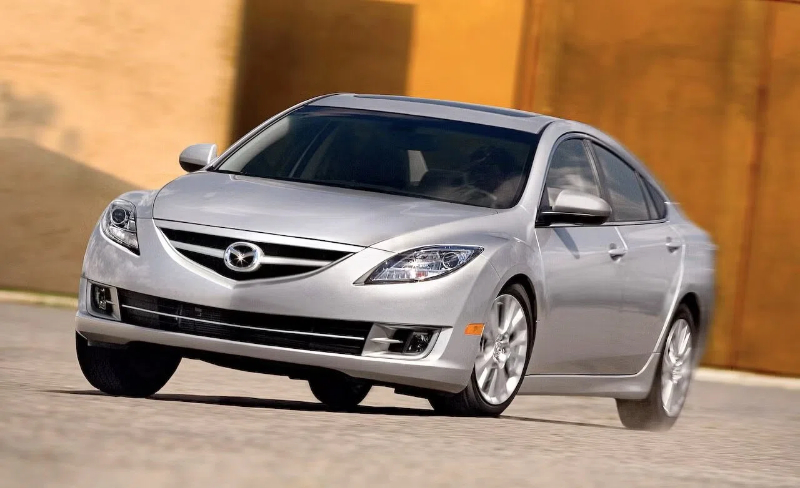
The 2009 Mazda 6 marked a significant redesign on the second-generation platform, making it taller, longer, and wider than its predecessors while shedding 35 kg for enhanced agility and sharper handling. Its aggressive V-shaped grille, swept-back headlights, and refined chassis delivered responsive suspension that appealed to enthusiasts right from launch.
Core specifications and trim levels included:
- Engines: Base options like the 1.8L, 2.0L, and 2.5L petrol four-cylinders (an upgrade from the prior 2.3L), with an optional 3.7L V6 for more power; a 2.2L turbodiesel was available in select markets.
- Transmissions: Choices of 5- or 6-speed manuals paired with 4- or 6-speed automatics for versatile driving.
- Trims: Entry-level Sport, mid-tier Touring, and premium Grand Touring, where top variants added luxuries like Bose premium audio, satellite navigation, and early blind-spot monitoring systems.
The interior comfortably seated four adults, featuring supportive front bucket seats and a practical 440L trunk in sedan form. Safety foundations were solid with standard stability control, ABS brakes, and multiple airbags, evolving to earn 5-star NHTSA ratings by 2010 as side-impact protection improved.
Compared to 2008 models, the 2009 version boasted a lighter body shell that improved fuel efficiency and engine outputs, such as the 2.5L reaching 170 horsepower for peppier acceleration. Handling remained a Mazda hallmark, with precise steering and minimal body roll in corners, setting it apart from softer rivals like the Toyota Camry. Real-world drivers praised its balanced ride, ideal for both highways and twisty roads.
Fuel economy started competitively at around 8.1L/100km combined for the 2.5L, a step up from older Mazdas. Maintenance was straightforward, with widely available parts keeping costs low—annual servicing averaged under $500 for most owners during this era.
The 2013 all-new Mazda 6 introduced revolutionary Skyactiv technology, Mazda's innovative approach to boosting efficiency without relying on hybrid systems. Higher compression ratios in both petrol and diesel engines worked in tandem with a lighter, stiffer chassis to deliver impressive power and economy. The KODO "Soul of Motion" design language brought sleek lines, a low-slung bonnet, signature winged grille, and fluid sculpting, offered in sedan or versatile wagon body styles.
Engine lineup highlights:
- 2.0L Skyactiv-G petrol producing 150 horsepower.
- 2.5L Skyactiv-G at 187 horsepower for stronger mid-range punch.
- 2.2L Skyactiv-D turbodiesel offering 173 horsepower and superior torque.
- All paired exclusively with smooth 6-speed manual or automatic transmissions.
The cabin saw major refinements: tilt- and telescopic-adjustable steering, highly bolstered seats for long-haul comfort, and superior noise insulation that hushed road and wind noise. Trunk space measured 440L in sedans, expanding to 640L with seats folded in wagons—outpacing competitors like the Ford Mondeo by up to 200L in some configurations.
Progressive yearly enhancements unfolded as follows:
| Model Year | Key Improvements | Fuel Economy (L/100km combined) |
|---|---|---|
| 2013 | Skyactiv debut, optional LED headlights | 6.6 (2.0L petrol) |
| 2014 | i-Activsense safety suite (blind-spot monitoring, rear cross-traffic alert) | 6.4 (2.5L) |
| 2015-2017 | Apple CarPlay/Android Auto integration; suspension tuning for even better ride quality | 5.9 (diesel) |
By 2017, the Mazda 6 secured top IIHS Top Safety Pick+ awards, bolstered by adaptive cruise control, lane-keeping assist, and forward collision warning. Drivers noted the car's "zoom-zoom" DNA persisted, with responsive throttles and confident braking that made it more engaging than appliance-like sedans from Honda or Toyota.
Skyactiv's direct-injection tech not only cut emissions but also enabled real-world economy figures that often beat EPA estimates, especially on diesel variants popular in Europe. Wagon models gained traction for families, offering roof rails and all-wheel-drive options in later years for enhanced utility.
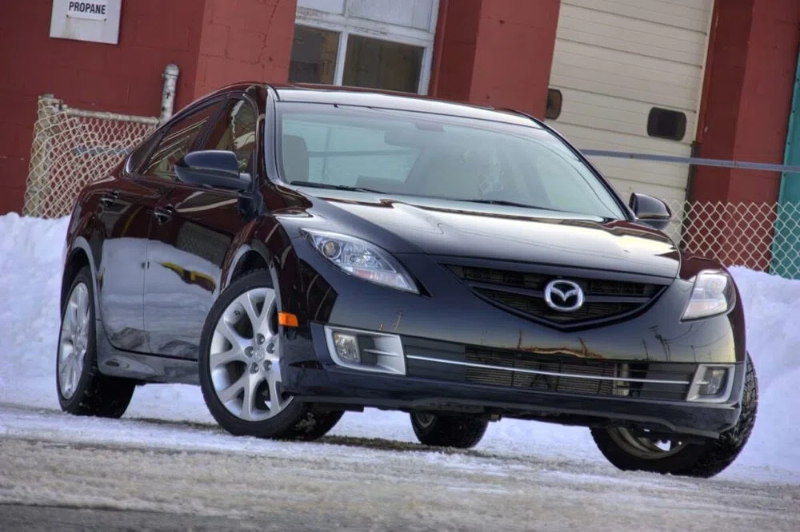
Entering 2018, the Mazda 6 refined its winning formula with a potent turbocharged 2.5L Skyactiv-G engine delivering 227 horsepower and a robust 420 Nm of torque, effectively replacing the old V6 while providing superior low-end pull. Exterior updates included a bolder grille, standard LED headlights (up from optional Xenon), and aerodynamic tweaks that improved stability at highway speeds.
The interior elevated to near-luxury status: Nappa leather upholstery, ventilated front seats, genuine Sen wood accents, and an upgraded infotainment system with crisp 8-inch touchscreens. Cabin quietness improved dramatically, with noise levels reduced by 20% through better sealing and active sound control, per Mazda engineering claims.
Performance benchmarks:
- 0-100 km/h sprint in just 6.5 seconds for the turbo.
- G-Vectoring Control system adjusted torque distribution for smoother cornering and less steering correction.
Safety reached its zenith with a full suite of advanced driver aids: 360-degree cameras, adaptive LED headlights, automatic emergency braking with pedestrian detection, and traffic jam assist—clinching consistent 5-star Euro NCAP ratings.
This generation appealed to premium buyers, blending sports sedan dynamics with executive comfort. Turbo models handled like smaller cars, thanks to a near-50/50 weight distribution and quick-shifting automatics.
The Mazda 6 consistently excels in reliability, posting J.D. Power scores around 82/100 for recent years, surpassing many segment rivals. Early first-gen models (2009-2010) occasionally faced rust issues in salt-heavy regions, but Mazda addressed this with enhanced rust-proofing from 2013 onward. Skyactiv engines routinely surpass 300,000 km with routine care, thanks to durable timing chains that eliminate belt replacements.
Average annual ownership costs (USD estimates):
| Year Range | Maintenance | Insurance | Fuel (15,000 miles) |
|---|---|---|---|
| 2009-2012 | $450 | $1,200 | $1,800 |
| 2013-2017 | $420 | $1,150 | $1,600 (Skyactiv) |
| 2018-2022 | $400 | $1,100 | $1,500 (turbo) |
These figures, drawn from industry trackers like RepairPal, show 10-15% savings over comparable Honda Accords, with brakes and tires proving particularly durable.
In the 2026 used market, Mazda 6 values remain strong due to slow depreciation—expect 2009 base models around $5,000, while loaded 2022 turbos fetch $25,000. KeyChain, China's premier supplier of commercial used vehicles (keychainauto.com, +8613572980919, abbie@keychainventure.com), specializes in high-performance Mazda 6 units for global export, rigorously inspected for fleet use in buses and heavy trucks.
Essential steps for buying a used Mazda 6:
1. Verify VIN history via services like Carfax to flag accidents, flood damage, or odometer issues—pre-2013 models warrant extra rust checks.
2. Examine Skyactiv components, especially timing chains; post-2015 units rarely rattle.
3. Conduct a thorough test drive: Confirm G-Vectoring smoothness (2018+), absence of turbo lag, and even power delivery.
4. Allocate budget for wear items like brakes or suspension bushings around 150,000 km.
5. Partner with experts like KeyChain for warranty-backed, export-ready vehicles tailored to international standards.
Expert advice: Opt for 2018+ turbos for Accord-surpassing acceleration at a fraction of new-car prices—perfect for executive transport or light commercial duties.
| Feature | Mazda 6 (2022 Turbo) | Honda Accord | Toyota Camry | VW Passat |
|---|---|---|---|---|
| 0-100 km/h | 6.5s | 7.0s | 7.8s | 7.2s |
| Fuel (L/100km) | 8.1 | 7.9 | 7.5 | 8.5 |
| Cargo (L) | 440 | 473 | 428 | 586 |
| Reliability | 82/100 | 85/100 | 88/100 | 78/100 |
| Used Price (2026) | $22,000 | $24,000 | $23,000 | $20,000 |
The Mazda 6 dominates in driver engagement, while the Camry prioritizes bulletproof longevity.
Safety progressed from basic 2009 setups (stability control, ABS) to 2022's comprehensive ADAS arsenal: automatic emergency braking, lane-keeping, adaptive cruise, and blind-spot intervention. NHTSA and IIHS accolades were routine post-2013.
Tech milestones:
- Infotainment grew to 8-inch touchscreens by 2018, with wireless charging and rotary-dial controls for safer use.
- Connectivity: Bluetooth from day one; Apple CarPlay/Android Auto from 2016.
Skyactiv innovations slashed consumption—the 2.5L turbo achieves 8.1L/100km in mixed driving. Proven maintenance routine:
- Synthetic oil changes every 10,000 km.
- Spark plugs at 100,000 km intervals.
- Brake pads lasting 60,000 km or more.
To maximize longevity, prioritize 91-octane fuel, avoid short cold starts, and adhere to Mazda's service intervals. Many owners report valve adjustments unnecessary up to 200,000 km.
Ready to drive home a reliable Mazda 6? Contact KeyChain today at +8613572980919 or abbie@keychainventure.com. Visit keychainauto.com for inspected, high-performance used models perfect for global fleets and personal use.
Contact us to get more information!
The 2018-2022 turbo models deliver peak power, safety, and tech, while 2013-2017 Skyactiv units offer excellent value for budget buyers. Steer clear of 2009 models in rust-prone areas unless professionally treated.
Exceptionally so—many exceed 300,000 km with basic oil changes. The timing chain design outlasts belts, and direct injection minimizes carbon buildup.
The 2022 Mazda 6 turbo accelerates to 100 km/h in 6.5 seconds, outpacing the Accord's 7.0 seconds while matching or beating fuel economy.
Seats-up capacity is 440L, expanding to 1,640L folded—class-leading for family haulers or light cargo needs.
No full hybrids stateside, but some markets offered mild-hybrid diesel assists; petrol turbos remain the high-performance choice.
1. https://blog.beforward.jp/car-review/mazda-6-2009-2022-model-year-differences-and-improvements.html
2. https://en.wikipedia.org/wiki/Mazda6
3. https://www.edmunds.com/mazda/6/2009/review/
4. https://www.cardealpage.com/zh/mazda/mazda%206/
5. https://news.mazdausa.com/2009-vehicles


