
Views: 222 Author: Sara Publish Time: 2026-01-12 Origin: Site


Content Menu
● Limitations of Traditional Plug-In Charging
● How Wireless Charging Technology Works and Its Key Advantages
● Global Deployments and Proven Case Studies
● 2026 Market Trends and Projections
● Opportunities for Wireless Charging in China's Commercial Sector
● Calculating ROI for Wireless Charging Implementation
● Challenges and Practical Solutions
● Business Models and KeyChain's Role
● FAQ
>> 1. Is wireless charging suitable for used commercial vehicles?
>> 2. What are 2026 wireless charging developments in China?
>> 3. Is dynamic wireless charging safe?
>> 4. How to calculate wireless charging ROI?
>> 5. How does KeyChain support the transition?
Wireless electric vehicle charging is revolutionizing commercial fleets, especially for buses and heavy-duty trucks, by enabling seamless, plugless energy transfer. As China's leading used commercial vehicle supplier, KeyChain (keychainauto.com) delivers high-performance bus and truck systems to global clients, powering the transition to efficient, wireless EV operations.[1]
This comprehensive guide explores the technology's core benefits, real-world deployments, and 2026 trends to help fleet operators make informed decisions.

Traditional plug-in EV charging faces significant hurdles despite its widespread use. Charging stations fail nearly 50% of the time due to hardware malfunctions, payment glitches, and cable damage - issues amplified in bus and truck scenarios where cables risk being crushed or vandalized, posing safety hazards.[1]
Ultra-fast chargers accelerate the process but demand massive power: a single 1.2 MW unit consumes as much electricity in one hour as 2-3 households do in a month, straining grids. Larger batteries add cost, weight, and environmental impact, while daily plug-and-wait routines mimic outdated gas station models, wasting time and reducing uptime.
- Time loss: Manual plugging adds 5-10 minutes per vehicle daily.
- High maintenance: Exposed cables face weather and vandalism, costing thousands annually.
- Grid overload: Peak demands risk blackouts in high-traffic areas.
These challenges drive commercial operators toward smarter alternatives.
Wireless electric vehicle charging systems rely on magnetic induction, akin to smartphone pads but scaled for roads. Coils embedded under pavement or parking surfaces transmit power invisibly to vehicle receivers like those from Electreon. Charging occurs automatically while driving, idling at lights, or parked - no plugs required.[1]
Key advantages include:
- Seamless operation: Buses charge during passenger boarding; trucks top up on highways.
- Safety and reliability: Tamper-proof with 90%+ efficiency, no exposed parts.
- Grid-friendly: Cloud platforms shift usage to off-peak hours, cutting total cost of ownership (TCO).
Compared to plug-in methods, wireless reduces battery degradation by 30%, extends life, and enables dynamic charging (on-the-move power). For used commercial vehicles, KeyChain recommends models prepped for wireless receivers to ease upgrades.
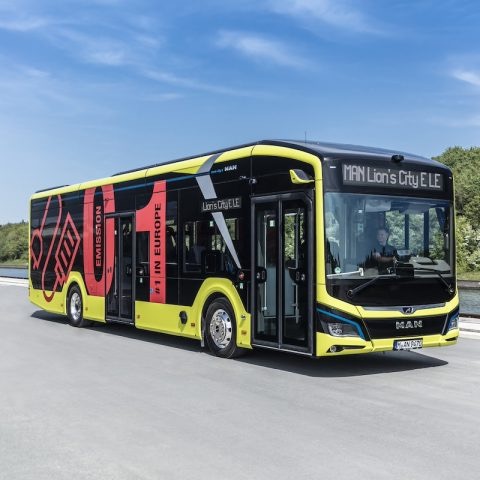
Wireless charging has moved beyond concepts, with nearly 30 projects live worldwide. Electreon's systems power buses and trucks in Germany and France, prove viable for Norway's Trondheim BRT lines, and will soon charge UCLA shuttles ahead of the 2028 Olympics. Michigan's first public wireless road in Detroit serves UPS electric vans via MDOT.[1]
- Europe leads: France's A10 highway pilot aims for 9,000 km by 2035, projecting 86% emissions cuts toward net-zero.
- U.S. momentum: Detroit and UCLA projects target freight and campus fleets.
- Asia insights: University of Tokyo research shows wiring just 1.6% of city streets (intersections, stops) yields "unlimited range."
These validate applications for buses, trucks, taxis, and more. KeyChain has supplied compatible used buses, enabling clients' rapid integration.
By 2026, the wireless EV charging market will surge from 2025's $1.07 billion toward $44.4 billion by 2035, boasting a 60%+ CAGR. Dynamic systems dominate, allowing mid-drive charging to minimize stops.[2]
Notable trends:
- Standardization: SAE J2954 ensures cross-brand compatibility, slashing costs.
- Smart city synergy: Integration with V2G eases grid peaks.[2]
- Funding boom: Government subsidies prioritize commercial pilots like Europe's ERS highways.[3]
China's vast commercial vehicle market holds immense potential; operators can adapt French models for logistics hubs and bus depots. KeyChain tracks global stock for 2026-standard compatibility.
China, the world's largest commercial vehicle market, accelerates wireless adoption. Firms like CATL offer 7kW parking garage systems ideal for bus depots.[4]
Key cases:
| Project | Location | Application | Impact |
|---|---|---|---|
| Kuailun Charging Road | Undisclosed | Heavy trucks, dynamic | Doubles range, zero downtime |
| Dechuan Automation | Ningde | Parking garages | 98% efficiency, used vehicle compatible |
| Weichai New Energy | Multiple provinces | Service networks | Blue Engine trucks wireless-ready |
Implementation steps:
1. Fleet audit: Assess used buses/trucks for receiver compatibility (KeyChain offers free checks).
2. Site selection: Target intersections/stops; costs 1/3 of traditional stations.
3. Financing: Use CaaS models covering energy and maintenance via monthly fees.
KeyChain forecasts 15% penetration in Chinese buses by 2026, spiking used vehicle retrofit demand. Early movers save 20% on operations.[2][1]
For practicality, consider a 100-bus fleet averaging 300 km daily.
Cost comparison:
| Metric | Plug-In | Wireless | Savings |
|---|---|---|---|
| Initial CapEx (100 vehicles) | $5M | $3.2M | 36% |
| Annual Maintenance | $500K | $100K | 80% |
| Energy (optimized) | $1.2M | $900K | 25% |
| Payback Period | - | 2.5 years | - |
Formula: ROI = (Savings - Investment) / Investment. Smaller 15% battery needs amplify savings. KeyChain clients report 40% equivalent fuel reductions post-pilot.
Wireless is not flawless:
- Efficiency gap: 8-12% loss vs. plugs due to air-gap induction.[2]
- Retrofit costs: $2K-$5K per used vehicle for receivers.
- Standards vary: Interoperability improving.
Solutions:
- Tech advances: 2026 efficiencies hit 95%+; dynamics lead.[7]
- KeyChain support: Full retrofit services; call +86 13572980919.
- Policy boosts: China's "dual carbon" goals fund infrastructure.
Providers like Electreon offer pay-per-use or CaaS subscriptions, auto-billing via vehicle ID like highway tolls.[1]
As the premier used commercial vehicle supplier, KeyChain stocks high-performance buses and trucks ready for wireless. Visit keychainauto.com or email abbie@keychainventure.com for tailored plans.
Ready to electrify your fleet without downtime? Contact KeyChain today at +86 13572980919 or abbie@keychainventure.com. Get a free wireless compatibility assessment and unlock seamless charging for your buses and trucks. Transform your operations now at keychainauto.com!
Yes, KeyChain provides retrofit services adding receivers compatible with Electreon systems at $3K per vehicle, delivering fast ROI.[1]
Market explosion with pilots in buses/logistics; subsidies drive 20% commercial penetration.[5][2]
Absolutely; fields stay subsurface with no radiation risks, validated on German/French heavy trucks.[1]
Use the ROI table: 36% initial savings, 2.5-year payback, 25% long-term TCO drop.[2]
We supply compatible used vehicles, global logistics, and retrofits. Reach abbie@keychainventure.com.[1]
[1](https://bus-news.com/deep-dive-into-wireless-electric-vehicle-charging/)
[2](https://www.precedenceresearch.com/wireless-electric-vehicle-charging-market)
[3](https://driivz.com/blog/2026-ev-charging-industry-predictions-and-trends/)
[4](https://www.evchargersky.com)
[5](https://www.kuailun.com/a-charging-road-that-can-charge-the-vehicle-wirelessly/)
[6](https://www.weichainecv.com/service/service-provider.htm)
[7](https://www.startus-insights.com/innovators-guide/wireless-ev-charging-companies/)


