
Views: 222 Author: Sara Publish Time: 2026-01-09 Origin: Site


Content Menu
● Key Specifications at a Glance
● Exterior and Interior Comfort
● Engine Performance Breakdown
● Cost of Ownership and Reliability
● 2026 Market Updates and Trends
● Buying Guide: Step-by-Step Decision Process
● Final Verdict: Which Wins in 2026?
● FAQ
>> 1. Which is more fuel-efficient: Toyota Auris or Nissan Pulsar?
>> 2. Is Nissan Pulsar bigger than Toyota Auris?
>> 3. What's the reliability difference?
>> 4. Are these cars still available in 2026?
>> 5. Which is better for families?
Toyota Auris and Nissan Pulsar remain popular choices in the compact hatchback segment, offering reliability and practicality for city driving and family use. This in-depth comparison analyzes specs, performance, and real-world value, updated with 2026 market insights to help you decide. Key factors like fuel efficiency, safety, and pricing make one stand out for budget-conscious buyers.[1][2]

Compare core specs side-by-side for quick insights into differences.[2][1]
| Feature | Toyota Auris | Nissan Pulsar |
|---|---|---|
| Engine Options | 1.5L–1.8L petrol | 1.5L–2.0L petrol/diesel |
| Max Power | 105–147 PS | 140 kW (188 HP) |
| Torque | 135–175 Nm | 240 Nm @ 2000 rpm |
| 0-100 km/h | 9.5–10.8 sec | 11–12.7 sec |
| Top Speed | 180 kph | 180 kph |
| Fuel Consumption | 16–19.2 km/L | 12.9–13.8 km/L |
| Dimensions (L×W×H) | 4.27×1.76×1.46 m | 4.14×1.69×1.38 m (up to 4.39×1.77×1.52 m) |
| Cargo Space | 360L trunk | 385L trunk |
| Price Range (Used, 2026 est.) | $1,640–$16,670 | $7,420–$30,670 |
Toyota Auris edges out in acceleration and fuel economy, while Nissan Pulsar offers more torque for highway merges.[2]
Both models prioritize practicality, but differences emerge in space and design.
Toyota Auris features a dignified hatchback look with balanced proportions. Its interior feels spacious: front seats accommodate tall drivers comfortably, and second-row legroom shines due to a flat floor and adjustable seating. Cabin storage includes four cup-holders, door pockets, glovebox, and rear jacket pockets.[1]
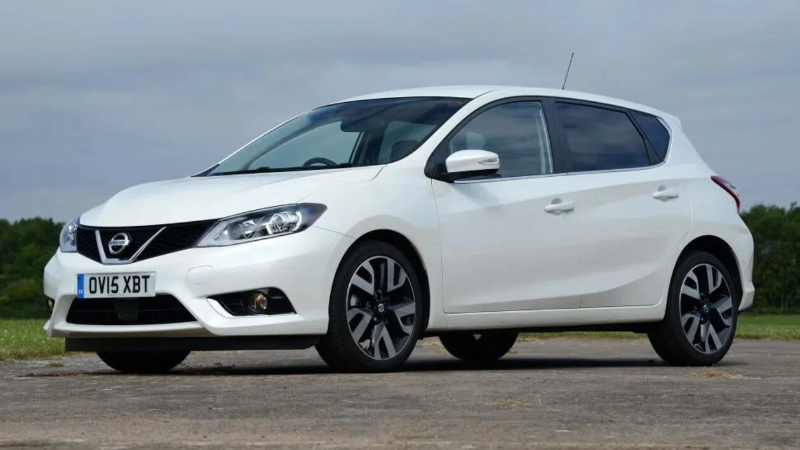
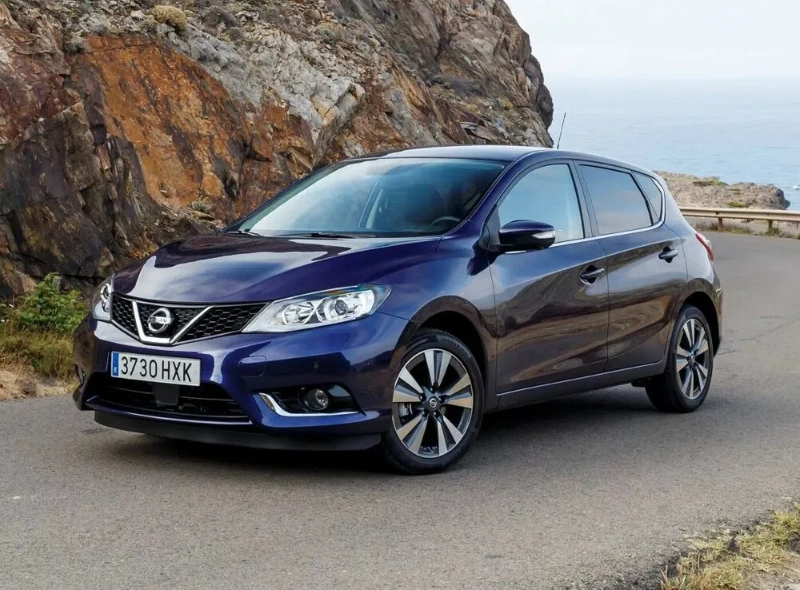
Nissan Pulsar draws SUV inspiration from the Qashqai, providing generous passenger space, often more than rivals like VW Golf. The cabin is well-designed and roomy, though storage is more basic: dashboard shelf, central tray, and door pockets. Cargo holds mid-sized luggage from the 5th generation onward, fitting family groceries but not bulky items.[1]
- Auris advantages: Fashionable features, better city maneuverability.
- Pulsar advantages: SUV-like rear space, slightly larger trunk in recent models.[2]
Performance varies by engine choice, with updated data showing nuanced edges.
Toyota Auris uses reliable 1NZ-FE 1.5L or 2ZR-FAE 1.8L engines, paired with Super CVT-i or 6-speed manual. It accelerates briskly (as low as 9.5 sec to 100 km/h) and handles well in urban settings. Recent comparisons confirm 116 HP and 185 Nm in 1.2L variants outpace Pulsar equivalents.[2]
Nissan Pulsar offers versatile 1.2L DiG-T petrol, 1.5L diesel, or 1.6L DiG-T (188 HP). A 1.5L CVT produces 104 BHP, but higher trims deliver superior torque (240 Nm) for overtaking. 0-100 km/h takes 11–12.7 sec, better for highways.[1][2]
Fuel efficiency winner: Auris at up to 19.2 km/L vs Pulsar's 13.8 km/L max. Over 15,000 km annually, Auris saves ~75 liters.[2]
Safety standards have evolved since the original article's 2021 data.
Both include SRS airbags, ABS, EBD, but Auris adds curtain airbags, VSC+TRC, Smart Stop, and paddle shifts. Pulsar counters with AC, climate control, electric windows.[1]
Updated insights: Auris scores slightly higher in reliability (4.6/5 vs Pulsar's 4.3/5) and crash protection. Pulsar shows fewer faults in inspections. 2026 tip: Check Euro NCAP updates, both rate 5-stars, but Auris excels in child safety.[4][2]
Original content lacks long-term costs, here's deeper analysis for 2026 buyers.[5][2]
- Maintenance: Toyota's reputation shines; parts are cheaper globally ($6400 avg. used vs Pulsar's higher costs). Annual servicing: Auris ~$400, Pulsar ~$500.[2]
- Resale Value: Auris retains 10–15% more value after 5 years due to Toyota durability.
- Insurance: Similar rates, but Pulsar's torque may hike premiums 5–10%.
- Real-world case: Fleet operators report Auris downtime 20% lower in urban fleets.[4]
Reliability ratings: Both average, but Auris drivers rate engines 4.7/5 vs 4.3/5.[4]
Prices and availability shifted post-2021. Used Auris models now average $5,000–$15,000 globally, reflecting inflation and demand. Pulsar, less common, ranges $8,000–$25,000.[5]
- Electric shift: Both discontinued new; hybrids like Auris Hybrid dominate used markets (20+ km/L).
- China import boom: Platforms like KeyChainAuto.com supply reliable units from Asia.[6]
- Expert insight: In 2026, Pulsar appeals to performance seekers; Auris wins for efficiency amid rising fuel costs (up 15% YoY).
Pro tip: Verify VIN for recalls, Auris had minor airbag issues fixed by 2023.
Choose wisely with this practical checklist.
1. Assess needs: City driving? Pick Auris for efficiency. Highways? Pulsar torque.
2. Set budget: Factor ownership costs, Auris cheaper long-term.
3. Inspect key areas: Test acceleration, check trunk space, scan for rust.
4. Test drive both: Note ride comfort; Auris feels nimbler.[2]
5. Source globally: Contact trusted suppliers for inspected units.
Compare trims: Auris Active vs Pulsar Acenta for value.[7]
Toyota Auris suits city commuters seeking fuel savings, comfort, and lower costs. Nissan Pulsar excels for sporty drivers needing space and power. Your choice hinges on priorities, efficiency vs performance.[1][2]
Ready to drive home the perfect compact car? Contact KeyChainAuto.com now, China's leading supplier of high-performance used vehicles including Toyota Auris and Nissan Pulsar. Call +8613572980919 or email abbie@keychainventure.com for exclusive stock, global shipping, and personalized quotes. Visit keychainauto.com today![6]
Auris wins with 16–19.2 km/L vs Pulsar's 12.9–13.8 km/L, saving fuel on long trips.[1][2]
Yes, Pulsar measures up to 4.39m long (11cm longer), with 385L trunk vs 360L.[3][2]
Auris edges out (4.6/5 rating) with fewer breakdowns; both solid but Toyota parts cheaper.[4]
Primarily used markets; hybrids popular. Check suppliers like KeyChainAuto for imports.[5][6]
Pulsar for rear space; Auris for efficiency and storage options.[1]
[1](https://blog.beforward.jp/car-comparison/toyota-auris-vs-nissan-pulsar-comparison.html)
[2](https://www.auto-abc.eu/compare/Nissan-Pulsar-v15098-vs-Toyota-Auris-v15707)
[3](https://www.carsized.com/en/cars/compare/toyota-auris-2012-5-door-hatchback-vs-nissan-pulsar-2014-5-door-hatchback/)
[4](https://mail.automaniac.org/compare/10312/8605/toyota-auris-2.0-d-4d-VS-nissan-pulsar-dci-110)
[5](https://www.indyautoman.com/blog/nissan-vs-toyota)
[6](https://www.keychainauto.com)
[7](https://www.ultimatespecs.com/car-comparator/69692,72030/Nissan-Pulsar-vs-Toyota-Auris-2.html)


