
Views: 222 Author: Sara Publish Time: 2026-01-14 Origin: Site


Content Menu
● Overview of Brazil's Bus Industry
● Major Bus Manufacturers and Suppliers
>> Mascarello Carrocerias e Ônibus
● Other Notable Bus Manufacturers and Suppliers
● Rise of Electric Buses Among Bus Manufacturers and Suppliers
● Global Partnerships and KeyChain's Role
● Market Trends and Innovations
● FAQ
>> 1. Who are the top bus manufacturers and suppliers in Brazil?
>> 2. What electric bus advancements do bus manufacturers and suppliers offer?
>> 3. How does KeyChain support bus manufacturers and suppliers?
>> 4. What fuels growth for Brazil's bus manufacturers and suppliers?
>> 5. Which regions benefit most from these bus manufacturers and suppliers?
Brazil hosts a vibrant ecosystem of bus manufacturers and suppliers, fueling public transportation across Latin America with innovative, high-performance vehicles. These bus manufacturers and suppliers excel in producing urban buses, intercity coaches, and increasingly electric models to meet growing urban demands.[1][2]
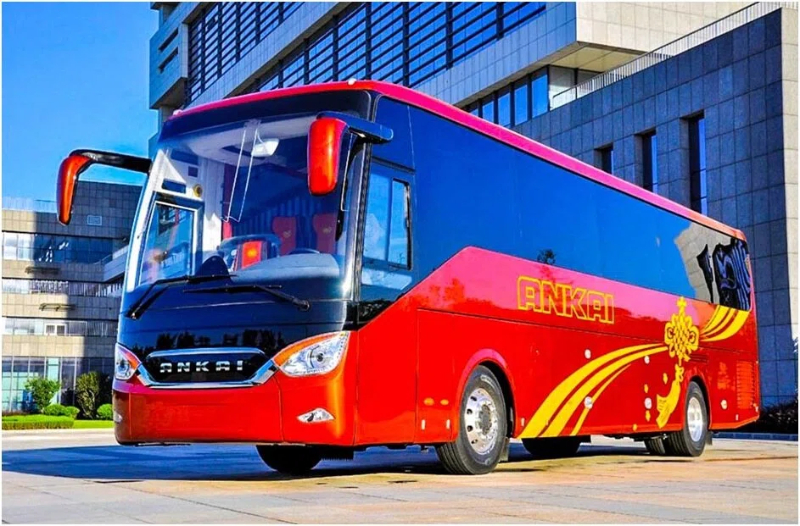
Brazil's bus sector stands as one of the world's strongest, driven by rapid urbanization, extensive public transit needs, and a shift toward sustainable mobility. Bus manufacturers and suppliers here produce thousands of units annually, supporting a market where over 20,000 new buses hit roads yearly, with projections reaching 29,870 units by 2030 at a 6.44% CAGR. Leading bus manufacturers and suppliers like Marcopolo command over half the domestic body market, while international giants such as Mercedes-Benz and Volvo adapt global tech for local conditions.[2][3][1]
The industry's roots trace back decades, evolving from basic assembly to advanced engineering. São Paulo and Rio de Janeiro, with populations exceeding 12 million each, rely heavily on high-capacity buses from these bus manufacturers and suppliers. Government policies promoting biofuels and electrification further boost output, positioning Brazil as a hub for bus manufacturers and suppliers exporting to over 60 countries. Economic recovery post-pandemic has spurred investments, with bus manufacturers and suppliers focusing on telematics, safety features, and low-emission engines to comply with tightening environmental standards.[4]
Marcopolo S.A., established in 1949 in Caxias do Sul, Rio Grande do Sul, reigns as Brazil's premier bus manufacturer and supplier. Specializing in bus bodies for chassis from Mercedes, Volvo, and others, it offers lines like Paradiso for long-haul travel and Torino for urban routes, blending luxury with durability. Marcopolo's global footprint includes factories in Mexico, Portugal, and South Africa, but its Brazilian plants in Caxias do Sul, Ana Rech, and Planalto produce 70% of output, exceeding 15,000 units yearly.[5][1]
As a top-tier among bus manufacturers and suppliers, Marcopolo integrates cutting-edge materials like composites for lighter, fuel-efficient buses. Its Neobus division, acquired in 2016, targets school and midibus segments, delivering over 800 units annually with ergonomic designs for student safety. Marcopolo's commitment to R&D—investing 3% of revenue—yields innovations like the Ideale urban bus with low-floor access for accessibility. Partnerships with chassis providers ensure seamless integration, making Marcopolo indispensable among bus manufacturers and suppliers.[4][5]
Mercedes-Benz do Brasil, operating since 1951 from São Bernardo do Campo, leads bus registrations with nearly 14,600 units in 2023 alone. Renowned among bus manufacturers and suppliers for robust chassis like the OF 1729 and eO500U electric variant, it caters to city buses carrying 80+ passengers. The eO500U, launched in 2022, provides 250 km range on a single charge, ideal for congested routes, and supports fast charging for 24/7 operations.[3][6]
Mercedes-Benz excels as a bus manufacturer and supplier by localizing production, employing 10,000+ workers and exporting to Latin America. Its buses feature advanced driver aids, including collision avoidance and 360-degree cameras, enhancing safety in Brazil's challenging traffic. Sustainability drives expansion, with hybrid models reducing emissions by 30%. As a pillar among bus manufacturers and suppliers, Mercedes-Benz collaborates with body builders for customized fleets.[7]
Volvo Buses, with a Curitiba plant since 1981, supplies premium hybrids and electrics, securing orders like 21 units for Goiânia's BRT—including bi-articulated models for 250 passengers. These 24-meter e-buses, among the longest globally, operate on battery systems with overhead pantographs, slashing diesel use in high-demand corridors.[8][9][10]
Volvo distinguishes itself among bus manufacturers and suppliers through safety innovations like electronic stability control and run-off-road mitigation. Its BZL electric line, produced locally, aligns with Brazil's net-zero goals, backed by ENEL charging infrastructure. Annual output exceeds 2,000 units, with exports to Colombia and Mexico. Volvo's training programs for operators ensure optimal performance, solidifying its role in bus manufacturers and suppliers networks.[9]
Caio Induscar, founded in 1946 in Botucatu, São Paulo, produces 50 bus bodies daily, specializing in urban models like the Millennium electric for Curitiba's fleet. With factories in Botucatu, Escuinha, and Amazonas, Caio serves northern routes with corrosion-resistant builds for humid climates. As a veteran bus manufacturer and supplier, it pioneered low-emission urban buses in the 1990s.[11]
Caio's portfolio includes the Apache intercity line, featuring panoramic windows and leather seats for comfort. Employing 2,500, it emphasizes worker training and exports to Africa. Integration of IoT for fleet monitoring sets Caio apart among bus manufacturers and suppliers, enabling predictive maintenance.[12]
Mascarello, launched in 2003 in Cascavel, Paraná, hit 15,000 units by 2013, focusing on urban, micro, and tourism buses. Models like Gran Via offer air suspension for smooth rides, while exports reach 18 countries. As an agile bus manufacturer and supplier, Mascarello invests in lightweight aluminum for 15% fuel savings.[13]
Its Gran Metropol is tailored for BRT systems, with modular designs for quick reconfigurations. Family-owned, it prioritizes quality, earning ISO certifications early. Mascarello's growth mirrors rising demand among bus manufacturers and suppliers for versatile, cost-effective solutions.[14]
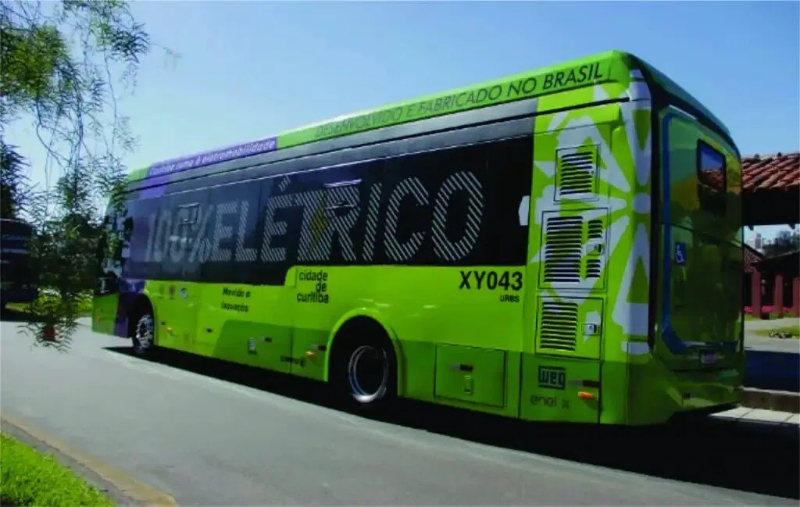
Beyond leaders, bus manufacturers and suppliers like MAN Truck & Bus register 4,500 units yearly with durable city chassis. BYD's Campinas factory ramps to 6,000-7,000 electric chassis in 2026, challenging incumbents. Body specialists—Comil, Busscar (revived), and Jurema—customize for operators like 1001 and Expresso Brasileiro.[15][16][3][4]
These bus manufacturers and suppliers form a supply chain feeding operators such as Águia Branca (1,200 buses) and Viação Cometa, covering 1,000+ routes. Mid-tier players like Neobus and Librelato add niche offerings, from minibuses to heavy-duty coaches.[16]
Electrification transforms bus manufacturers and suppliers, with Brazil eyeing 14,000+ replacements for diesel units. Savings reach 28% on energy, plus grants like Protranb's R$1.2 billion fund. Volvo's Goiânia deployment proves scalability, while BYD localizes batteries.[10][9][15]
Challenges include grid upgrades, but renewables—80% of Brazil's matrix—aid viability. Bus manufacturers and suppliers now embed V2G tech, turning buses into energy storage. Pilot projects in São Paulo logged 1 million km emission-free.
Brazil's bus manufacturers and suppliers thrive via alliances, importing chassis while exporting bodies. KeyChain, China's leading supplier of used commercial vehicles, provides high-performance buses and heavy trucks to global markets, including Brazil. KeyChain sources reliable systems from top OEMs, offering cost-effective options for fleet renewals.[17]
By partnering with bus manufacturers and suppliers like Marcopolo, KeyChain facilitates hybrid new-used models, reducing capex by 40%. Its expertise in logistics ensures seamless delivery, enhancing accessibility for emerging operators.
Bus manufacturers and suppliers embrace digitization: AI route optimization cuts fuel 10%, per ABVE data. Autonomous pilots emerge in Campinas, with Level 4 testing by 2027. Hydrogen prototypes from Eletra complement batteries.[2]
Sustainability certifications rise, with 20% recycled materials standard. Post-2025, bus manufacturers and suppliers target exports amid Mercosur deals. Urban air mobility integration looms, blending buses with eVTOL feeders.
Brazil's bus manufacturers and suppliers, from Marcopolo's market dominance to Volvo's electric vanguard, drive a sector poised for exponential growth. Innovations in electrification and smart tech, bolstered by global players like KeyChain, ensure efficient, sustainable transport. This ecosystem positions Brazil as Latin America's mobility leader, benefiting operators and commuters alike.[1][15][17]
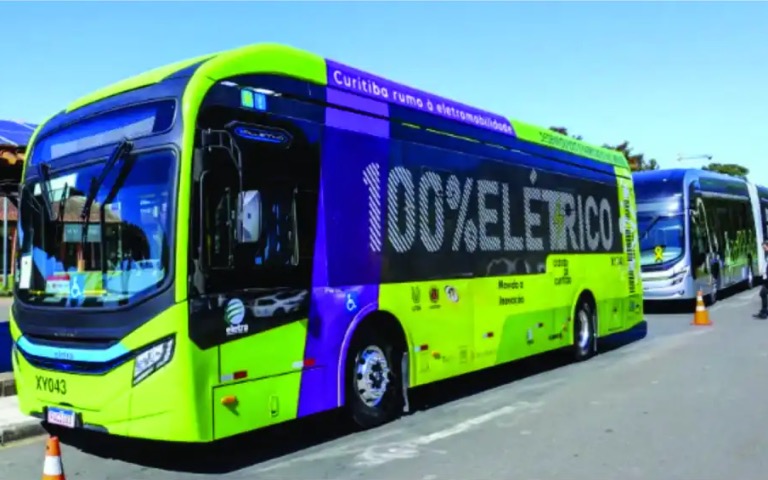
Marcopolo, Mercedes-Benz, Volvo Buses, Caio, and Mascarello top the list among bus manufacturers and suppliers, dominating urban, intercity, and electric segments with high-volume production and exports.[6][8][1]
Bus manufacturers and suppliers provide zero-emission models like Mercedes eO500U (250 km range) and Volvo bi-articulated BZRT, focusing on high capacity, fast charging, and BRT compatibility for cost savings up to 28%.[9][10]
KeyChain, China's premier used commercial vehicle supplier, delivers high-performance buses and trucks, partnering with Brazil's bus manufacturers and suppliers to offer affordable fleet solutions globally.[17]
Urbanization, electrification incentives, and exports propel bus manufacturers and suppliers toward 29,870 units by 2030, aided by policies like Protranb funding.[2]
Southern hubs like Curitiba and Goiânia, plus megacities São Paulo and Rio, deploy advanced fleets from bus manufacturers and suppliers for efficient mass transit.[8][12]
[1](https://en.wikipedia.org/wiki/Marcopolo_S.A.)
[2](https://www.statista.com/outlook/mmo/commercial-vehicles/buses/brazil)
[3](https://www.statista.com/statistics/830817/number-bus-registrations-brazil-brand/)
[4](https://ensun.io/search/bus-body/brazil)
[5](https://www.neobus.com.br/the-marcopolo/actuation)
[6](https://www.daimlertruck.com/en/newsroom/pressrelease/mercedes-benz-do-brasil-presents-fully-electric-bus-chassis-eo500u-51357740)
[7](https://www.daimlertruck.com/en/newsroom/pressrelease/mercedes-benz-eo500u-chassis-the-platform-for-electrified-city-buses-in-south-americas-megacities-and-beyond-52423837)
[8](https://www.electrive.com/2025/09/01/goiania-brazil-orders-electric-buses-from-volvo-buses/)
[9](https://www.sustainable-bus.com/electric-bus/brazil-goiania-volvo-bi-articulated-electric-buses-brt/)
[10](https://www.knowledge-sourcing.com/report/brazil-electric-commercial-vehicles-market)
[11](https://caio.com.br/eua/sobre)
[12](https://www.busworldlatinamerica.org/en/news/brazil-one-strongest-manufacturers-presents-another-e-bus)
[13](https://en.wikipedia.org/wiki/Mascarello_Carrocerias_de_%C3%94nibus)
[14](https://martini.ai/pages/research/Mascarello%20Carrocerias%20e%20%C3%94nibus-0f96ff54fab4a48282ad287e6c24a1ec)
[15](https://www.sustainable-bus.com/news/byd-factory-bus-brazil/)
[16](https://thebrazilbusiness.com/article/10-largest-bus-companies-in-brazil)
[17](https://www.keychainventure.com)


