
Views: 230 Author: Keychain Venture Publish Time: 2026-09-04 Origin: Site


Content Menu
● Why the Ford Focus Became a Popular Compact Car
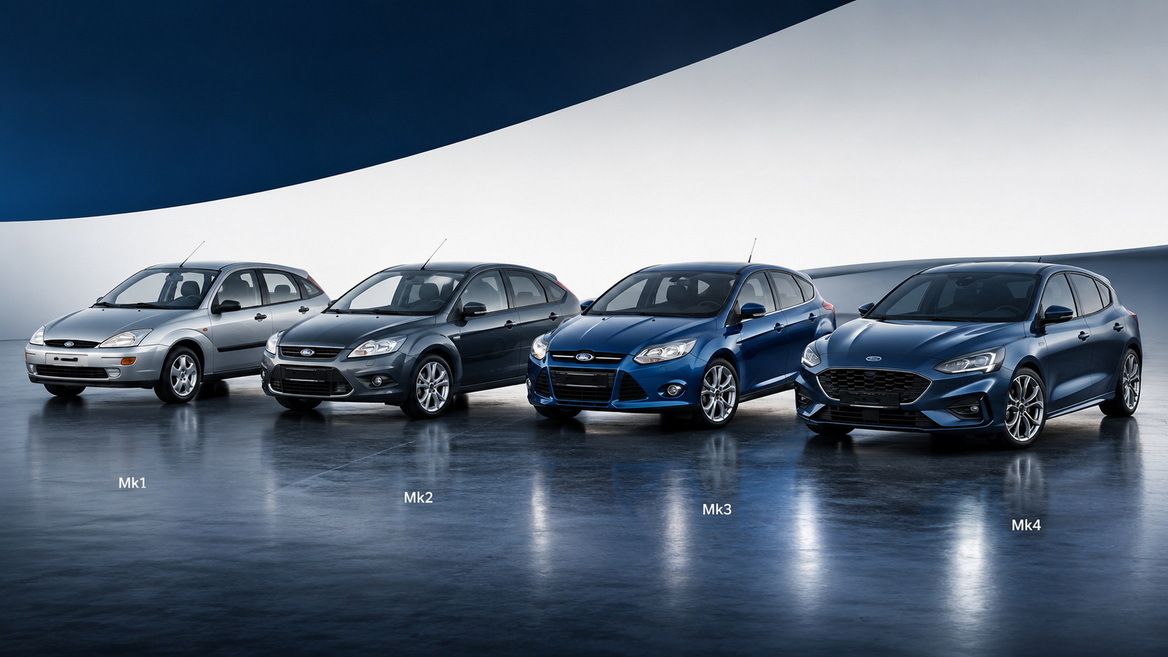
● Ford Focus Generations at a Glance
● Ford Focus Mk1 (1998–2004): The Beginning of a New Era
>> What Made the Mk1 Ford Focus Different
>> Mk1 Ford Focus Buying Considerations
● Ford Focus Mk2 (2004/2005–2011): More Space and Everyday Refinement
>> Key Changes in the Mk2 Ford Focus
>> Mk2 Ford Focus Buying Considerations
● Ford Focus Mk3 (2011–2018): Efficient Engines and Connected Features
>> EcoBoost Engines and Everyday Efficiency
>> Technology and Driver Convenience
● Ford Focus Mk4 (2018–2025): Modern Safety, Connectivity, and Final European Generation
>> Safety and Driver-Assistance Features
>> The 2022 Update and the End of Production
● What the Ford Focus Teaches Today's Vehicle Buyers
>> Match Vehicle Technology to Real Operations
>> Safety Is a Complete System
>> New-Energy Vehicles Must Fit the Duty Cycle
● Practical Used Ford Focus Inspection Checklist
>> Step 1: Verify the Vehicle Details
>> Step 2: Inspect Exterior and Underbody Condition
>> Step 3: Check Mechanical Components
>> Step 4: Test Electronics and Cabin Equipment
>> Step 5: Review Maintenance Documentation
>> Step 6: Arrange an Independent Inspection
>> What years were the Ford Focus generations produced?
>> Which Ford Focus generation is best for used-car buyers?
>> Is the Ford Focus a suitable family car?
>> Did the Ford Focus have performance models?
>> Why did Ford stop producing the Focus in Europe?
The Ford Focus is one of the most recognisable compact cars in modern automotive history. Since its introduction in 1998, it has evolved from a bold replacement for the Ford Escort into a widely respected hatchback, estate, saloon, and performance-car platform.
For many drivers, the Ford Focus has represented an appealing balance between everyday comfort, practical interior space, responsive handling, fuel efficiency, and accessible ownership. Across four generations, Ford adapted the Focus to changing expectations in safety, technology, connectivity, emissions, family mobility, and the rising importance of New Energy Vehicles.
The Ford Focus story also reflects a much larger industry shift. Cars are no longer judged only by engine output, styling, or cabin space. Buyers now consider digital systems, driver-assistance functions, fuel or energy consumption, maintenance costs, environmental requirements, charging accessibility, and long-term usability.
This guide explores every major Ford Focus generation, highlights the key changes that shaped the model, and offers practical insights for used-car buyers, vehicle distributors, fleet managers, and transport professionals navigating the transition toward smarter mobility and New Energy Vehicle solutions.
The Ford Focus entered one of the most competitive automotive segments in Europe. Compact cars needed to serve several different purposes at once. They had to be practical enough for families, economical enough for commuters, comfortable enough for long-distance travel, and enjoyable enough for drivers who wanted more than basic transport.
The Focus stood out because it brought several important qualities together:
- Responsive driving dynamics for a mainstream compact car.
- Practical body styles for everyday family and business use.
- A wide variety of engine and trim options.
- Strong performance versions, including ST and RS models.
- Continuous improvements in cabin technology and safety equipment.
- Broad appeal across private, fleet, and company-car markets.
The first-generation Ford Focus changed what many buyers expected from a family hatchback. It showed that an affordable compact vehicle could feel agile, stable, comfortable, and modern without sacrificing everyday usability.
Over time, Ford developed the Focus into a more refined and technology-focused model. Each generation reflected changing market priorities, including efficiency, emissions reduction, passenger protection, digital connectivity, and driver-assistance systems.
| Generation | Main Production Era | Main Character | Key Strengths |
|---|---|---|---|
| Ford Focus Mk1 | 1998–2004 | Fresh design and engaging driving feel | Handling, originality, compact practicality |
| Ford Focus Mk2 | 2004/2005–2011 | Larger, more refined, and family-oriented | Space, comfort, strong performance variants |
| Ford Focus Mk3 | 2011–2018 | Technology-led and globally developed | Fuel efficiency, connectivity, broad powertrain choice |
| Ford Focus Mk4 | 2018–2025 | Modern, connected, and safety-focused | Driver-assistance systems, refined cabin, advanced features |
The first-generation Ford Focus arrived in Europe in 1998. It replaced the long-running Ford Escort, but the Focus was not simply a redesigned version of its predecessor. It represented a major change in Ford's design, engineering, and product strategy.
The Mk1 Focus introduced a more distinctive exterior design, a modern dashboard layout, and a chassis that quickly earned a strong reputation among drivers. At a time when many compact cars focused mainly on basic transportation, the Focus offered a more engaging driving experience.
Its independent rear suspension was one of the major reasons for its appeal. The setup helped deliver a balance between comfort and control, making the car feel more confident on winding roads while still being practical for daily commuting.
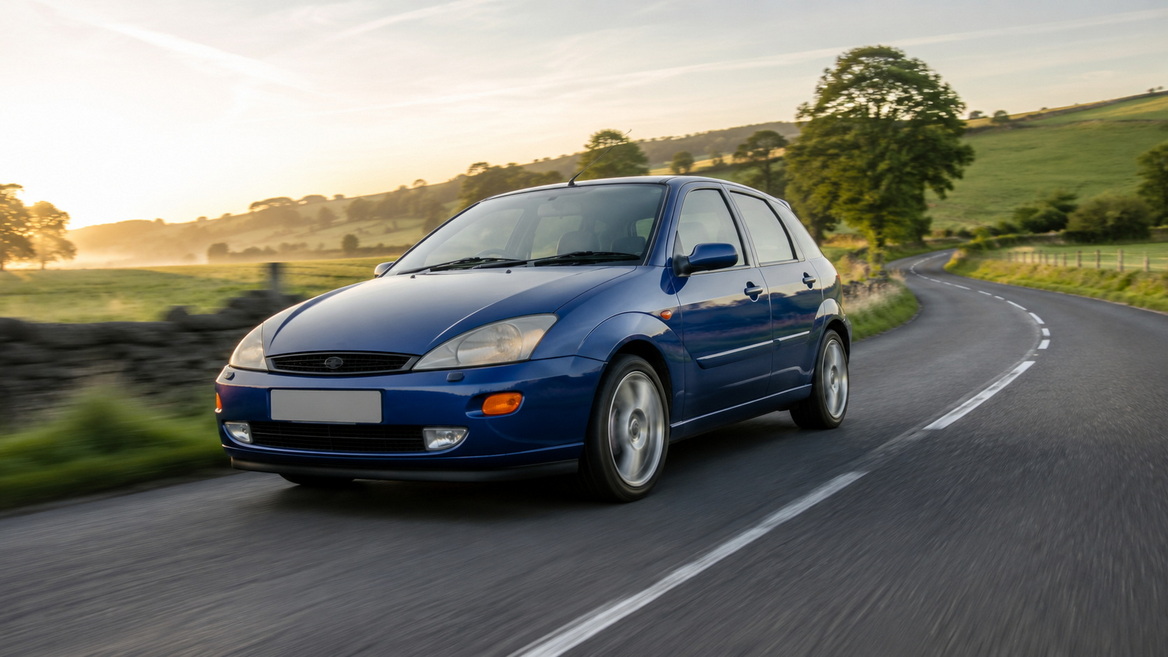
- A modern and distinctive design compared with many late-1990s compact cars.
- Responsive steering and confident cornering behaviour.
- A practical choice of hatchback, saloon, estate, and performance versions.
- A strong reputation for driving enjoyment.
- A model range that appealed to both everyday drivers and automotive enthusiasts.
The Mk1 Focus was offered with a variety of petrol and diesel engines. Entry-level models were practical and affordable, while more powerful versions offered a more spirited driving experience.
The most memorable version was the Ford Focus RS, launched in 2002. It featured a turbocharged engine producing 215 bhp, a specially developed chassis, upgraded brakes, wider bodywork, and motorsport-inspired styling. The Focus RS helped establish the Focus as more than a family hatchback. It became a desirable performance car with a strong enthusiast following.
A well-maintained Mk1 Ford Focus can still provide a rewarding ownership experience. However, these vehicles are now older, and their condition is more important than their original specification.
Buyers should inspect the following areas carefully:
- Corrosion around wheel arches, sills, floor panels, and suspension mounting points.
- Service history and evidence of regular maintenance.
- Suspension condition, including worn bushes, dampers, and steering components.
- Electrical functions, dashboard warning lights, and central-locking operation.
- Tyre condition and uneven wear patterns.
- Signs of previous accident repairs or low-quality modifications.
Performance models such as the Focus RS require even more attention. Original components, maintenance documentation, professional servicing, and a careful inspection can make a major difference to long-term ownership value.
The second-generation Ford Focus was designed to offer a more mature and practical ownership experience. Compared with the Mk1, the Mk2 was larger, more spacious, and more refined.
Its exterior design was more conventional, but the improvements in cabin room, luggage capacity, ride comfort, and long-distance usability made it a strong choice for families and business users.
Ford recognised that many buyers wanted a compact car that could handle school runs, motorway journeys, shopping trips, family holidays, and everyday commuting without feeling too small or basic.
- Increased interior space for front and rear passengers.
- More comfortable seating and a more mature dashboard layout.
- A broader range of body styles, including hatchback, estate, saloon, and coupé-cabriolet versions.
- Improved refinement for motorway driving.
- More family-friendly practicality than the first generation.
The Mk2 also continued the Focus tradition of high-performance models. The Focus ST brought a more powerful turbocharged engine and sportier styling, while the later Focus RS became one of the most talked-about hot hatchbacks of its era.
The 2009 Ford Focus RS used a turbocharged five-cylinder engine producing 297 bhp. It featured a limited-slip differential, larger brakes, aggressive bodywork, and a specially engineered front suspension system designed to manage its high power output.
For enthusiasts, the Mk2 RS remains an important modern performance car. For practical buyers, however, standard petrol or diesel versions may offer a more manageable balance of purchase cost, insurance, servicing, tyres, fuel consumption, and repair expenses.
The Mk2 Focus can be a practical used-car option when it has been maintained correctly. Buyers should pay close attention to mechanical condition, electrical functions, and service records.
Important checks include:
1. Confirm the engine type, transmission type, trim level, and mileage.
2. Review the full service history and previous repair invoices.
3. Check for clutch wear, gearbox issues, and unusual noises during acceleration.
4. Inspect suspension components and listen for knocking noises over uneven surfaces.
5. Test the air conditioning, infotainment functions, windows, lights, and central locking.
6. Inspect the condition of brakes, tyres, wheels, and exhaust components.
7. Arrange an independent inspection before completing the purchase.
The third-generation Ford Focus marked a major transition for the model. Ford developed the Mk3 as part of a broader global vehicle strategy, aiming to create a compact car that could appeal to buyers in multiple international markets.
The Mk3 retained the Focus reputation for capable handling, but it placed greater emphasis on fuel efficiency, technology, infotainment, and a wider selection of powertrains.
This generation arrived during a period when buyers were increasingly interested in lower fuel consumption, reduced emissions, turbocharged petrol engines, digital connectivity, and modern interior features.
One of the best-known developments during the Mk3 period was Ford's EcoBoost petrol-engine range. These smaller turbocharged engines were designed to provide a balance between performance and fuel economy.
The 1.0-litre EcoBoost engine was especially notable because it demonstrated how a small-displacement petrol engine could provide enough power for many everyday driving situations while reducing fuel consumption compared with larger conventional engines.
However, the right engine depends on how the vehicle will be used.
| Driving Requirement | Suitable Vehicle Direction | Important Consideration |
|---|---|---|
| Short city journeys | Petrol, hybrid, or electric vehicle | Frequent short trips may not suit every diesel engine |
| Long-distance motorway use | Efficient petrol, diesel, hybrid, or electric vehicle | Annual mileage and charging access should guide the decision |
| Family transport | Five-door hatchback or estate | Rear-seat space and luggage needs should be checked |
| Sport-focused driving | ST or sport-oriented trim | Higher running costs should be expected |
| Business and fleet use | Vehicle matched to duty cycle | Running costs, uptime, and maintenance support are critical |
The most important principle is simple: choose a vehicle based on its real operating environment. A car that performs well in city traffic may not be the ideal choice for long-distance motorway use. Likewise, a vehicle suited to one region may not be the best solution for another market with different roads, fuel costs, climate conditions, or service infrastructure.
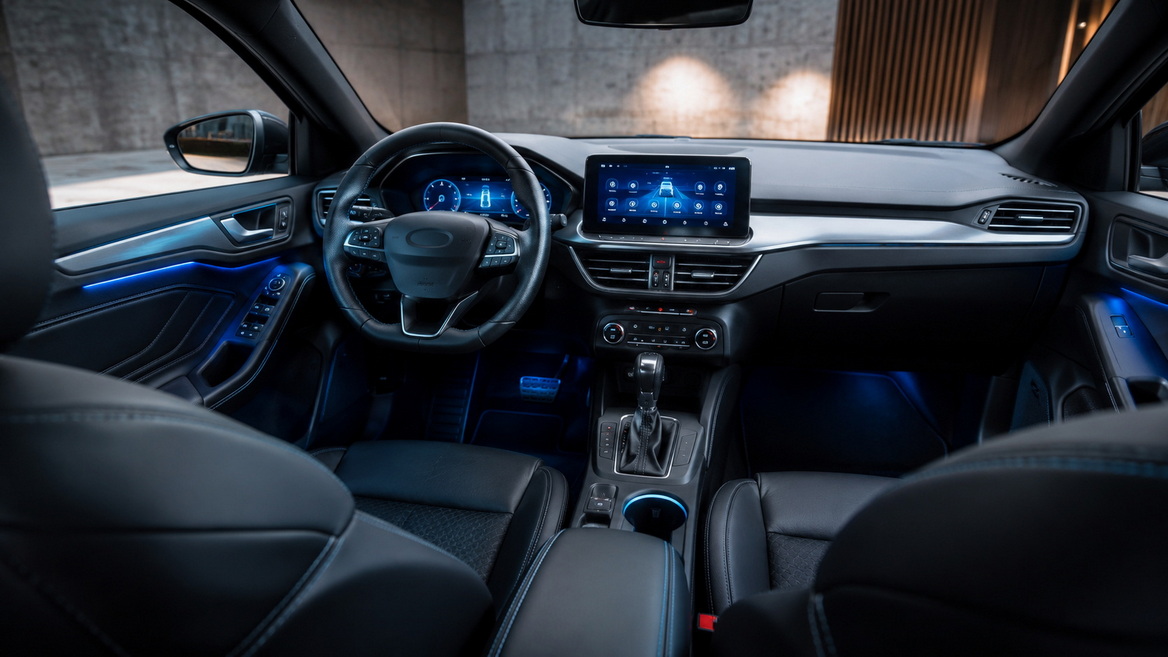
The Mk3 Focus introduced more advanced infotainment and driver-convenience features than previous generations. Depending on trim level and market, these could include touchscreen systems, Bluetooth connectivity, parking sensors, reversing cameras, cruise control, climate control, and voice-command functions.
For used-car buyers, technology should always be checked carefully. Older infotainment systems may require updates, while cameras, sensors, climate-control systems, and electronic controls should be tested before purchase.
The fourth-generation Ford Focus arrived in 2018 with a more refined platform, updated styling, improved cabin comfort, and a greater focus on advanced driver-assistance technology.
The Mk4 was created for buyers who expected more from a compact car. Modern customers increasingly wanted efficient engines, connected infotainment, improved comfort, stronger safety systems, and flexible body styles.
Ford offered the Mk4 Focus in hatchback, estate, ST, and Active versions. The Active model used increased ground clearance and a more rugged appearance, appealing to buyers who wanted some crossover-inspired styling and practicality.
The Mk4 Focus represented a significant step forward in safety technology. Depending on the vehicle specification, available systems could include:
- Autonomous emergency braking.
- Lane-keeping assistance.
- Lane-departure warning.
- Traffic-sign recognition.
- Adaptive cruise control.
- Blind-spot monitoring.
- Parking assistance.
- Rear-view cameras and parking sensors.
- Speed-assistance functions.
The 2019 Ford Focus achieved strong independent safety assessment results, including high scores for adult occupant protection and child occupant protection. Its safety-assistance performance also reflected the increasing importance of active systems that help drivers avoid or reduce the severity of accidents.
However, buyers should always verify the exact equipment installed on an individual vehicle. Safety features can vary between trim levels, model years, countries, and optional equipment packages.
Ford updated the Mk4 Focus in 2022 with revised exterior styling, technology improvements, and updated powertrain choices in selected markets.
The final years of the Focus reflected a changing automotive environment. SUVs and crossovers had become increasingly popular, while battery-electric vehicles and hybrid models were gaining a larger role in many global markets.
Ford confirmed that European Focus production would end in 2025. This marked the conclusion of a 25-year model history in Europe and highlighted the automotive industry's transition toward electrification, connected mobility, and new vehicle formats.
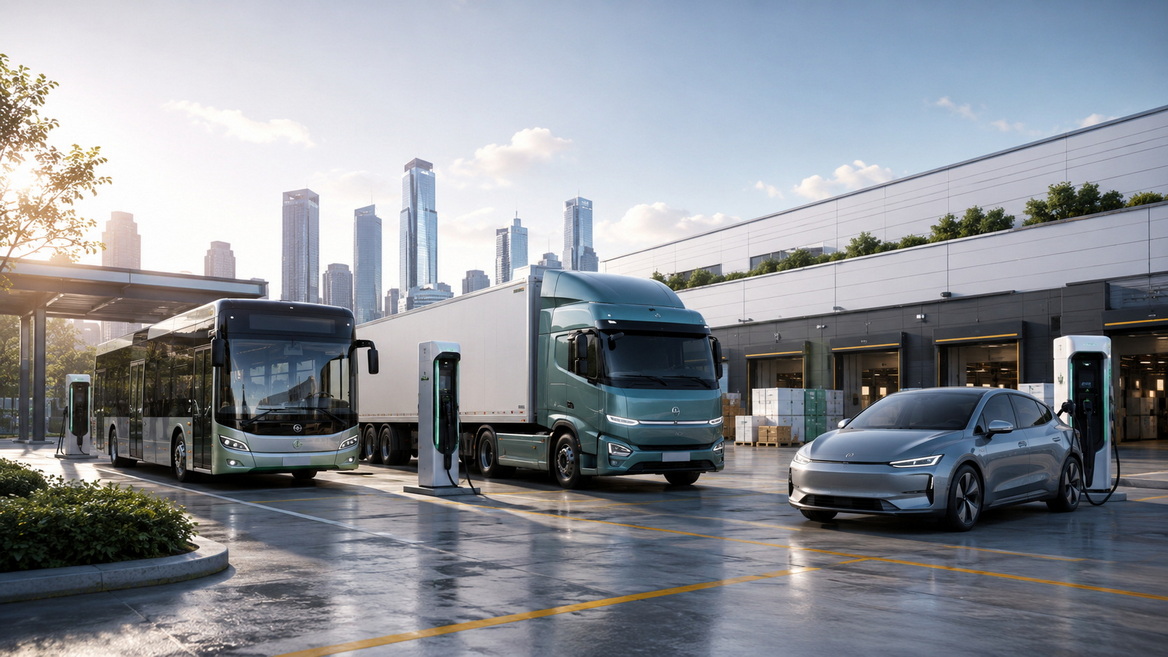
The Ford Focus is a passenger car, but its development provides useful lessons for buyers of all vehicle types, including family cars, fleet vehicles, buses, heavy trucks, and new-energy transport solutions.
Technology should solve a practical problem. A feature has genuine value when it improves safety, reduces fuel or energy consumption, makes a driver more comfortable, increases productivity, or helps reduce vehicle downtime.
For commercial vehicles, useful technologies may include:
- Fleet telematics systems.
- Driver-behaviour monitoring.
- Battery and energy-management tools.
- Predictive maintenance alerts.
- Vehicle-location tracking.
- Remote diagnostics.
- Charging or refuelling data analysis.
The goal is not simply to add more equipment. The goal is to select equipment that improves daily operations and supports long-term business performance.
Modern safety is not only about airbags or braking systems. It involves vehicle structure, visibility, tyre condition, driver training, maintenance standards, route planning, speed control, and the correct use of driver-assistance systems.
For fleet operators and commercial transport buyers, safety evaluation should include:
- Vehicle structure and occupant protection.
- Brake-system performance.
- Active safety features.
- Driver ergonomics and visibility.
- Maintenance requirements.
- Spare-parts availability.
- Driver training and after-sales support.
A vehicle is only as safe as the system supporting it.
Electric buses, electric trucks, hybrid vehicles, and other new-energy transport solutions should be selected based on real operating conditions.
Before choosing a new-energy vehicle, buyers should evaluate:
1. Daily driving distance.
2. Passenger capacity or payload requirement.
3. Route elevation and road conditions.
4. Weather and air-conditioning demand.
5. Available charging or energy infrastructure.
6. Depot space and charging time.
7. Local maintenance capability.
8. Spare-parts support.
9. Driver training requirements.
10. Total cost of ownership over the intended operating period.
A vehicle with a suitable battery capacity, charging strategy, and operating profile can deliver strong value. A vehicle selected without considering those factors may face avoidable challenges in range, charging time, energy cost, maintenance, or operational scheduling.
A used Ford Focus can offer good value when it has been maintained properly. Before purchase, buyers should follow a structured inspection process.
Confirm the VIN, model year, engine type, transmission, trim level, service history, mileage, and ownership records. Make sure the details match the seller's description.
Look for corrosion, uneven panel gaps, mismatched paint, damaged underbody covers, tyre wear, cracked lights, and signs of previous accident repairs.
Listen for unusual engine noises. Test clutch operation, gearbox shifts, steering response, brakes, suspension, and engine temperature. A vehicle should accelerate smoothly, brake predictably, and track straight on the road.
Test all buttons, screens, lights, windows, air conditioning, parking sensors, camera systems, infotainment features, and dashboard warning lights.
A complete service record can reveal whether the vehicle has been cared for correctly. Look for evidence of regular oil changes, brake maintenance, tyre replacement, coolant checks, transmission servicing, and repairs.
An independent pre-purchase inspection is highly recommended, especially for older vehicles, imported vehicles, performance models, and vehicles with incomplete service history.
The Ford Focus evolved from a bold and driver-focused hatchback into a more refined, technology-led, and safety-conscious compact car. Each generation reflected the changing priorities of drivers, families, businesses, and automotive manufacturers.
The Mk1 established a reputation for engaging handling and modern design. The Mk2 added more comfort and family practicality. The Mk3 introduced greater efficiency and digital features. The Mk4 brought connected technology, advanced driver assistance, and a more sophisticated ownership experience.
Although Ford Focus production in Europe ended in 2025, the model remains an important part of modern automotive history. Its evolution demonstrates how quickly vehicle development can change in response to safety requirements, energy priorities, customer expectations, and market demand.
For today's vehicle buyers, fleet operators, distributors, and transport professionals, the central lesson remains clear: the best vehicle is not simply the newest or most powerful option. It is the vehicle that best matches the real operating environment, expected mileage, passenger or cargo needs, energy strategy, maintenance capability, and long-term business goals.
KeyChain provides high-quality buses, heavy trucks, and new-energy vehicle solutions for domestic and international customers. Vehicle options can be matched to market requirements, route conditions, passenger capacity, operating targets, and export needs.
The Ford Focus Mk1 was produced from 1998 to 2004. The Mk2 was produced from approximately 2004 or 2005 to 2011. The Mk3 was produced from 2011 to 2018. The Mk4 was produced from 2018 until European production ended in 2025.
The best generation depends on the buyer's needs. The Mk1 is attractive to enthusiasts who value driving feel. The Mk2 offers more family practicality. The Mk3 provides better technology and engine choices. The Mk4 is generally more suitable for buyers who want newer safety systems, improved infotainment, and a more modern cabin.
Yes. Many Ford Focus hatchback and estate models are suitable for small families. Buyers should compare rear-seat space, luggage capacity, child-seat compatibility, door access, and safety equipment before choosing a specific version.
Yes. Ford produced several performance versions, including the Focus ST and Focus RS. These models offered more powerful engines, sportier suspension systems, upgraded brakes, distinctive styling, and stronger driving performance.
Ford ended European Focus production in 2025 as the automotive market shifted toward electric vehicles, SUVs, crossovers, connected technologies, and new mobility strategies.
1. Evans Halshaw. [The Evolution of the Ford Focus]
2. Euro NCAP. [Ford Focus Safety Rating and Assessment]
3. Motor1.com. [Ford Focus Production To End in 2025: Official]
4. Car and Driver. [Ford Focus ST Production Has Officially Ended in Europe]
5. CarGurus UK. [Ford Focus Models and Best Years to Buy]


