
Views: 222 Author: Sara Publish Time: 2026-01-07 Origin: Site


Content Menu
● Generations and Production Overview
● Detailed Price Comparison (2014-2017 Used Models)
● Exterior Dimensions and Design
● Engine Performance and Fuel Efficiency
● Ownership Costs and Reliability
● Frequently Asked Questions (FAQ)
>> 1. Is Honda Fit more reliable than Nissan Note?
>> 2. Which has better fuel economy in 2025?
>> 3. Nissan Note vs Honda Fit: cargo space?
>> 4. Are 2024 hybrids worth it?
Nissan Note and Honda Fit stand out as top subcompact hatchbacks for city driving, offering fuel efficiency, versatility, and affordability. This in-depth Nissan Note vs Honda Fit analysis draws from the latest 2024-2025 models to help you choose the best compact hatchback based on performance, space, hybrids, and value.[1]

Honda Fit excels for buyers prioritizing interior flexibility and low running costs. Its Magic Seat system transforms the cabin for cargo or passengers effortlessly.[1]
- New drivers: Compact size and reliable handling build confidence.
- Urban families: Spacious despite small footprint, with hybrid options under 27 km/L.
- Budget-conscious commuters: Proven durability reduces long-term ownership costs.
Nissan Note suits those seeking family comfort and modern hybrid tech. The sliding rear bench optimizes space on demand.[1]
- Families: Adjustable seats boost legroom or boot space.
- Eco-drivers: e-Power hybrids deliver up to 38 km/L.
- City navigators: Easy parking and smooth ride manners.
Both models trace roots to 2001 (Fit) and 2004 (Note), now in fourth and third generations. Honda Fit emphasizes evolutionary refinements, adding AWD hybrids recently. Nissan Note innovates with e-Power series hybrids, prioritizing electric-like driving.[1]
| Aspect | Honda Fit | Nissan Note |
|---|---|---|
| Generations | 4 (2001-present) | 3 (2004-present) |
| Latest Focus | Multi-mode hybrids | e-Power AWD variants |
| Global Reach | 5M+ units sold | Strong in Asia/Europe |
Used prices reflect December 2024 averages from Japanese exporters, ideal for global buyers. Newer Fits command premiums for tech upgrades.[1]
| Model Year | Honda Fit (USD) | Nissan Note (USD) |
|---|---|---|
| 2014 | N/A | 1,280 - 10,700 |
| 2015 | 2,690 - 16,720 | 1,620 - 12,160 |
| 2016 | 3,520 - 10,000 | 2,250 - 15,060 |
| 2017 | 4,000 - 16,710 | N/A |
Pro Tip: Factor import duties; Notes often cheaper entry-level.
Honda Fit measures 4110mm long x 1752mm wide x 1565mm tall, perfect for tight urban parking. Minimalist grille, LED headlights, and sporty rear spoiler give a functional edge.[1]
Nissan Note is slightly smaller at 4045mm x 1695mm x 1525mm, with bold V-motion grille and angular LEDs for premium appeal.[1]
- Fit advantages: Better rear visibility via tall tailgate.
- Note strengths: Aerodynamic curves, optional alloys.
Both offer 15-inch wheels; Note's cleaner sides aid maneuverability.
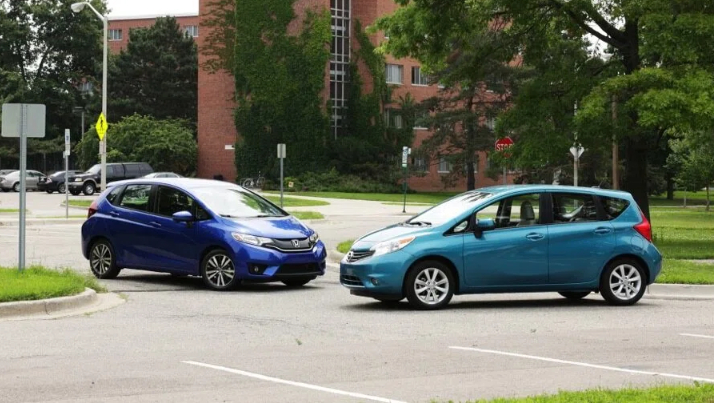
Honda Fit's cabin shines with supportive seats and height-adjustable fronts. A 9-inch touchscreen supports Apple CarPlay/Android Auto, USB-C, and Bluetooth.[1]
Nissan Note provides surprising rear space for adults, plus foldable armrest storage. Similar infotainment, but adds ProPILOT Assist on higher trims.[1]
Cargo Kings:
- Fit: 1492L max via Magic Seats (flip-up or flat-fold).[1]
- Note: 300L standard, expandable with sliding bench.
| Feature | Honda Fit | Nissan Note |
|---|---|---|
| Seats | 5, adjustable | 5, sliding |
| Infotainment | 9" touchscreen | 9" + Safety Shield |
| Storage | Deep console | Armrest bin |
| Max Cargo | 1492L | ~800L folded |
Fit engines range 90-130 hp, sipping 15-27 km/L. Standouts:[1]
1. 1.3L i-DSI: 100 hp, 18 km/L.
2. 1.5L i-VTEC: 128 hp, 15 km/L.
3. Hybrid 1.5L: 108 hp, 34 km/L.
Note offers 78-118 hp, 14-26 km/L base.[1]
1. 1.2L 3-cyl: 78 hp, 21 km/L.
2. 1.6L: 118 hp, 11 km/L.
3. e-Power: 114 hp, 38.2 km/L.
Transmissions: Fit (CVT/DCT); Note (Xtronic CVT/e-Power).
Fuel Verdict: Note hybrids edge city efficiency; Fit balances power/economy.
Hybrids define both: Fit since 2010, Note e-Power from 2016. Fit's i-MMD blends petrol/electric seamlessly (34 km/L). Note's series hybrid uses petrol generator for electric drive (up to 38 km/L).[1]
2024 Updates:
- Fit: 120 hp total, 40km EV range.[1]
- Note: Dual-motor AWD e-Power, 27 km/L city.[1]
Real-World Gains:
- Reduces emissions 30-40% vs petrol.
- Regenerative braking charges on deceleration.
Expert Insight: Note's EV feel suits stop-go traffic; Fit's parallel hybrid accelerates stronger on highways.
Both pack essentials: ABS, airbags, reverse cameras, keyless entry.[1]
- Fit: Power windows, A/C, DVD/CD.
- Note: Push-start, Safety Shield 360 (auto braking).
Higher trims add adaptive cruise. Fit edges reliability per J.D. Power data.
Honda Fit RS: Rally-inspired with tuned suspension, manual option, sport seats. Hybrid available for 120 hp pep.[1]
Nissan Note Nismo: Aero kits, larger wheels, 118 hp tune. Stays hybrid-capable.[1]
Fit Shuttle: Wagon variant adds cargo (2011+).[1]
| Variant | Power Boost | Unique Style |
|---|---|---|
| Fit RS | +Tuning | Rally aesthetics |
| Note Nismo | +Handling | Aero body kits |
| Fit Shuttle | N/A | Extra length |
These appeal to enthusiasts without sacrificing practicality.
Honda Fit (2024): Slimmer 4089mm body, honeycomb grille, wireless charging. 1.5L hybrid hits 120 hp, airy cabin with responsive controls.[1]
Nissan Note (2024): Retained V-motion, upgraded ProPILOT. e-Power excels urban (27 km/L), uncluttered interior.[1]
Timely Edge: Amid 2025 fuel hikes, hybrids save ~$500/year (20,000 km driven).
Market Context: Japanese exports dominate globals; check tariffs.
Maintenance: Both low; Fit leads resale (Honda badge). Annual costs ~$400-600.[2]
Reliability: Fit scores higher (iSeeCars); Note improves post-2016.[3]
1. Oil changes: Every 10,000 km.
2. Tires: 40,000 km lifespan.
3. Battery (hybrid): 8-10 years warranty.
Total 5-Year Cost: Fit ~$25K; Note ~$23K (fuel savings offset).[1]
Honda Fit triumphs for versatility (Magic Seats) and proven reliability - ideal if space trumps all. Nissan Note wins on hybrid innovation and value for efficiency seekers.[1]
Both excel subcompacts; choose Fit for cargo, Note for EV-like drive.
Ready to drive home your perfect hatchback? Contact KeyChain Auto today - China's leading used commercial vehicle supplier specializing in high-performance Japanese imports. Call +86 13572980919, email abbie@keychainventure.com, or visit keychainauto.com to explore inventory, get quotes, and ship globally. Start your urban adventure now!
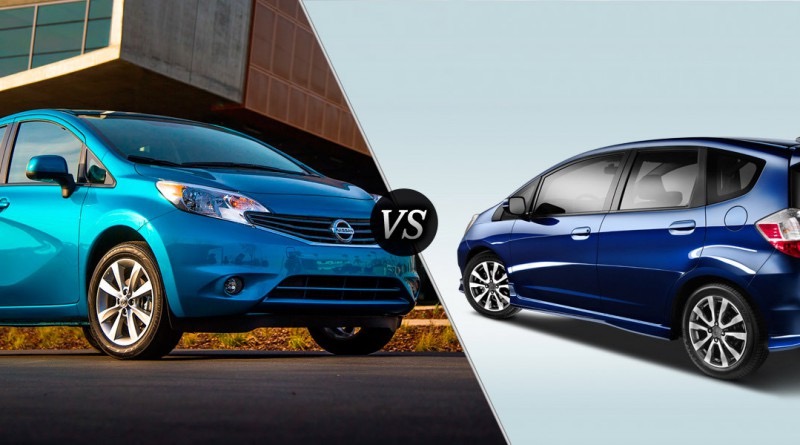
Yes, Fit edges out per iSeeCars and J.D. Power, thanks to Honda's engineering.[2][1]
Note's e-Power hits 38 km/L; Fit's hybrid 34 km/L. Note for city, Fit for mixed.[1]
Fit's 1492L max crushes Note's ~800L, via Magic Seats.[1]
Absolutely - save 30% fuel, lower emissions. EV range adds daily usability.[1]
Both easy; Fit's handling preferred, Note's comfort close second.[3][1]
[1](https://blog.beforward.jp/car-comparison/nissan-note-vs-honda-fit-comparison.html)
[2](https://www.iseecars.com/compare/honda-fit-vs-nissan-versa_note)
[3](https://www.cars.com/articles/subcompact-hatchback-head-to-head-honda-fit-and-nissan-versa-note-1420682668894/)


